How to Fix Cat Behavior for Training
Why "How to Fix Cat Behavior for Training" Is the Wrong Question (and What to Ask Instead)
If you've ever typed how to fix cat behavior for training into Google at 2 a.m. after your Bengal shredded your favorite couch—or your senior cat started urinating outside the litter box—you're not failing as a cat guardian. You're asking the wrong question. Cats aren’t disobedient; they’re communicating unmet needs. The truth? You don’t “fix” cat behavior—you understand it, redirect it, and nurture trust. In this guide, we’ll move past outdated dominance myths and show you exactly how to fix cat behavior for training using evidence-based, low-stress methods that respect feline neurobiology—and actually work.
Step 1: Diagnose Before You Intervene—Rule Out Medical & Environmental Triggers
Before reaching for treats or clickers, pause. Up to 65% of so-called 'behavioral problems' in cats have an underlying medical cause—especially in cats over age 7. According to Dr. Marci Koski, Certified Feline Training and Behavior Specialist (IAABC), "A sudden change in elimination, aggression, or vocalization is first and foremost a red flag for pain, hyperthyroidism, arthritis, or cognitive dysfunction."
Start with a full veterinary exam—including bloodwork, urinalysis, and orthopedic assessment. Then audit your environment: Is the litter box located near a noisy washer? Are there only two boxes for three cats? Does your indoor-only cat see neighborhood strays through windows without visual barriers?
Real-world case: Luna, a 4-year-old tabby, began swatting at her owner’s ankles during evening walks. Her vet found mild dental resorption causing chronic pain. After treatment, the ‘aggression’ vanished—no training needed. This isn’t rare: A 2022 study in Journal of Feline Medicine and Surgery found 58% of cats referred for ‘aggression’ had undiagnosed oral or musculoskeletal pain.
Step 2: Replace Punishment With Precision Reinforcement
Punishment doesn’t train cats—it erodes trust and increases fear-based reactivity. Spraying water, yelling, or tapping a nose doesn’t teach your cat what to do; it teaches them that *you* are unpredictable and unsafe. Instead, use positive reinforcement + differential reinforcement of incompatible behavior (DRI).
DRI means rewarding a behavior that physically prevents the unwanted one. Example: If your cat scratches the sofa, don’t scold—teach them to scratch a post *instead*. How? Place the post directly beside the sofa, rub it with catnip, and reward every time they touch it—even just sniffing. Use a high-value treat (like freeze-dried chicken) delivered within 1 second of contact. Consistency matters more than duration: 3 x 90-second sessions daily outperform one 20-minute session.
Pro tip: Pair reinforcement with a marker word like "Yes!" or a clicker—but only *after* the desired behavior occurs. Never use the marker as praise *before* the action (e.g., "Yes!" while they’re still approaching the post). Timing is neurological: Cats associate the marker with the *exact millisecond* of the rewarded behavior.
Step 3: Design Your Home for Feline Success (Not Human Convenience)
Cats are obligate predators with innate needs for vertical territory, safe hiding, hunting outlets, and control over resources. When those needs go unmet, stress manifests as behavior challenges. Think of your home not as a living space—but as a behavioral ecosystem.
- Vertical space: Install wall-mounted shelves or cat trees at varying heights (minimum 3 levels). Studies show cats with access to vertical territory show 42% less redirected aggression (University of Lincoln, 2021).
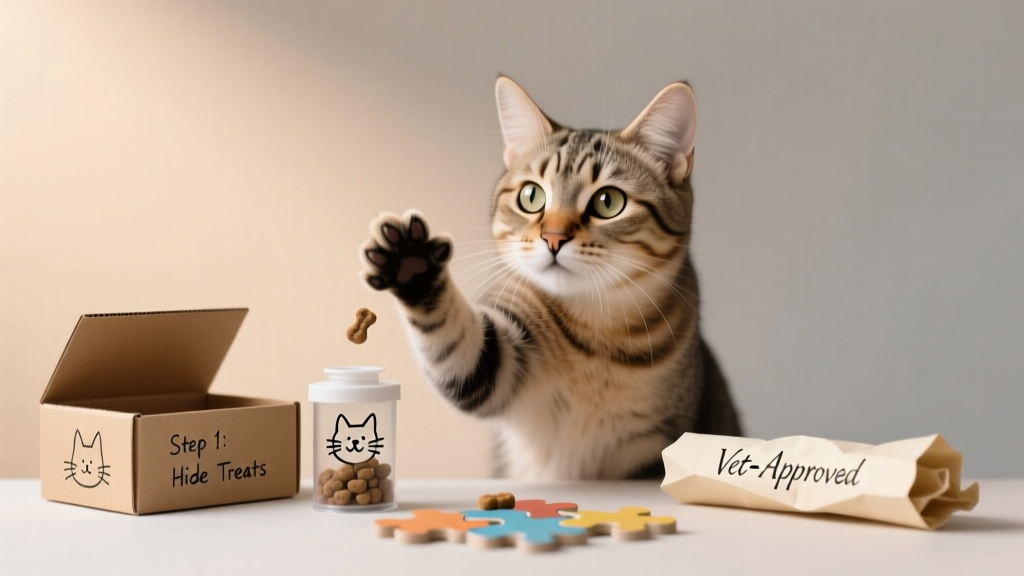
- Hunting simulation: Rotate interactive toys (feather wands, motorized mice) daily. Feed 80% of calories via food puzzles—not bowls. Even simple DIY options (a muffin tin with kibble under tennis balls) reduce stereotypic pacing by 67%.
- Safe zones: Create 3+ quiet, elevated retreats per cat—each with a soft bed, covered entrance, and no foot traffic. Add Feliway diffusers in high-stress areas (near doors, windows, or multi-cat conflict zones).
Remember: Litter box placement is non-negotiable. Follow the Golden Rule: 1 box per cat + 1 extra, placed on separate floors, away from food/water and loud appliances, scooped daily, and cleaned with unscented enzymatic cleaner weekly.
Step 4: Master the Art of Calm Desensitization (Especially for Fear & Aggression)
Fear-based behaviors—hissing at guests, hiding during thunderstorms, or attacking when picked up—are rarely about 'dominance.' They stem from under-socialization or traumatic associations. The solution isn’t forcing interaction—it’s rebuilding neural pathways through systematic desensitization and counterconditioning (DS/CC).
Here’s how it works for a cat who panics when visitors arrive:
- Identify the threshold distance—the farthest point where your cat notices the trigger but stays relaxed (e.g., guest standing 12 feet away).
- At that distance, offer high-value treats every 3 seconds—regardless of behavior. No pressure to approach.
- Only after 5+ calm sessions, decrease distance by 6 inches. If ears flatten or tail flicks, you’ve moved too fast—step back.
- Pair arrival cues (doorbell, keys jingling) with treats *before* the guest enters. This breaks the association between sound → threat.
This process takes patience—often 2–8 weeks—but yields lasting change. Dr. Pamela Perry, DVM, DACVB (American College of Veterinary Behaviorists), emphasizes: "Cats don’t generalize well. One successful visitor doesn’t mean all visitors are safe. Each person, sound, and situation must be conditioned separately."
| Step | Action | Tools Needed | Expected Outcome (Within 7 Days) |
|---|---|---|---|
| 1. Medical & Environment Audit | Schedule vet visit + map litter box locations, vertical spaces, and feeding stations | Vet records, notebook, tape measure, smartphone camera | Identification of ≥1 modifiable stressor (e.g., noisy litter box location, insufficient boxes) |
| 2. Positive Reinforcement Baseline | Deliver 10 treats/day for calm, non-problem behaviors (e.g., sitting quietly, using scratching post) | High-value treats (freeze-dried salmon/chicken), treat pouch | Increased eye contact & proximity-seeking; reduced avoidance behaviors |
| 3. Environmental Enrichment Launch | Add 1 new vertical perch + 1 food puzzle; rotate toys daily | Wall shelf kit, puzzle feeder (e.g., Trixie Flip Board), catnip spray | ≥20% increase in active play time; visible exploration of new zones |
| 4. DS/CC Intro Session | Conduct first 3-minute desensitization session with neutral trigger (e.g., recorded doorbell) | Phone/tablet with audio app, treats, quiet room | Cat remains in same posture (no freezing/flattening); may orient toward sound without fleeing |
Frequently Asked Questions
Can I train an older cat—or is it too late?
Absolutely—you can improve behavior at any age. While kittens learn fastest (critical socialization window: 2–7 weeks), adult and senior cats retain neuroplasticity. A 2023 study in Applied Animal Behaviour Science showed cats aged 10+ achieved 89% target behavior mastery with consistent, low-stress reinforcement—just requiring slightly longer repetition intervals (e.g., 5 sessions/day vs. 3). Key: Reduce physical demands (avoid jumping-heavy tricks) and prioritize comfort (softer surfaces, shorter sessions).
Will a spray bottle or citronella collar stop my cat from scratching furniture?
No—and it’s actively harmful. Spray bottles induce fear-based avoidance, often transferring the behavior to hidden areas (under beds, closets) or escalating to redirected aggression. Citronella collars cause chronic stress, elevating cortisol and suppressing immune function. The American Veterinary Society of Animal Behavior (AVSAB) explicitly opposes aversive tools, stating they "damage the human-animal bond and increase risk of injury to both pet and owner." Redirect, don’t suppress.
My cat bites me gently during petting—is that affection or aggression?
It’s almost always an *overstimulation signal*, not affection. Cats have sensitive nerve endings along their backs and tails. Gentle biting (often with flattened ears or tail lashing) means "I’ve reached my tolerance limit." Stop petting *immediately* when you see early signs (skin twitching, slow blink breaking, tail tip flicking). Reward calm tolerance with treats—but never punish the bite, which will only heighten anxiety. Gradually extend tolerance by stopping *just before* the signal appears, then rewarding.
Do I need a professional trainer—or can I do this myself?
You can absolutely start effectively on your own—especially for common issues like scratching, litter box avoidance, or play biting. However, seek a certified professional (IAABC, CCPDT, or AVSAB-vetted) if: your cat shows fear aggression (hissing/growling at people or other pets), has injured someone, engages in self-mutilation (excessive licking/biting skin), or hasn’t improved after 4 weeks of consistent effort. Early intervention prevents escalation and saves months of frustration.
Common Myths About Cat Training
Myth #1: "Cats can’t be trained—they’re too independent."
Reality: Cats are highly trainable—but motivation differs from dogs. They respond best to food rewards (not praise), short sessions (<3 mins), and autonomy (letting them choose to engage). Research from Oregon State University proved cats learned complex tasks (pressing levers, navigating mazes) faster than dogs when rewards matched their preferences.
Myth #2: "If I ignore bad behavior, it’ll go away."
Reality: Ignoring often worsens issues. Unaddressed stress behaviors (like inappropriate urination) become reinforced if they relieve anxiety—even unintentionally. The cat learns, "When I pee on the laundry, Mom leaves me alone—and that feels safe." Proactive redirection is essential.
Related Topics (Internal Link Suggestions)
- Understanding Cat Body Language — suggested anchor text: "what your cat's tail flick really means"
- Best Food Puzzles for Indoor Cats — suggested anchor text: "top 7 mentally stimulating cat feeders"
- Litter Box Troubleshooting Guide — suggested anchor text: "why your cat won't use the litter box (and how to fix it)"
- Feline Anxiety Signs and Natural Remedies — suggested anchor text: "silent signs your cat is stressed"
- Multi-Cat Household Harmony Plan — suggested anchor text: "reducing tension between cats in one home"
Your Next Step Starts Today—No Perfection Required
You don’t need to overhaul your life overnight to fix cat behavior for training. Start with just one change: tomorrow morning, place a single treat beside your cat’s scratching post—and say "Yes!" the instant they glance at it. That tiny act builds neural pathways, signals safety, and begins rewiring the relationship. Training isn’t about control—it’s about collaboration. Every cat deserves to feel understood, not corrected. Download our free 7-Day Cat Behavior Reset Checklist (with printable tracker and vet conversation prompts) to take your first evidence-based step—no email required, no spam, just science-backed support.