Cat Paw Resting on Your Knee While You Read
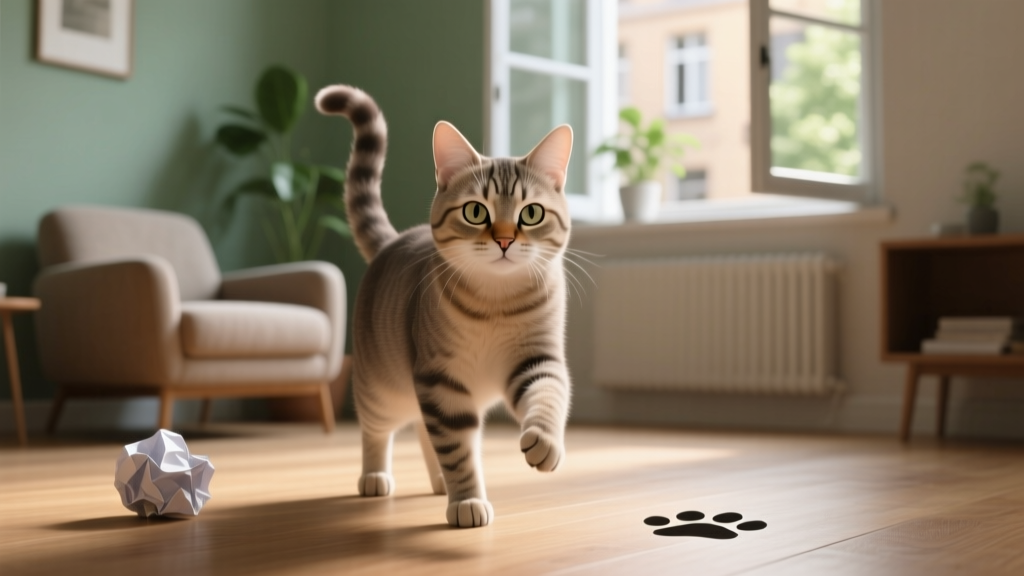
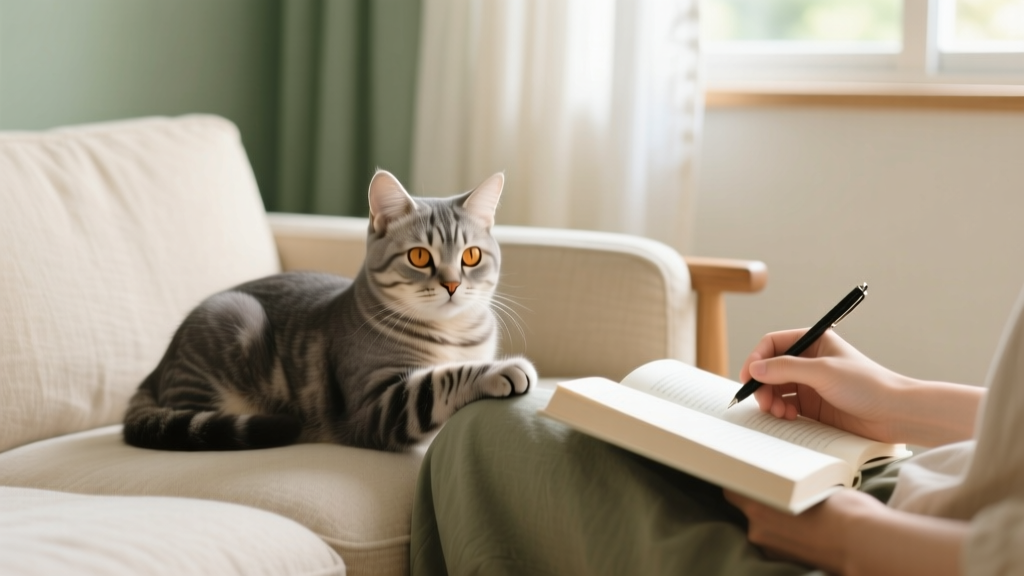
You finally sit down with a cup of tea and a book (or your phone—no judgment). Your cat hops up, circles once like they’re auditioning for a tiny ballet, and settles beside you. Then it happens: a soft paw reaches out and lands on your knee. Not a full-on “pet me now” demand. Not a swat. Just… a gentle, deliberate paw resting there while you read, as if your cat is saying, “I’m here. Don’t drift too far away.”
If you’ve ever wondered why cats do this—why the paw, why the knee, why now—you’re not alone. It’s one of those quietly adorable behaviors that feels meaningful. And it often is.
1) The science (and evolution) behind the “knee paw”
Cats may be domesticated, but their brains still run a lot of “small predator + social survivor” software. In the wild, felines balance independence with strategic closeness. They’re not pack animals like dogs, but they do form social bonds, share space, and coordinate peaceably when it benefits them.
A paw on your knee can be understood as a low-effort, high-information social signal. It’s contact without confrontation—more like a tap on the shoulder than a hug. From a behavioral perspective, it combines a few instincts:
- Proximity bonding: Touch increases social bonding in many mammals. For cats, contact can function like a “bond maintenance” tool—small, frequent check-ins that say, “We’re good.”
- Territorial reassurance: Cats use scent and touch to mark what’s familiar. When your cat rests a paw on you, they may also be mixing scent cues (from paw pads and fur) into the shared environment.
- Control of distance: Predators like cats prefer to manage how close something is. A paw acts like a measuring stick—your cat can monitor your movement and react fast if you shift.
- Kittenhood carryover: Kittens constantly use paws to steady themselves, knead, and maintain contact with mom and siblings. Some adult cats retain “soft-touch” habits as a comfort behavior.
Think of it as your cat’s version of placing a hand on the armrest between you—casual, confident, and surprisingly intimate.
2) A detailed breakdown: different contexts, different meanings
The same behavior can mean different things depending on the situation. Here are common “knee paw” scenarios cat owners recognize immediately:
When you’re deeply focused (book, laptop, phone)
You’re still. Quiet. Mentally elsewhere. Cats notice that. A paw on your knee can be a gentle reconnection cue: “You’re here physically, but I’d like a little acknowledgment.” It’s often paired with slow blinks, a relaxed tail, or a calm loaf posture.
When your cat is settling in for a nap
Some cats place a paw on you the way a person might drape an arm over a partner while falling asleep. It can be a stability thing (you’re a warm anchor) and a safety thing (they trust you not to startle them).
When you’ve been away
After you come home, your cat may sit near you and place a paw on your knee as a “re-entry ritual.” Not every cat greets with headbutts. Some do quiet contact instead—less dramatic, just as meaningful.
When something in the environment feels uncertain
New guest? Delivery noise? Thunder? A paw on you can be your cat’s way of using you as a secure base. Many cats seek “safe proximity” rather than hiding, especially if they’re confident but slightly on alert.
When your cat is subtly asking for something
Yes, sometimes it’s a request—petting, warmth, a spot on your lap. The key is the intensity. A gentle resting paw tends to be polite. Repeated tapping, increased pressure, or creeping closer can mean, “Excuse me, I would like service.”
3) What it says about your cat’s mood and feelings
Most of the time, a relaxed paw on your knee is a positive sign. Here’s what it commonly indicates:
- Trust: Your cat feels safe enough to reduce personal space boundaries. Touch is vulnerable. They wouldn’t do it if they thought you were unpredictable.
- Affiliation: This is friendly social behavior—your cat is choosing connection.
- Contentment: Many cats do this when they’re settled and cozy, especially if their body looks loose (not stiff) and their face is soft.
- Gentle “attention tethering”: Some cats want a light line of connection so you don’t stand up without warning.
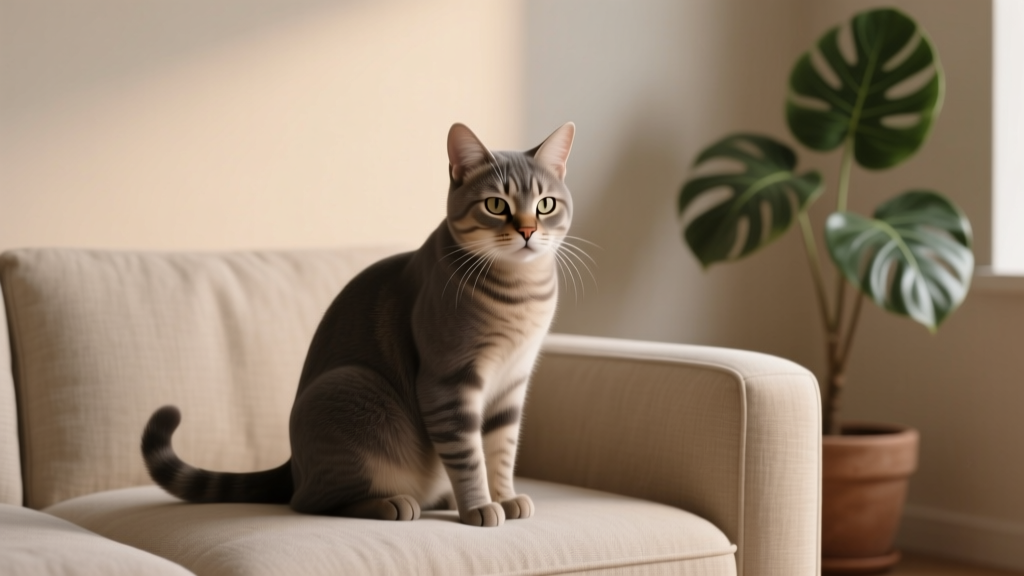
Look at the whole cat, not just the paw. A happy “knee paw” cat usually has neutral ears, a still or slowly moving tail, half-closed eyes, and relaxed whiskers. A tense cat might have wide pupils, low or twitchy tail, stiff shoulders, and ears rotating or flattening—same paw placement, different emotional soundtrack.
4) Related behaviors you might also notice
If your cat is a “knee paw” type, you may also see:
- Slow blinking while touching you: An affectionate, calm signal that often pairs with gentle contact.
- “One paw on, one paw off” sitting: A classic cat compromise—close but with an exit plan.
- Kneading your leg or blanket: Comfort behavior; some cats start with a resting paw and then knead if they get extra relaxed.
- Head bunting or cheek rubbing: Another affectionate contact behavior with scent marking components.
- Following you from room to room but not demanding attention: Cats who like quiet companionship often use subtle touch instead of vocal requests.
- Pawing your arm when you stop petting: A more direct “continue, please” version of the same tool—using paws to communicate.
5) When it’s normal… and when it might be a concern
In most households, a paw resting on your knee is entirely normal and sweet. Still, context matters. Consider a closer look if you notice any of the following:
Potential concern signs
- Sudden increase in clinginess: If your independent cat becomes unusually touchy or anxious seemingly overnight, check for changes (new pet, construction noise, schedule shifts) or possible health issues.
- Restlessness, panting, or pacing: Touch combined with agitation can indicate stress.
- Paw sensitivity: If your cat flinches when their paw touches you, licks it excessively, limps, or you see swelling—think injury, nail issues, or paw pad irritation.
- Touch leading to irritability: Some cats get overstimulated. If the paw contact turns into tail lashing, skin twitching, growling, or sudden swats when you move, your cat may be telling you they want closeness on their terms only.
Normal variations
- Light pressure, relaxed posture: Usually affectionate and calm.
- Brief touch then withdrawal: Your cat may be “checking in” and moving on—very normal.
- Paw plus purring: Often contentment, though remember purring can also happen during stress or discomfort. Body language will clarify.
If anything feels “off,” a vet check is never a bad idea—especially if behavior changes come with appetite changes, hiding, litter box issues, or reduced grooming.
6) How to respond (and gently encourage it)
If you enjoy the behavior and want to reinforce that calm, bonded feeling, your response can teach your cat that gentle contact is welcome.
Do this
- Acknowledge with calm: A soft “hello,” a slow blink, or a few gentle strokes on the head or cheeks can be perfect. Many cats love facial-area petting more than full-body strokes.
- Stay predictable: If your cat uses the paw to monitor your movements, try not to abruptly stand. Give a small cue first—shift slowly or say your cat’s name so they can disengage.
- Offer a “reading buddy” setup: Place a folded blanket or small cat bed next to you on the couch. Cats often rest a paw on you when they want proximity but not full lap contact. Give them an option that still feels close.
- Reward the calm version: If your cat taps politely instead of grabbing your sleeve, reinforce the polite version with attention or a treat.
Avoid this
- Forcing more contact: If your cat places a paw and you scoop them into a cuddle they didn’t ask for, they may stop offering that gentle signal.
- Punishing or startling: Pulling away dramatically or scolding can make your cat cautious about initiating contact in the future.
If you don’t want the paw on your knee (maybe it’s cute but distractingly sharp), redirect kindly: shift your leg, offer a nearby blanket, or invite your cat to sit beside you and reward that spot.
7) Fun facts and research-y nuggets (without the dry lecture)
- Cat paws are communication tools: Beyond walking and hunting, paws are used for testing surfaces, play, gentle social contact, and “requesting” behavior. A resting paw is often the lowest-intensity ask a cat can make.
- Touch helps regulate arousal: Many cats use small rituals—kneading, paw resting, slow blinking—to stay calm and keep social interactions friendly rather than intense.
- Cats prefer choice-based affection: Studies on cat social behavior consistently point toward a theme: cats are more comfortable when they can initiate and end contact. A paw on your knee is a perfect example of “I’m choosing connection, but I’m not trapped.”
- Some cats have “anchor habits”: Repeated tiny behaviors—like touching you while you read—can become routine comfort cues. Your cat may associate your reading posture with quiet time and safety.
8) FAQ: common questions cat owners ask
Why does my cat rest a paw on me but won’t sit on my lap?
That’s a classic compromise. Your cat wants closeness but also wants control over personal space and an easy exit route. Lap sitting can feel restrictive or too warm. The paw lets them bond without committing.
Is my cat trying to stop me from reading?
Sometimes they’re trying to reconnect your attention, especially if you’ve been focused for a long time. But many cats do it even when they don’t want pets—they just want contact. If the paw becomes tapping or your cat starts nudging the book, that’s more clearly an attention request.
My cat’s claws come out a little when they do it. Are they being aggressive?
Usually not. Mild claw extension can happen when cats relax their paws, adjust balance, or lightly grip fabric. If it’s painful, keep nails trimmed and offer a blanket barrier. Aggression typically includes tense posture, tail lashing, pinned ears, or a hard stare.
Why does my cat do this more at night?
Evening is prime social time for many cats—after meals, when the house is calmer, and when you’re more likely to be still. Nighttime can also bring a little uncertainty (shadows, outside noises), and your cat may find contact reassuring.
Does this mean my cat loves me?
In cat language, gentle voluntary touch is a strong sign of trust and social bonding. “Love” is a human word, but if we translate it into feline terms—safety, preference, comfort, and affiliation—then yes, this behavior belongs in that category.
Should I pet my cat when they place their paw on my knee?
Try a brief, gentle response and watch their feedback. If they lean in, purr, slow blink, or keep the paw there, they likely enjoy it. If they pull away, flick their tail, or their skin ripples, they may prefer quiet contact without petting.
A cat paw on your knee while you read is one of those small moments that quietly builds a relationship—no fireworks, just trust. If you notice it, you’re already doing something right: you’re paying attention to your cat’s language.
Does your cat do the “knee paw”? Or do they have their own signature move—like sitting on the page you’re reading, tapping your hand mid-scroll, or placing a single paw on your ankle as you walk by? Share your story with fellow cat people on catloversbase.com—we’d love to hear the quirky details.