Cat Paw Holding Your Arm During Petting: Enjoy
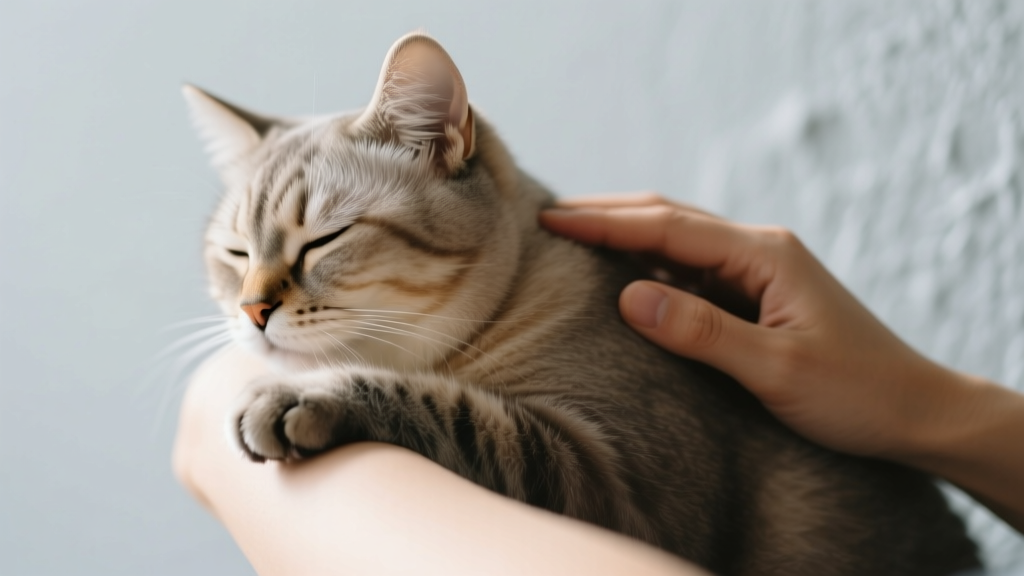
You’re on the couch, one hand scrolling, the other doing that absentminded “good cat” stroke along your cat’s cheek. Everything is calm and purry… until your cat gently hooks a paw around your wrist. Not claws-out, not a swat—more like a tiny, deliberate grab. Sometimes they pull your hand closer like a magnet. Sometimes they just rest their paw there, as if to say, “Stay. Right. Here.”
If your cat has ever held your arm during petting, you’re not alone—and it’s one of those behaviors that feels incredibly personal. It can be affection, communication, habit, or even a polite boundary. The fun part is learning to read the context so you know whether your cat is saying “more, please,” “don’t stop,” or “that’s enough, but I still want you near.”
1) Why Cats Do This: The Science and the Cat in the Wild
Cats are tactile communicators. Even though they don’t cuddle in “packs” like some social species, they rely heavily on touch with individuals they trust. In the feline world, physical contact is information: who you are, how safe you feel, whether you’re welcome, and what happens next.
In evolutionary terms, pawing is a toolkit behavior. Paws are a cat’s multi-purpose “hands”: they catch prey, test surfaces, knead nests, and control objects (including you). Holding your arm can be a gentle version of the same motor pattern used to keep something valuable within reach.
It also makes sense developmentally. Kittens touch, paw, and cling to mom and littermates constantly. Early on, paws are how kittens stabilize themselves, seek comfort, and maintain contact. Many adult cats keep some of that “kitten logic” when they’re relaxed: touch equals connection, and connection equals safety.
There’s also the calming chemistry angle. Pleasurable petting can trigger a parasympathetic “rest and digest” state. When cats are enjoying touch, they often engage in comfort behaviors—kneading, paw resting, slow blinking—because their nervous system is shifting into calm mode. The paw-on-arm can be part of that “I’m safe enough to settle” ritual.
2) A Detailed Breakdown: Different Contexts, Different Meanings
Same gesture, different message. Here are the most common contexts where cats hold your arm or hand, plus what’s usually going on.
A) “Don’t you dare stop” (the gentle anchor)
Your cat is purring, leaning into the strokes, eyes half-closed. When you pause, the paw appears—light pressure, maybe a little pull back to the sweet spot. This is often a simple request: keep petting, and keep it predictable.
What it looks like: Soft paw pads on your skin, claws sheathed, relaxed shoulders, slow blinks, and a loose tail tip.
B) “Right there—this exact spot” (the steering wheel paw)
Some cats use a paw to guide your hand to their preferred petting zone: the cheek, chin, or base of the ears. Think of it as your cat “fine-tuning” the experience.
What it looks like: Paw touches your wrist while their head angles to present a specific area. They may rub their cheek against your knuckles immediately after.
C) “I like you close, but I’m not in a petting mood” (the contact compromise)
Occasionally a cat holds your arm while actually wanting less motion. They want proximity, warmth, and security—not constant strokes. The paw is a way of maintaining contact while controlling intensity.
What it looks like: They may stop purring, settle their body weight, and keep the paw there like a bookmark. Petting might trigger a skin twitch, ear turn, or gentle tail flick.
D) “Play mode activated” (the grab-and-bunny-kick prequel)
Sometimes the paw-hold is the opening move to play. Your hand is suddenly “prey.” This is especially common if petting turns fast, wiggly, or overstimulating.
What it looks like: Pupils dilate, body tenses, hind legs prep, and you might get a soft bite or rapid kicks. Not aggression—just misdirected hunting play.
E) “I’m a tiny security guard” (the mild resource hold)
Some cats, especially those who are very bonded to one person, will hold an arm as a subtle “claim.” It’s not jealousy in the human sense, but it can function like social anchoring: “This is my safe person; stay connected.”
What it looks like: They may do this more when other people are around, when you’re distracted, or right before you stand up.
3) What It Means About Your Cat’s Mood and Feelings
Think of paw holding as a communication bundle. It’s rarely just one emotion; it’s a mix of comfort, control, and connection. Here are the most likely emotional states behind it:
- Contentment: Relaxed body, slow blink, soft face muscles, steady purr (though not all cats purr when happy).
- Affection and trust: Claws sheathed, gentle grip, leaning in, choosing to stay near you.
- Security-seeking: Paw stays even when petting stops; cat seems to “settle” more with contact.
- Overstimulation creeping in: Paw becomes firmer, tail flicks increase, skin ripples, ears rotate sideways.
- Play drive: Focused stare, tense body, quick movements, mouth involvement (mouthing or nibbling).
The biggest clue is the rest of the cat. A paw on your arm is like a word in a sentence—you need the full sentence to understand it.
4) Related Behaviors You Might Also Notice
If your cat holds your arm during petting, you may see other “touch-and-control” behaviors, too:
- Kneading on your lap or chest: A comfort behavior linked to kittenhood; often appears when a cat is deeply relaxed.
- Head-butting (bunting) and cheek rubs: Friendly scent marking; “you’re part of my safe map.”
- Wrapping their tail around your arm: A feline version of holding hands—often social and affiliative.
- Placing a paw on your face: Some cats do this while you sleep. It can be attention-seeking, closeness, or “wake up and pet me.”
- Gentle love bites: Light mouthing that isn’t meant to injure; can also signal rising arousal/overstimulation.
5) When Paw Holding Is Normal… and When It Might Be a Concern
Most of the time, arm-holding is completely normal and adorable. Still, watch for patterns that suggest discomfort, anxiety, or escalating arousal.
Normal, healthy paw holding usually looks like:
- Claws mostly sheathed
- Soft body posture
- Cat can disengage easily
- No hissing, growling, or hard staring
- Petting stays within your cat’s comfort window
Potential concern signs:
- Sudden change in tolerance: A cat who used to enjoy petting now grabs tightly or bites quickly.
- Compulsive or frantic grabbing: Looks panicky, cannot settle, repeated attempts to restrain your hand.
- Increased irritability: Skin twitching, frequent tail lashes, ears pinned, quick escalation to biting.
- Pain indicators: Flinching when touched, avoiding certain strokes, sensitivity around back/hips, or aggression that appears “out of nowhere.”
If you suspect pain (arthritis, dental discomfort, skin irritation, or sensitivity along the spine), a vet check is the kindest first step. Behavior changes are often a cat’s way of saying, “Something doesn’t feel right.”
6) How to Respond (and How to Encourage the Sweet Version)
If you want more of the gentle, affectionate paw holding—and less of the grabby-playful ambush—your response matters. Cats learn fast what their paw move “gets” them.
A) Pause and read the body
When the paw lands on your arm, take a one-second inventory: tail, ears, eyes, muscle tension. If everything is soft, continue. If you see agitation building, slow down or stop.
B) Keep petting predictable
Many cats prefer steady, moderate pressure on the cheeks, chin, and base of the ears. Fast, whole-body rubs can flip a cat from pleasure to overstimulation quickly.
C) Offer “consent checks”
Try petting for 3–5 seconds, then stop and hold your hand still. If your cat leans in, paws you gently, or repositions for more, that’s a clear yes. If they look away, lick their lips, or shift off, that’s a polite no.
D) Redirect play grabbing to a toy
If the paw-hold turns into a wrestle, don’t punish. Simply freeze your hand (no exciting movement), then offer a wand toy or kicker toy. This teaches: “Hands are for calm contact; toys are for hunting.”
E) Reward the behavior you like
When your cat holds your arm gently, you can softly praise, slow blink, and continue the kind of petting they prefer. If your cat enjoys treats, reward calm contact occasionally so it becomes a reliable “affection routine.”
7) Fun Facts and Research Tidbits
- Cats have scent glands in their paws. While paw holding isn’t always “marking,” cats do leave chemical messages through scent glands on various parts of the body. Touch often has a subtle social-scent component in cat communication.
- Touch helps cats control intensity. Cats aren’t passive recipients of petting; many actively shape interactions using paws, head position, and body angles—your cat is essentially “editing” your technique in real time.
- Purring isn’t a perfect happiness meter. Cats can purr when content, but also when stressed or seeking comfort. Pair purring with relaxed posture and facial softness for the clearest read.
- Overstimulation is a real phenomenon. Repeated petting can become too much for a cat’s nervous system, especially along the back or near the base of the tail. The paw-hold can be a warning sign—or an attempt to control the interaction before it tips over.
FAQ: Cat Paw Holding During Petting
1) Why does my cat grab my arm when I stop petting?
Most commonly, your cat is asking for more—especially if the grip is gentle and the body looks relaxed. Some cats also do it to keep contact while they settle, like a comfort “anchor.” If it escalates to biting or kicking, it may be shifting into play or overstimulation.
2) Is it affection when my cat holds my hand?
Often, yes. A soft paw resting on you is usually a sign of trust and connection. Look for relaxed posture, slow blinking, and a loose tail. If your cat is tense or whipping their tail, it may be more about control or “I’m getting overstimulated.”
3) Why does my cat hold my arm and then bite?
This usually happens for two reasons: playful hunting behavior (your hand became “prey”) or petting-induced overstimulation. The fix is to reduce intensity, pet in safer areas (cheeks/chin), and redirect to toys when play energy shows up.
4) Should I pull my arm away when my cat holds it?
A gentle pause is better than a quick pull. Sudden movement can trigger chase/play instincts and make the grip tighter. If you need to disengage, go still, then slowly slide your arm away or distract with a toy or treat toss.
5) My cat uses claws a little when holding me—does that mean they’re mad?
Not necessarily. Some cats “forget” to fully sheath claws when they’re excited or kneading-adjacent. If the rest of the body is relaxed, it may be enthusiasm, not anger. You can protect your skin by offering a blanket buffer on your lap and rewarding softer contact.
6) Can this behavior mean my cat is anxious or possessive?
It can, especially if it happens most when you’re about to leave, when other people approach, or if the grip looks tense and your cat struggles to settle. If you suspect anxiety, add predictable routines, more play, and safe resting spots—and consider talking with a vet or behavior professional if it’s escalating.
Better Petting, Better Bond
When your cat holds your arm during petting, it’s rarely random. It’s communication—sometimes a sweet request, sometimes a steering wheel, sometimes a playful trap. The more you watch for the full-body “subtitle” (tail, ears, tension, eyes), the easier it becomes to respond in a way your cat appreciates.
And honestly? Being chosen as the human your cat wants to physically anchor is a pretty great compliment.
Does your cat hold your wrist like a tiny paw hug, or do they turn it into a dramatic wrestling match? Share your story (and your cat’s quirky petting rules) with the Cat Lovers Base community at catloversbase.com.