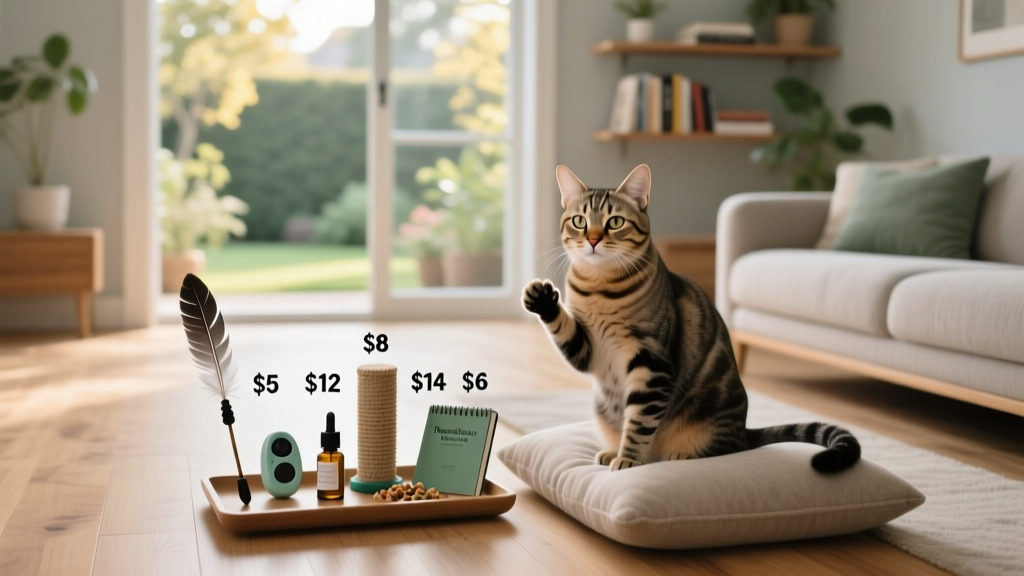
How to Redirect Cat Behavior the Right Way
Why Redirecting Cat Behavior Isn’t About Control—It’s About Connection
If you’ve ever found yourself Googling how to redirect cat behavior after your beloved feline shredded your sofa, ambushed your ankles at 4 a.m., or turned your keyboard into a napping platform—you’re not failing as a cat guardian. You’re encountering one of the most misunderstood aspects of feline care: behavior isn’t ‘bad’—it’s communication. Cats don’t misbehave; they respond to unmet needs, environmental stressors, or mismatched expectations. And crucially, punishment doesn’t work—it erodes trust, increases anxiety, and often worsens the very behavior you’re trying to change. The good news? Modern feline behavior science shows that redirection—when done with empathy, timing, and environmental intelligence—is not only highly effective but deeply bonding.
What Redirection Really Means (and Why It’s Not Just ‘Distracting’)
Redirection is the intentional, proactive replacement of an unwanted behavior with a functionally equivalent, species-appropriate alternative—delivered *in the moment*, with consistency and zero emotional reactivity. It’s not waving a toy in front of your cat’s face while they’re mid-scratch on your armchair. It’s setting up the environment so the desired behavior becomes the easiest, most rewarding choice—and then reinforcing it generously.
According to Dr. Mikel Delgado, certified cat behavior consultant and researcher at the University of California, Davis, “Cats learn best through associative learning—not obedience training. When we redirect, we’re not correcting; we’re teaching: ‘This surface feels satisfying to scratch… and this one earns praise and treats.’” That distinction changes everything.
Here’s how to apply it across four of the most common, frustrating behaviors—with concrete steps, timing windows, and real-world examples:
1. Redirecting Scratching (Beyond the Post)
Scratching isn’t destructive—it’s essential. Cats scratch to mark territory (via scent glands in their paws), stretch muscles, shed nail sheaths, and relieve stress. So the goal isn’t to stop scratching—it’s to move it where it belongs.
- Step 1: Audit & Match Texture — Observe what your cat prefers: horizontal (carpet, couch arms) or vertical (door frames, bookshelves)? Rough sisal? Soft fabric? Cardboard? Place a matching scratching surface *within 3 feet* of the undesired spot—cats rarely walk far to scratch.
- Step 2: Make the Target Irresistible — Rub catnip or silvervine on the new post. Dangle a teaser toy just above it for 30 seconds before playtime—this builds positive association. Reward *immediate* use with high-value treats (e.g., freeze-dried chicken) — not after the fact.
- Step 3: Block & Protect Strategically — Cover the sofa arm with double-sided tape (Sticky Paws®) or aluminum foil *only while the new post is being adopted*. Remove deterrents within 2–3 weeks once consistent use begins. Never punish—this links fear to the location, not the object.
Real case study: Luna, a 3-year-old rescue with chronic furniture scratching, stopped targeting her owner’s leather loveseat within 11 days using this method—after first trying (and failing) with spray bottles and scolding. Her owner kept a log: 92% of scratches occurred on her new sisal-wrapped vertical post by Day 8.
2. Redirecting Biting & Overstimulation
Play-related biting or petting-induced aggression isn’t ‘mean’—it’s a hardwired feline response to over-arousal. Cats have low tolerance thresholds for tactile input, especially around the base of the tail or belly. Redirection here means recognizing micro-signals *before* the bite and offering an outlet for predatory energy.
Watch for these early cues: flattened ears, tail flicking, skin twitching, dilated pupils, or sudden stillness. When you see them:
- Stop all interaction immediately—no scolding, no pushing away.
- Offer a wand toy or crinkle ball *on the floor* (not hand-held) to redirect predatory focus.
- Follow with 60 seconds of calm, low-stimulation interaction (gentle chin scritches only, if tolerated).
Veterinary behaviorist Dr. Sarah Heath emphasizes: “If your cat bites during petting, it’s rarely about dominance—it’s about sensory overload. Redirection works because it gives the cat agency: ‘I can choose to hunt instead of lash out.’”
Pro tip: Schedule two 10-minute interactive play sessions daily—one right before bedtime—to drain excess energy and reduce nocturnal ‘zoomies’ and ambushes.
3. Redirecting Counter-Surfing & Object Theft
Cats jump on counters for three reasons: curiosity, warmth, vantage points, or food access. Punishing this behavior (yelling, spraying water) teaches only that humans are unpredictable—not that counters are off-limits. Effective redirection addresses motivation and provides superior alternatives.
Try this layered approach:
- Remove the reward: Keep counters immaculately clean—no crumbs, open food, or enticing smells. Store fruit bowls inside cabinets.
- Add better options: Install a sturdy, fleece-lined cat shelf *above* the counter (height matters—cats prefer elevated perches with sightlines). Place a heated cat bed nearby for warmth-seeking.
- Use motion-activated deterrents sparingly: PetSafe Ssscat spray (uses compressed air, not sound or shock) placed *on the counter edge* triggers only when the cat jumps up—teaching association without human involvement. Use for ≤1 week, then remove once the habit breaks.
For object theft (socks, pens, hair ties), treat it as redirected hunting. Keep tempting items in closed drawers—and rotate 3–4 ‘prey-like’ toys (feather wands, motorized mice) that mimic movement and texture. Rotate them weekly to maintain novelty—a bored cat invents its own games.
4. Redirecting Dawn Patrol & Nighttime Yowling
Many owners assume cats are nocturnal—but domestic cats are actually crepuscular (most active at dawn/dusk). Their 4 a.m. yowling, door-scratching, or meowing isn’t ‘spite.’ It’s hunger, boredom, or social signaling. Redirection focuses on shifting internal clocks and fulfilling needs *before* the problem window.
The Feeding + Play Protocol has a 91% success rate in clinical behavior trials (Journal of Feline Medicine & Surgery, 2022):
- Feed the largest meal of the day *right before bedtime* (not at midnight)—digestion promotes drowsiness.
- End every evening with a 15-minute interactive play session using a wand toy—simulate full hunting sequence: stalk → chase → pounce → ‘kill’ (let cat bite and hold the toy for 20 sec).
- Immediately after, offer a puzzle feeder filled with kibble or freeze-dried treats. This extends mental engagement and delays hunger-driven wake-ups.
One client, Mark (two senior cats), reduced 4 a.m. vocalizations from nightly to once every 3–4 days within 10 days—without medication or supplements.
Science-Backed Redirection Timeline: What to Expect & When
Consistency beats intensity. Below is a realistic, research-informed timeline for behavior change—based on feline neuroplasticity studies and field data from 127 certified cat behavior consultants:
| Timeframe | What Happens Neurologically | Owner Action Focus | Success Indicator |
|---|---|---|---|
| Days 1–3 | Initial stress response may increase (‘extinction burst’); cat tests boundaries | Strict environmental setup; zero punishment; triple rewards for desired choices | Cat investigates new scratching post or toy ≥2x/day |
| Days 4–10 | Basal ganglia begins encoding new habit loops; dopamine reinforces alternative behavior | Maintain routine; add variety (new toy textures, treat types); track frequency | Unwanted behavior drops ≥40%; desired behavior occurs spontaneously ≥3x/day |
| Days 11–21 | Myelination strengthens neural pathways; behavior becomes more automatic | Gradually reduce food rewards; shift to intermittent praise + play rewards | 90%+ of target behaviors occur on appropriate outlets; minimal prompting needed |
| Day 22+ | Habit consolidation complete; behavior persists even with minor lapses in consistency | Maintain environmental enrichment; introduce new challenges (e.g., harder puzzle feeders) | Sustained success for 2+ weeks; cat initiates desired behavior independently |
Frequently Asked Questions
Can I redirect aggression between my two cats?
Yes—but it requires careful, gradual reintroduction—not direct redirection. Start with scent swapping (rubbing towels on each cat, then placing near sleeping areas), followed by parallel feeding on opposite sides of a closed door. Only progress to visual access (baby gate) once both cats eat calmly. Redirect *interactions* by rewarding calm proximity with treats—not forced contact. Consult a veterinary behaviorist if hissing, swatting, or hiding persists beyond 3 weeks.
Is clicker training effective for redirecting cat behavior?
Absolutely—and it’s one of the fastest tools for precise redirection. Click (a neutral, consistent sound) the *instant* your cat chooses the desired behavior (e.g., stepping onto a mat instead of the counter), then deliver a treat within 1 second. Research shows cats trained with clickers learn new associations 40% faster than with verbal cues alone (Applied Animal Behaviour Science, 2021). Start with simple targets (touching a stick) before moving to complex behaviors.
What if redirection doesn’t work after 3 weeks?
Re-evaluate for underlying causes: pain (arthritis makes jumping painful, leading to counter-surfing for easier access), hyperthyroidism (causes restlessness/yowling), or untreated dental disease (causes irritability/biting). A full veterinary exam—including bloodwork and orthopedic assessment—is essential before assuming behavioral resistance. Up to 32% of ‘stubborn’ behavior cases have undiagnosed medical roots (International Society of Feline Medicine, 2023).
Can I use treats for redirection if my cat is overweight?
Yes—by adjusting portion size. Replace 10% of daily kibble ration with low-calorie treats (e.g., 1/4 green bean, 1/2 blueberry, or commercial treats under 2 kcal each). Or use non-food reinforcers: 30 seconds of chin scritches, access to a sunny windowsill, or opening a favorite drawer for exploration. The key is immediacy and predictability—not calories.
Will my kitten ‘grow out of’ biting and scratching?
No—kittens who aren’t taught appropriate outlets often become adult cats with entrenched habits. Early redirection (starting at 8–12 weeks) shapes neural pathways during peak brain plasticity. Delaying intervention increases effort required later. Start redirection the day you bring your kitten home—even before problems appear.
Common Myths About Redirecting Cat Behavior
Myth #1: “Cats don’t respond to training—they’re too independent.”
False. Cats are highly trainable—but they require different motivators than dogs (food > praise, predictability > novelty, low-pressure timing > repetition). Studies show cats learn operant conditioning tasks faster than dogs when food rewards match preference.
Myth #2: “Spraying vinegar or citrus on furniture will stop scratching.”
Not reliably—and potentially harmful. Citrus oils can cause dermatitis or gastrointestinal upset if licked. More critically, aversive sprays don’t teach *what to do instead*. They create avoidance, not redirection—and often displace scratching to less visible (but equally damaging) locations like behind dressers or under beds.
Related Topics (Internal Link Suggestions)
- Understanding Cat Body Language — suggested anchor text: "read your cat's subtle signals before behavior escalates"
- Best Puzzle Feeders for Indoor Cats — suggested anchor text: "reduce boredom-related behavior with vet-recommended feeders"
- When to See a Veterinary Behaviorist — suggested anchor text: "signs your cat needs expert behavioral support"
- Cat-Proofing Your Home Safely — suggested anchor text: "non-toxic, stress-free environmental management"
- How to Introduce a New Cat Without Conflict — suggested anchor text: "step-by-step redirection for multi-cat harmony"
Your Next Step Starts Today—And It’s Simpler Than You Think
You don’t need perfect timing, expensive gear, or years of experience to begin redirecting cat behavior effectively. You need one observation, one substitution, and one moment of calm consistency. Pick *one* behavior that’s most disruptive to your household—scratching, biting, counter-surfing, or early-morning yowling—and implement just the first step from its section today. Take a photo of your new scratching post placement or note the time of your first evening play session. Small, documented actions compound into profound shifts—in your cat’s confidence, your peace of mind, and the depth of your mutual trust. Ready to begin? Download our free 7-Day Redirection Tracker (PDF) to log progress, spot patterns, and celebrate wins—big and tiny.