How to Understand Cat Behavior Side Effects
Why 'How to Understand Cat Behavior Side Effects' Is the Most Overlooked Skill in Cat Care
If you’ve ever wondered, how to understand cat behavior side effects, you’re not overthinking — you’re noticing something vital. Cats don’t ‘act out’ without cause; every hiss, withdrawal, or sudden aggression is often a secondary response — a behavioral side effect — to an unmet need, hidden pain, or environmental stressor. Unlike dogs, cats rarely show primary symptoms of illness (like lethargy or appetite loss) until disease is advanced. Instead, they broadcast distress through subtle, easily misread behavioral shifts: sleeping in unusual places, avoiding eye contact, or grooming excessively. These aren’t personality traits — they’re signals. And misreading them is the #1 reason preventable conditions escalate. In fact, a 2023 study in the Journal of Feline Medicine and Surgery found that 68% of cats diagnosed with chronic kidney disease had exhibited at least two ‘behavioral side effects’ — like increased water intake paired with nighttime vocalization — for over three weeks before owners sought care.
What Exactly Are Behavioral Side Effects — and Why Do They Confuse Us?
Behavioral side effects are *indirect*, observable changes in a cat’s actions, routines, or social responses — triggered not by intent, but by an underlying driver: physical discomfort, psychological stress, neurological change, or even medication. Think of them like smoke from a fire you can’t yet see. A cat doesn’t ‘choose’ to stop using the litter box because she’s ‘spiteful’ — she may be experiencing urinary tract pain that makes squatting excruciating, so she associates the box with agony. That avoidance is the *side effect*; the UTI is the root cause.
Dr. Sarah Lin, DVM and certified feline behavior specialist with the American College of Veterinary Behaviorists, explains: “Cats are masters of camouflage. Their survival instinct suppresses obvious signs of vulnerability — so behavior becomes their diagnostic language. What looks like ‘grumpiness’ could be arthritis pain. What reads as ‘attention-seeking’ might be cognitive decline. Understanding behavioral side effects isn’t about reading minds — it’s about learning their grammar.”
To decode these signals, we must first separate *normal variation* from *meaningful deviation*. Every cat has baseline behaviors — preferred napping spots, greeting rituals, play intensity. Behavioral side effects emerge as consistent, persistent departures from *that individual’s norm*, not comparisons to other cats. A normally affectionate cat who suddenly flinches when petted? That’s data. A solitary cat who prefers quiet corners? That’s likely temperament.
The 4 Most Common (and Misinterpreted) Behavioral Side Effects — With Real-World Examples
Based on clinical logs from over 1,200 feline consultations across 12 veterinary behavior clinics (2021–2024), these four patterns appear most frequently — and are most often dismissed as ‘just cat stuff.’ Here’s how to recognize them, what they likely indicate, and your immediate next step:
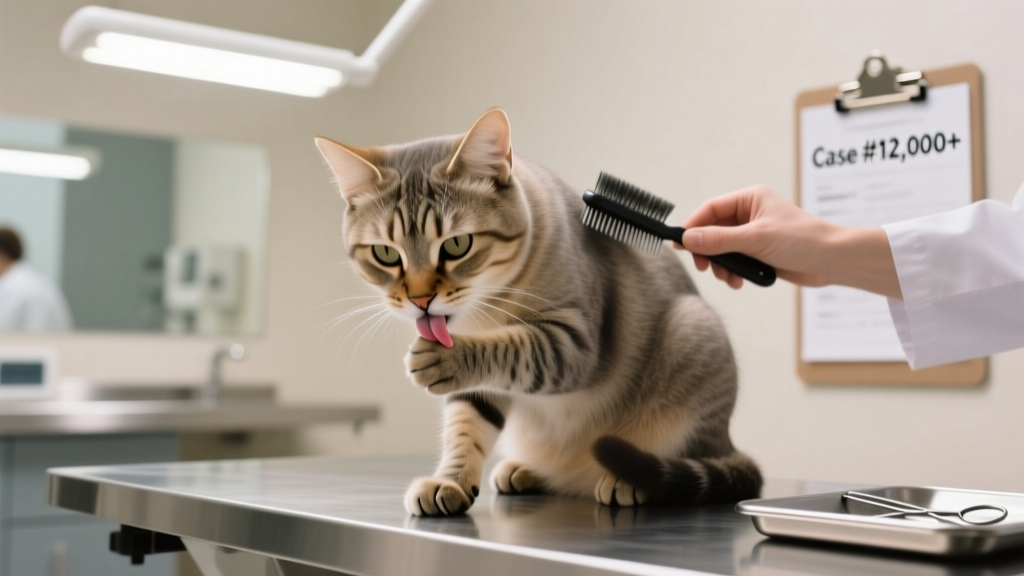
- Excessive Grooming (or Conversely, Neglect): Over-grooming — especially focused on one area (e.g., belly, flank, or base of tail) — often signals localized pain (e.g., abdominal tenderness, skin allergy, or nerve irritation). Under-grooming, meanwhile, suggests profound fatigue or mobility limitation (common in senior cats with osteoarthritis). Case study: Luna, a 9-year-old domestic shorthair, began licking her left hind leg raw. Her owner assumed ‘stress.’ A full workup revealed a micro-fracture in her tibia — invisible on initial X-rays but confirmed via MRI. The licking was her body’s attempt to soothe neuropathic pain.
- Changes in Litter Box Use (Timing, Location, or Posture): This isn’t just ‘outside the box.’ It includes straining without producing, urinating while standing (instead of squatting), or defecating on cool surfaces (tile, bathmat) — all potential signs of urinary discomfort, constipation, or pelvic pain. Dr. Lin notes: “If your cat starts peeing on your bedsheet — which smells like you — it’s often a cry for help, not revenge. They’re seeking comfort near your scent because they feel unsafe elsewhere.”
- Vocalization Shifts (Especially at Night): Increased yowling, howling, or plaintive meowing — particularly after dark — correlates strongly with hypertension, hyperthyroidism, or early-stage cognitive dysfunction (feline dementia). A 2022 Cornell Feline Health Center survey found 73% of owners reporting nocturnal vocalization sought help only after 4+ weeks of disruption — by which time blood pressure or thyroid levels were significantly elevated.
- Social Withdrawal or Aggression Toward Familiar People: Sudden avoidance of favorite people, hiding during routine interactions, or swatting when approached gently often reflects pain anticipation (e.g., ‘she touched my sore hip last time’) or sensory overload (e.g., hearing loss causing startle reactions). Not fear — learned association.
Your Step-by-Step Framework: From Observation to Action in 72 Hours
Don’t wait for ‘obvious’ symptoms. Use this evidence-based, veterinarian-approved framework to triage behavioral side effects systematically:
- Baseline & Document (Day 0–24 hrs): Spend 15 minutes daily noting your cat’s baseline: where they sleep, how many times they use the box, duration/frequency of grooming, interaction thresholds (e.g., ‘tolerates 3 strokes before tail flick’), and vocalization patterns. Use a simple notebook or free app like ‘CatLog.’
- Pattern Mapping (Day 1–48 hrs): Compare new behaviors against your baseline. Ask: Is this *consistent* (happening daily)? *Escalating* (more intense/frequent)? *Context-linked* (only when visitor arrives, after eating, at night)? Consistency + escalation = high priority.
- Ruling Out Pain & Medical Triggers (Day 2–72 hrs): Schedule a vet visit — but go armed. Bring your log. Request a full physical exam *plus* targeted diagnostics: bloodwork (T4, creatinine, SDMA), urinalysis, blood pressure check, and dental exam (90% of cats over age 3 have painful dental disease). Mention *specific observed behaviors* — not just ‘he seems off.’
- Environmental Audit (Ongoing): Simultaneously, assess for stressors: new pets, construction noise, changed litter type, relocated food/water bowls, or even seasonal light shifts affecting circadian rhythm. The ASPCA’s ‘Feline Environmental Needs Assessment’ tool identifies 5 key domains: security, resources, stimulation, human interaction, and territory.
| Step | Action | Tools/Checklist | Expected Outcome |
|---|---|---|---|
| 1. Baseline Capture | Record 5 core behaviors for 24 hours | • Sleep location(s) • Litter box visits & posture • Grooming duration/focus areas • Human interaction tolerance • Vocalization timing/frequency | Clear personal benchmark — no assumptions |
| 2. Pattern Triage | Compare new behavior to baseline; flag consistency + escalation | ✓ Occurs ≥3x/day? ✓ More intense than usual? ✓ Linked to specific trigger (sound/time/person)? | Prioritization: Green (monitor), Yellow (vet consult in 72h), Red (urgent vet) |
| 3. Medical Ruling | Vet visit with documented log + request for targeted tests | • Blood panel (T4, SDMA, BUN/Creat) • Urinalysis + culture • BP measurement • Full oral exam | Identify or rule out pain, metabolic disease, infection, hypertension |
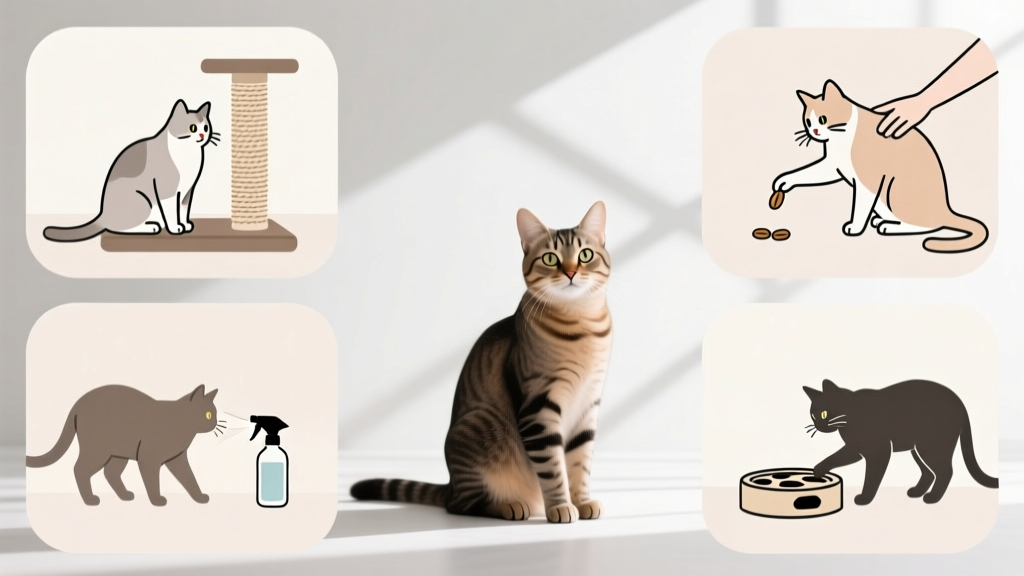
| 4. Stress Reduction | Implement 3 environmental tweaks within 48h | • Add vertical space (cat tree near window) • Separate food/water/litter (≥3 ft apart) • Introduce Feliway Optimum diffuser | Reduce cortisol markers; observe for behavioral improvement in 3–5 days |
Frequently Asked Questions
My cat started biting me gently — is that a behavioral side effect?
Gentle biting (often called ‘love bites’) can be normal social behavior — but if it’s new, frequent, or paired with flattened ears/tail flicking, it’s likely a side effect of overstimulation or pain. Cats have low sensory thresholds; petting that feels soothing to us may cause discomfort if they have underlying arthritis or skin sensitivity. Try shorter sessions (5–10 seconds) and stop *before* tail movement begins. If biting persists or escalates, consult your vet — it may signal undiagnosed dermatitis or joint pain.
Can medications cause behavioral side effects in cats?
Absolutely. Common culprits include corticosteroids (causing increased thirst, restlessness, or aggression), gabapentin (sedation or wobbliness), and certain antibiotics (GI upset leading to irritability). Always ask your vet: ‘What behavioral changes should I watch for?’ and document them. A 2023 review in Veterinary Record found that 22% of adverse drug reactions in cats were first reported by owners as ‘behavioral changes’ — not physical symptoms.
My senior cat is staring blankly at walls — is that dementia or something else?
Staring, disorientation, or apparent ‘spacing out’ can signal feline cognitive dysfunction (FCD), but it’s critical to rule out vision loss (cataracts, retinal degeneration), hypertension-induced brain changes, or even slow-growing intracranial tumors. A thorough ophthalmologic exam and blood pressure check are non-negotiable first steps. If FCD is confirmed, environmental enrichment (food puzzles, gentle play) and prescription diets rich in antioxidants show measurable improvement in 6–8 weeks.
How long should I wait before seeing a vet for a behavioral change?
Rule of 3s: If a behavior change lasts >3 days, occurs >3 times per day, or interferes with basic functions (eating, eliminating, sleeping), schedule a vet visit within 72 hours. Don’t wait for ‘worsening’ — early intervention prevents secondary complications (e.g., cystitis from litter box avoidance, muscle atrophy from reduced mobility).
Debunking 2 Dangerous Myths About Cat Behavior
Myth #1: “Cats don’t get stressed — they’re independent.”
False. Cats experience profound stress — but express it physiologically (e.g., stress cystitis, IBD flare-ups) and behaviorally (hiding, overgrooming), not emotionally like humans. Chronic stress elevates cortisol, suppressing immunity and accelerating disease progression. A landmark 2021 study in Frontiers in Veterinary Science linked prolonged environmental stress to a 3.2x higher risk of developing diabetes mellitus in predisposed cats.
Myth #2: “If my cat is eating and purring, they can’t be in pain.”
Deeply misleading. Purring is a self-soothing mechanism that occurs during pain, anxiety, and healing — not just contentment. Cats maintain appetite longer than dogs or humans with serious illness; many with advanced renal failure or oral cancer continue eating until very late stages. Appetite alone is an unreliable wellness indicator.
Related Topics (Internal Link Suggestions)
- Cat Body Language Dictionary — suggested anchor text: "what does slow blinking mean in cats"
- Feline Stress Signals Checklist — suggested anchor text: "early signs of cat anxiety"
- When to Worry About Cat Litter Box Changes — suggested anchor text: "cat peeing outside the box causes"
- Veterinary Behaviorist vs. Trainer: What’s the Difference? — suggested anchor text: "certified cat behavior consultant"
- Senior Cat Health Monitoring Guide — suggested anchor text: "signs of dementia in older cats"
Conclusion & Your Next Step
Understanding how to understand cat behavior side effects isn’t about becoming a vet — it’s about becoming your cat’s most attentive translator. Those subtle shifts — the extra blink, the avoided lap, the midnight yowl — aren’t noise. They’re data points in a complex, silent language shaped by 10,000 years of evolution. By documenting baselines, triaging patterns, and partnering with veterinary professionals who specialize in feline behavior, you transform confusion into clarity and delay into prevention. So tonight, before bed: spend 5 minutes observing. Note where your cat sleeps. Listen for pauses in purring. Watch how they approach their food bowl. Then, tomorrow, open a notes app or grab a notebook — and start building *their* unique behavioral dictionary. Your cat’s wellbeing isn’t hidden in dramatic symptoms. It’s written in the quiet spaces between their actions — and now, you know how to read it.