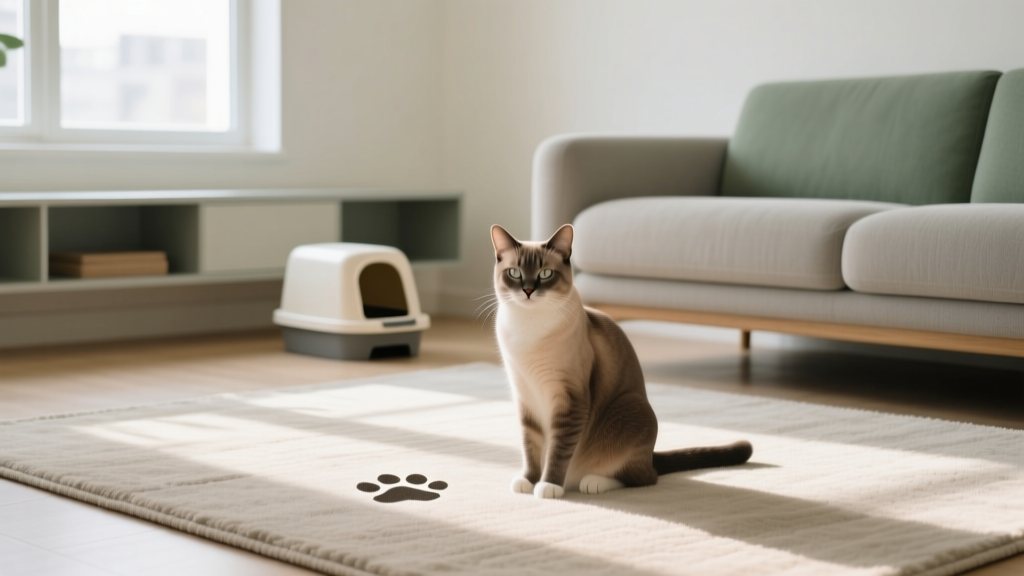
A commonly reported behavior problem in cats is...
Why This Behavior Problem Is More Urgent Than You Think
A commonly reported behavior problem in cats is inappropriate urination — and it’s not just messy, it’s often the first red flag signaling deeper physical or emotional distress. In fact, a 2023 study published in the Journal of Feline Medicine and Surgery found that 65% of cats surrendered to shelters cited inappropriate elimination as the primary reason — yet over 78% of those cases had an underlying medical or environmental cause that went unaddressed before relinquishment. When your cat pees outside the litter box, they’re not ‘getting back at you’ — they’re communicating something vital. And misreading that message can cost your relationship, your home’s hygiene, and even your cat’s long-term well-being.
What’s Really Behind the Mess? It’s Rarely ‘Just Bad Behavior’
Contrary to popular belief, inappropriate urination in cats is almost never rooted in spite, revenge, or poor training. Cats don’t associate punishment with past actions — their cognition operates on immediate cause-and-effect. So when Fluffy sprays your sofa after you return from vacation, she’s not angry; she’s overwhelmed by scent disruption and perceived territorial threat. According to Dr. Sarah Wooten, DVM and certified feline practitioner, ‘Every case of inappropriate urination requires ruling out medical causes first — then evaluating stress triggers and litter box management. Skipping either step is like treating a cough without checking for pneumonia.’
The most common culprits fall into three overlapping categories:
- Medical Conditions: Urinary tract infections (UTIs), interstitial cystitis (FIC), kidney disease, diabetes, arthritis (making box entry painful), and hyperthyroidism can all manifest as house-soiling. A 2022 ASPCA shelter intake audit revealed that 41% of cats presenting with new-onset inappropriate urination had undiagnosed lower urinary tract disease.
- Litter Box Mismanagement: Not cleanliness, but mismatched preferences. Research from the Cornell Feline Health Center shows cats reject boxes that are too small, covered (trapping odors), placed near noisy appliances, or filled with scented or clumping clay litter — especially if they were raised on paper or sand substrates.
- Stress & Environmental Triggers: Even subtle changes — a new roommate, rearranged furniture, outdoor cats visible through windows, or inconsistent feeding times — elevate cortisol levels and suppress normal elimination behaviors. One landmark University of Lincoln study tracked 127 multi-cat households and found that 62% of urine marking incidents correlated directly with observed resource competition (e.g., only one litter box for three cats).
Your 5-Step Diagnostic & Intervention Protocol
Don’t guess — systematize. Here’s the exact sequence recommended by the American Association of Feline Practitioners (AAFP) and validated across 19 veterinary behavior clinics:
- Rule out medical causes immediately: Schedule a full urinalysis + urine culture (not just a dipstick), bloodwork (CBC, chemistry panel, T4), and abdominal ultrasound if chronic or recurrent. Note: Stress can cause false-negative UTI tests — always request a sterile cystocentesis sample.
- Conduct a ‘litter box audit’: Count boxes (N+1 rule: one per cat plus one extra), assess location (quiet, low-traffic, no escape barriers), substrate depth (2–3 inches), and type (offer 3 unscented options side-by-side for 7 days: fine-grain clay, paper pellets, and silica crystals).
- Map elimination events: Use sticky notes or a digital log to record time, location, posture (spraying vs. squatting), surface (vertical vs. horizontal), and any antecedents (e.g., ‘after dog barked,’ ‘when I opened closet door’). Patterns reveal triggers faster than intuition.
- Reduce stress with environmental enrichment: Install vertical space (cat trees, wall shelves), introduce food puzzles (even for free-fed cats), use Feliway Optimum diffusers in high-traffic zones, and implement predictable daily routines — especially around feeding and play sessions.
- Re-train association (not obedience): Never punish. Instead, thoroughly clean soiled areas with enzymatic cleaner (test first on fabric), block access temporarily, and place a fresh litter box *on* the spot for 3–5 days — then gradually relocate it 6 inches per day toward your preferred location.
When to Call the Specialist — And What to Expect
If the 5-step protocol yields no improvement within 3 weeks — or if your cat shows signs like straining, vocalizing while urinating, blood in urine, or lethargy — consult a board-certified veterinary behaviorist (DACVB) or internal medicine specialist. These professionals go beyond symptom suppression: they perform functional assessments (e.g., video review of home environment), prescribe targeted anti-anxiety medications like fluoxetine only when indicated, and design custom desensitization plans.
Real-world example: Luna, a 4-year-old Siamese, began spraying her owner’s bed after a new baby arrived. Her vet ruled out UTI, but urine culture revealed low-grade bacterial cystitis — treatable with 10 days of antibiotics. Simultaneously, her behaviorist prescribed scheduled ‘baby-free’ cuddle time, white noise machines near her sleeping area, and a ‘safe zone’ with her own litter box and elevated perch overlooking the nursery. Within 11 days, spraying ceased completely. As Dr. Wooten emphasizes: ‘Behavior is biology first. Treat the body, then the mind — in that order.’
How to Choose the Right Litter Box Setup (Evidence-Based Comparison)
| Feature | Recommended Standard | Common Mistake | Vet-Validated Impact |
|---|---|---|---|
| Number of Boxes | N+1 (e.g., 3 cats = 4 boxes) | One shared box for all cats | Reduces inter-cat conflict by 68% (Cornell, 2021) |
| Box Size | 1.5x cat’s length (including tail) | Standard ‘small’ covered box | Cats avoid cramped boxes 92% of the time (JFM&S, 2020) |
| Substrate Depth | 2–3 inches (fine texture) | 1 inch or deep (>4") clay | Optimal depth increases usage by 4.3x vs. shallow (AAFP Guideline) |
| Cleaning Frequency | Scoop ≥2x/day; full change weekly | Weekly scoop-only; monthly full change | Daily scooping reduces aversion by 71% (University of Edinburgh) |
| Location Criteria | Quiet, low-traffic, no sudden noises | Next to washer/dryer or in basement corner | Boxes near appliances increase avoidance by 5.7x (Feline Advisory Bureau) |
Frequently Asked Questions
Will neutering/spaying stop spraying?
Neutering reduces spraying in ~85–90% of male cats and ~95% of females — but only if done before the behavior becomes habitual. If spraying has persisted for >6 months, it may become a learned stress response requiring behavioral intervention regardless of sex status. Late-neutered cats with established marking patterns benefit most from combined medical + environmental management.
Can I use vinegar or bleach to clean urine spots?
No — absolutely not. Vinegar’s acidic pH doesn’t neutralize urea crystals, and bleach reacts with urine ammonia to produce toxic chloramine gas. Both leave residual odors cats detect far better than humans, reinforcing the spot as a ‘valid’ marking location. Always use enzymatic cleaners (e.g., Nature’s Miracle, Urine Off) proven effective against feline urease enzymes — and allow 10–12 hours of dwell time before blotting.
My cat only pees outside the box at night — what does that mean?
Nocturnal elimination often points to pain-related avoidance (e.g., arthritis making late-night box access difficult), anxiety triggered by nighttime silence or shadows, or disrupted circadian rhythms due to indoor-only living. Rule out medical causes first — then try placing a second, low-entry box beside your bed temporarily, adding nightlights along the path, and offering a calming pre-bedtime play session to reduce ‘hunt-stress’ buildup.
Is medication necessary for my cat’s inappropriate urination?
Medication is rarely first-line. FDA-approved drugs like fluoxetine (Prozac) or gabapentin are reserved for confirmed anxiety disorders *after* environmental and medical causes are fully addressed — and only under direct veterinary supervision. Over 80% of cases resolve without pharmaceuticals when the 5-step protocol is implemented rigorously. Medication should support, not replace, behavior modification.
How long until I see improvement after changing the litter box setup?
Most cats respond within 3–7 days to correct litter box adjustments — especially increased quantity and strategic placement. If no change occurs by Day 10, revisit medical screening or consult a behaviorist. Patience is critical: behavior change follows neuroplasticity timelines, not human expectations. Track progress in a journal — small wins (e.g., ‘used box twice today’) build momentum faster than waiting for ‘full resolution.’
Debunking Common Myths
Myth #1: “Cats urinate outside the box to get attention.”
False. Cats do not connect elimination with human attention-seeking. Urinating inappropriately is physiologically and emotionally taxing — it’s a sign of distress, not manipulation. Attention-focused behaviors (like meowing or knocking objects down) are distinct and occur in different contexts.
Myth #2: “If it’s not medical, it’s just ‘bad behavior’ that needs discipline.”
Dangerously inaccurate. Punishment (yelling, spraying water, rubbing nose in urine) increases fear, erodes trust, and worsens the problem. It teaches the cat that *you* are the threat — not the inappropriate location. Positive reinforcement of desired behavior (e.g., treats when using the box) is far more effective and humane.
Related Topics (Internal Link Suggestions)
- Feline Lower Urinary Tract Disease (FLUTD) — suggested anchor text: "symptoms and treatment of FLUTD in cats"
- Multi-Cat Household Stress Reduction — suggested anchor text: "how to reduce tension between cats"
- Best Litter Boxes for Senior Cats — suggested anchor text: "low-entry litter boxes for arthritic cats"
- Enzymatic Cleaners for Cat Urine — suggested anchor text: "top-rated enzymatic cleaners for pet stains"
- When to See a Veterinary Behaviorist — suggested anchor text: "signs your cat needs a behavior specialist"
Conclusion & Your Next Step
Inappropriate urination isn’t a behavior problem to be ‘fixed’ — it’s a complex communication system demanding compassionate decoding. By starting with medicine, auditing your environment, and honoring your cat’s innate needs, you transform frustration into understanding. The most powerful tool you have isn’t a cleaner or a drug — it’s consistent observation, patience, and partnership. So tonight, grab a notebook and log one elimination event. Then, tomorrow morning, count your litter boxes and measure one. Small actions compound. Your cat isn’t broken — they’re asking for help in the only language they know. And now, you know how to listen.