Why Cats Sit on the Car Dashboard
You’re loading groceries, your keys are in your mouth (briefly), and the car door is open just long enough for your cat to stage a tiny, silent heist. Before you can say, “Hey! Get out of there,” they’ve already hopped onto the driver’s seat, strolled across the center console like they own the place, and—of course—settled onto the dashboard with the confidence of a seasoned road-tripper.
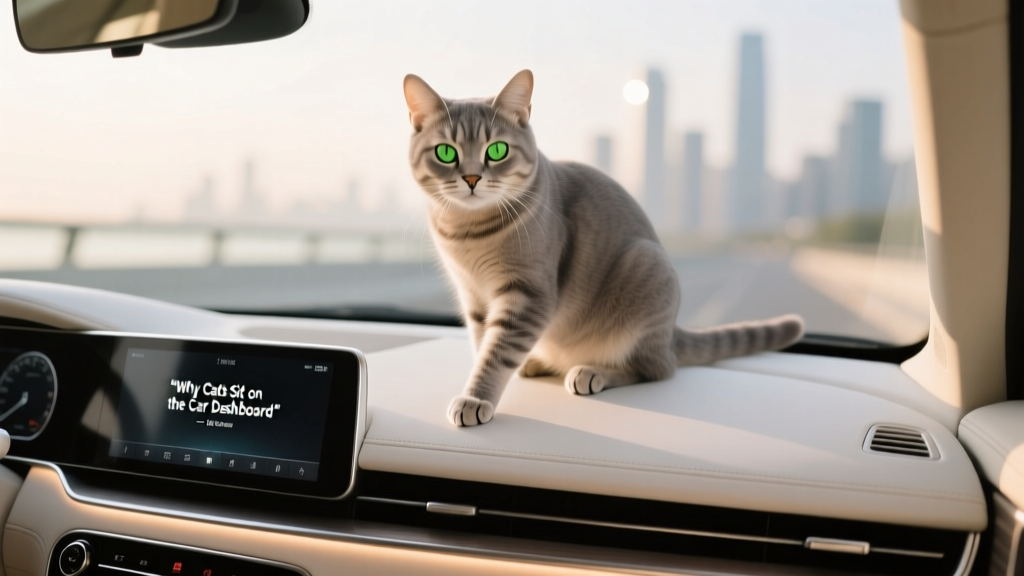
If you’ve ever watched your cat perch on the car dash like a fuzzy hood ornament, you’re not alone. It’s one of those behaviors that feels random until you look at it through a cat’s eyes: warm, high, interesting, and full of information. The dashboard isn’t just “the front of the car.” To a cat, it’s prime real estate.
1) The scientific (and evolutionary) “why” behind dashboard sitting
Cats are built to seek vantage points. Their wild ancestors survived by climbing and perching—scanning for prey, spotting predators early, and keeping track of their environment. Even though your cat’s biggest “hunt” may be a dust bunny, the instincts are still there.
A dashboard checks several ancient feline boxes:
- Height + visibility: Cats feel safer when they can see what’s happening. A dashboard offers a panoramic view compared to the footwell or the back seat.
- Warmth: Cars trap heat, and dashboards warm quickly in sunlight. Cats are heat-seekers by design; warmth supports muscle comfort and energy conservation.
- Territory surveillance: Cats are territorial managers. From the dash, they can “monitor” the outside world and keep tabs on you, too.
- Novelty + information: Cats process the world largely through scent and observation. A car is a rolling collage of smells and sights: outdoors, other animals, food stops, your stress pheromones, the neighbor’s dog you’d rather forget.
In short: dashboard sitting is often a mashup of instinct (vantage point), comfort (heat), and curiosity (sensory input).
2) A detailed breakdown: different contexts that change the meaning
Not all dashboard sits are created equal. The “why” can shift depending on what’s happening before, during, and after the dash perch.
When the car is parked at home
If your cat darts into the car while it’s stationary, the dashboard may be about curiosity and exploration. Cats are drawn to small “new worlds” inside your home territory: closets, suitcases, cardboard boxes, and yes—cars. It’s an enclosed space with unfamiliar textures and concentrated scents. The dash is simply the best seat in the house.
Common scenario: You’re cleaning the car or unloading bags. Your cat slips in and immediately climbs forward, sniffing the vents, rubbing their cheek on the windshield edge, then loafing like, “I live here now.”
When sunlight is streaming through the windshield
This one is pure feline solar engineering. The dashboard can become a sun-baked warming tray. Many cats prefer warm surfaces because it’s comforting and energy-efficient. Their bodies run higher than ours, and warmth helps keep muscles relaxed.
Common scenario: Your cat ignores three expensive beds inside, yet chooses the dashboard because it’s basically a heated lounge chair without the electricity bill.
When you’re preparing for a trip
If the carrier comes out and your cat runs to the dashboard, you may be seeing stress + a search for control. Some cats respond to looming travel by moving to a spot that gives them a better view and a better sense of “what’s happening.”
Translation: “I don’t like surprises. I’m going to watch your hands.”
When the car is moving (or about to)
This is where behavior and safety collide. If your cat tries to sit on the dashboard while the car is moving, it can still be motivated by instinct—high perch, visual monitoring—but it can also indicate anxiety. An anxious cat may seek the highest point, cling to surfaces, or try to get closer to “escape routes” (windows), even though those aren’t actual exits.
Sometimes, it’s also the opposite: a very confident, curious cat who wants to watch the world scroll by like feline television.
When your cat only does it in certain places
If dashboard sitting happens only in a driveway, at a particular parking lot, or near a specific person, the behavior may be tied to associations: other animals nearby, a previous scary trip, or the smell of another pet.
3) What dashboard sitting says about your cat’s mood
Your cat’s posture and facial expression tell you more than the location does. Here are a few common “dashboard moods”:
- Loaf position (paws tucked), half-closed eyes: Comfort and calm. Your cat thinks the dashboard is cozy and safe.
- Sitting tall, ears forward, whiskers neutral: Curious and engaged. They’re observing, not worried.
- Low crouch, ears slightly sideways, wide pupils: Uncertain or anxious. They may be bracing for movement or sound.
- Rapid scanning, tail flicking, tense body: Overstimulated. The outside world may feel like too much, too fast.
- Rubbing cheeks/chin on the dash or windshield edge: Scent marking. This is a “mine” gesture—comforting for them and often a sign they feel ownership or familiarity.
One of my favorite cat truths: a cat can be brave and nervous at the same time. A dashboard sit may look bold, but the body language will reveal whether it’s confident curiosity or a coping strategy.
4) Related behaviors you might also notice
If your cat loves the dashboard, you may recognize these cousin behaviors around the house:
- Window-sill surveillance: Watching birds, neighbors, delivery trucks—anything that moves.
- Sitting on warm electronics: Routers, laptops, gaming consoles (the “heat + attention” combo platter).
- Perching on the highest furniture: Top of the couch, wardrobe shelves, fridge (yes, really).
- Claiming your “in-between” spaces: Suitcases, laundry baskets, open drawers—temporary territories are exciting.
- Cheek rubbing on new items: Marking novelty to make it feel safe and familiar.
All of these behaviors come from the same internal goals: find safety, find comfort, gather information, and maintain territory.
5) When dashboard sitting is normal vs. when it’s a concern
Normal:
- Your cat explores the car when it’s parked and supervised.
- They hop up, sniff around, then settle briefly and seem relaxed.
- They choose the dashboard mainly when it’s sunny and warm.
Potential concerns:
- Travel panic: Heavy panting, drooling, frantic pacing, yowling, trying to wedge under pedals, or attempting to escape through windows.
- Unsafe fixation: Your cat repeatedly tries to reach the dashboard while the car is moving, increasing risk of driver distraction or injury.
- Heat risk: Cats can overheat quickly in a warm car. A sunny dashboard can become dangerously hot—especially if the car is off and the cabin temperature climbs.
- Sudden behavior change: A cat who never explored the car before but suddenly insists on sitting in it could be responding to stressors at home or discomfort that makes them seek new resting spots. If it’s paired with appetite changes, hiding, aggression, or litter box issues, check in with your veterinarian.
Even if your cat looks composed, remember: airbags deploy fast and hard. A cat on the dashboard is in a high-risk zone if the car is in motion.
6) Tips for responding (and redirecting safely)
You can respect the instinct while setting boundaries that keep everyone safe.
Make the “safe spot” more appealing than the dashboard
- Use a secured carrier or crash-tested pet restraint: Place it on the back seat and make it inviting—soft bedding, a familiar-smelling blanket, and occasional treats when the car is parked.
- Practice “car = calm” sessions: Sit in the parked car for 2–5 minutes, feed a few treats, then go back inside. No engine. No trip. This reduces the “car predicts vet” effect.
- Try a covered carrier for visual stress: Some cats relax when visual input is reduced. Others do better seeing out. Test what your cat prefers.
If your cat is already on the dashboard (parked car)
- Avoid sudden grabbing: It can turn a casual adventure into a wrestling match and teach your cat that cars are scary.
- Lure with a treat or toy: Guide them toward the carrier or out of the car using a calm voice and a high-value reward.
- Close access proactively: If your cat bolts into the car often, pause before opening doors, and consider training a “wait” cue at thresholds.
If your cat attempts the dashboard while the car is moving
- Prioritize safety: Pull over as soon as it’s safe. Secure your cat in a carrier/restraint before continuing.
- Don’t “tough it out”: A loose cat in a moving car can become a projectile in sudden stops and can interfere with pedals or steering.
Support anxious travelers
If your cat seems stressed during travel, discuss options with your veterinarian. Some cats benefit from behavior modification plans, pheromone products, anti-nausea support, or prescribed calming medications for necessary trips.
7) Fun facts (and a few research-leaning tidbits)
- Cats are microclimate experts: They naturally seek warmer zones to conserve energy. That’s why sunbeams are basically scheduled appointments.
- Height changes a cat’s confidence: Many cats feel more secure when they can observe from above rather than being approached at ground level. It’s part safety strategy, part preference.
- Scent marking is self-soothing: When cats rub their cheeks on objects, they’re depositing facial pheromones that help the environment smell “right.” A car full of shifting scents can trigger extra rubbing.
Also: if your cat has ever stared out the windshield like a tiny taxi driver, you’ve witnessed a masterclass in environmental monitoring. They aren’t judging your parking. Probably.
FAQ: Why Cats Sit on the Car Dashboard
1) Is it normal for my cat to like the dashboard?
Yes—especially when the car is parked. The dashboard is warm, elevated, and offers a great view. It’s a very “cat-approved” spot from an instinct perspective.
2) Does my cat sitting on the dashboard mean they want to go for a ride?
Sometimes, but not always. Some cats associate the car with adventure (or at least novelty). Others are simply exploring or enjoying the heat. Look for signs of eagerness—relaxed body, curiosity, calm behavior—rather than tension or hiding.
3) My cat only does this right before we leave—what does that mean?
It can mean your cat has learned the routine and is either curious or anxious about what comes next. If you notice wide pupils, crouching, tail flicking, or vocal stress, they may be trying to cope by getting a better view and more control.
4) Is it safe to let my cat sit on the dashboard while I drive?
No. It’s unsafe due to airbags, sudden stops, and the risk of distracting the driver. A secured carrier or crash-tested restraint in the back seat is the safer option.
5) How can I stop my cat from jumping onto the dashboard?
Prevent access when possible (close doors quickly, train threshold “wait”), and make an alternative spot more rewarding (a comfortable carrier with treats and a familiar blanket). If your cat is anxious, gradual car-desensitization helps more than scolding.
6) Why does my cat rub their face on the dashboard?
That’s scent marking with facial glands—a normal way cats make a space smell familiar and comforting. It’s often a sign your cat is trying to “claim” the area or reduce stress by surrounding themselves with their own scent.
If your cat has a strong opinion about the dashboard—whether it’s their favorite sun lounge or their anxiety lookout post—we’d love to hear about it. Share your cat’s funniest car adventures (or most dramatic dashboard poses) with the Cat Lovers Base community at catloversbase.com.