What Does Cat Behavior Mean? 12 Subtle Signs You’re...
Why Understanding What Cat Behavior Means Is the #1 Skill Every Cat Owner Needs Today
If you've ever stared at your cat mid-blink, watched them suddenly sprint at 3 a.m., or wondered whether that slow blink is love or exhaustion — you're not alone. What does cat behavior mean? That question isn’t just curiosity — it’s the cornerstone of trust, safety, and lifelong companionship. Cats don’t speak our language, but they communicate constantly: through micro-expressions, posture shifts, vocal tonality, and even scent marking. Yet studies show over 68% of first-time cat owners misinterpret at least three critical signals — leading to avoidable stress, behavioral issues, and even unnecessary vet visits. In fact, the American Association of Feline Practitioners reports that up to 40% of ‘problem behaviors’ like urine marking or aggression stem not from defiance, but from unmet needs masked by misunderstood cues. This guide cuts through the myth and delivers actionable, veterinarian-validated decoding — so you respond with empathy, not confusion.
The Truth Behind the Tail: Decoding Posture & Movement
A cat’s tail is their most expressive limb — and also the most frequently misread. Unlike dogs, who wag tails to signal friendliness, cats use tail position and motion as precise emotional barometers. A high, upright tail with a gentle tip curl? That’s pure confidence and greeting — often called the 'question mark' tail, and it’s your cat’s version of a handshake. But a tail held low and tucked? That’s anxiety or submission. And here’s where many owners slip up: rapid, forceful tail flicking at the base (not just the tip) isn’t ‘playful energy’ — it’s a red-flag warning sign of rising agitation. Dr. Sarah Wooten, DVM and certified feline behavior specialist, explains: ‘That flick is the feline equivalent of clenching fists. It means “I’m about to lose my cool — back off now.” Ignoring it escalates to hissing, swatting, or avoidance.’
Real-world example: Maya, a rescue tabby adopted after shelter stress, would flick her tail rapidly when her owner reached to pet her head — yet the owner assumed she was ‘just being playful.’ After recording interactions and consulting a veterinary behaviorist, they realized Maya associated head-touching with past handling trauma. Switching to chin-and-cheek scratches *only* when her tail was still and upright reduced her defensive swats by 92% in three weeks.
Pro tip: Watch the tail *in context*. A puffed tail during play? Likely excitement. A puffed tail while hiding behind the couch? Fear response. Always pair tail cues with ear position, pupil size, and body tension.
Vocalizations: Beyond ‘Meow’ — The Hidden Grammar of Cat Sounds
Here’s a surprising truth: adult cats rarely meow at other cats — they meow almost exclusively for humans. That means every ‘meow’ is tailored communication, shaped by your responses over time. But not all meows are equal. Researchers at the University of Sussex analyzed over 2,000 cat vocalizations and found distinct acoustic patterns tied to specific human-directed needs:
- Short, high-pitched ‘mew’ — request for attention or food (often used near feeding time or when you’re on your phone)
- Long, drawn-out ‘mrrrroooow’ — frustration or protest (e.g., closed door, empty food bowl)
- Low-pitched, guttural ‘growl-meow’ — discomfort or pain (common before vet visits or when touched in sore areas)
- Purring — not always contentment! Studies confirm cats purr at frequencies (25–150 Hz) shown to promote bone density and tissue repair — meaning they’ll purr when injured, stressed, or giving birth.
Dr. Mikel Delgado, a certified applied animal behaviorist, emphasizes: ‘Purring during a vet exam doesn’t mean your cat is relaxed — it may be self-soothing during acute stress. Look at the whole picture: flattened ears, dilated pupils, and rigid posture override the purr.’
Try this: For one week, log each meow — time, location, your action before/after, and your cat’s body language. You’ll quickly spot patterns: Does that ‘demand meow’ only happen near the pantry? Does the ‘door meow’ intensify when rain hits the window? Pattern recognition builds fluency faster than any app.
Eyes, Ears & Whiskers: The Micro-Expression Triad
Cats broadcast emotion through three tightly linked features: eyes, ears, and whiskers. Misreading one distorts the entire message.
Slow blinking — often called the ‘cat kiss’ — is genuine affection and trust. When your cat locks eyes and slowly closes and opens them, they’re signaling safety. Replicate it: hold soft eye contact, then blink slowly. Many cats will blink back — a two-way bond reinforcement validated in a 2020 study published in Scientific Reports.
Ear position tells an urgent story: forward and alert = engaged curiosity; sideways (‘airplane ears’) = uncertainty or mild stress; flat-back (‘helicopter ears’) = fear or aggression. But crucially — ears alone aren’t enough. A cat with forward ears *and* dilated pupils may be hunting prey. Same ears + constricted pupils? Possibly overstimulation.
Whisker placement is subtler but revealing. Whiskers forward and slightly fanned = interest or focus. Whiskers pulled tightly against cheeks = fear or defensiveness. And if whiskers twitch rapidly while the cat is resting? They’re likely processing sensory input — not necessarily distressed, but mentally active.
Mini case study: Leo, a senior Siamese, began hiding after his owner installed new hardwood floors. His ears stayed forward, but his whiskers were pinned back and his pupils remained wide — classic signs of chronic low-grade stress, not acute fear. A feline-certified behaviorist recommended vertical space (cat trees), pheromone diffusers, and gradual floor exposure. Within 10 days, his whiskers relaxed and he resumed sunbathing in the same spot.
When Behavior Signals Health: The Critical Overlap
Some behaviors aren’t just emotional — they’re physiological alarms. What does cat behavior mean when it changes *suddenly*? That’s your cue to investigate health.
According to the International Society of Feline Medicine, sudden litter box avoidance (especially outside the box) is the #1 behavioral red flag for urinary tract disease, kidney issues, or arthritis pain. Likewise, increased vocalization at night in older cats correlates strongly with cognitive dysfunction syndrome (feline dementia) or hypertension — both treatable if caught early.
Key rule: Any persistent change in baseline behavior lasting >72 hours warrants a vet visit — even without obvious physical symptoms. As Dr. Tony Buffington, professor of veterinary clinical sciences, states: ‘Cats hide illness masterfully. Behavior is their primary symptom report. If your cat stops greeting you at the door, grooms less, or sleeps in new locations, listen — it’s data, not drama.’
| Behavior | Most Likely Meaning | What to Do Next | When to Call the Vet |
|---|---|---|---|
| Kneading with paws + purring | Contentment, security, or nesting instinct (rooted in kitten nursing) | Offer soft blankets; gently stroke if welcomed | Rarely urgent — unless kneading becomes obsessive or causes injury |
| Sudden staring + freezing + tail-tip twitch | Detecting prey (real or imagined) — high-focus hunting mode | Observe quietly; avoid startling; offer interactive toy afterward | No action needed — unless freezing lasts >5 mins or repeats hourly |
| Excessive licking of one body area | Pain, allergy, or stress-induced dermatitis | Check for redness, swelling, fleas; reduce environmental stressors | Within 24–48 hrs — especially if hair loss or skin breaks appear |
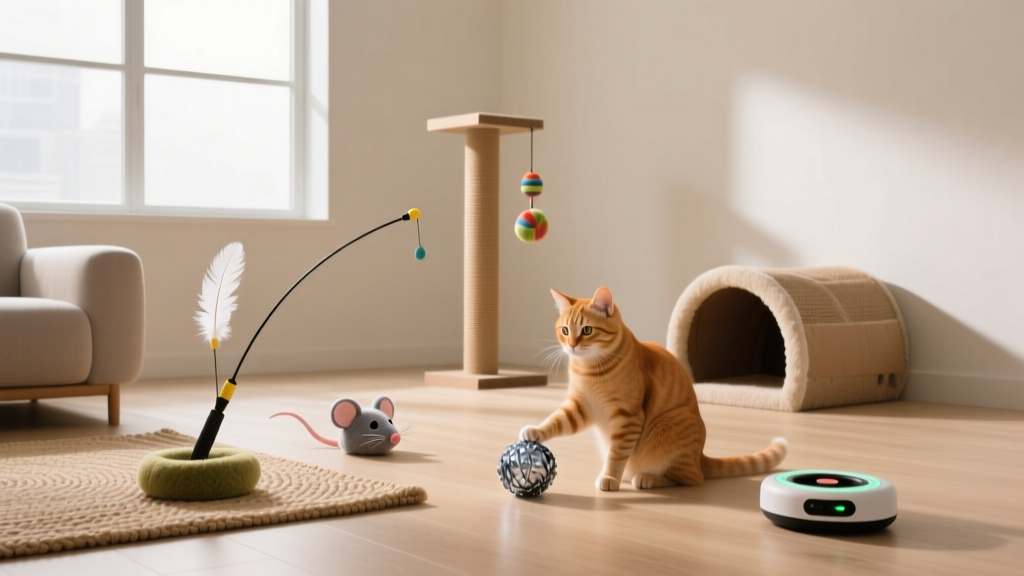
| Bringing dead or ‘gift’ prey to you | Instinctual teaching behavior — sees you as inept hunter needing instruction | Thank calmly; dispose discreetly; provide daily 15-min hunt-play sessions | Not urgent — but if indoor-only cat brings live prey, check window/door security |
| Chattering teeth at windows | Frustration + predatory arousal (‘vacuum activity’) | Redirect with wand toys; add bird feeder outside *away* from windows to satisfy curiosity safely | No — unless accompanied by vocal distress or self-injury |
Frequently Asked Questions
Why does my cat stare at me silently — is it threatening?
Not usually. Silent staring is often curiosity or gentle attention-seeking — especially if paired with slow blinks or upright tail. However, if the stare comes with dilated pupils, rigid posture, and no blinking, it may indicate overstimulation or mild anxiety. Try breaking eye contact softly and offering a treat or chin scratch. If the stare persists with tension, assess recent changes (new pets, noises, rearranged furniture) that might be triggering vigilance.
My cat rolls onto their back and shows their belly — does that mean ‘pet me’?
Surprisingly, no — not always. Exposing the belly is a sign of deep trust, but it’s also the most vulnerable position. Most cats dislike belly rubs and will swipe or bite if touched there. Instead, interpret it as ‘I feel safe around you’ — and respond with respectful distance or gentle cheek/neck strokes. Only a small percentage of cats truly enjoy belly rubs, and they’ll actively nudge your hand there or relax fully when touched.
What does it mean when my cat bites me gently during petting?
This is a classic ‘overstimulation bite’ — not aggression. Cats have sensitive nerve endings, and prolonged petting (especially along the back or tail base) can become physically uncomfortable. The gentle bite is their polite ‘stop’ signal. Learn your cat’s threshold: watch for tail flicking, skin twitching, flattened ears, or sudden stillness. End petting *before* the bite — reward calm disengagement with treats. Over time, you can gradually increase tolerance with positive reinforcement.
Is it normal for my cat to sleep in weird positions — like upside down or curled tight?
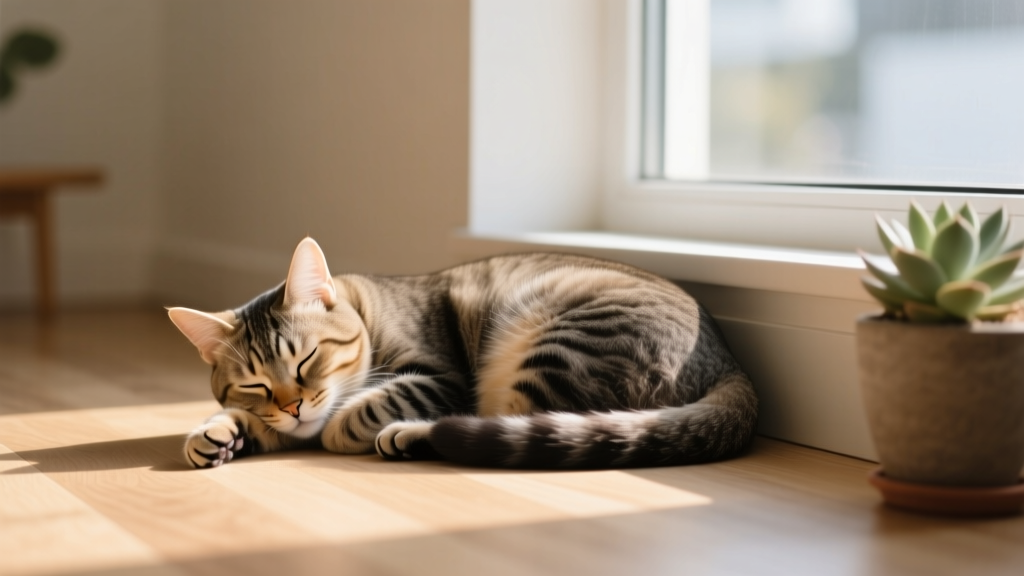
Yes — and it reveals comfort level. A cat sleeping on their back with paws in the air feels completely safe (exposing their belly). A tightly curled ‘loaf’ position conserves heat and offers protection — common in cooler environments or when resting lightly. However, if your cat suddenly switches from loose sprawls to constant tight curling *and* seems lethargic or avoids interaction, it could indicate pain or illness — worth a vet check.
Why does my cat bring me socks, pens, or plastic bags?
This mimics prey-caching behavior. Your cat views these items as ‘kills’ to share or store — especially if they’re soft, scented with your smell, or make crinkly sounds. It’s a compliment (you’re part of their family unit), not mischief. Redirect by offering appropriate ‘prey’ toys: fuzzy mice, crinkle balls, or feather wands. Never punish — instead, praise and play when they interact with approved items.
Common Myths About Cat Behavior
Myth #1: “Cats are aloof and don’t form strong bonds.”
False. Neuroimaging studies (2022, University of Tokyo) confirm cats form secure attachments to caregivers comparable to dogs and infants — measured by reduced stress hormones and seeking proximity during novelty tests. Their independence reflects evolutionary self-reliance, not emotional detachment.
Myth #2: “If a cat purrs, they must be happy.”
Incorrect. As noted earlier, cats purr during labor, injury, fear, and recovery. Purring is a self-regulatory mechanism — like human humming when nervous. Always assess context: body language, environment, and recent events tell the real story.
Related Topics (Internal Link Suggestions)
- Understanding Cat Body Language — suggested anchor text: "cat body language guide"
- Why Does My Cat Bite Me Gently? — suggested anchor text: "why does my cat bite me"
- How to Stop Cat Aggression Toward People — suggested anchor text: "cat aggression solutions"
- Signs of Pain in Cats That Owners Miss — suggested anchor text: "hidden signs of cat pain"
- Best Toys to Satisfy Natural Hunting Instincts — suggested anchor text: "cat hunting toys"
Conclusion & Your Next Step
Understanding what does cat behavior mean isn’t about memorizing a dictionary — it’s about cultivating presence, pattern awareness, and compassionate response. Every flick, blink, meow, and pause holds meaning — once you know how to listen. You don’t need a degree to build this fluency. Start today: choose *one* behavior you’ve misread (tail flicks? nighttime yowling? sudden hiding?) and observe it for 48 hours — noting time, triggers, and your cat’s full-body cues. Then compare notes with our decoding table above. In under a week, you’ll spot shifts you never noticed before. Ready to go deeper? Download our free 7-Day Cat Behavior Tracker (with printable logs and vet-approved interpretation prompts) — and transform confusion into connection, one accurate read at a time.