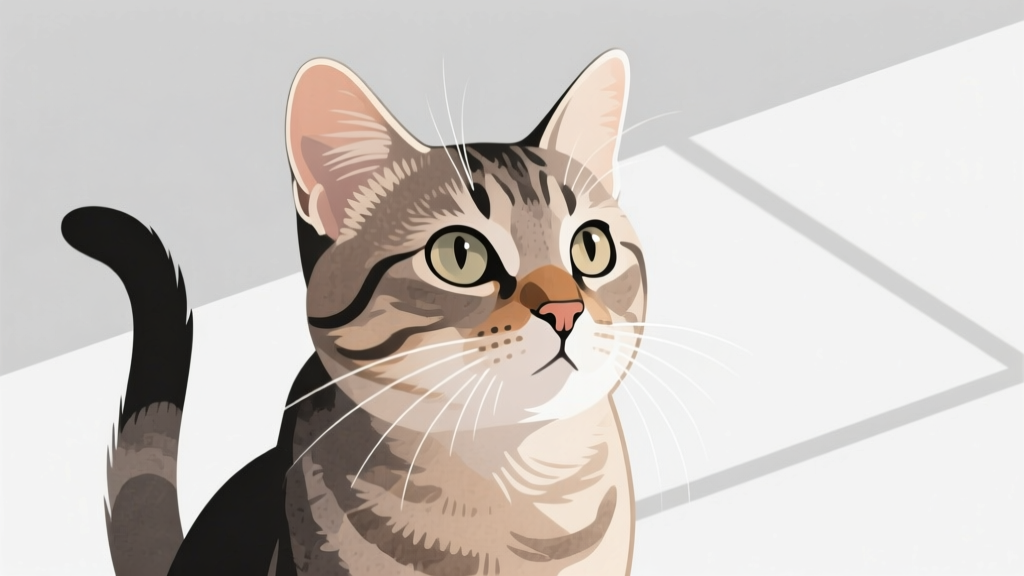
Reading Your Cat
The first time I met Barnaby, a 6-year-old rescue tabby, he sat perfectly still on the exam table and stared at me without blinking. His tail wrapped neatly around his paws. To anyone unfamiliar, he looked relaxed. But his ears were rotated a full 45 degrees outward, his pupils were dilated to roughly 70% of the iris, and the whiskers on his left side were pushed forward while the right side stayed flat against his cheek. Barnaby wasn't calm. He was conflicted, curious but guarded. Ten minutes later, after I stopped making direct eye contact and let him sniff my stethoscope, he stood up, stretched, and rubbed his cheek against my forearm. The consultation went smoothly after that.
That moment illustrates something most cat owners learn too late: cats are constantly talking. They're just doing it in a language built around micro-movements, scent, and spatial positioning rather than sound. Once you learn to read the signals, an entirely different layer of communication opens up. And it changes everything about how you live with your cat.
The Tail Tells More Than You Think
A cat's tail functions as both a signal flag and a balance mechanism. But the signaling side is what matters most for daily interaction. Research published in Behavioural Processes documented over 25 distinct tail positions in domestic cats, each carrying different meanings depending on context.
The Straight-Up Greeting
When a cat approaches you with its tail held vertically, tip occasionally hooked forward like a question mark, that's a friendly greeting. This behavior traces back to kittenhood. Kittens raise their tails for their mothers to inspect, and adult cats carry the gesture forward as a social signal. A cat walking into a room with a vertical tail is announcing its presence and asking for acknowledgment. Roughly 90% of cats display this behavior toward people they trust, according to observational data from the Feline Behavior Solutions consulting group (2024).
Here's the thing most people miss: the difference between a straight-up tail and one that's up but quivering. A steady vertical tail means "hello." A quivering vertical tail usually means excitement, and in unneutered males, it can signal spraying behavior. If your cat backs up against the wall with a quivering tail, you'll want to redirect it before it marks the surface.
The Puffed Bottle Brush
The classic Halloween cat pose, with tail puffed to twice its normal diameter, is piloerection in action. Tiny muscles called arrector pili contract at the base of each hair, making the cat look as large as possible. This is a defensive display, not an aggressive one. A puffed-up cat is trying to avoid a confrontation by looking intimidating enough to deter the threat.
The context matters enormously. A kitten puffing its tail during play is mimicking adult behavior and learning boundaries. An adult cat doing it when a stranger enters the house is genuinely frightened. The response should be completely different: ignore the playing kitten, but give space to the frightened adult.
Low, Tucked, or Thumping
A tail held low to the ground or tucked between the legs signals fear or submission. A tail that thumps rhythmically against the floor while the cat lies still is not content. Dogs wag when happy. Cats thump when irritated. The difference is critical, and confusing the two is one of the most common mistakes new cat owners make.
"The cat's tail is perhaps the most expressive single organ in the domestic animal kingdom. A single tail can communicate fear, aggression, playfulness, and affection within the span of ten minutes. Understanding this language is the single most effective thing an owner can do to improve their relationship with their cat."
Eyes, Ears, and Whiskers: The Facial Signal System
If the tail is the headline, the face is where you find the details. Cats have over 20 muscles controlling ear movement, and their whiskers serve as active sensory organs, not just decorative features.
Pupil Size and Eye Contact
Pupil dilation in cats responds to both light and emotion. In normal indoor lighting (around 300 lux), a relaxed cat's pupils will be moderate slits. Dilated pupils in the same lighting condition signal arousal, which could mean fear, excitement, or predatory focus. You need the rest of the body to interpret it.
Slow blinking is something different entirely. When a cat looks at you and closes its eyes slowly, holding them shut for half a second before reopening, it's expressing trust. A 2020 study at the University of Sussex found that cats were significantly more likely to approach a person who slow-blinked at them first, compared to someone who maintained a neutral expression. The effect was strongest when the person slow-blinked from about 3 feet away and then looked slightly away.
Direct, unbroken staring is a challenge. If your cat is staring at another cat in the household without blinking, and the other cat is staring back, you're watching a standoff that could escalate. Breaking eye contact by placing a hand between them or creating a visual barrier usually defuses the situation within 30 to 60 seconds.
Ear Orientation Maps Mood
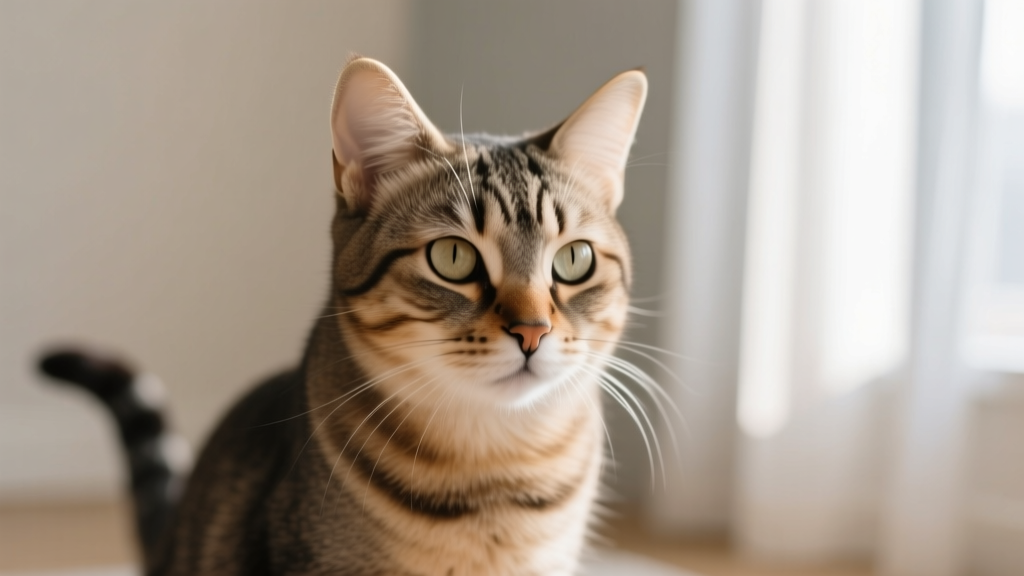
Ears rotated forward indicate interest or alertness. Ears flattened against the head signal fear or aggression. The subtle middle ground is where things get interesting. Ears rotated slightly sideways, often called "airplane ears," suggest the cat is feeling uncertain or mildly annoyed. It's the feline equivalent of a furrowed brow.
If one ear is forward and one is sideways, the cat is divided: part of its attention is on something interesting, part is on something concerning. This asymmetrical ear position is common in new environments, like a vet waiting room or a house with unfamiliar guests.
Whisker Position Reveals Internal State
Whiskers aren't just hair. Each whisker is embedded three times deeper than a normal hair and surrounded by a blood-filled capsule packed with nerve endings. Cats can detect air current changes as small as 0.1 millimeters per second through their whiskers.
When whiskers fan outward and forward, the cat is engaged and curious. When they pull back flat against the cheeks, the cat is afraid or defensive. During relaxed rest, whiskers hang loosely at the sides. If you're photographing your cat and the whiskers are tight against the face in every shot, the camera noise or flash is likely causing stress.
Body Posture and Spatial Positioning
How a cat places its body in space communicates volumes about how it feels. The same cat in the same room can send entirely different messages by shifting weight, changing orientation, or adjusting the distance between itself and other objects.
The Belly-Up Position: Trust, Not an Invitation
One of the most persistent misunderstandings in cat ownership involves belly exposure. When a cat rolls onto its back and exposes its stomach, it is demonstrating trust. It is showing you its most vulnerable area. What it is not doing is asking you to rub its belly.
In the wild, a cat exposing its belly can still deploy all four sets of claws in a defensive reflex. The belly-up position in play or greeting is a display of confidence. Reaching in to pet the belly is often interpreted as an ambush. A 2019 survey of 2,300 cat owners published in the Journal of Feline Medicine and Surgery found that 68% of cats reacted defensively when their exposed bellies were touched, despite having initiated the belly-up display themselves.
Loafing, Sphinxing, and the Art of Resting Positions
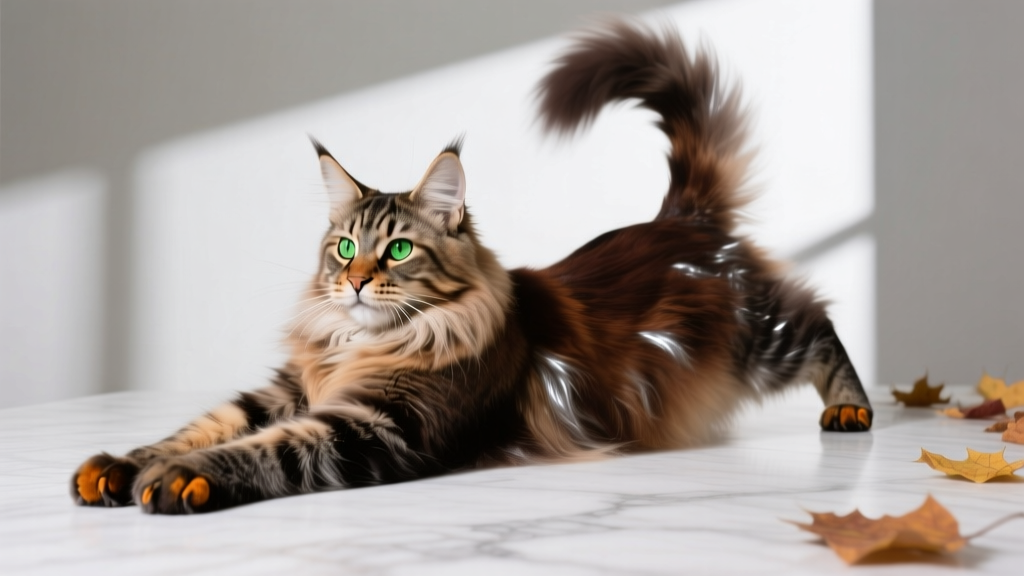
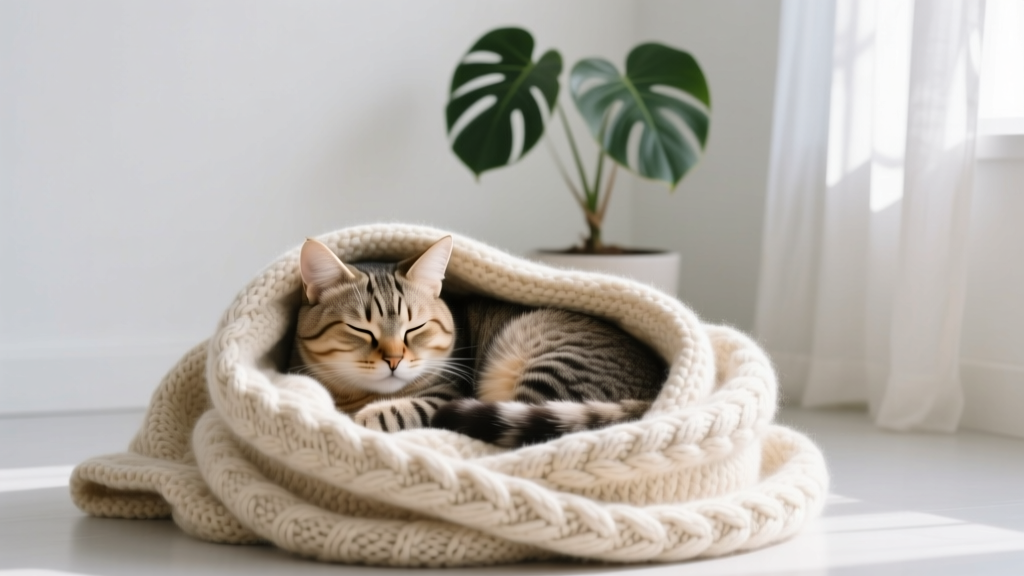
The "loaf" position, where a cat tucks all four paws beneath its body, indicates a moderate level of relaxation. The cat can spring into action quickly if needed. A deeper rest position is the full side-lying stretch, where the cat lies on its side with legs extended. That level of physical exposure requires genuine comfort with the environment.
Temperature plays a role too. Cats thermoregulate by adjusting their surface area. A cat in a room at 18 degrees Celsius (64 degrees Fahrenheit) will typically curl tightly, minimizing exposed surface. The same cat at 24 degrees Celsius (75 degrees Fahrenheit) will sprawl. If your cat is always curled tightly even in warm conditions, it may be experiencing chronic stress or pain.
Vocalization as Contextual Communication
Adult cats rarely meow at each other. The meow is a behavior that domestic cats developed specifically for human interaction. Kittens meow at their mothers, but the behavior fades as they mature, unless they learn that meowing gets results with humans.
| Vocalization | Typical Context | What It Usually Means | Response Suggestion |
|---|---|---|---|
| Short meow | Greeting, attention-seeking | Acknowledgment or request | Respond with a word or gentle pet |
| Repeated meowing | Feeding time, door requests | Urgent demand | Assess if need is legitimate or trained behavior |
| Chirping | Watching birds or prey | Frustrated hunting instinct | Redirect to interactive toy |
| Low growl | Threatened, cornered | Warning to back off | Remove pressure, give space |
| Yowling (prolonged) | Distress, territory, illness | Significant discomfort or disorientation | Check for environmental changes or vet visit |
The chirping sound cats make while watching birds through a window is particularly fascinating. Some researchers believe it's a rehearsal of the killing bite, a motor pattern the cat's brain triggers in response to prey visuals. Others suggest it's frustration vocalization. Either way, it's a natural hunting sequence playing out in miniature, and it's perfectly normal behavior for an indoor cat.
Environmental Signals and Scent Marking
Cats live in a world we can't fully perceive because so much of their communication happens through scent. They have roughly 200 million scent receptors in their noses, compared to our measly 5 million. When a cat rubs its face against your leg, it's depositing pheromones from glands located in the cheeks, forehead, and chin. This is called bunting, and it's how cats mark their territory and their people.
Chemical Messages You Can't Smell
Facial pheromones signal familiarity and comfort. When a cat has bunted all the key surfaces in a room, that room becomes part of its recognized territory. Stress spikes when those chemical markers are disrupted by cleaning, moving furniture, or introducing new objects. Using a synthetic facial pheromone diffuser in a new environment can reduce stress markers by up to 47%, according to a controlled study published by the University of Lincoln's animal behavior department in 2022.
Scratching as Communication, Not Destruction
Scratching serves at least four functions: claw maintenance, muscle stretching, territory marking through visual marks and scent from interdigital glands, and emotional regulation. A cat scratching a post after waking up is going through a natural sequence. It's not being destructive. It's saying, "I was here, this is mine, and I feel good."
The placement of scratching matters. Cats prefer to scratch in high-traffic areas where their scent marks will be encountered by others. If your cat is scratching the sofa arm, it's likely because that's where the family spends the most time. Providing a scratching post in that same location usually redirects the behavior within two to three weeks.
When Body Language Signals a Problem
Not every behavioral signal is normal. Some indicate pain, illness, or severe distress that requires professional attention. Knowing the difference between a quirk and a warning sign can save your cat's health.
- Hiding for more than 24 hours: Cats naturally seek enclosed spaces for rest. But if your cat disappears for an entire day and resists coming out, especially if it's also skipping meals, this warrants a veterinary check. Chronic hiding is the number-one behavioral indicator of underlying illness, according to the American Association of Feline Practitioners (2023).
- Sudden aggression in a previously gentle cat: A cat that starts swatting, hissing, or biting without obvious provocation may be in pain. Arthritis, dental disease, and hyperthyroidism can all cause behavioral shifts that look like attitude problems.
- Over-grooming to the point of bald patches: Some grooming is normal. Cats spend roughly 30 to 50 percent of their waking hours grooming themselves. But if you notice thinning fur, especially on the belly or inner thighs, the grooming has crossed into compulsive territory. This is often stress-related but can also indicate skin conditions or allergies.
- Changes in litter box behavior paired with body language shifts: A cat that crouches low, walks with a hunched back, or vocalizes while using the litter box may have a urinary tract issue. These signs combined with excessive licking of the genital area should trigger an immediate vet visit.
Building a Shared Language With Your Cat
The best cat owners aren't the ones who know the most facts. They're the ones who pay attention. Every cat has its own dialect within the broader feline language. Your cat's specific tail angle when it wants dinner, the particular ear position it uses when the vacuum starts, the exact way it stretches when it's truly relaxed, these are unique to your individual cat.
Start by watching. Spend ten minutes a day simply observing your cat without trying to interact. Note what happens before it meows. Watch where it chooses to sit and how its body changes when different people enter the room. Over the course of a few weeks, patterns will emerge that no book could teach you, because they're specific to the cat you live with.
I keep a small notebook next to my couch where I jot down observations about my own cats. Nothing formal. Just things like "Mira stretches her left paw first when genuinely relaxed" or "Toby's tail tip twitches three times before he decides to jump." Over time, these notes become a dictionary for reading your own cat, and that dictionary is worth more than any general guide.
The relationship you build with a cat isn't about training it to understand your language. It's about learning to understand its. And once you start seeing the world through those subtle signals, through every ear swivel and whisker shift, you'll realize your cat has been having a conversation with you all along. You just needed to learn how to listen.