Why Cats Prefer Warmed Food Over Refrigerated Food
How warm should my cat’s food be?
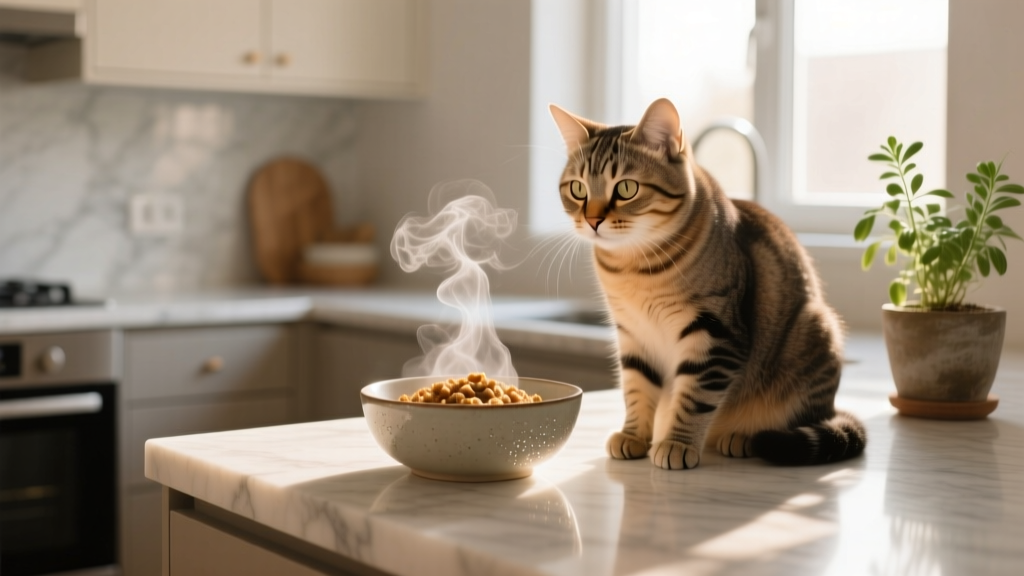
Lukewarm is ideal—slightly warmer than room temperature and never hot. If you can comfortably hold your finger in the food, it’s usually safe. Stir well to avoid hot spots, especially after microwaving.
Can I microwave my cat’s wet food?
Yes, but carefully. Use very short bursts, stir thoroughly, and test the temperature before serving. Consider warming with a warm water bath or mixing in warm water to reduce hot-spot risk.
Will warming food help a picky cat eat?
Often, yes—because it increases aroma and softens texture. If picky eating is new or worsening, consult your veterinarian to rule out dental pain, GI disease, kidney disease, hyperthyroidism, stress, or other medical problems.
Is it bad for my cat to eat food straight from the refrigerator?
For most healthy cats, it’s not inherently harmful, but many cats eat less when food is cold. If your cat reliably eats enough and maintains a healthy weight and hydration status, refrigerator-cold food may be fine. If intake is inconsistent, warming is a simple improvement.
How long can wet cat food sit out?
Many owners follow a 30–60 minute guideline, but warmer rooms shorten safe time. If your cat grazes, offer smaller portions more frequently or use feeding strategies that keep food fresh. Your veterinarian can advise based on your home environment and your cat’s health status.
My cat suddenly refuses cold food—what should I do?
Try warming to see if appetite improves, but don’t assume it’s purely preference. A sudden appetite change can indicate illness or pain. Contact your veterinarian, especially if your cat eats little to nothing for 24 hours, vomits repeatedly, seems lethargic, or hides.
For most cats, serving wet food at room temperature or gently warmed is a practical, evidence-based way to improve palatability, support hydration, and keep meals consistent. For personalized diet decisions—especially for kittens, seniors, or cats with medical conditions—work with your veterinarian or a board-certified veterinary nutritionist.
Explore more cat nutrition guides, feeding tips, and health-focused diet articles on catloversbase.com to help your cat thrive.