Cat Food Manufacturing Transparency: What Companies Hide
1) Why this topic matters for cat health
Most cat owners choose food based on a label, a marketing claim, or a handful of ingredients that “sound healthy.” The problem is that a pet food label can reveal very little about how the food was actually made, what quality controls were used, whether the nutrients survive processing, and how consistent the formula is from batch to batch. Those behind-the-scenes details affect what your cat truly eats: digestibility, nutrient balance, safety, and long-term health.
When transparency is limited, the risks are not abstract. Poorly controlled sourcing can lead to contamination or nutrient imbalances. Heavy processing without careful testing can reduce certain vitamins or change protein quality. “Complete and balanced” on paper can still leave individual cats with issues like chronic soft stool, dull coat, vomiting, weight gain, or urinary problems if the food’s real-world performance doesn’t match the label. Better manufacturing transparency helps you choose diets that support healthy muscle, stable energy, urinary tract function, and lifespan.
2) Scientific background: feline nutritional needs (obligate carnivore biology)
Cats are obligate carnivores. Their metabolism and nutrient requirements evolved around animal prey, which shapes what “good nutrition” means for them.
- High protein needs: Cats have a high baseline requirement for dietary protein and specific amino acids. Protein quality and digestibility matter as much as the percentage listed on the label.
- Essential nutrients found in animal tissues: Cats require nutrients such as taurine, preformed vitamin A (retinol), arachidonic acid, and vitamin D in forms that are most reliably supplied by animal-based ingredients. Deficiencies can cause severe disease (for example, taurine deficiency can lead to dilated cardiomyopathy and retinal degeneration).
- Lower carbohydrate requirement: Cats can digest starch when properly cooked, but they do not have a dietary requirement for carbohydrates. High-carbohydrate diets may contribute to excess calorie intake in some cats and can be less aligned with their natural macronutrient profile.
- Water intake and urinary health: Cats have a naturally low thirst drive. Many cats do better with more moisture in the diet. Higher dietary water intake can support urinary tract health, especially in cats prone to lower urinary tract disease.
“Complete and balanced” cat food can meet nutrient standards (such as AAFCO nutrient profiles in the U.S.) when properly formulated and manufactured. The catch is that manufacturing choices determine whether the finished food consistently meets those nutrient targets, remains safe, and performs well for real cats.
3) What companies hide (or don’t clearly disclose): an evidence-based look
A) Ingredient sourcing: the label rarely tells you quality
Ingredients are listed by weight before cooking, which can make meats appear higher on the list due to water content. More importantly, the label doesn’t disclose:
- Supplier standards: Are suppliers audited? Are there written specs for microbiology, mycotoxins, heavy metals, and nutrient ranges?
- Variability (“least-cost formulation”): Many manufacturers adjust ingredients based on commodity pricing while meeting nutrient minimums. This can lead to subtle changes in digestibility or stool quality batch to batch.
- Species and tissue specifics: Terms like “meat by-products” can be nutritionally valuable, but they are broad. Some companies avoid specifying which organs or quality grades are used.
B) “Natural flavors,” palatants, and appetite engineering
Many foods rely on palatants (often animal digest or yeast-based flavorings) to boost acceptance. That’s not automatically bad—cats can be picky—but transparency is limited:
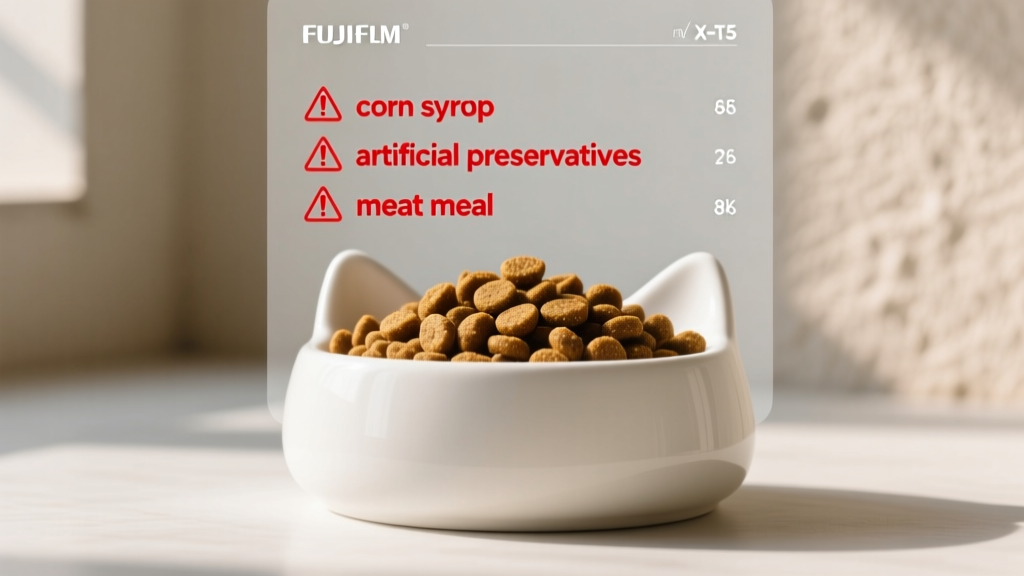
- “Natural flavor” is vague: It may include animal digests or processed flavor compounds without clear sourcing.
- Highly palatable foods can mask poor fit: A cat may overeat a very palatable dry diet, making weight control harder.
C) Processing effects: extrusion, rendering, and nutrient stability
Processing methods affect nutrient integrity and digestibility. Common processes include rendering (to create meals and fats), extrusion (most kibble), retort/canning, freeze-drying, and air-drying.
| Format | Typical processing | Potential benefits | Potential tradeoffs |
|---|---|---|---|
| Dry kibble | Rendered ingredients + extrusion at high heat/pressure | Convenient, economical, long shelf life; dental calculus reduction is limited but some cats chew it | Lower moisture; nutrient losses require vitamin premix; can be calorie-dense and easy to overfeed |
| Canned/wet | Cooked in can (retort) | Higher moisture supports hydration; often lower carbohydrate | Texture varies; some formulas are higher fat; cost and storage considerations |
| Freeze-dried/raw-style | Dehydration via freezing and vacuum | High animal-ingredient content; convenient for some owners | Pathogen control depends on manufacturer; may require rehydration; not ideal for immunocompromised households if handling is poor |
| Air-dried/baked | Lower-temp dehydration/baking | Often high-protein with moderate moisture | Still processed; nutrient adequacy and safety depend on testing and formulation |
Companies may highlight “gentle cooking” or “minimally processed” without showing evidence of nutrient retention testing, digestibility research, or robust microbial controls.
D) Nutrient adequacy claims: “complete and balanced” vs feeding trials
One of the biggest transparency gaps is how a food’s adequacy was established. A label may say:
- Formulated to meet AAFCO nutrient profiles (nutrient targets on paper, supported by lab analysis).
- Animal feeding tests using AAFCO procedures (a feeding trial with cats).
Feeding trials are not perfect and may be short, but they offer real-world evidence that the diet can sustain cats under controlled conditions. Many boutique brands avoid feeding trials due to cost. Some brands do additional digestibility or urinary health research and publish data—this is a strong sign of transparency.
E) Batch testing, recalls, and “quiet” formulation changes
Manufacturers rarely disclose batch-to-batch nutrient variability, microbial testing frequency, or corrective actions. Yet these factors drive safety and consistency. Watch for:
- Limited information about quality control: Does the company test incoming ingredients and finished product?
- Unannounced reformulations: Ingredient lists can change subtly, sometimes affecting sensitive cats.
- Recall patterns: Any company can have a recall, but transparency in communication and corrective measures matters.
F) “Grain-free,” “human-grade,” and other marketing shields
Some labels create a health halo without proving nutritional superiority:
- Grain-free: Not inherently better for cats. Many grain-free dry foods replace grains with potatoes/peas, which still contribute carbohydrates.
- Human-grade: This can have a legal meaning only if the entire process meets human food standards. Some brands use the term loosely or only for certain ingredients.
- No by-products: By-products like liver and heart can be nutrient-dense. The key is quality control and proper formulation, not the presence or absence of the term.
4) Practical recommendations for cat owners
You don’t need inside access to a factory to choose better foods. Use a structured approach:
- Prioritize brands that share quality control details: Look for published statements about supplier audits, HACCP-style plans, and routine testing (microbial, mycotoxin, heavy metal where relevant).
- Check the adequacy statement: Prefer foods validated by feeding trials when possible, especially for kittens and cats with medical needs.
- Ask for a full nutrient analysis: Request “as fed” and “dry matter basis” macronutrients, plus key minerals (calcium, phosphorus, magnesium, sodium) and taurine levels.
- Choose moisture strategically: Many cats benefit from including wet food for hydration and urinary support.
- Watch your individual cat’s response: Stool quality, vomiting frequency, coat condition, energy, body weight, and urinary habits matter more than trendy ingredients.
5) Comparison of approaches: how to choose among realistic options
| Approach | Best for | What to verify | Potential downsides |
|---|---|---|---|
| Wet-food-forward diet (canned/pouches) | Cats prone to urinary issues, constipation, weight gain on kibble | AAFCO statement for life stage, calories per can, mineral levels if urinary concerns | Cost, dental plaque still possible, picky eaters may need gradual transition |
| Mixed feeding (wet + measured dry) | Most households seeking balance of hydration and convenience | Total daily calories, consistent portioning, avoid free-feeding dry | Easy to overfeed if calories aren’t tracked |
| Dry-only (measured portions) | Owners needing convenience; cats that do well and maintain hydration | Company testing standards, calorie density, urinary history of the cat | Lower moisture intake; weight gain risk; not ideal for many urinary-prone cats |
| Therapeutic veterinary diets | Cats with diagnosed medical conditions (CKD, urinary stones, GI disease, diabetes) | Use under veterinary guidance; ensure correct formula for diagnosis | Cost; limited flavors; not interchangeable with OTC “similar” claims |
6) Common mistakes and misconceptions to avoid
- Myth: The first ingredient tells you the whole story.
Reality: Ingredient order reflects pre-cooked weight and doesn’t show digestibility, amino acid balance, or quality control. - Myth: “No by-products” automatically means higher quality.
Reality: Organ meats can provide taurine, vitamin A, and other nutrients. Quality depends on sourcing, handling, and formulation. - Myth: Grain-free is healthier for every cat.
Reality: Cats don’t need grains, but grain-free doesn’t guarantee low carbs or better nutrition. - Myth: Raw is always superior.
Reality: Raw or raw-style diets can work for some households, but pathogen control and nutritional completeness are non-negotiable. Kittens, seniors, and immunocompromised cats (or humans in the home) warrant extra caution. Discuss with your veterinarian. - Mistake: Switching foods frequently due to marketing trends.
Reality: Frequent changes can trigger GI upset and make it harder to identify what actually suits your cat.
7) How to implement changes safely (transition tips)
Diet changes should be gradual unless your veterinarian directs otherwise. A slow transition supports the gut microbiome and reduces vomiting/diarrhea.
| Day | Old food | New food |
|---|---|---|
| 1–2 | 75% | 25% |
| 3–4 | 50% | 50% |
| 5–6 | 25% | 75% |
| 7+ | 0% | 100% |
- Measure portions by calories, not vibes: Check kcal per can/cup and adjust to maintain a lean body condition.
- For wet food beginners: Warm slightly (not hot), add a teaspoon of warm water, and start with small “side servings.”
- Monitor: Appetite, stool consistency, vomiting, itching, ear debris, and energy. If vomiting, diarrhea, or refusal to eat persists, stop the transition and call your veterinarian.
- Never allow prolonged fasting: Cats that don’t eat for 24 hours (or even less for kittens) can be at risk of serious complications. Contact your vet promptly.
8) Special considerations (age, health conditions, activity level)
Kittens (growth and development)
- Choose a diet labeled for growth or all life stages.
- Kittens need higher energy and carefully balanced calcium/phosphorus. Avoid unbalanced homemade or “supplement-only” plans unless formulated by a veterinary nutritionist.
Adult cats (maintenance and weight control)
- Focus on lean body condition, adequate protein, and appropriate calorie intake.
- Mixed feeding often helps manage hunger and hydration while keeping calories controlled.
Senior cats
- Older cats may lose muscle more easily; protein quality and palatability become critical.
- Ask your vet about screening for kidney disease, hyperthyroidism, dental disease, and arthritis, all of which can influence diet choice.
Common medical conditions
- Chronic kidney disease (CKD): Diets often require controlled phosphorus and tailored protein. Use veterinary guidance; not every “senior” food is kidney-appropriate.
- Urinary crystals/stones: Therapeutic urinary diets can be lifesaving. OTC “urinary support” claims aren’t equivalent. Confirm stone type with your vet.
- Diabetes or obesity: Calorie control and a plan designed with your vet are key; many cats benefit from higher-protein, lower-carb wet diets, but individual needs vary.
- Food allergies or IBD-like signs: True food allergies are less common than owners think. Work with your veterinarian on an elimination diet trial using a veterinary hydrolyzed or novel protein diet.
How to spot a more transparent manufacturer (quick checklist)
| Transparency sign | Why it matters | What to ask/search |
|---|---|---|
| Provides a full nutrient analysis (not just “guaranteed analysis”) | Better view of protein, fat, carbs, minerals | Dry matter macros; Ca, P, Mg, Na; taurine levels |
| Explains quality control testing | Safety and consistency | Finished product microbial tests; mycotoxin policy; supplier audits |
| Conducts feeding trials or publishes research | Real-world performance evidence | AAFCO feeding trials; digestibility studies; urinary health data |
| Clear recall communication and corrective actions | Accountability | Public recall history; what changed afterward |
| Accessible customer support with meaningful answers | Signals operational maturity | Can they provide batch info, calories, minerals, sourcing standards? |
9) FAQ
1) Is “complete and balanced” enough to trust a cat food?
It’s a baseline, not a guarantee of excellence. It means the diet meets recognized nutrient targets for a life stage, either by formulation or feeding trials. Manufacturing quality control, digestibility, calorie accuracy, and batch consistency still matter. For cats with medical conditions, ask your veterinarian which diets are most appropriate.
2) Should I choose foods that list “real meat as the first ingredient”?
It’s not harmful as a preference, but it’s not a reliable quality metric. Fresh meat contains lots of water, and ingredient order is based on pre-cooked weight. A better strategy is choosing brands that share nutrient data, testing practices, and appropriate life-stage validation.
3) Are by-products bad for cats?
No. Many by-products (organs) are nutrient-dense and biologically appropriate for cats. The real question is sourcing, handling, and whether the finished diet is properly formulated and tested.
4) Is wet food always better than dry food?
Wet food provides more moisture, which often benefits urinary health and weight management. Some cats do well on measured portions of dry food, especially if they drink well and have no urinary history. Many households succeed with mixed feeding. Your cat’s health status and preferences matter, so discuss the best plan with your vet.
5) How can I estimate carbohydrates if the label doesn’t list them?
You can estimate “carbs by difference” using the guaranteed analysis, but it’s imprecise because moisture, fiber, and ash aren’t always fully provided. The most accurate approach is asking the company for a full “as fed” nutrient profile or using foods that publish it.
6) What’s the safest way to try a new brand if my cat has a sensitive stomach?
Transition slowly over 7–14 days, change only one variable at a time, and keep treats constant. Consider choosing a diet with feeding trials and strong quality control. If vomiting, diarrhea, blood in stool, or appetite loss occurs, stop and contact your veterinarian promptly.
Feeding your cat well is less about chasing buzzwords and more about choosing diets backed by transparent manufacturing practices, sound formulation, and consistent quality control. For any major dietary change—especially for kittens, seniors, or cats with medical conditions—partner with your veterinarian for individualized guidance.
Explore more cat nutrition guides, label-reading tips, and feeding strategies on catloversbase.com to keep building a healthier, happier diet for your cat.