Feeding Cats With Hypertrophic Cardiomyopathy: Taurine Focus
1) Why this nutrition topic matters for cat health
Hypertrophic cardiomyopathy (HCM) is the most common heart disease diagnosed in cats. It causes thickening of the heart muscle (usually the left ventricle), which can reduce efficient filling and pumping of blood. Some cats live for years with mild disease; others develop congestive heart failure, arrhythmias, or blood clots (aortic thromboembolism). Medication and regular veterinary monitoring are central to management, but nutrition can play a supportive role—especially when the cat’s overall cardiac workload, body condition, hydration, and electrolyte balance are considered.
Taurine deserves special attention because it is an essential amino acid for cats and is tightly linked to heart function. Taurine deficiency is classically associated with dilated cardiomyopathy (DCM), not HCM, yet the “taurine conversation” still matters for cats with HCM for three reasons:
- Cardiac support: Taurine contributes to normal myocardial function, calcium handling, and anti-oxidative effects in heart tissue.
- Diet safety: Homemade or poorly formulated diets can inadvertently be low in taurine or in taurine availability, creating avoidable cardiac risk on top of HCM.
- Whole-diet quality: A taurine focus often reveals broader issues in protein quality, digestibility, and nutrient balance—core factors in feeding cats with any heart condition.
Always partner with your veterinarian and, ideally, a board-certified veterinary nutritionist when making diet changes for a cat with heart disease. Cats with HCM may also take medications (diuretics, antithrombotics, beta-blockers), and nutrition decisions can interact with hydration, electrolytes, appetite, and weight.
2) Scientific background: feline nutritional needs and obligate carnivore biology
Cats are obligate carnivores. Their metabolism is adapted to diets naturally high in animal protein and fat and very low in carbohydrate. This biology shapes how we should think about nutrition for HCM.
| Obligate carnivore trait | What it means nutritionally | Why it matters for heart health |
|---|---|---|
| High protein requirement and continuous amino acid catabolism | Cats need highly digestible animal-based protein daily | Supports lean muscle (including cardiac muscle) and overall resilience during illness |
| Taurine is essential | Cats cannot synthesize enough taurine; must get it from diet | Deficiency can cause severe heart disease (DCM) and retinal degeneration; adequacy is non-negotiable |
| Limited ability to upregulate certain nutrient pathways | They rely on preformed nutrients (e.g., arachidonic acid, vitamin A) | Diet formulation errors are more dangerous in cats than many other species |
| Lower thirst drive | Often benefit from higher-moisture foods | Hydration influences circulation, kidney function, and medication tolerance |
For cats with heart disease, the goal is not to “treat HCM with food,” but to feed a complete, balanced, highly digestible diet that maintains ideal body condition, supports hydration, and avoids nutrient excesses or deficiencies that could worsen outcomes.
3) Detailed analysis: taurine, HCM, and what the evidence supports
Taurine basics: what it does
Taurine is involved in bile acid conjugation (fat digestion), retinal function, reproductive health, immune function, and normal cardiac muscle performance. In the heart, taurine is associated with:
- Cell membrane stability and osmoregulation
- Calcium handling in cardiac muscle cells (important for contraction/relaxation)
- Antioxidant and anti-inflammatory effects
HCM vs. taurine-deficiency cardiomyopathy: clearing up confusion
Taurine deficiency is strongly linked to dilated cardiomyopathy (DCM), a condition where the heart chambers enlarge and the muscle becomes weaker. HCM, by contrast, involves thickened heart muscle and impaired relaxation. Most feline HCM cases are not caused by taurine deficiency; genetics and other factors are more prominent contributors.
Even so, taurine adequacy is still a priority in cats with HCM because:
- Any cat can become taurine-deficient if fed an unbalanced homemade diet, an improperly formulated raw diet, or certain unconventional diets not meeting established nutrient profiles.
- Cardiac disease reduces margin for error. A cat with HCM already has compromised cardiac function; adding a nutritional deficiency can worsen overall stability.
- Some cats have concurrent issues (poor appetite, weight loss, intestinal disease) that can reduce taurine intake or absorption.
How much taurine does a cat need?
Reputable commercial diets formulated to meet AAFCO or FEDIAF nutrient profiles are designed to provide adequate taurine when fed as the sole diet. Taurine content is typically higher in canned foods than in dry kibble due to formulation differences, but both can meet requirements when properly manufactured and handled.
If your cat has HCM and you are considering taurine supplements, involve your veterinarian first. Taurine is generally considered safe at typical supplemental doses used in cats, but supplementation should not be used to “paper over” a diet that is incomplete, unbalanced, or inappropriate for the cat’s other medical needs (kidney disease, hyperthyroidism, etc.).
Bioavailability: taurine in food isn’t just about the number
Taurine levels on paper don’t always match taurine delivered to the cat. Factors that may influence taurine status include:
- Protein source and processing: Heat processing can reduce taurine availability; manufacturers account for this by adding taurine to diets, especially canned foods.
- Fiber content: Very high fiber can increase taurine loss in feces because taurine is used in bile acids, and fiber can bind bile acids.
- Gut health: Chronic gastrointestinal disease can reduce nutrient absorption and appetite, indirectly lowering taurine intake.
Other nutrients that often matter in heart disease nutrition
A taurine-focused plan is strongest when it also considers the whole heart-health picture:
- Omega-3 fatty acids (EPA/DHA): Evidence supports benefits for inflammation modulation and possibly arrhythmia risk. Use products designed for pets; dose should be veterinarian-guided.
- Sodium: For cats with congestive heart failure, many veterinarians recommend avoiding very high sodium diets. Overly aggressive sodium restriction is not always appropriate and can reduce palatability; the right approach depends on disease stage and medications.
- Potassium and magnesium: Diuretics can alter electrolyte balance. Food and supplements should be coordinated with bloodwork and veterinary guidance.
- Energy and protein density: Maintaining muscle mass is protective. Underfeeding or unintentional weight loss can reduce quality of life.
4) Practical recommendations for cat owners
Choose a complete and balanced diet as the foundation
- Look for labeling that the food is complete and balanced for your cat’s life stage, formulated to meet AAFCO or FEDIAF profiles, or has passed feeding trials.
- Prioritize highly digestible animal protein and established brands with quality control.
- If your cat has HCM plus another condition (kidney disease, pancreatitis, IBD), ask your vet whether a therapeutic diet is needed.
Support hydration (often helpful for cats with cardiac concerns)
- Consider incorporating wet food to increase moisture intake, unless your veterinarian advises otherwise.
- Use multiple water stations, wide bowls, or a pet fountain.
- Monitor litter box output and appetite—changes can signal medication effects or disease progression.
Discuss taurine supplementation only if there’s a reason
Reasons your vet may consider taurine testing or supplementation include:
- Home-prepared diet (cooked or raw), especially if not formulated by a veterinary nutritionist
- History of feeding boutique, exotic-protein, or poorly studied diets
- Chronic GI disease, long-term poor appetite, or unexplained weight loss
- Evidence of DCM-like changes or low taurine levels on testing
5) Comparing options and approaches
| Approach | Pros | Cons / cautions | Best fit |
|---|---|---|---|
| Commercial complete & balanced wet food | Typically excellent taurine adequacy; higher moisture; often palatable | Cost; some formulas may be higher sodium (varies by brand) | Many cats with HCM, especially if hydration is a goal |
| Commercial complete & balanced dry food | Convenient; stable; can meet taurine requirements when formulated correctly | Lower moisture; free-feeding can promote weight gain; not ideal for cats needing higher water intake | Cats that prefer kibble, multi-cat homes; can be combined with wet food |
| Mixed feeding (wet + dry) | Balances moisture, cost, convenience; can improve acceptance during transitions | Calorie tracking required to avoid overfeeding | Many households; cats with variable appetite |
| Home-cooked diet (nutritionist-formulated) | Customizable for multiple health issues; ingredient control | Must be precisely formulated; requires supplements; time-intensive | Cats with complex medical needs when owners can commit to precision |
| Unformulated homemade or raw diets | Owners may perceive “naturalness” | High risk of nutrient imbalances (including taurine), pathogens, and inconsistent intake | Generally not recommended—especially for cats with heart disease |
6) Common mistakes and misconceptions to avoid (myths debunked)
- Myth: “HCM is caused by taurine deficiency, so taurine will fix it.”
Reality: Taurine deficiency is linked to DCM, not most HCM cases. Taurine is still essential, but it’s not a cure for HCM. Treatment relies on veterinary cardiology care, monitoring, and appropriate medication when indicated. - Myth: “If a food is grain-free, it’s better for the heart.”
Reality: “Grain-free” is a marketing category, not a quality marker. What matters is overall formulation, nutrient balance (including taurine adequacy), digestibility, and quality control. - Myth: “Raw diets automatically provide more taurine.”
Reality: Taurine content varies by ingredients and handling, and many homemade/raw diets are nutritionally incomplete. Food safety and nutrient consistency are major concerns for medically vulnerable cats. - Myth: “All cats with heart disease need strict low-sodium food.”
Reality: Sodium strategy depends on disease stage and medications. Over-restricting sodium can reduce palatability and calorie intake, which can be harmful. Let your veterinarian guide this.
7) How to implement changes safely (transition tips)
Cats with HCM may be less tolerant of stress, appetite disruption, or dehydration. Make diet changes gradually and track what matters.
Step-by-step transition plan (7–14 days)
- Days 1–3: 75% current food + 25% new food
- Days 4–6: 50% current + 50% new
- Days 7–10: 25% current + 75% new
- Days 11–14: 100% new food
Safety checks during the transition
- Monitor appetite, breathing effort, resting respiratory rate, stool quality, and energy.
- Weigh your cat weekly (or more often if your vet advises). Unplanned weight loss is a red flag.
- If your cat is on diuretics or other cardiac medications, ask your vet whether follow-up electrolytes should be checked after major diet changes.
When to slow down or stop the change
- Vomiting, persistent diarrhea, refusal to eat for >24 hours
- Noticeably increased breathing rate/effort, weakness, collapse
- Any sudden change in mobility (could indicate clot risk)
Contact your veterinarian promptly if these occur.
8) Special considerations (age, health conditions, activity level)
| Cat profile | Nutrition priorities | Taurine-related considerations |
|---|---|---|
| Kittens and young adults | Growth-appropriate complete diet, steady energy intake | Do not dilute diets with excessive treats; ensure life-stage formulation provides adequate taurine |
| Seniors | Maintain lean mass; manage appetite; monitor kidney/thyroid status | Older cats may eat less; nutrient-dense, palatable foods help maintain taurine intake |
| HCM + kidney disease | Balance cardiac needs with renal support; avoid drastic diet changes without vet guidance | Taurine is still essential; avoid unbalanced “low-protein” approaches unless prescribed |
| HCM + IBD/food sensitivity | Digestibility, consistency, controlled ingredients | Malabsorption or reduced intake can threaten taurine status; discuss testing/supplementation with your vet |
| Overweight/low activity | Calorie control, measured meals, avoid free-feeding | Calorie restriction must still deliver essential nutrients—use veterinary-guided weight-loss diets when needed |
9) FAQ
Should I give my cat taurine if they have HCM?
Don’t start supplements automatically. Most cats eating a reputable complete and balanced diet already receive adequate taurine. Taurine may be considered if your cat eats a homemade/unconventional diet, has chronic GI disease, poor appetite, or if testing suggests low taurine. Discuss the right plan and dose with your veterinarian.
What foods are naturally high in taurine for cats?
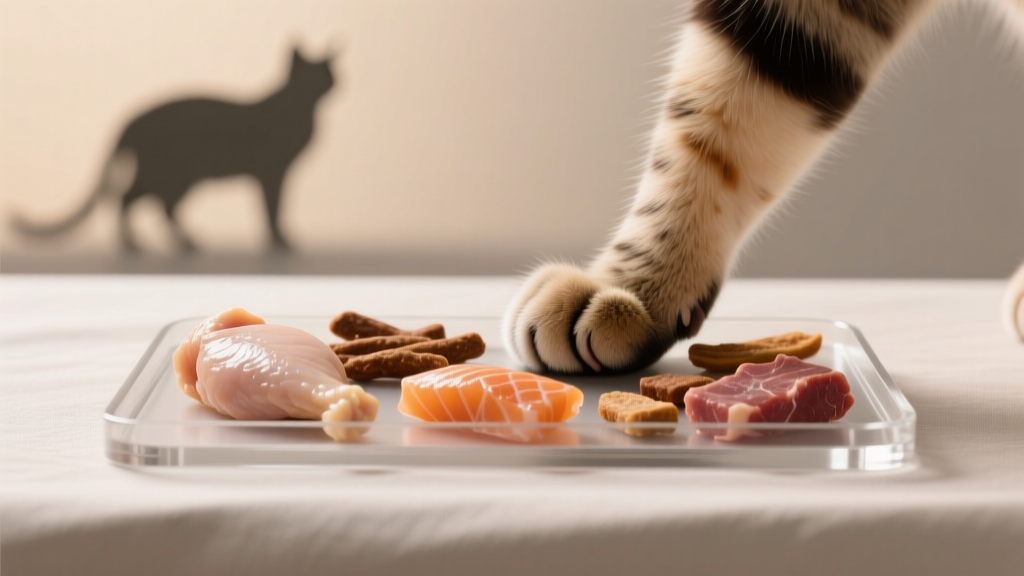
Taurine is found in animal tissues, especially heart and dark meats. That said, “naturally high” doesn’t guarantee a diet is nutritionally complete. For most owners, the safest way to ensure taurine adequacy is feeding a commercial diet that meets AAFCO/FEDIAF standards or a properly formulated home-cooked recipe from a veterinary nutritionist.
Is wet food better than dry food for cats with HCM?
Wet food can be helpful because it increases water intake and is often very palatable, which supports consistent nutrition. Dry food can also be appropriate if it’s complete and balanced and your cat maintains good hydration and body condition. Many cats do well with a mixed approach. Your veterinarian can advise based on your cat’s stage of disease and medications.
Do cats with heart disease need a low-sodium diet?
Sometimes, especially if congestive heart failure is present or sodium sensitivity is a concern. But not every HCM cat needs aggressive sodium restriction. Too strict a reduction can decrease food acceptance and lead to weight loss. Ask your veterinarian or veterinary cardiologist what sodium target is appropriate for your cat.
Can I feed a homemade diet if my cat has HCM?
Yes, but only if it’s properly formulated to be complete and balanced, ideally by a board-certified veterinary nutritionist. Unbalanced homemade diets are a common way cats develop taurine deficiency and other nutrient problems. Precision matters even more when a cat already has heart disease.
What are the biggest diet red flags for a cat with HCM?
Refusing food, rapid weight loss, frequent diet switching due to pickiness, feeding unformulated homemade/raw diets, relying heavily on treats, and making supplement changes without veterinary oversight. If your cat’s breathing seems faster at rest or their appetite changes suddenly, call your veterinarian.
Veterinary partnership reminder: HCM management is individualized. Before changing diets, adding taurine, omega-3s, or restricting sodium, consult your veterinarian (and a veterinary cardiologist if you have one) to align nutrition with medications, bloodwork, and your cat’s current disease stage.
If you want more practical, science-based feeding support, explore the nutrition guides and diet strategy articles on catloversbase.com.