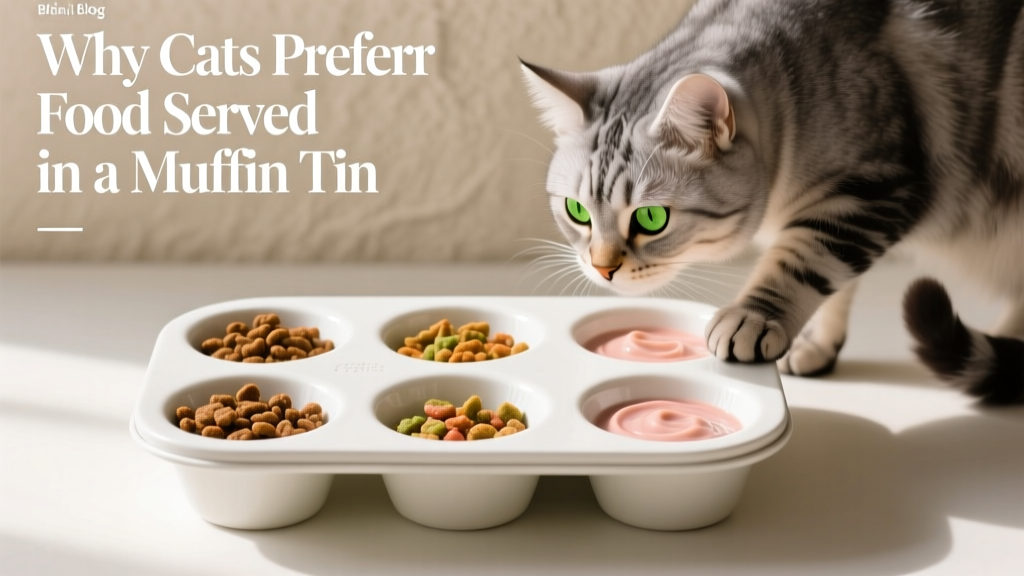
Why Cats Prefer Food Served in a Muffin Tin
1) Is a muffin tin better than a regular bowl for all cats?
No. Many cats do great with a wide shallow dish or a standard bowl. A muffin tin is most helpful for cats that eat too fast, seem stressed by bowls, or need portion control/enrichment. Your cat’s comfort and consistent intake matter most.
2) Should I use metal, silicone, or ceramic?
Food-safe silicone can be quieter and less likely to clink, while metal is sturdy and easy to sanitize. Ceramic muffin pans are less common but can be heavy and stable. Avoid anything with peeling coatings or cracks that trap bacteria. If your cat startles at noise, silicone is often the easiest transition.
3) Can I serve only wet food in a muffin tin?
Yes, as long as the wet food is complete and balanced for your cat’s life stage and you’re meeting daily calorie needs. Many cats benefit from wet food for hydration. If you plan a major diet shift (dry-only to wet-only or vice versa), consult your veterinarian, especially for cats with urinary disease, kidney disease, diabetes, or GI issues.
4) Will this stop my cat from vomiting?
It can help if vomiting is triggered by eating too fast. If vomiting continues, increases, or is accompanied by weight loss, lethargy, diarrhea, or appetite changes, schedule a veterinary visit. Vomiting has many causes that aren’t solved by a feeding tool.
5) My cat paws food out of the tin—what should I do?
That behavior can reflect preference (they want to eat off a flatter surface) or frustration. Try using fewer wells with shallower smears of wet food, place the tin on a non-slip mat, and consider switching to a wide plate if pawing persists.
6) Can I use a muffin tin as a slow feeder for multiple cats together?
It’s usually better to feed cats separately, especially if there’s any tension or food guarding. Multiple tins in different locations work well. For cats on prescription diets, strict separation is essential to prevent diet “mix-ups.”
Serving your cat’s food in a muffin tin can be a smart, low-cost way to support healthier eating speed, reduce bowl aversion, and add enrichment—while still keeping the focus where it belongs: a complete-and-balanced diet tailored to your cat. For personalized guidance on calories, medical diets, or feeding schedules, consult your veterinarian.
Looking for more practical, vet-informed feeding tips? Explore the nutrition guides and cat wellness articles on catloversbase.com.