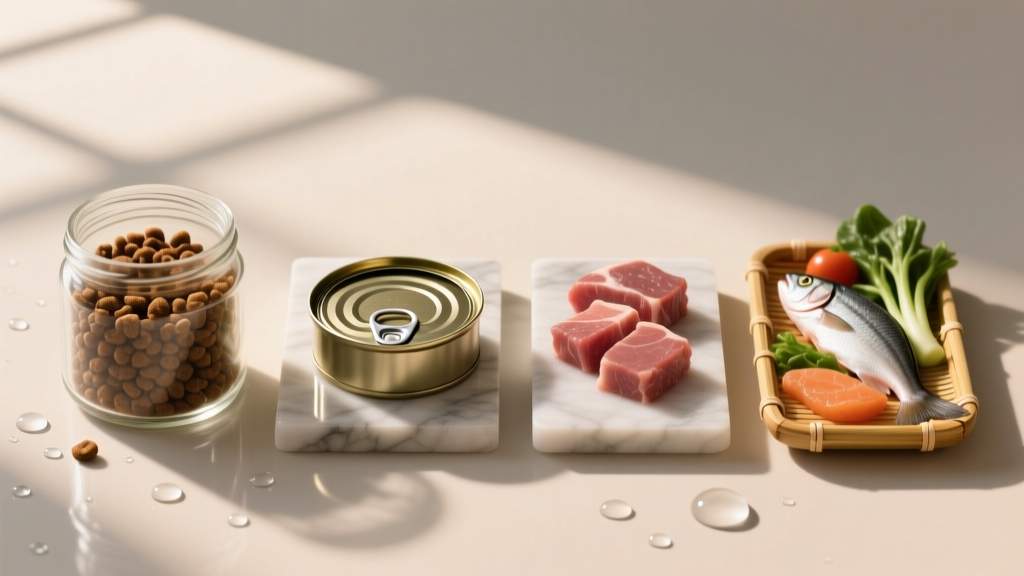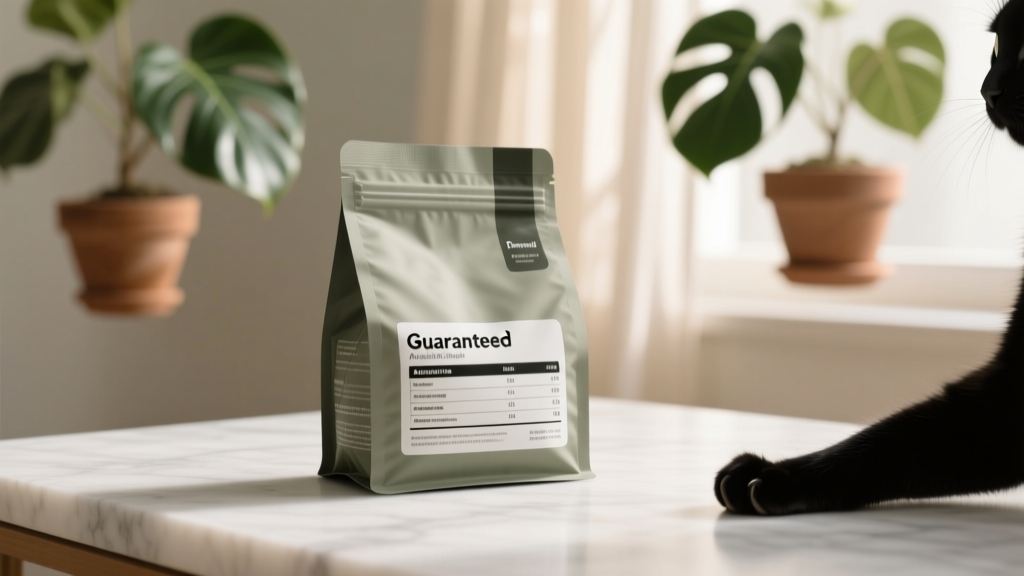
Understanding Cat Food Guaranteed Analysis Loopholes
1) Why this topic matters for cat health
Most cat owners want a simple way to judge whether a food is “good.” The Guaranteed Analysis (GA) on the label looks like it should be that tool: protein, fat, fiber, moisture, sometimes ash and a few minerals. The problem is that GA is a legal minimum/maximum snapshot, not a full nutritional blueprint. Two foods can show very similar numbers in the GA panel yet perform very differently in your cat’s body.
Understanding GA “loopholes” helps you avoid common pitfalls: buying a food that looks high-protein but is mostly plant-based, choosing a diet that’s too dry for a cat prone to urinary issues, or assuming a food is complete and balanced when the GA doesn’t actually confirm that. This isn’t about becoming a label detective for fun; it’s about reducing preventable nutrition-related problems like obesity, diabetes risk, digestive upset, lower urinary tract disease, and poor coat quality.
2) Scientific background: feline nutritional needs (obligate carnivore biology)
Cats are obligate carnivores with metabolism and physiology adapted to animal prey. Key points that shape what matters on a label:
- High protein needs: Cats have higher dietary protein requirements than many omnivores because they use amino acids continuously for energy and have limited ability to downregulate protein catabolism.
- Essential amino acids: Taurine is required preformed in the diet; deficiencies can cause retinal degeneration and dilated cardiomyopathy. Arginine is essential for the urea cycle; deficiency can cause dangerous hyperammonemia.
- Fat and fatty acids: Cats need arachidonic acid (typically from animal tissues) and benefit from appropriate omega-3s (EPA/DHA) for skin, coat, and inflammation modulation.
- Limited carbohydrate requirement: Cats can digest starch when cooked and processed, but they do not have a nutritional requirement for carbohydrates. Excess calories from carbs can contribute to weight gain in sedentary cats.
- Water economy: Cats have a low thirst drive relative to many species and are designed to get much of their water from prey. This is why moisture content matters, especially for cats with urinary tract concerns.
Because cats rely on specific nutrients rather than “high protein” as a vague concept, the most useful question is not “What does the GA say?” but “Does the food reliably deliver the right nutrients in the right amounts, in a form a cat can use?”
3) Detailed analysis: what the Guaranteed Analysis really tells you (and what it doesn’t)
3.1 GA numbers are minimums and maximums, not exact values
GA is typically listed as:
- Crude Protein (min)
- Crude Fat (min)
- Crude Fiber (max)
- Moisture (max)
- Sometimes: ash (max), magnesium, phosphorus, taurine, omega fatty acids
“Min” and “max” matter. A food with protein 35% (min) could be 36%… or it could be 50%. A moisture 10% (max) kibble could be 7% or 10%. This means GA is a compliance statement, not a precise nutrient report.
3.2 “Crude” doesn’t mean low quality, but it doesn’t mean bioavailable either
“Crude” refers to the lab method used to estimate protein or fat, not the ingredient quality. GA does not tell you:
- Protein digestibility
- Amino acid balance (including taurine adequacy unless separately listed)
- How much protein is from animal vs plant sources
- Calorie density (kcal/cup or kcal/can is listed elsewhere, not in GA)
3.3 The “as-fed” trap: why moisture makes comparisons misleading
GA is reported “as-fed,” meaning including water. Wet foods look “low protein” on the label because they contain 70–82% water. To compare foods fairly, convert to dry matter (DM).
| Example | Protein (as-fed) | Moisture | Dry Matter Protein (approx.) | What it means |
|---|---|---|---|---|
| Canned food | 10% min | 78% max | 10 ÷ (100-78) × 100 = 45% | Actually very high protein on a DM basis |
| Dry kibble | 35% min | 10% max | 35 ÷ (100-10) × 100 = 39% | Often lower than many canned foods on a DM basis |
Loophole effect: A kibble can look higher protein at a glance, while a canned food may deliver more protein per calorie and far more water.
3.4 Fiber (max) can hide big differences in carbohydrate load
Fiber is listed as a maximum, and it’s only one part of carbohydrate. The GA does not list starch/sugars. Many owners try to estimate carbohydrates by “nitrogen-free extract” (NFE), which is a rough calculation:
NFE (approx. carbs) = 100 - (protein + fat + moisture + ash + fiber)
Loophole effect: If ash isn’t listed, you can’t estimate carbs accurately from GA alone. Companies may not disclose ash, making owner math unreliable.
3.5 Protein percentage doesn’t equal “high meat” (and can be inflated)
Protein can come from animal or plant sources. Some plant ingredients (pea protein, potato protein, corn gluten meal) can raise crude protein numbers. That doesn’t automatically make the food “bad,” but it can shift amino acid profiles and may not match obligate carnivore biology as well as animal-based proteins.
Loophole effect: A food can display an impressive protein minimum while relying heavily on plant concentrates. GA doesn’t reveal that pattern.
3.6 “Complete and balanced” is not proven by GA
GA does not confirm that a food is complete for your cat’s life stage. The label statement that matters is the AAFCO nutritional adequacy statement (or regional equivalent):
- Formulated to meet AAFCO nutrient profiles, or
- Animal feeding tests substantiate adequacy
Loophole effect: A food can have a GA panel and still be intended for “supplemental feeding only.” Always look for the adequacy statement.
3.7 Mineral details: urinary health can’t be judged by GA alone
Some labels list magnesium or phosphorus, but GA rarely gives the full mineral picture (calcium, phosphorus ratio, sodium, chloride) or urine-impacting factors (urinary pH effect). For cats prone to urinary crystals or blockage, the most reliable approach is a veterinarian-guided plan, often using therapeutic urinary diets when indicated.
3.8 Calories matter more than most owners realize
GA is a nutrient percentage report; it doesn’t tell you how calorie-dense the food is. A high-fat dry food can pack far more calories per mouthful than a wet food. Overfeeding calorie-dense diets is a major driver of feline obesity.
4) Practical recommendations for cat owners
- Use GA for quick screening, not final decisions: It can help spot extremely low protein or unusually high fiber, but it can’t rank foods reliably.
- Compare foods on a dry matter basis: Especially when comparing wet vs dry.
- Prioritize the AAFCO adequacy statement: Choose “complete and balanced” for your cat’s life stage (growth, adult maintenance, all life stages).
- Ask for a typical nutrient analysis: Many reputable brands will provide “typical” (average) values and calorie breakdown. This is often more informative than GA.
- Look for calorie information (kcal): Use kcal/can, kcal/pouch, or kcal/cup to portion correctly.
- Match diet moisture to health needs: Many cats benefit from increased water intake via wet foods or added water.
- Work with your veterinarian for medical nutrition: Kidney disease, urinary disease, diabetes, and food allergies require individualized strategies.
5) Comparing options and approaches
| Approach | Pros | Cons/Watch-outs | Best fit for |
|---|---|---|---|
| Wet food as primary diet | High moisture; often high animal protein on DM basis; lower calorie density | Cost; dental benefits are limited; picky eaters may need transition | Cats prone to urinary issues, constipation, weight gain, low drinkers |
| Dry food as primary diet | Convenient; cost-effective; works with feeders/puzzles | Low moisture; easy to overfeed; GA comparisons can mislead | Households needing convenience; cats that do well with controlled portions and added water strategies |
| Mixed feeding (wet + measured dry) | Balances moisture and convenience; can improve palatability and satiety | Requires calorie math; inconsistent portions can cause weight creep | Many average healthy adult cats, especially multi-cat homes |
| Therapeutic veterinary diets | Evidence-based targets for specific diseases; controlled minerals and nutrients | Needs vet guidance; not interchangeable with OTC “similar-sounding” foods | Kidney disease, urinary crystal history, GI disease, diabetes management plans |
6) Common mistakes and misconceptions to avoid (myths debunked)
- Myth: “Higher protein % on the GA always means better.”
Reality: Moisture skews comparisons, and protein source/digestibility matters. A wet food with “only” 10% protein as-fed may be higher protein on a dry matter basis than kibble. - Myth: “Crude protein tells me the meat content.”
Reality: Protein can be boosted by plant concentrates. Ingredient list order is also imperfect because it’s based on pre-cooked weight. - Myth: “Cats need grain-free diets.”
Reality: Cats need nutrients, not marketing categories. Some cats do fine with grains; others need specific formulas for sensitivities. Grain-free can still be high in carbohydrates (often from potatoes/peas). - Myth: “If it’s labeled ‘natural’ or ‘premium,’ the GA is more trustworthy.”
Reality: These are marketing terms. Look for AAFCO adequacy, manufacturer transparency, and whether the diet suits your cat’s medical needs. - Myth: “Fiber should be as low as possible.”
Reality: Some fiber can help stool quality and hairball management. Too much can reduce calorie density and affect nutrient absorption, but “zero fiber” is not a universal goal.
7) How to implement changes safely (transition tips)
Diet changes can trigger vomiting, diarrhea, or food refusal if done abruptly. Transition gradually, and consult your veterinarian if your cat has any medical condition, is underweight, has a history of hepatic lipidosis, or refuses food.
- Standard transition (7–10 days):
- Days 1–3: 75% old, 25% new
- Days 4–6: 50% old, 50% new
- Days 7–9: 25% old, 75% new
- Day 10: 100% new
- For sensitive stomachs: Extend to 2–3 weeks, increasing new food more slowly.
- Hydration boost: For wet foods, you can mix in a tablespoon or two of warm water to increase fluid intake (as long as your cat still eats enthusiastically).
- Monitor: Appetite, stool quality, vomiting, itchiness, coat condition, and body weight/BCS.
- Never let a cat “hunger strike”: If a cat won’t eat for 24 hours (or 12 hours in kittens), contact a veterinarian promptly.
8) Special considerations (age, health conditions, activity level)
Kittens (growth)
- Need higher calories, protein, and key nutrients like DHA for development.
- Choose diets labeled for growth or all life stages.
- GA won’t confirm adequacy—use the AAFCO statement and your veterinarian’s guidance.
Adult indoor cats
- Weight gain is common due to lower activity; calorie control is crucial.
- Favor measured portions and consider mixed feeding for satiety and moisture.
Seniors
- Needs vary widely. Some seniors lose muscle and benefit from highly digestible protein; others have kidney disease requiring specific nutrient management.
- Don’t self-prescribe low-protein diets. For chronic kidney disease, diet choices should be veterinarian-guided.
Urinary tract history (crystals, blockages)
- Hydration, mineral balance, and urine chemistry matter more than GA percentages.
- Discuss whether a therapeutic urinary diet is indicated; OTC foods can’t claim the same clinical outcomes.
Kidney disease
- Often requires controlled phosphorus and tailored protein quality/amount plus omega-3s and adequate calories.
- GA rarely provides enough phosphorus detail for decision-making; request a full nutrient profile and involve your veterinarian.
Diabetes and obesity
- Calorie control and carbohydrate management can be helpful, but the plan must be individualized and coordinated with insulin if used.
- Wet diets may help reduce calorie intake and improve satiety; monitor closely with your vet.
9) FAQ: common questions about guaranteed analysis
1) Can I pick the best cat food using GA alone?
No. GA is a limited compliance panel. Use it alongside the AAFCO adequacy statement, calorie information, ingredient list context, manufacturer transparency (typical analysis, quality control), and your cat’s health needs. For medical conditions, choose diets with veterinary guidance.
2) How do I compare wet and dry foods fairly?
Convert protein/fat (and other nutrients) to a dry matter basis. Wet food often looks lower as-fed because it contains much more water. If you want precision, ask the company for a typical analysis and kcal breakdown.
3) Does “crude protein” mean the protein is low-quality?
No. “Crude” refers to the testing method, not ingredient quality. What GA doesn’t show is digestibility and amino acid balance—two factors that strongly affect how well your cat can use the protein.
4) Why isn’t carbohydrate listed on cat food labels?
Pet food labels typically don’t list total carbohydrate directly. You can estimate it with a calculation, but it’s approximate—especially if ash isn’t provided. When carbohydrate level is medically relevant (obesity/diabetes), request a full nutrient profile and work with your veterinarian.
5) If a food is “all life stages,” is it automatically better?
Not automatically. “All life stages” foods must meet higher nutrient minimums for growth and reproduction, which can mean higher calories and certain minerals. For some adult cats (especially sedentary indoor cats), an adult-maintenance diet with careful portioning may be a better fit.
6) What label statement matters most besides GA?
The AAFCO nutritional adequacy statement (or your region’s equivalent) is critical. It tells you whether the food is intended to be complete and balanced for a specific life stage and whether that was shown by formulation or feeding trials.
If you’re rethinking your cat’s diet based on label details, schedule a check-in with your veterinarian (or a board-certified veterinary nutritionist) to tailor choices to your cat’s age, weight, medical history, and lifestyle.
For more practical, science-based feeding help, explore the nutrition guides on catloversbase.com.