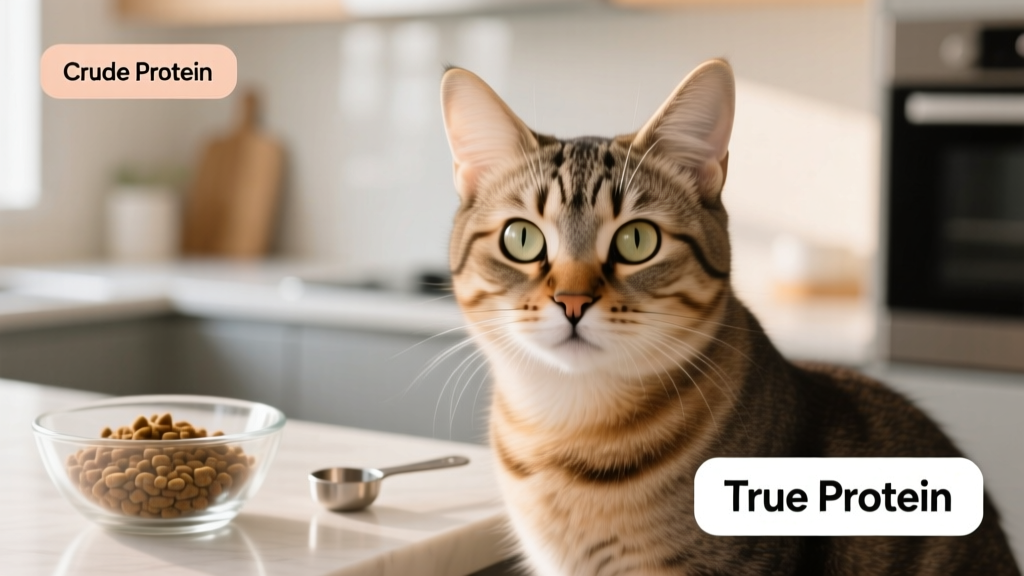
Understanding Cat Food Crude Protein vs True Protein
1) Why this topic matters for cat health
Protein is the nutritional centerpiece of a cat’s diet. Cats use amino acids (the building blocks of protein) not only to maintain muscle, skin, fur, and immune function, but also for core metabolic processes that other species can “dial down” when protein intake drops. That’s why cat food labels that advertise “high protein” often catch an owner’s attention.
Here’s the problem: the protein number you see on a cat food label is usually crude protein, not a direct measurement of true, usable protein. Two foods can list the same crude protein percentage and still differ dramatically in:
- How much protein is digestible (actually absorbed and used)
- Which amino acids are supplied (taurine is a classic feline requirement)
- Overall calorie balance (protein percentage “as-fed” can be misleading)
- Ingredient quality and processing (which can change amino acid availability)
Understanding crude protein vs true protein helps you choose diets that better support lean body mass, healthy weight, skin/coat quality, gut health, and long-term vitality. For cats with medical conditions (kidney disease, diabetes, obesity, food sensitivities), getting protein right can also be part of a successful treatment plan—always with veterinary guidance.
2) Scientific background: feline nutritional needs and obligate carnivore biology
Cats are obligate carnivores. Their physiology evolved around prey-based diets—high in animal tissue, moderate in fat, and naturally low in carbohydrates. This matters because feline metabolism depends heavily on amino acids and has limited flexibility when dietary protein is reduced.
- Higher baseline protein needs: Cats have relatively high activity of liver enzymes involved in amino acid breakdown, and they do not downregulate these enzymes as effectively as omnivores. This increases their dietary protein requirement.
- Essential amino acids: Cats require all the essential amino acids mammals need, plus they have unique requirements for taurine (cannot synthesize enough), and higher needs for certain amino acids such as arginine (critical for ammonia detoxification).
- Animal vs plant proteins: Animal tissues generally provide a more complete amino acid pattern for cats and tend to be more digestible. Plant proteins can contribute amino acids but may be limiting in one or more essentials unless carefully balanced.
- Protein isn’t just a percentage: What matters is whether a food delivers adequate essential amino acids at the calories your cat eats daily. If a cat eats fewer calories (weight loss plan, poor appetite, senior cat), the diet must be nutrient-dense enough to still meet amino acid needs.
Modern “complete and balanced” cat foods are formulated to meet established nutrient profiles (such as AAFCO in the US) or pass feeding trials. That helps ensure minimum amino acids, including taurine, are present. Still, the crude protein number alone doesn’t tell you the whole story about protein quality or availability.
3) Crude protein vs true protein: what the label really means
What “crude protein” is
Crude protein is a laboratory estimate based on nitrogen content. Most protein contains nitrogen, so labs measure nitrogen and multiply by a factor (commonly 6.25) to estimate protein.
Key limitation: crude protein reflects nitrogen, not “usable amino acids.” It does not directly measure digestibility, amino acid balance, or how well the protein supports feline needs.
What “true protein” (usable protein) means in practice
In pet nutrition conversations, true protein typically refers to the protein that is actually present as intact amino acids/peptides and is digestible and biologically valuable to the cat. You may also hear terms like:
- Digestible protein (what’s absorbed)
- Bioavailable protein (what can be used for body functions)
- Biological value (how well the amino acid pattern matches the animal’s needs)
Why crude protein can be misleading
- Non-protein nitrogen: Crude protein testing can “count” nitrogen that isn’t part of complete proteins (more common as an issue in some livestock feeds; reputable pet foods avoid unsafe practices, but the concept explains the limitation).
- Digestibility differences: Animal proteins and well-processed proteins are typically more digestible than some lower-quality or heavily heat-damaged proteins.
- Amino acid limitations: A diet can have a high crude protein percentage but still be short in one or more essential amino acids if ingredients and formulation are poor. Most reputable “complete and balanced” foods address this by supplementing amino acids (for cats, taurine is commonly supplemented).
- “As-fed” vs “dry matter” confusion: Canned foods look lower in crude protein on the label because they contain much more water. Comparing protein across wet and dry foods requires converting to dry matter.
Crude protein vs true protein: quick comparison table
| Aspect | Crude Protein (Label) | True/Usable Protein (What your cat benefits from) |
|---|---|---|
| How it’s measured | Nitrogen-based estimate | Digestible amino acids available to the body |
| Shows amino acid balance? | No | Yes (functionally), depends on formulation and ingredients |
| Accounts for digestibility? | No | Yes |
| Easy for owners to compare? | Somewhat, but can mislead (wet vs dry; calories) | Harder; requires more data (calorie basis, digestibility, quality control) |
Better ways to judge protein quality than crude protein alone
- “Complete and balanced” statement: Look for an AAFCO (or equivalent) adequacy statement for your cat’s life stage.
- Life-stage appropriateness: Kitten, adult maintenance, or all life stages. Don’t feed adult-only diets to growing kittens.
- Company transparency: Brands that employ veterinary nutritionists, publish nutrient analyses, and provide calorie information are easier to evaluate.
- Calorie (energy) basis: Ask: “How much protein does my cat get per 100 kcal?” This helps compare foods fairly and protects against “high percentage, low intake” problems.
- Body condition and muscle condition: The ultimate real-world check. If a cat loses muscle, the diet (or calories) may not be meeting needs even if the label looks impressive.
4) Practical recommendations for cat owners
Use this step-by-step approach to choose a protein-appropriate food without getting trapped by label marketing:
- Prioritize completeness: Choose foods labeled complete and balanced for your cat’s life stage.
- Compare on a calorie basis when possible: If the brand provides it, compare grams of protein per 100 kcal rather than only the percentage on the guaranteed analysis.
- Use wet food strategically: Wet foods support hydration and often help weight management. Protein percentage “as-fed” will look lower due to water—don’t assume it’s lower protein quality.
- Look for animal protein sources: Ingredients like poultry, beef, fish, eggs, and organ meats typically provide strong amino acid profiles for cats. Plant proteins can be included, but the overall formulation matters.
- Watch the whole diet, not just protein: Adequate fat, essential fatty acids, minerals, and vitamins all matter. Over-focusing on one number can backfire.
If your cat has a medical condition (kidney disease, urinary issues, GI disease, diabetes, pancreatitis, food allergies), ask your veterinarian what protein level and type are appropriate and whether a therapeutic diet is needed.
5) Comparing approaches: wet vs dry, “high-protein” claims, and fresh/raw trends
| Option/Approach | Potential Benefits | Potential Downsides | Best Fit For |
|---|---|---|---|
| Wet (canned/pouch) complete diets | Higher moisture; often helps satiety; can support urinary health | Cost; dental tartar still possible; some cats need gradual transition | Cats prone to low water intake, overweight cats, many urinary concerns (vet-guided) |
| Dry kibble complete diets | Convenient; cost-effective; can work well when portioned precisely | Lower moisture; easy to overfeed; protein % may look high but calorie intake matters | Multi-cat homes, puzzle-feeder routines, owners needing convenience |
| “High-protein” marketing formulas | May increase protein intake per calorie; can help preserve lean mass during weight loss when properly formulated | Claim doesn’t guarantee digestibility, amino acid balance, or appropriateness for all conditions | Healthy adults needing weight management support (vet-approved plan) |
| Fresh-cooked / home-prepared | Ingredient control; palatability for some cats | High risk of nutrient imbalance without a veterinary nutritionist recipe; calcium/phosphorus errors common | Cats with special needs when formulated by a boarded veterinary nutritionist |
| Raw diets | Some owners report palatability/coat changes (anecdotal) | Pathogen risk (Salmonella, E. coli, Listeria); nutrient imbalance; bone hazards; not ideal for immunocompromised households | Only with strong veterinary oversight and strict food safety; often not recommended |
6) Common mistakes and misconceptions to avoid
- Myth: “Higher crude protein always means better food.”
Fact: Crude protein doesn’t reveal digestibility, amino acid profile, or calories. A moderate crude protein food can outperform a higher one if it’s more digestible and better balanced. - Myth: “Wet food is low protein because the label shows a small number.”
Fact: Wet foods contain much more water. Compare using dry matter or, even better, protein per 100 kcal. - Myth: “Cats with kidney disease must always eat the lowest protein possible.”
Fact: Modern veterinary management focuses on a therapeutic balance: controlling phosphorus, ensuring adequate calories, and using an appropriate amount of high-quality protein. The right plan depends on disease stage, lab values, appetite, and body condition. Always follow your veterinarian’s guidance. - Myth: “Grain-free means more meat and better protein.”
Fact: Grain-free often swaps grains for other starches (peas, lentils, potatoes). Protein quality depends on the total formulation, not the presence or absence of grains. - Mistake: Using ingredient lists as a protein scoreboard.
Ingredient lists are ordered by weight before cooking. Water content can shift the order dramatically. Use the adequacy statement, nutrient analysis, and your cat’s results (weight, muscle, stool quality, coat) for a clearer picture.
7) How to implement changes safely (transition tips)
Even a “better” protein profile can cause digestive upset if you switch too quickly. Cats also develop strong food preferences, and sudden change can lead to food refusal.
- Use a 7–10 day transition: Mix the new food in gradually (e.g., 10–25% new for 2–3 days, then 50/50, then 75/25, then 100%). Sensitive cats may need longer.
- Track stool and appetite: Soft stool, vomiting, or reduced appetite means slow down and call your vet if it persists.
- Protect against “hunger strikes”: Cats that stop eating are at risk for hepatic lipidosis (fatty liver), especially if overweight. If your cat refuses food for 24 hours or eats dramatically less, contact your veterinarian.
- Weigh your cat regularly: Every 2–4 weeks during changes (or weekly for a weight-loss plan). Adjust portions with your vet’s help.
- Hydration matters: If moving from wet to dry, add water to food (if accepted), use water fountains, and monitor urine output.
8) Special considerations: age, health conditions, and activity level
Kittens and growing cats
- Need higher protein and energy density to support growth.
- Choose diets labeled for growth or all life stages.
- Ensure adequate taurine, DHA (often from fish oil/algae), and balanced minerals for skeletal development.
Healthy adult cats
- Focus on maintaining ideal body condition and lean muscle.
- Compare foods using calorie information when possible; avoid free-feeding if weight creep is happening.
Senior cats
- Many seniors benefit from highly digestible protein to preserve muscle, but medical conditions become more common.
- Monitor for unintentional weight loss or muscle loss (topline thinning). Ask your vet about routine lab work and whether protein, phosphorus, or calories should be adjusted.
Overweight cats
- A well-designed weight-loss plan often emphasizes adequate protein per calorie to protect muscle.
- Rapid weight loss is unsafe. Work with a veterinarian for a controlled plan, precise calorie targets, and follow-up weigh-ins.
Chronic kidney disease (CKD)
- Protein decisions should be individualized by stage and lab results.
- Therapeutic kidney diets typically focus heavily on phosphorus control and overall nutrient balance, not simply “low protein at all costs.”
- Never switch a CKD cat’s diet without veterinary oversight.
Diabetes
- Many diabetic cats do well on diets that are lower in carbohydrates and supportive of lean mass, but treatment must align with insulin therapy and monitoring.
- Consult your vet before changing foods because diet changes can alter insulin needs.
Food sensitivities and GI disease
- Protein source and digestibility matter more than crude protein percentage.
- Your veterinarian may recommend a hydrolyzed protein diet or a novel-protein therapeutic diet and a strict diet trial.
9) FAQ: common questions about crude protein vs true protein
1) Is crude protein “bad” or meaningless?
No. Crude protein is a useful standardized label value, and it helps ensure minimum protein levels. It’s just incomplete. It doesn’t tell you digestibility, amino acid balance, or how much protein your cat gets per calorie.
2) How can I compare wet and dry foods fairly?
Two practical methods:
- Dry matter comparison (removes water from the math)
- Protein per 100 kcal (often the most owner-friendly if the company provides nutrient and calorie data)
If you’re unsure, your veterinarian can help you interpret the label and the manufacturer’s nutrient analysis.
3) Does “meat as the first ingredient” guarantee higher true protein?
No. Ingredient lists are ordered by weight before processing, and water content can skew the order. A food can list fresh meat first yet still be high in starch after cooking. Look for complete-and-balanced labeling, reputable formulation, and calorie-based nutrient info when possible.
4) Are plant proteins harmful for cats?
Not automatically. Cats do best with diets that provide essential amino acids in appropriate amounts, and animal proteins are generally the most natural fit. Some plant ingredients can be included successfully in complete diets, but they should not replace the overall amino acid pattern cats require. If a food relies heavily on plant proteins, brand quality control and formulation expertise matter a lot.
5) Should I choose the highest protein food for my cat?
Not as a blanket rule. For many healthy cats, adequate high-quality protein is beneficial, but the “best” choice depends on calories, life stage, medical conditions, and your cat’s body condition and muscle. If your cat has kidney disease, urinary disease, diabetes, or GI issues, consult your veterinarian before increasing protein.
6) What are signs my cat may not be thriving on their current diet?
- Unexplained weight loss or muscle loss
- Dull coat, excessive shedding, or flaky skin
- Chronic soft stools, constipation, or frequent vomiting
- Constant hunger with weight gain (portion/calorie mismatch)
- Lethargy or reduced activity (medical causes should be ruled out)
These signs can have many causes. A veterinary exam is the safest first step.
Bottom line: crude protein is a label estimate, while true/usable protein depends on digestibility and amino acid balance. Choose complete and balanced diets from reputable manufacturers, compare foods using calorie-based information when you can, and work with your veterinarian for any cat with health concerns or for major diet changes.
For more practical, vet-informed feeding guidance, explore our nutrition guides and food-label breakdowns on catloversbase.com.