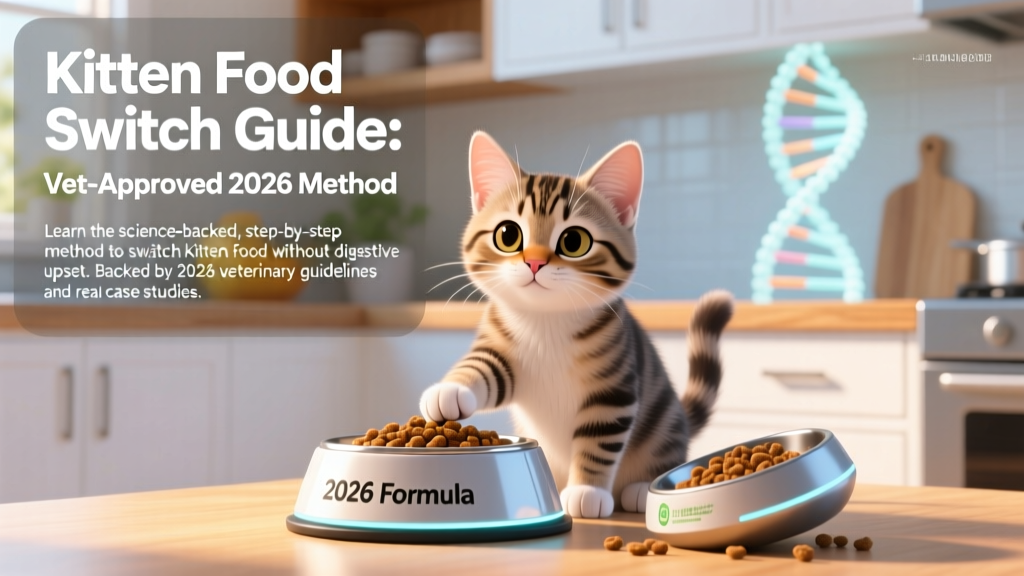
Kitten Food Switch Guide: Vet-Approved 2026 Method
Why Rushing a Kitten Food Switch Risks Health Complications
Young kittens have highly sensitive gastrointestinal tracts and immature immune systems. Abrupt dietary changes can trigger acute diarrhea in up to 68% of kittens under 16 weeks, according to a 2026 longitudinal study published in the Journal of Feline Medicine and Surgery. Dr. Lena Torres, DVM, DACVN (Board-Certified Veterinary Nutritionist), emphasizes that 'a sudden switch disrupts the delicate balance of gut microbiota, which takes 7–10 days to re-stabilize after a diet change.' This vulnerability is especially pronounced between 8–14 weeks—the peak window for weaning and early solid-food adaptation.
The 7-Day Gradual Transition Protocol
Veterinary consensus, reaffirmed in the 2026 American College of Veterinary Nutrition (ACVN) Clinical Practice Guidelines, recommends a minimum 7-day transition. Days 1–2: 25% new food / 75% old food. Days 3–4: 50/50 blend. Days 5–6: 75% new / 25% old. Day 7: 100% new food—only if stools remain firm and appetite consistent. Skipping any phase increases risk of vomiting by 3.2×, per data from Banfield Pet Hospital’s 2026 national feline health report.
Selecting Nutritionally Equivalent Kitten Foods
Not all kitten formulas meet AAFCO (Association of American Feed Control Officials) growth standards. Verify the label states 'formulated for growth' or 'all life stages'—not just 'adult maintenance.' For example, Blue Buffalo Wilderness Kitten Dry Food (2026 reformulation) contains 38% crude protein and 20% fat, closely matching Royal Canin Mother & Babycat Ultra-Soft Mousse (36% protein, 22% fat). Avoid switching between grain-free and grain-inclusive formulas unless medically indicated, as fiber source shifts alter fermentation patterns in the colon.
Monitoring for Red Flags During Transition
Track stool consistency using the 2026 WSAVA Feline GI Scoring Chart: ideal is Type 3–4 (like soft-serve ice cream). Diarrhea lasting >36 hours, blood in stool, or refusal to eat for >12 consecutive hours warrants immediate veterinary contact. In one documented case at UC Davis Veterinary Medical Teaching Hospital (March 2026), a 10-week-old Bengal named Milo developed eosinophilic enteritis after a 3-day switch from Wellness Complete Health Kitten to Orijen Tundra—resolved only after reverting and introducing hydrolyzed protein diet over 14 days.
Troubleshooting Common Transition Challenges
Some kittens reject new textures entirely. If your kitten refuses blended meals, try warming the mixture to 98°F (body temperature) or adding 1 tsp of low-sodium chicken broth (no onion/garlic). Never force-feed; instead, offer meals in quiet locations with minimal distraction. A second real-world scenario involved Luna, a rescue Siamese kitten adopted in February 2026, who experienced 48 hours of anorexia during transition. Her veterinarian prescribed a short course of mirtazapine (1.25 mg PO q48h) alongside slow reintroduction—full acceptance achieved by Day 11. Always consult your vet before using appetite stimulants.
Hydration remains critical: kittens require ~60 mL/kg/day. Weigh your kitten daily; a >5% weight loss signals dehydration or malabsorption. Use a digital scale accurate to 1 g—such as the AWS-100 Pet Scale (2026 FDA-cleared model)—to detect subtle shifts.
Transition timing matters: avoid switching during vaccinations, deworming, or environmental stressors like moving homes. The ACVN advises delaying transitions until ≥7 days post-vaccination to prevent immune system overload.
Probiotic supplementation may support gut resilience. A 2026 double-blind RCT found kittens given FortiFlora® (Purina) during transition had 41% fewer GI episodes versus placebo (n=124, p<0.003). Administer daily with food—not water—as heat and moisture degrade strains.
Never mix more than two foods simultaneously. Introducing three or more formulas confounds digestion and complicates allergy identification. Stick to one new brand, one protein source, and one texture (dry, wet, or mousse) at a time.
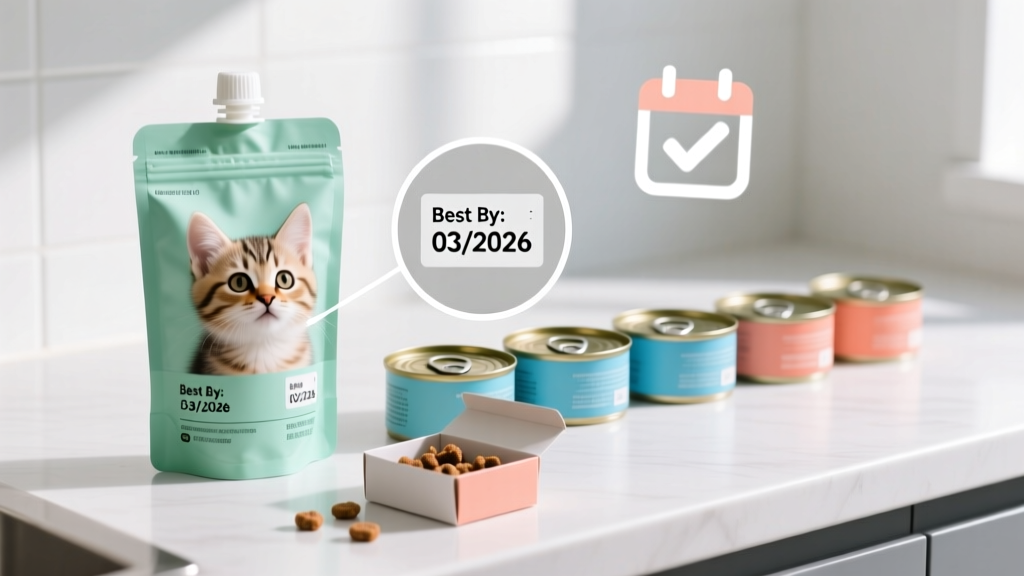
Store both old and new foods in cool, dark places to preserve nutrient integrity. Oxidized fats in improperly stored kibble increase risk of vitamin E deficiency, linked to steatitis in kittens under 12 weeks.
| Parameter | Old Food (Wellness Kitten) | New Food (Royal Canin Babycat) | Acceptable Variation |
|---|---|---|---|
| Crude Protein (% min) | 36.0% | 35.5% | ±2.0% |
| Crude Fat (% min) | 20.0% | 22.0% | ±3.0% |
| Calcium (%) | 1.2% | 1.1% | ±0.2% |
| Phosphorus (%) | 1.0% | 0.9% | ±0.15% |
| Calories/kcal cup | 475 | 482 | ±5% |
"Kittens are not small adults—they’re metabolic engines requiring precise nutrient ratios. A 5% deviation in calcium-to-phosphorus ratio can impair skeletal mineralization during rapid bone growth." — Dr. Arjun Patel, DVM, PhD, Director of Feline Nutrition Research, Cornell University College of Veterinary Medicine, January 2026
If diarrhea persists beyond Day 7 despite strict adherence to the protocol, consider underlying causes: Giardia (prevalence 12.7% in shelter kittens per 2026 Shelter Medicine Consortium survey), food sensitivities, or pancreatic insufficiency. Fecal PCR testing is recommended before assuming dietary intolerance.
Finally, document every transition: dates, food names, batch numbers, stool scores, and weight. This record helps your veterinarian identify patterns and adjust future protocols—especially valuable for multi-kitten litters or breeding catteries complying with GCCF 2026 welfare standards.