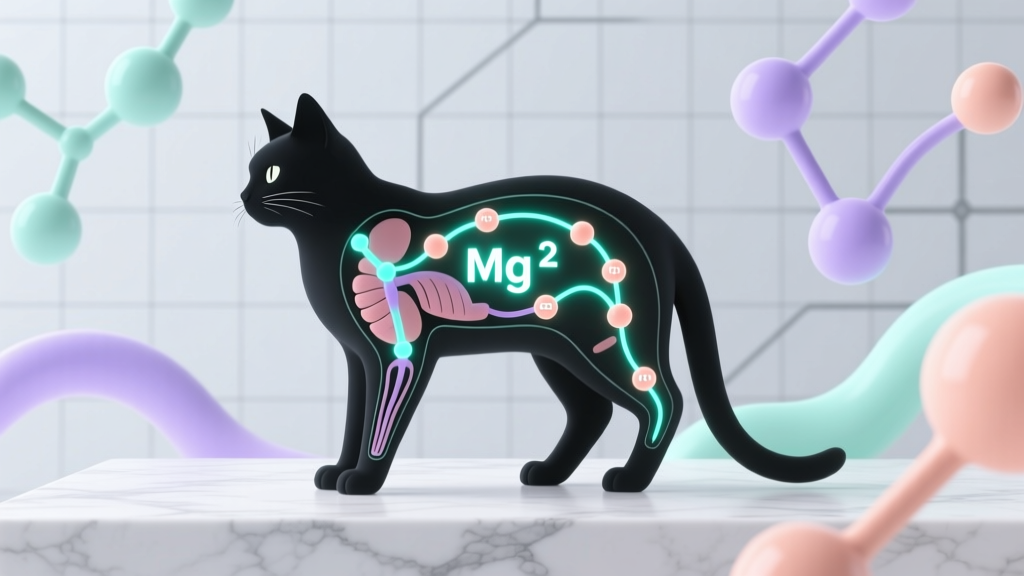
The Role of Magnesium as Enzyme Cofactor in Cats
1) Why this topic matters for cat health
Magnesium doesn’t get as much attention as protein or taurine, yet it influences how a cat’s body turns food into usable energy, maintains normal nerve and muscle function, supports bone structure, and keeps the heart rhythm stable. The reason is simple: magnesium is a required “helper” for a large number of enzymes—proteins that run almost every chemical reaction in the body.
For cat owners trying to feed the best diet, magnesium sits at a tricky intersection of benefits and concerns. Too little can disrupt metabolism and neuromuscular function. Too much—especially in the wrong context—has historically been associated with urinary crystal risk and, more rarely, other health issues. Getting magnesium “right” means understanding what it does, how cats are different from many other species, and how to choose diets that meet established nutritional standards without chasing extremes.
2) Scientific background: feline nutritional needs and obligate carnivore biology
Cats are obligate carnivores. Their metabolism is adapted for a prey-based diet: high in protein, moderate in fat, very low in carbohydrate. Several key traits shape mineral nutrition in cats:
- High protein turnover: Cats maintain relatively high activity of protein-metabolizing enzymes even when dietary protein drops. Minerals that serve as enzyme cofactors—magnesium included—support these pathways.
- Limited ability to adapt to low essential nutrients: Nutrients like taurine are well known, but minerals also need to be provided consistently in balanced amounts.
- Urinary physiology matters: Diet influences urine volume, pH, and concentration, which affects crystal formation. Magnesium interacts with urinary chemistry, so context (water intake, urine pH, other minerals) is essential.
- Commercial diet formulation is usually the safest route: Reputable diets are designed to meet AAFCO or FEDIAF nutrient profiles, including minimum magnesium, and are often tested for adequacy.
3) Detailed analysis: magnesium as an enzyme cofactor in cats
What “enzyme cofactor” means
Many enzymes need a helper molecule to function. Magnesium often binds to enzymes and to ATP (adenosine triphosphate), the body’s primary “energy currency.” In practical terms, magnesium helps enzymes:
- Transfer phosphate groups (critical in energy metabolism)
- Stabilize DNA and RNA structures (supporting cell repair and replication)
- Regulate ion channels (supporting nerve signaling and muscle contraction)
- Maintain normal mitochondrial function (energy production)
Key magnesium-dependent processes in cats
| Body system | How magnesium helps (cofactor roles) | What owners might notice if disrupted |
|---|---|---|
| Energy metabolism | Supports ATP-related enzymes; helps carbohydrate, fat, and protein metabolism | Lethargy, reduced stamina, poor recovery (nonspecific signs) |
| Nerve & muscle function | Helps regulate neuromuscular excitability and electrolyte balance | Tremors, weakness, abnormal gait in severe cases |
| Heart rhythm | Involved in ion transport and electrical stability of cardiac muscle | Usually only noticeable with significant imbalance; may contribute to arrhythmias |
| Bone structure | Part of bone mineral matrix; interacts with calcium and phosphorus regulation | Not obvious early; long-term imbalance can affect skeletal health |
| Cell function & repair | Stabilizes DNA/RNA, supports enzymes for synthesis and repair | Poor coat/condition can occur with overall malnutrition |
Magnesium needs: adequacy vs. excess
Healthy cats need magnesium, but the goal is balanced intake rather than supplementation “just in case.” In modern commercial cat foods, magnesium is typically supplied through ingredient sources (meat, fish, mineral premixes) and is formulated to meet established nutrient profiles. Deficiency is uncommon in cats fed complete and balanced diets, but it can occur with:
- Unbalanced homemade diets without veterinary formulation
- Long-term feeding of diets not labeled “complete and balanced” (some treat-only foods)
- Malabsorption or chronic gastrointestinal disease (needs veterinary management)
- Some medications or conditions that affect electrolyte balance
Magnesium and urinary health: what the science-based view looks like
Magnesium is one piece of urinary crystal risk, not the whole story. Struvite crystals (magnesium ammonium phosphate) form when urine is concentrated and tends to be more alkaline. Historically, high-magnesium diets were implicated in feline lower urinary tract disease (FLUTD), especially struvite formation. Modern veterinary nutrition has refined this view:
- Urine pH and urine concentration are major drivers. Water intake (wet food, fountains, multiple bowls) is often more impactful than small differences in dietary magnesium.
- “Low magnesium” is not automatically better. Over-restricting magnesium is not a wellness strategy and may be inappropriate for some cats.
- Therapeutic urinary diets manage multiple variables at once. They control magnesium, phosphorus, and other minerals, while also targeting urine pH and promoting urine dilution.
For cats with a history of urinary blockage, recurrent crystals, or diagnosed stones, diet selection should be guided by a veterinarian. The “right” approach depends on the type of stone (struvite vs calcium oxalate), urine pH patterns, and individual risk factors.
Interactions: magnesium doesn’t work alone
Minerals function as a team. Magnesium interacts with:
- Calcium and phosphorus: All three influence bone mineralization and hormonal regulation (including vitamin D-related pathways). Imbalances can matter as much as absolute amounts.
- Potassium and sodium: Together they help regulate fluid balance, nerve impulses, and muscle contraction.
- Vitamin B6 and protein metabolism: Magnesium supports enzymes involved in amino acid handling; cats rely heavily on protein metabolism.
4) Practical recommendations for cat owners
For most cats, the most effective way to optimize magnesium as an enzyme cofactor is to choose a diet that is reliably complete, balanced, and appropriate for the cat’s life stage and health status.
What to look for on the label
- “Complete and balanced” statement meeting AAFCO or FEDIAF nutrient profiles
- Life-stage match: kitten/growth, adult maintenance, or senior; “all life stages” can be appropriate but may be more calorie-dense
- Reputable manufacturer quality controls: consistent sourcing, nutrient analysis, feeding trials when available
Hydration supports mineral balance
If urinary health is a concern (or you want to be proactive), prioritize hydration strategies alongside diet choice:
- Feed some or all wet food
- Add water or broth formulated for cats (no onion/garlic, low sodium) to meals
- Provide multiple water stations and consider a fountain
5) Comparison of approaches and products (where applicable)
| Approach | Pros | Cons / cautions | Best for |
|---|---|---|---|
| Complete & balanced wet food | Higher moisture supports urinary dilution; typically well-controlled minerals | Cost; dental benefits are not guaranteed; choose reputable brands | Most cats, especially those prone to low water intake |
| Complete & balanced dry food | Convenient; often cost-effective; can be nutritionally complete | Lower moisture; may require extra hydration strategies | Cats that drink well and do best on dry, or mixed feeding households |
| Veterinary therapeutic urinary diets | Designed to manage urine pH and mineral balance; evidence-based for specific urinary issues | Should be used under veterinary guidance; not always appropriate for every stone type | Cats with FLUTD, struvite issues, some stone risks (vet-directed) |
| Homemade diets | Can be tailored for allergies or special cases when properly formulated | High risk of mineral imbalance without a veterinary nutritionist; magnesium may be too low or too high | Only with professional formulation and monitoring |
| Magnesium supplements (powders, tablets) | Rarely needed; may be prescribed in specific medical situations | Over-supplementation risk; can worsen GI upset and interfere with mineral balance; not for routine use | Only when prescribed and monitored by a veterinarian |
6) Common mistakes and misconceptions to avoid
- Myth: “Low magnesium prevents all urinary problems.”
Reality: Urinary issues are multifactorial. Urine concentration and pH, water intake, stress, and the specific crystal/stone type matter. Over-restriction isn’t a wellness plan. - Mistake: Supplementing magnesium without a diagnosis.
Magnesium is essential, but more is not better. Supplements can create imbalance with calcium/phosphorus and may cause diarrhea or other issues. - Myth: “Ash content tells you if minerals are safe.”
“Crude ash” is a broad measure of total mineral residue, not a precise indicator of magnesium level or urinary risk. - Mistake: Feeding unbalanced homemade recipes long-term.
Even meat-heavy recipes can miss critical minerals or provide them in the wrong ratios. Cats need precise formulation. - Myth: “If my cat has crystals once, the same fix works forever.”
Struvite and calcium oxalate stones have different dietary strategies. Diet should match the diagnosis and be rechecked over time.
7) How to implement changes safely (transition tips)
Sudden diet changes can trigger gastrointestinal upset and food refusal. Cats also have a real risk of hepatic lipidosis if they stop eating. Use a gradual transition unless your veterinarian directs otherwise.
Practical transition plan
| Day | Old food | New food |
|---|---|---|
| 1–2 | 75% | 25% |
| 3–4 | 50% | 50% |
| 5–6 | 25% | 75% |
| 7+ | 0% | 100% |
Tips for picky eaters
- Warm wet food slightly to increase aroma (not hot)
- Offer small, frequent meals
- Use a tiny topper of the old food rather than treats that unbalance the diet
- Track intake; call your vet if your cat eats significantly less for more than 24 hours
8) Special considerations (age, health conditions, activity level)
Kittens and pregnant/nursing cats
- Higher nutrient demands overall; choose a growth/reproduction diet formulated to standards.
- Avoid “adult maintenance” foods for kittens as the sole diet.
- Do not add magnesium supplements unless a veterinarian specifically prescribes them.
Senior cats
- Older cats may have kidney changes, dental issues, or reduced appetite—factors that affect hydration and mineral handling.
- Senior diets vary widely; the best choice depends on body condition, muscle mass, and medical status.
Chronic kidney disease (CKD)
- Mineral management becomes more complex (phosphorus control is a central focus).
- Magnesium may accumulate in some kidney patients, especially if supplemented or if certain binders/antacids are used.
- Diet changes for CKD should be guided by your veterinarian with lab monitoring.
History of urinary crystals or stones
- Diet should be matched to the diagnosed stone type and urine findings.
- Therapeutic urinary diets can be highly effective, but they are not one-size-fits-all.
- Hydration and environmental stress reduction are key parts of prevention for many cats with FLUTD.
Highly active cats vs. indoor sedentary cats
- Activity level changes calorie needs more than magnesium requirements.
- Overfeeding leads to obesity, which increases inflammation risk and can worsen some urinary issues. Choose portion sizes based on body condition and veterinary guidance.
9) FAQ
How do I know if my cat is getting enough magnesium?
If you feed a reputable food labeled “complete and balanced” for your cat’s life stage, magnesium intake is typically adequate. If you’re feeding homemade food or your cat has chronic GI disease, kidney disease, or urinary issues, ask your veterinarian whether additional testing or diet adjustments are needed.
Should I choose a “low magnesium” cat food?
Not as a general wellness strategy. For cats with certain urinary problems, a veterinarian may recommend a therapeutic urinary diet that manages magnesium along with urine pH and other minerals. For healthy cats, focus on complete-and-balanced nutrition and hydration.
Can magnesium cause urinary crystals in cats?
Magnesium can be part of struvite crystal formation, but crystals are strongly influenced by urine concentration and pH. Modern urinary diets address the full picture rather than relying on magnesium reduction alone. If your cat shows urinary signs (straining, frequent attempts, blood in urine), treat it as urgent and contact a vet promptly.
Is magnesium supplementation safe for cats?
Supplementation should only be done under veterinary direction. Unnecessary supplementation can cause diarrhea and disturb mineral balance. Cats with kidney disease may be at higher risk from excess magnesium.
Does wet food have more magnesium than dry food?
Not consistently. Magnesium content depends on formulation, ingredients, and mineral premix, not simply moisture level. Wet food’s main advantage is higher water intake, which supports urinary dilution.
What’s the single best step I can take to support magnesium-related health?
Feed a complete-and-balanced diet from a reputable manufacturer and support hydration (especially if your cat is prone to urinary issues). For cats with medical conditions, work with your veterinarian to choose an appropriate diet and monitoring plan.
Vet guidance matters: If you’re considering changing diets for urinary health, kidney disease, GI issues, or if you’re thinking about supplements, consult your veterinarian (or a board-certified veterinary nutritionist) for individualized recommendations.
If you want to keep optimizing your cat’s nutrition with practical, science-based guidance, explore more feeding and nutrient deep-dives on catloversbase.com.