The Role of Cobalt in Feline Vitamin B12 Synthesis
1) Why this topic matters for cat health
Vitamin B12 (cobalamin) is one of the most commonly deficient vitamins seen in cats with chronic digestive disease, and it can strongly affect appetite, weight, energy, nerve function, and gut healing. Because cobalt sits at the core of the cobalamin molecule, many cat owners assume that “more cobalt” helps a cat make more B12. That idea is true for ruminants like cows, but cats are different.
For cat owners trying to feed the best diet, the practical takeaway is this: cats need vitamin B12 in the diet, and cobalt supplementation is not a substitute for B12. Understanding why helps you make smarter food choices, avoid risky supplements, and recognize when your cat might need veterinary testing and treatment.
2) Scientific background: feline nutritional needs and obligate carnivore biology
Cats are obligate carnivores. Their metabolism, digestive physiology, and nutrient requirements evolved around prey-based diets with highly bioavailable animal nutrients. That biology shows up in several relevant ways:
- High demand for animal-sourced nutrients: cats have higher requirements for certain amino acids (taurine), vitamins (preformed vitamin A), and fatty acids (arachidonic acid) than many omnivores.
- Limited ability to “adapt” to shortages: cats often have less metabolic flexibility than dogs and humans, making deficiencies more clinically significant.
- Gut microbiome differences: cats do have intestinal bacteria, but they are not designed like ruminants that rely on microbial fermentation to produce key vitamins in a usable way.
Vitamin B12 is essential for:
- DNA synthesis and cell division (critical for intestinal lining turnover)
- Red blood cell production
- Nervous system function
- Normal metabolism via enzyme systems involved in methylation and fatty acid/amino acid metabolism
When a cat is B12 deficient, you may see vague signs such as reduced appetite, weight loss, diarrhea, poor coat quality, lethargy, or failure to gain weight—especially in kittens or cats with gastrointestinal disease.
3) Detailed analysis: cobalt, cobalamin, and what cats can (and can’t) synthesize
What cobalt actually is
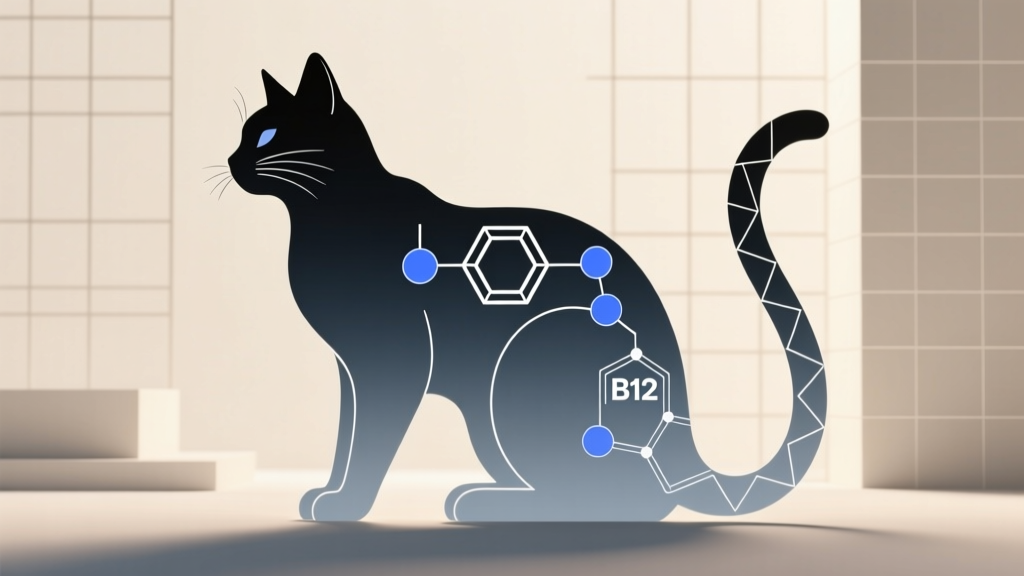
Cobalt is a trace mineral. In animal nutrition, it’s most famous because ruminants require cobalt so their rumen microbes can synthesize vitamin B12. Cobalt is literally part of the cobalamin molecule—hence the name.
Vitamin B12 (cobalamin) and why it’s unique
Vitamin B12 is unusual among vitamins because it is primarily synthesized by certain microorganisms. In many species, B12 can come from:
- Dietary animal tissues (where B12 has accumulated via food chains and microbial production)
- Microbial synthesis in parts of the GI tract—usefulness depends on where it occurs and whether the vitamin can be absorbed
Can cats convert cobalt into vitamin B12?
Not in any reliable, nutritionally meaningful way. Cats do not have a rumen. Any B12 produced by bacteria in the large intestine would occur after the primary site where B12 is absorbed (the ileum, the end portion of the small intestine). That means even if some microbial B12 is made, it may not be efficiently absorbed or adequate to meet needs.
Practical interpretation for cat owners:
- Adding cobalt does not “create” B12 for your cat.
- A diet can be cobalt-containing and still be B12-deficient.
- B12 status depends far more on dietary B12 intake and GI absorption than on cobalt intake.
How cats absorb vitamin B12 (and why GI disease matters)
B12 absorption is a multi-step process. In broad terms:
- B12 is released from food during digestion.
- It binds to carrier proteins and eventually to intrinsic factor (in cats, intrinsic factor is produced mainly by the pancreas).
- The B12–intrinsic factor complex is absorbed in the ileum.
This is why B12 deficiency is so common in cats with:
- Chronic enteropathy / inflammatory bowel disease (IBD)
- Small intestinal disease affecting the ileum
- Exocrine pancreatic insufficiency (EPI) (reduced intrinsic factor and digestive enzymes)
- Chronic pancreatitis (can reduce intrinsic factor production and disrupt digestion)
- Dysbiosis where bacteria may consume B12 or disrupt normal absorption
Evidence-based perspective: cobalt vs. cobalamin requirements
Commercial cat foods formulated to meet AAFCO or FEDIAF guidelines include required vitamins, including B12, because cats are not expected to synthesize adequate amounts. Cobalt itself is not the “fix” for B12 problems in cats; rather, appropriate B12 intake and absorption is.
| Question cat owners ask | What happens in ruminants (cow/sheep) | What happens in cats |
|---|---|---|
| “Can cobalt help make B12?” | Yes—rumen microbes use cobalt to synthesize B12. | No practical benefit—cats don’t have rumen fermentation. |
| “If my cat is low in B12, should I add cobalt?” | Sometimes used as part of ruminant nutrition strategy. | Not recommended—address B12 intake/absorption with vet guidance. |
| “Is B12 deficiency usually a diet problem?” | Can be diet-related depending on forage/cobalt. | Often due to GI disease or malabsorption; diet can contribute if unbalanced. |
4) Practical recommendations for cat owners
- Choose a complete and balanced diet (AAFCO/FEDIAF compliant). This is the most reliable way to ensure adequate B12 intake without risky supplementation.
- Take chronic GI signs seriously. Recurrent diarrhea, vomiting, weight loss, poor appetite, or gassiness warrants veterinary evaluation and may include B12 testing.
- Don’t self-prescribe cobalt supplements. The potential downsides outweigh any theoretical benefit in cats.
- Ask your vet about cobalamin testing if your cat has GI disease. Blood cobalamin is commonly measured; your vet may also consider folate and other GI panels.
- Use vet-recommended B12 supplementation when indicated. Many cats with malabsorption need targeted B12 support (often via injections initially).
5) Comparing options: food strategies and supplementation approaches
When B12 status is a concern, here are common approaches and how they compare. Always consult your veterinarian before changing diets or adding supplements, especially if your cat is ill.
| Approach | Best for | Pros | Cons / cautions |
|---|---|---|---|
| Complete & balanced commercial food (wet or dry) | Most healthy cats | Reliable B12 inclusion; convenient; safety testing and formulation standards | Not all foods suit every medical condition (e.g., allergies, IBD) |
| Veterinary therapeutic GI diet | Cats with chronic enteropathy/IBD-like signs, pancreatitis history | Designed for digestibility and gut support; often paired with medical plan | Requires veterinary guidance; trial period needed to judge response |
| Oral B12 supplement | Mild deficiency or maintenance after injections (vet-directed) | Easy to administer for some cats; non-invasive | May not work well if absorption is impaired; product quality varies |
| B12 injections (cobalamin) | Malabsorption, severe deficiency, chronic GI disease | Bypasses intestinal absorption barriers; often effective quickly | Requires vet dosing schedule; stress for some cats |
| Cobalt supplementation | Not recommended for routine cat nutrition | No meaningful benefit for B12 synthesis in cats | Risk of inappropriate dosing; may distract from treating real cause |
6) Common mistakes and misconceptions to avoid (myths debunked)
- Myth: “Cobalt supplements are a safe way to boost B12.”
Fact: Cats don’t reliably convert supplemental cobalt into usable B12. If your cat needs B12, supplement B12 itself under veterinary guidance. - Myth: “If my cat eats meat, B12 deficiency can’t happen.”
Fact: Many B12 deficiencies in cats are driven by malabsorption (IBD, pancreatitis, EPI), not lack of dietary B12. - Myth: “Seaweed/spirulina/‘superfoods’ supply everything, including B12.”
Fact: Plant-based sources are unreliable for active B12. Some products contain B12 analogs that are not nutritionally useful. Cats do best with animal-based, complete diets. - Myth: “Homemade diets are automatically more nutritious.”
Fact: Homemade diets can work, but only when formulated by a veterinary nutritionist or using a properly designed recipe with the right vitamin/mineral premix. B12 gaps are common in poorly supplemented homemade diets. - Myth: “A sprinkle of mineral mix covers trace needs.”
Fact: Random mineral products can unbalance the diet and still fail to provide correct vitamin levels. Nutrition is about the whole formulation, not single-ingredient fixes.
7) How to implement changes safely (transition tips)
If you’re improving diet quality or moving to a veterinary GI diet, slow transitions reduce digestive upset. Adjust the pace based on your cat’s history (sensitive stomachs often need longer).
- Typical transition schedule (7–10 days):
- Days 1–3: 75% old food, 25% new food
- Days 4–6: 50/50
- Days 7–9: 25% old, 75% new
- Day 10: 100% new
- For cats with active diarrhea/vomiting: talk to your vet before changing foods; your cat may need stabilization, testing, or a prescription diet plan.
- Track outcomes: appetite, stool consistency, vomiting frequency, weight (weekly), coat quality, and energy.
- Avoid multiple changes at once: switching food, adding treats, probiotics, and supplements simultaneously makes it hard to know what helped or harmed.
8) Special considerations: age, health conditions, activity level
Kittens
- Rapid growth increases sensitivity to nutrient imbalances.
- Feed a complete and balanced kitten diet; avoid unbalanced homemade or “all life stages” foods unless they meet recognized standards.
- Poor growth, diarrhea, or low appetite in a kitten warrants prompt veterinary care—B12 status may be part of the workup.
Adult cats
- Most healthy adults do well on any reputable complete diet that matches their body condition goals.
- Chronic hairballs, intermittent vomiting, or loose stool can signal underlying GI issues rather than a simple “sensitive stomach.” Discuss B12 testing with your vet if signs persist.
Senior cats
- Older cats are more prone to chronic GI disease, kidney disease, hyperthyroidism, and appetite changes.
- Unexplained weight loss or muscle loss deserves a veterinary assessment; B12 may be checked alongside thyroid and kidney values.
Cats with IBD/chronic enteropathy, pancreatitis, or EPI
- B12 deficiency is common and can worsen GI function, creating a cycle of poor digestion and poor absorption.
- Many cats benefit from vet-prescribed B12 protocols (often starting with injections).
- Diet choice (hydrolyzed, novel protein, highly digestible, or fiber-modified) should be individualized with your veterinarian.
Highly active cats vs. indoor loungers
- Activity level changes calorie needs more than B12 needs when the diet is complete and balanced.
- Restricting calories for weight loss should not mean restricting micronutrients—choose diets designed for weight control rather than simply feeding much less of a standard food.
9) FAQ
Can I give my cat a cobalt supplement to prevent B12 deficiency?
No. Cobalt is part of the B12 molecule, but cats do not reliably synthesize B12 from cobalt. Prevention focuses on feeding a complete and balanced diet and addressing GI disease early. Consult your veterinarian before giving any mineral supplement.
What are the signs of B12 deficiency in cats?
Common signs include poor appetite, weight loss, chronic diarrhea or soft stools, vomiting, lethargy, and failure to gain weight (especially in kittens). These signs overlap with many conditions, so testing is needed to confirm.
Is B12 deficiency usually caused by poor diet or illness?
In cats, illness (malabsorption from intestinal or pancreatic disease) is a frequent cause. Diet can contribute if it’s unbalanced (some homemade or improperly formulated foods). Your vet can help determine the cause.
Are oral B12 supplements effective for cats?
They can be, depending on the cause. If absorption is impaired, injections may work better initially. Your veterinarian can recommend the best form and dosing schedule for your cat’s specific situation.
Does cooking or processing cat food destroy vitamin B12?
Heat can affect some vitamins, but reputable pet food manufacturers account for processing losses by formulating with appropriate vitamin levels. The bigger concern is feeding diets that are not complete and balanced or that are improperly supplemented.
Should I switch foods if my cat has low B12?
Sometimes, but not always. Many cats need direct B12 supplementation (often injections) and a plan to manage the underlying GI condition. Food changes should be made with your veterinarian to avoid worsening symptoms or creating nutrient imbalances.
Vet reminder: If you suspect B12 deficiency or your cat has chronic digestive signs, partner with your veterinarian for testing and a tailored treatment plan. Nutrition changes and supplements are safest when guided by medical context.
For more practical, science-based cat nutrition help, explore the other feeding and wellness guides on catloversbase.com.