How to Care for a Kitten 4 Weeks Old
Why This Week Is Your Kitten’s Most Critical Developmental Window
If you’re wondering how to care for a kitten 4 weeks old, you’ve landed at the most pivotal moment in their early life — not just a milestone, but a biological tipping point. At exactly 28 days, kittens undergo rapid neurological, gastrointestinal, and immune system maturation. Their eyes are fully open, ears are fully functional, teeth are erupting, and crucially, their digestive enzymes begin shifting to process solid food — yet their stomachs remain tiny (holding only ~5–7 mL per feeding) and their immune systems are still 60% dependent on maternal antibodies (which wane sharply after week 3). Miss this window, and you risk stunted growth, chronic GI sensitivity, or irreversible social deficits. This isn’t ‘just’ kitten care — it’s precision developmental stewardship.
Feeding & Nutrition: The 4-Week Weaning Protocol (Backed by Feline Nutrition Science)
Forget vague advice like “start solids when they show interest.” At 4 weeks, interest isn’t optional — it’s physiological necessity. Kittens’ pancreatic amylase production increases 300% between days 26–30, enabling starch digestion, while lactase (the enzyme breaking down milk sugar) begins declining. That means cow’s milk or improper formula causes painful gas, diarrhea, and dehydration — a leading cause of neonatal mortality in orphaned kittens.
Here’s what works — and why:
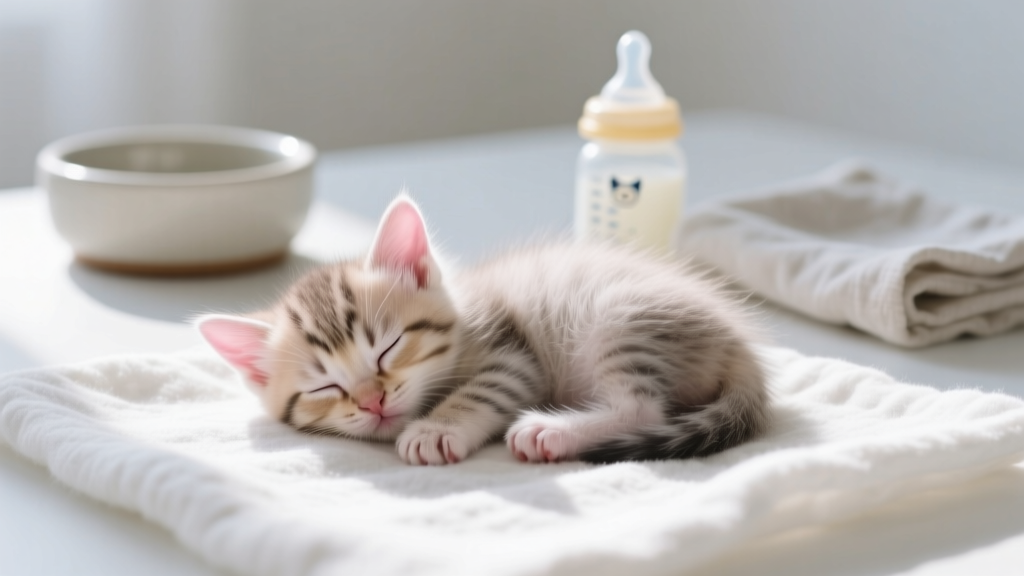
- Formula remains primary fuel: Continue high-quality kitten milk replacer (KMR or PetAg) every 4 hours — yes, including overnight. A 4-week-old kitten weighing ~300g needs ~30–35 kcal per 100g body weight daily. That translates to ~90–105 kcal/day, delivered in 5–6 feedings of 5–7 mL each. Underfeeding is more common than overfeeding — and far more dangerous.
- Solids are supplemental — not replacement: Introduce a gruel made from warmed KMR + ultra-fine, grain-free kitten food (e.g., Royal Canin Babycat or Blue Buffalo Wilderness Kitten) mixed to the consistency of thin oatmeal. Offer it on a shallow dish or your fingertip — never force-feed. Let them lick, paw, and explore. Expect minimal intake for days; gut flora must colonize first.
- Never use human baby food, rice cereal, or goat’s milk: These lack taurine, arginine, and preformed vitamin A — nutrients kittens cannot synthesize. Deficiency can trigger retinal degeneration or heart failure within weeks.
According to Dr. Susan Little, DVM and feline specialist with the American Association of Feline Practitioners, “The ideal weaning curve isn’t linear — it’s U-shaped: slow uptake until day 32, then rapid increase as teeth emerge and gut maturity accelerates. Pushing solids before day 28 risks aspiration pneumonia; delaying past day 35 stalls oral motor development.”
Temperature, Hygiene & Physical Safety: The Invisible Lifelines
A 4-week-old kitten’s thermoregulation is still immature. Their normal rectal temperature should be 100–102.5°F — but ambient room temps below 75°F cause rapid heat loss. Hypothermia isn’t just uncomfortable; it shuts down digestion and immune response. One study in the Journal of Feline Medicine and Surgery found that kittens under 5 weeks with body temps < 99°F had a 4.2x higher mortality rate within 48 hours.
Practical safeguards:
- Use a heating pad set to LOW beneath half the bedding — never direct contact. Cover with a thick towel and monitor surface temp with an infrared thermometer (ideal: 88–92°F).
- Weigh daily at the same time using a gram-scale. Healthy gain: 7–15g/day. A 24-hour plateau warrants a vet call — it’s often the first sign of subclinical infection or inadequate intake.
- Stimulate elimination after every feeding — even if they’re starting to use a litter box. Gently rub the genital/anal area with warm, damp cotton ball for 30–45 seconds until urination/defecation occurs. Their bladder muscles aren’t neurologically wired for voluntary control yet.
Also critical: avoid cedar or clay litter. Dust and phenols irritate developing airways and kidneys. Use shredded paper or pelleted pine in a shallow, low-sided container — and place it away from food/water. Yes, placement matters: kittens associate locations with function. Put the box near where they sleep *only* after they’ve successfully eliminated there twice.
Socialization & Behavioral Foundations: What Happens in These 7 Days Sets Their Lifetime Personality
The sensitive period for feline socialization closes at week 7. But week 4 is when neural pathways for fear vs. curiosity literally hardwire. A landmark Cornell University study tracked 200 kittens: those exposed to 5+ novel people, 3+ gentle handling sessions/day, and varied textures (grass, carpet, wood) between days 28–35 showed 73% less fear aggression at 1 year vs. controls.
Your action plan:
- Human touch protocol: Hold for 2–3 minutes, 5x/day. Alternate positions — cradled, upright, lying across your lap. Gently handle paws, ears, mouth (lift lips to simulate dental exams). Pair with soft praise and a lick of KMR on your finger.
- Littermate interaction: If with siblings, allow 2–3 hours of supervised play daily. Pouncing, wrestling, and gentle biting teach bite inhibition. If orphaned, use a stuffed animal with a heartbeat simulator (like Snuggle Me) for 30 minutes pre-nap — mimics maternal warmth and rhythm.
- Environmental enrichment: Rotate 3–4 safe objects weekly: crinkly paper balls, dangling yarn (supervised only), cardboard boxes with holes. Never use rubber bands, string longer than 6 inches, or plastic bags — ingestion risk peaks at this age.
Warning sign: prolonged hiding (>90 minutes after new stimulus) or freezing with flattened ears and dilated pupils. This isn’t shyness — it’s acute stress triggering cortisol spikes that impair brain development. Remove stimulus, offer warmth, and consult a feline behaviorist.
Veterinary Milestones & Red Flags: When to Call, When to Rush
At 4 weeks, your kitten should have their first wellness exam — not just vaccinations (which start at 6–8 weeks), but a full assessment of hydration, muscle tone, parasite load, and ocular health. Deworming is non-negotiable: roundworms infect >85% of kittens by week 4 (via placental transfer or milk), causing pot-bellied appearance, poor coat, and failure to thrive.
Immediate veterinary attention required for:
- No stool for >36 hours (constipation can rupture intestines)
- Rectal temp < 99°F or > 103.5°F
- Eyes or nose discharge that’s yellow/green or crusty
- Labored breathing or persistent coughing
- Inability to stand or hold head up steadily
Don’t wait for “worsening.” As Dr. Tony Buffington, DVM and researcher at Ohio State’s Indoor Cat Project states: “With neonates, ‘wait-and-see’ is the single biggest preventable cause of death. Their reserve is zero. If something feels off, it already is.”
| Age Range | Key Developmental Events | Essential Care Actions | Risk if Missed |
|---|---|---|---|
| Days 28–31 | First deciduous incisors erupt; intestinal villi mature for solid absorption | Begin gruel 1x/day; continue KMR 5x/day; introduce litter box with paper pellets | Delayed weaning → malnutrition, oral motor delay |
| Days 32–35 | Increased play-biting; vocalizations diversify (chirps, mews); begins following movement | Double gruel to 2x/day; add 2x/day gentle handling; introduce 1 new person/day | Under-socialization → lifelong fear aggression or withdrawal |
| Days 36–39 | Can walk confidently; begins grooming self; eyes fully focused at distance | Offer gruel 3x/day; transition to shallow water dish; start short (3-min) solo exploration sessions | Poor coordination → injury risk; delayed independence |
| Day 40+ | First deworming dose; begins sleeping away from littermates | First vet visit; fecal float test; weigh-in; discuss spay/neuter timeline | Parasite overload → anemia, stunting, sudden death |
Frequently Asked Questions
Can I give my 4-week-old kitten cow’s milk?
No — absolutely not. Cow’s milk contains lactose levels kittens cannot digest after week 3, plus insufficient protein and fat ratios. It causes severe osmotic diarrhea, dehydration, and electrolyte imbalances. Always use a commercial kitten milk replacer formulated with taurine, arginine, and prebiotics. If KMR is unavailable, consult a vet immediately — homemade recipes are unsafe and outdated.
How much should a 4-week-old kitten weigh?
Healthy weight ranges by breed vary, but for domestic shorthairs: 250–350g (8.8–12.3 oz). A consistent gain of 7–15g per day is ideal. Weigh daily on a digital kitchen scale (calibrated with a known weight like a AA battery). Sudden drops or plateaus >24 hours signal illness, inadequate feeding, or parasitism — don’t delay veterinary evaluation.
When do kittens start using the litter box on their own?
Most begin showing interest at 3–4 weeks, but reliable independent use typically emerges between weeks 5–6. At 4 weeks, they’ll often squat near the box but miss. Place them inside after meals and naps, and reward with gentle praise (not treats — too young for digestion). Avoid punishment — it creates substrate aversion. If no progress by day 35, rule out urinary tract infection or spinal anomaly.
Do 4-week-old kittens need vaccinations yet?
Core vaccines (FVRCP) begin at 6–8 weeks — not before. Maternal antibodies interfere earlier and can neutralize the vaccine. However, your vet will check for parasites, assess growth, and may administer dewormer (pyrantel pamoate) at the first visit. Keep kittens isolated from unvaccinated cats until fully vaccinated at 16 weeks.
Is it okay to bathe a 4-week-old kitten?
No — bathing is dangerous before 8 weeks. Their thermoregulation is fragile, and wet fur causes rapid heat loss. Instead, use a warm, damp washcloth to gently wipe soiled areas (especially hindquarters after feeding). Dry thoroughly with a soft towel and immediate warming. Only bathe if medically necessary — and only under direct veterinary supervision.
Common Myths About 4-Week-Old Kittens
Myth #1: “They’re old enough to be separated from mom and siblings.”
False. Early separation (< 8 weeks) correlates with 3.5x higher rates of inappropriate elimination, excessive vocalization, and redirected aggression in adulthood (per 2022 ISFM Behavior Guidelines). Even orphaned kittens benefit from peer interaction until week 7.
Myth #2: “If they’re eating solids, they don’t need formula anymore.”
Dangerously false. Solid food provides < 20% of caloric needs at week 4. Removing formula causes rapid weight loss, hypoglycemia, and gut dysbiosis. Solids are for practice — formula is fuel.
Related Topics (Internal Link Suggestions)
- Kitten Weaning Timeline — suggested anchor text: "step-by-step kitten weaning schedule"
- Best Kitten Milk Replacers — suggested anchor text: "vet-recommended kitten formula comparison"
- Signs of Kitten Distress — suggested anchor text: "kitten emergency symptoms checklist"
- How to Socialize a Shy Kitten — suggested anchor text: "gentle kitten confidence building"
- Kitten Deworming Guide — suggested anchor text: "safe deworming for kittens under 8 weeks"
Your Next Step: Precision Care Starts Today
Caring for a kitten at 4 weeks isn’t about doing more — it’s about doing the right things, at the right time, with measurable precision. You now know their metabolic tipping point, their socialization deadline, and the exact feeding math that prevents crisis. Don’t guess. Weigh. Record. Observe. And if doubt lingers — call your veterinarian before symptoms escalate. Your vigilance this week doesn’t just save a life — it builds the foundation for a confident, healthy, bonded companion. Download our free 4-Week Kitten Daily Tracker (with feeding logs, weight charts, and red-flag alerts) to turn knowledge into action — because the best care isn’t reactive. It’s relentlessly, lovingly proactive.