Feeding Cats With Chronic Diarrhea: Bland Diet Transition
1. Why This Nutrition Topic Matters for Cat Health
Chronic diarrhea in cats (generally diarrhea lasting longer than 2–3 weeks, or recurring frequently) is more than an unpleasant litter box issue. Ongoing loose stools can cause dehydration, electrolyte imbalances, unintentional weight loss, poor coat quality, and nutrient deficiencies. It can also be an early sign of medical problems such as parasites, food-responsive enteropathy, inflammatory bowel disease (IBD), pancreatitis, hyperthyroidism, or other gastrointestinal disease.
Nutrition is one of the most effective tools cat owners can use to stabilize stool quality while their veterinarian investigates the root cause. A properly designed “bland diet transition” can give the intestines a temporary break, improve hydration and stool consistency, and create a controlled baseline diet that helps identify dietary triggers. Done incorrectly, though, a bland diet can worsen nutrient imbalance, delay diagnosis, or even be dangerous for kittens, seniors, or cats with other conditions. This guide focuses on evidence-based, vet-aligned nutrition steps that support gut recovery while keeping your cat safe.
2. Scientific Background: Feline Nutritional Needs and Obligate Carnivore Biology
Cats are obligate carnivores. Their digestive physiology and metabolism are adapted for diets rich in animal protein and fat with very limited carbohydrate. This matters for chronic diarrhea because “gentle” human-style foods can accidentally be low in key nutrients or too high in carbs, altering gut motility and microbiome balance.
- High protein requirement: Cats use amino acids as a primary energy source and have higher baseline protein needs than dogs.
- Essential nutrients that must come from animal sources: Taurine, arachidonic acid, preformed vitamin A, and vitamin D are critical.
- Fat digestion and bile acids: Fat supports energy density and palatability, but some cats with intestinal disease struggle with fat tolerance. Diets too fatty can worsen loose stools in susceptible cats.
- Limited ability to handle large carbohydrate loads: Sudden increases in starch can change fermentation patterns in the colon, contributing to gas and diarrhea.
- Hydration is part of nutrition: Cats have a low thirst drive. Chronic diarrhea increases fluid loss; moisture-rich diets (wet food) often support recovery better than dry-only feeding.
When diarrhea persists, the intestinal lining may be inflamed. This can reduce digestion and absorption, increase gut permeability, and disrupt the microbiome. Nutrition strategies aim to reduce irritation, provide highly digestible calories, support the gut barrier, and (when appropriate) modify fiber type and amount to improve stool consistency.
3. Detailed Analysis: What a “Bland Diet Transition” Really Means
Many owners hear “feed a bland diet” and immediately think boiled chicken and rice. For cats, that approach is often incomplete and sometimes counterproductive. A bland diet for chronic diarrhea should be:
- Highly digestible (easy on the small intestine)
- Nutritionally complete (especially if fed beyond a very short period)
- Controlled (limited variables to identify triggers)
- Appropriate for the suspected cause (food intolerance vs. parasites vs. IBD vs. pancreatic disease)
Acute vs. Chronic: Why Duration Changes the Plan
For short-lived diarrhea in an otherwise healthy adult cat, a brief gastrointestinal diet may be used while monitoring. With chronic diarrhea, there is a higher chance of underlying disease, so diet should be coordinated with veterinary workup. If your cat has chronic diarrhea, contact your veterinarian promptly, especially if there is weight loss, vomiting, poor appetite, blood in stool, fever, lethargy, or dehydration.
What Causes Chronic Diarrhea? Nutrition-Related vs. Medical
Diet can be the primary driver (food-responsive enteropathy) or a contributing factor, but chronic diarrhea is not “just a sensitive stomach” until proven otherwise. Common categories include:
- Dietary intolerance or sensitivity: Reaction to an ingredient (often proteins like chicken, beef, fish, dairy) rather than true allergy.
- Inflammatory bowel disease (IBD) / chronic enteropathy: Inflammation that may respond to diet, probiotics, medication, or a combination.
- Parasites and infections: Giardia, Tritrichomonas foetus, worms, bacterial overgrowth.
- Pancreatitis or exocrine pancreatic insufficiency (rare in cats but possible): Can alter digestion and stool quality.
- Endocrine/systemic disease: Hyperthyroidism, kidney disease, liver disease.
- Stress-related GI upset: Environmental changes can impact motility and microbiome.
A bland diet transition is most useful when it’s part of an organized plan: stabilize stool, then systematically test diet approaches under veterinary guidance.
Evidence-Based Diet Tools Used in Veterinary GI Nutrition
- Highly digestible therapeutic diets: Often considered first-line because they are nutritionally complete and designed for GI sensitivity.
- Hydrolyzed protein diets: Proteins are broken into smaller fragments to reduce immune recognition; used for suspected food allergy/IBD.
- Novel protein diets: A protein the cat has not eaten before (e.g., rabbit, venison, duck) to reduce antigen exposure.
- Fiber modification: Some cats benefit from added soluble fiber (e.g., psyllium) to improve stool form; others do better with lower residue diets.
- Prebiotics and probiotics: Certain veterinary strains may support stool quality; evidence varies by product and condition.
- Fat adjustment: Moderating fat can help some cats; others need higher energy density to prevent weight loss.
4. Practical Recommendations for Cat Owners
Step 1: Get a Vet Plan First (Especially for Chronic Diarrhea)
Before making major diet changes, talk to your veterinarian. Chronic diarrhea warrants diagnostics such as fecal testing (including Giardia/Tritrichomonas where appropriate), deworming strategy, bloodwork, and sometimes ultrasound or diet trials. Diet trials are most informative when done correctly and consistently.
Step 2: Choose the Right “Bland” Starting Point
For chronic diarrhea, the safest bland option is usually a complete and balanced veterinary gastrointestinal diet rather than a home-cooked chicken-and-rice mix. If your veterinarian recommends a temporary home-cooked bland diet, it should be short-term and carefully formulated.
| Approach | Best For | Pros | Cons / Risks |
|---|---|---|---|
| Veterinary GI therapeutic diet (highly digestible) | Many cases of chronic diarrhea; stabilization phase | Complete nutrition; consistent; designed for digestibility; often available wet form | Cost; may not address true food allergy; requires strict feeding |
| Hydrolyzed protein therapeutic diet | Suspected food allergy/IBD; chronic recurring diarrhea | Strong evidence for food-responsive disease; controlled ingredients | Palatability varies; must be exclusive for 6–8+ weeks |
| Novel protein limited-ingredient diet (therapeutic) | Food trial when hydrolyzed is not chosen | Can identify trigger proteins; often palatable | “Over-the-counter” limited ingredient foods can have cross-contamination; trial requires strict control |
| Short-term home-cooked bland (vet-directed) | Very short bridge (usually days) when commercial options aren’t tolerated | Simple; may be tolerated during flare-ups | Not balanced; taurine/vitamin/mineral gaps; can worsen diarrhea if too fatty or too much carbohydrate |
Step 3: Feed Small, Frequent Meals
- Divide daily calories into 3–6 small meals to reduce GI load.
- Warm wet food slightly to enhance aroma (avoid overheating).
- Measure portions to prevent overfeeding, which can worsen diarrhea.
Step 4: Support Hydration
- Prefer wet food during diarrhea episodes (unless your vet advises otherwise).
- Offer multiple water stations; consider a water fountain.
- Ask your veterinarian about safe use of electrolyte support if dehydration is a concern.
5. Comparison of Options and Approaches
Therapeutic Diet vs. Over-the-Counter “Sensitive Stomach” Foods
| Feature | Veterinary Therapeutic GI / Hydrolyzed | Over-the-Counter Sensitive Stomach |
|---|---|---|
| Ingredient control | High; strong quality control | Variable; may include multiple proteins/fats |
| Clinical testing | Often supported by feeding trials and research | Less consistent evidence |
| Use for elimination trials | Commonly appropriate | Often unreliable due to cross-contact or mixed ingredients |
| Cost | Higher | Lower to moderate |
Novel Protein vs. Hydrolyzed Protein
- Hydrolyzed: Often preferred when true food allergy is suspected or when a clean novel protein history is difficult (many cats have eaten many proteins).
- Novel protein: Useful when the cat refuses hydrolyzed diets or when a genuinely new protein is available and the household can be strict.
6. Common Mistakes and Misconceptions to Avoid (Myth-Busting)
- Myth: “Boiled chicken and rice is the best bland diet for cats.”
Reality: Cats don’t need rice for gut rest, and many do better with lower carbohydrate. Boiled chicken alone is not complete and can cause deficiencies if fed longer than a brief vet-directed window. - Myth: “Fasting fixes diarrhea.”
Reality: Prolonged fasting can be risky for cats and may contribute to hepatic lipidosis (fatty liver), especially in overweight cats. Only fast if your veterinarian specifically instructs you. - Myth: “Pumpkin always stops diarrhea.”
Reality: Fiber can help some cats, but too much (or the wrong type) may worsen stool or cause gas. Use only with veterinary guidance, especially in chronic cases. - Myth: “Grain-free is better for chronic diarrhea.”
Reality: The trigger is usually a specific ingredient or overall digestibility, not grains as a category. Grain-free diets may still contain multiple proteins and fats that can perpetuate symptoms. - Myth: “Raw diets are ideal for GI problems.”
Reality: Raw diets carry pathogen risks (Salmonella, E. coli) for cats and humans and are not generally recommended for chronic diarrhea, especially when the gut is compromised or the household includes children, seniors, or immunocompromised individuals.
7. How to Implement Changes Safely (Transition Tips)
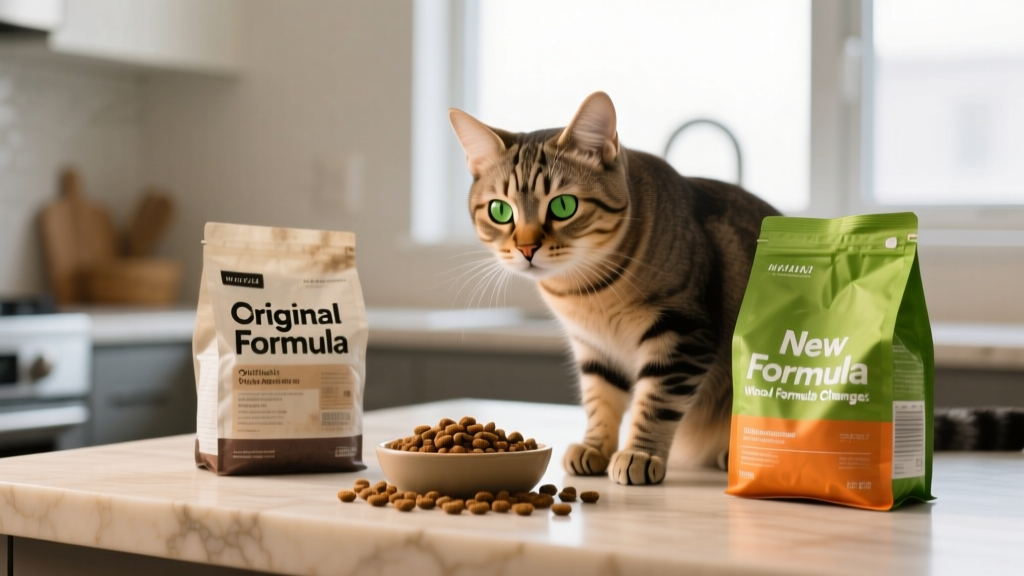
Diet changes should be gradual unless your veterinarian advises an immediate switch (sometimes done in severe food-responsive diarrhea). A slow transition reduces the risk of worsening diarrhea due to abrupt microbiome and motility shifts.
Suggested Transition Schedule (Typical)
| Day | Old Food | New Bland / Therapeutic Food |
|---|---|---|
| 1–2 | 75% | 25% |
| 3–4 | 50% | 50% |
| 5–6 | 25% | 75% |
| 7+ | 0–10% | 90–100% |
When to Slow Down (or Call the Vet)
- Stool becomes watery or much more frequent
- Vomiting increases
- Appetite drops for more than 24 hours
- Lethargy, dehydration, or blood in stool appears
Rules for a True Diet Trial (If Food Sensitivity Is Suspected)
- Feed the prescribed diet exclusively for the full duration (often 6–8 weeks, sometimes longer).
- No flavored treats, no table food, no flavored medications if avoidable (ask your vet for alternatives).
- If multiple cats share a home, prevent food swapping with microchip feeders or separate feeding.
- Track stool using a simple diary: frequency, consistency, mucus/blood, appetite, weight.
8. Special Considerations (Age, Health Conditions, Activity Level)
Kittens
- Diarrhea can become dangerous quickly due to dehydration and low energy reserves.
- Kittens need higher calories and specific nutrient levels for growth; avoid unbalanced home-cooked bland diets unless your vet directs it.
- Parasites are common; diagnostics and vet-directed deworming matter.
Senior Cats
- Weight loss with diarrhea is a red flag; seniors may have hyperthyroidism, kidney disease, or cancer.
- Ask your vet how to balance GI support with other needs (protein levels, phosphorus, sodium) if comorbidities exist.
Cats with Diabetes
- Sudden diet changes can alter glucose control.
- Work with your veterinarian to choose a GI-appropriate diet that also supports stable carbohydrates and insulin management.
Cats with Kidney Disease
- Some GI diets may be higher in phosphorus or protein than ideal for advanced kidney disease.
- Do not choose a diet solely for stool quality without your vet balancing renal priorities.
Overweight Cats
- Do not fast an overweight cat without veterinary supervision due to fatty liver risk.
- Choose calorie-controlled, highly digestible options and monitor weight weekly.
High-Activity or Multi-Cat Households
- Food trials are harder when cats share bowls; controlled feeding is essential.
- Use puzzle feeders carefully during diarrhea episodes; they can increase stress or rapid eating in some cats.
FAQ: Feeding Cats With Chronic Diarrhea
1) How long should my cat stay on a bland diet?
For chronic diarrhea, the duration depends on the goal. If it’s a stabilization phase using a therapeutic GI diet, your veterinarian may recommend weeks to months. If it’s an elimination diet trial (hydrolyzed or novel protein), it often requires 6–8 weeks of strict feeding before you can judge response. Avoid long-term home-cooked “bland” diets unless formulated by a veterinary nutritionist.
2) Should I add probiotics?
Some cats benefit from probiotics, but results depend on strain, dose, and the underlying cause. Choose veterinary-recommended products with quality control rather than random human supplements. Ask your veterinarian which probiotic is appropriate for your cat’s case and whether it could interfere with diagnostic plans.
3) Is pumpkin safe for chronic diarrhea?
Small amounts may help some cats, but fiber is not universally beneficial. Too much can worsen gas or stool volume. If your veterinarian approves, start with a very small amount and monitor stool for 3–5 days.
4) Why did my cat’s diarrhea get worse after switching foods?
Common reasons include transitioning too fast, introducing a diet that’s richer in fat than the previous food, hidden treats or flavored medications breaking a diet trial, stress, or an underlying disease that needs medical treatment (parasites, infection, IBD). Contact your veterinarian if diarrhea worsens or your cat seems unwell.
5) Can I use boiled chicken alone during flare-ups?
Only as a short, vet-directed bridge in specific situations. Chicken alone is not complete nutrition and can lead to deficiencies if continued. If your cat needs a home-cooked plan beyond a few days, ask your vet for a recipe formulated by a board-certified veterinary nutritionist.
6) When is chronic diarrhea an emergency?
Seek urgent veterinary care if you see significant lethargy, repeated vomiting, refusal to eat for 24 hours (or any prolonged appetite loss in a cat prone to fatty liver), dehydration, black/tarry stool, large amounts of blood, severe abdominal pain, or rapid weight loss.
Practical Takeaway: A Safe Path Forward
For cats with chronic diarrhea, the most effective “bland diet transition” is usually a controlled switch to a veterinary therapeutic GI diet or a structured elimination diet (hydrolyzed or novel protein), paired with veterinary diagnostics. Focus on consistency, strict control of extras, moisture-rich meals, and a gradual transition that supports the gut rather than shocking it.
Every cat’s situation is different, so partner with your veterinarian before making significant diet changes—especially if your cat is a kitten, senior, overweight, or has diabetes, kidney disease, or other chronic conditions.
If you’d like more practical, science-based feeding guidance, explore additional nutrition guides and cat health articles on catloversbase.com.