Why Cats Stop Eating When Food Formula Changes
1) Why this topic matters for cat health
When a cat suddenly refuses a food they “used to love,” it’s easy to assume they’re being picky. Sometimes they are. More often, a food refusal after a recipe change is a meaningful signal: the new product may smell different, feel different, digest differently, or trigger nausea after eating. Because cats are small animals with a high metabolic rate, even a short period of reduced intake can become a medical risk. Prolonged calorie restriction can contribute to hepatic lipidosis (fatty liver disease), especially in overweight cats, and can worsen dehydration, constipation, and diabetes control.
Understanding why cats stop eating when a formula changes helps you respond in a way that protects appetite, hydration, and overall nutritional status while also catching medical problems early.
2) Scientific background: feline nutritional needs and “obligate carnivore” biology
Cats are obligate carnivores. Their metabolism is adapted to diets derived primarily from animal tissues, with a consistent need for specific nutrients that are naturally abundant in prey. This biology influences not only what they need, but also how strongly they respond to changes in smell, texture, and digestibility.
| Nutrient/Factor | Why cats need it | What can go wrong when a formula changes |
|---|---|---|
| High-quality animal protein | Cats have higher baseline protein requirements and use amino acids continuously. | Lower digestibility or different protein sources can reduce palatability or cause GI upset. |
| Taurine | Essential for heart, vision, reproduction; cats can’t make enough on their own. | Reputable brands meet standards, but poor-quality diets or improper storage can be risky. |
| Arachidonic acid & preformed vitamin A | Required from animal sources; limited ability to convert plant precursors. | Major ingredient shifts (especially boutique diets) can affect adequacy if not well formulated. |
| Water intake | Cats have a low thirst drive; hydration is often tied to food moisture. | Switching from wet to dry (or lower-moisture foods) can reduce total water intake. |
| Fat & aroma compounds | Fat carries smell and flavor; aroma drives acceptance more than taste. | Small changes in fats, fish oils, or processing can drastically change smell. |
Cats also develop strong food preferences. Early-life exposure affects what they consider “food,” and many cats become conservative about novel flavors or textures. This is not stubbornness; it’s a protective survival mechanism called neophobia (avoidance of unfamiliar foods).
3) Why cats stop eating after a formula change (evidence-based causes)
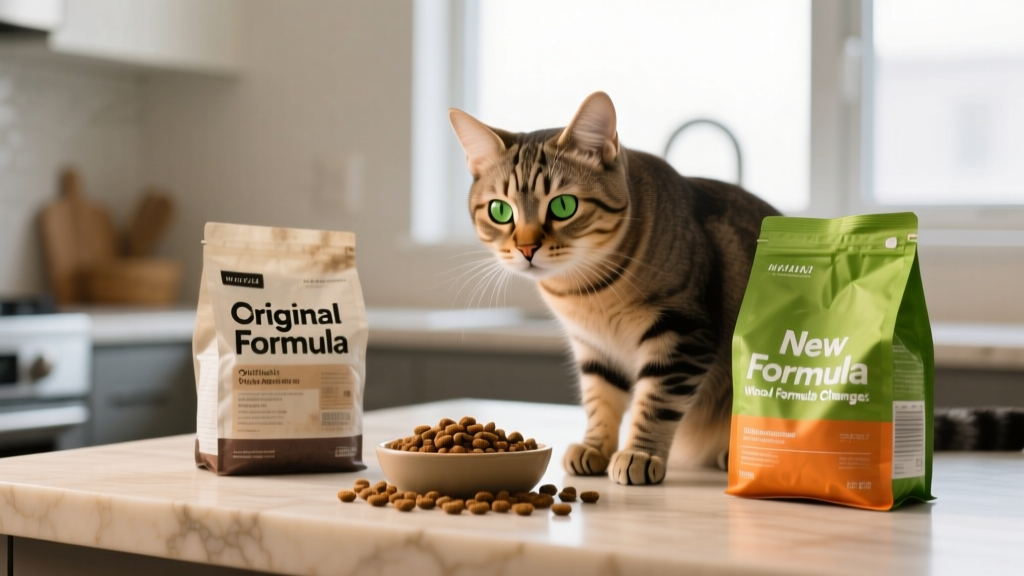
Manufacturers change formulas for many reasons: ingredient sourcing, price changes, regulatory updates, or “improved” nutrition profiles. Even if the label looks similar, the cat may experience the food as totally different.
A) Smell and flavor changes (the biggest driver)
- Different fat blend or fish oil: fats oxidize and create off-odors, and even fresh fats smell different by source.
- Protein source changes: chicken vs. turkey vs. mixed poultry can alter aroma and aftertaste.
- Processing changes: extrusion temperature for kibble, retort processing for canned food, or particle size shifts can change volatile compounds that cats detect.
Cats rely heavily on smell. If nasal congestion is present (even mild), a cat may refuse a newly smelly or unfamiliar food more readily.
B) Texture and mouthfeel differences
- Paté vs. chunks vs. shredded changes can trigger refusal even with the same protein.
- Kibble size/hardness changes may matter for cats with dental pain or sensitive mouths.
- Gum or thickener changes (guar gum, xanthan gum, carrageenan alternatives) can alter texture and stool quality.
C) Digestive upset and learned food aversion
If a cat eats the new formula and then feels nauseated, gassy, or has diarrhea, they can form a learned food aversion—refusing that food (or even that bowl location) afterward. Common triggers include:
- Higher fat content or different fat source
- Sudden fiber changes
- New protein source (especially in cats with sensitive GI tracts)
- Ingredient intolerance or food allergy (less common than owners think, but possible)
D) Calorie density and “portion confusion”
Some reformulations change calorie density. If you feed by volume (same scoop) rather than calories, your cat may inadvertently receive fewer calories and act “not interested” because the feeding routine feels off—or they may be hungry at odd times and beg. Conversely, a more calorie-dense food can lead to unintentional weight gain.
E) Mineral profile and urinary comfort
For cats prone to urinary issues, changes in minerals (magnesium, phosphorus), urine pH targets, sodium levels, or moisture content can affect urinary comfort. Discomfort may reduce appetite, and the timing can coincide with a diet change.
F) The formula change is a coincidence: a medical issue is starting
A cat who stops eating right after a formula change may actually be showing early signs of illness:
- Dental disease or oral pain
- Kidney disease (nausea, altered smell sensitivity)
- Pancreatitis, IBD, constipation
- Hyperthyroidism (sometimes appetite increases, but nausea can occur)
- Stress or environmental change (new pet, move, construction noise)
Any cat that refuses food for 24 hours (or eats dramatically less), especially if overweight, elderly, or ill, should be assessed by a veterinarian.
4) Practical recommendations for cat owners
| Situation | Best first step | What to avoid |
|---|---|---|
| Cat sniffs and walks away, otherwise normal | Start a slow transition and offer familiar food to keep calories coming in | Leaving only the new food down “until they give in” |
| Vomiting/diarrhea after new formula | Stop the new food, call your vet; consider a bland/vet-directed plan | Continuing the same food to “let them adjust” for days |
| Cat won’t eat any food | Vet visit urgently (same day if possible) | Waiting multiple days; risking hepatic lipidosis |
| Cat has history of urinary crystals or obstruction | Talk to your vet before switching; prioritize therapeutic diets if prescribed | Switching to non-urinary foods because the cat is picky |
- Check the label and company announcement: look for “new look,” “improved recipe,” “now with,” or a different guaranteed analysis. Manufacturers often publish reformulation notes.
- Confirm the exact product: same life stage (kitten/adult/senior), same format (wet/dry), same flavor line. Similar packaging can hide a different SKU.
- Protect calorie intake first: the priority is to keep your cat eating something appropriate while you troubleshoot.
- Track intake and litter box output: appetite changes plus vomiting, diarrhea, constipation, or reduced urination deserve veterinary attention.
5) Comparing options: what to try when the “same food” changed
| Approach | Pros | Cons / watch-outs | Best for |
|---|---|---|---|
| Gradual transition to the new formula | Safest for digestion; reduces stress | May fail if the cat has strong aversion | Most healthy cats |
| Switch to a different flavor within the same brand/line | Often similar nutrient profile; may restore acceptance | Some cats dislike frequent flavor rotation | Mild pickiness after reformulation |
| Switch to a comparable diet from another reputable brand | May match previous texture/aroma better | Needs careful comparison of calories, moisture, protein, and life stage | Persistent refusal or GI issues |
| Use a veterinary therapeutic diet (when indicated) | Evidence-based targets (urinary, kidney, GI, hydrolyzed protein) | Must be chosen with your vet; not all cats accept them immediately | Medical conditions or recurrent GI/urinary problems |
| Palatability aids (vet-approved) | Can jump-start eating during transitions | Some toppers unbalance the diet or add excess sodium/fat | Short-term support, picky cats, seniors |
Choosing “the best” option depends on your cat’s health status and how long appetite has been reduced. If your cat has a chronic condition (kidney disease, urinary crystals, diabetes, IBD), treat the diet as part of medical care and involve your veterinarian early.
6) Common mistakes and misconceptions (myths debunked)
- Myth: “A healthy cat won’t starve; they’ll eat when hungry.”
Reality: Cats can refuse food long enough to become dangerously ill. Overweight cats are at higher risk for hepatic lipidosis with prolonged poor intake. - Myth: “If the ingredients list looks similar, it’s the same food.”
Reality: Small shifts in fats, processing, or minor ingredients can change smell/texture dramatically. Cats notice differences humans miss. - Myth: “Just add tuna/cheese/broth to make them eat.”
Reality: Some add-ins are too salty, too fatty, or create a cat who refuses food unless toppers are present. Tuna can also encourage unbalanced feeding if overused. Use vet-approved toppers strategically. - Myth: “Grain-free means better, so switching is always beneficial.”
Reality: Grain-free is not automatically higher in animal protein or more digestible. What matters is overall formulation quality, nutrient adequacy, digestibility, and your cat’s medical needs.
7) How to implement changes safely (transition tips that work)
A slow transition protects the gut and reduces food neophobia. Adjust the pace to your cat’s sensitivity and medical needs, and consult your veterinarian if your cat has any health condition.
Standard transition schedule (7–10 days)
| Days | Old food | New food |
|---|---|---|
| 1–2 | 75% | 25% |
| 3–4 | 60% | 40% |
| 5–6 | 50% | 50% |
| 7–8 | 25% | 75% |
| 9–10 | 0% | 100% |
If your cat is very sensitive (10–21 days)
- Make smaller jumps (e.g., increase new food by 5–10% every few days).
- If vomiting/diarrhea starts, pause at the last tolerated ratio and call your vet.
Palatability and routine strategies
- Warm wet food slightly (not hot) to enhance aroma.
- Use measured meals rather than free-feeding during transitions, unless your vet advises otherwise.
- Keep bowls clean and offer food in a quiet, low-stress area.
- Separate cats during meals to reduce competition stress.
- For dry food changes, try mixing kibbles thoroughly so the aroma distributes, or transition using a “bridge” food that your cat accepts well.
Red flags during transition: repeated vomiting, lethargy, hiding, drooling, straining in the litter box, not urinating normally, or refusal to eat for 24 hours. These warrant veterinary guidance right away.
8) Special considerations: age, health conditions, activity level
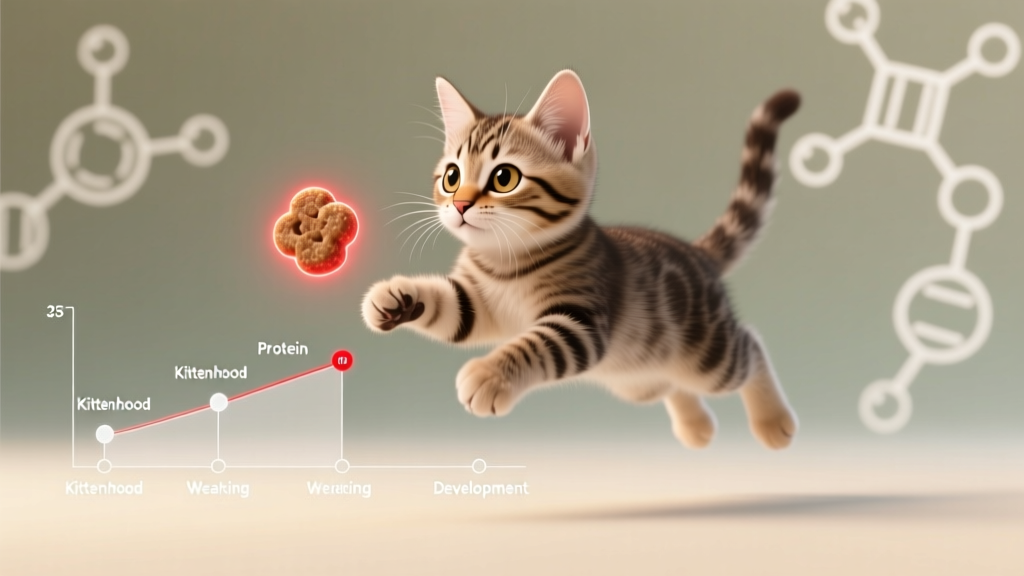
Kittens (growth)
- Need energy-dense, highly digestible diets formulated for growth.
- Refusals can lead to faster weight loss than in adults.
- Don’t “experiment” with multiple rapid switches; work with your veterinarian if appetite is inconsistent.
Adult cats (maintenance and weight control)
- Monitor calorie density when formulas change to prevent slow weight gain.
- For indoor or less active cats, higher-calorie reformulations may require portion adjustments.
Senior cats
- More likely to have dental disease, arthritis (affects posture at the bowl), kidney disease, or reduced smell sensitivity.
- May prefer softer textures and stronger aromas (warmed wet food can help).
- Any abrupt appetite change should prompt a veterinary check, not just a food swap.
Chronic kidney disease (CKD)
- Diet adherence is crucial; appetite dips are common due to nausea.
- Switching foods should be coordinated with your veterinarian to balance phosphorus control, protein targets, and palatability.
Urinary tract disease
- Cats with a history of urinary crystals/obstruction often need consistent therapeutic nutrition.
- Switches in mineral content and moisture can affect recurrence risk; consult your vet before changing.
Food allergies/suspected IBD
- Formula changes can introduce new proteins that trigger relapse.
- Your vet may recommend a hydrolyzed or novel-protein diet trial with strict control of treats and flavored medications.
9) FAQ
How long can a cat safely go without eating after a food change?
Healthy adult cats should not go 24 hours without meaningful food intake. Overweight cats are at higher risk for hepatic lipidosis if they stop eating. If your cat refuses food for a full day (or eats much less than normal), contact your veterinarian.
Should I switch foods immediately if my cat refuses the new formula?
First, keep your cat eating by offering the last reliably accepted food if available, then plan a gradual transition. If refusal is paired with vomiting, diarrhea, lethargy, or hiding, involve your veterinarian right away rather than trying multiple new foods.
Does warming the food or adding toppers help?
Warming wet food slightly can improve aroma and acceptance. Toppers can help short-term, but choose options that don’t unbalance the diet. Avoid salty broths, heavy amounts of tuna, or fatty meats unless your veterinarian recommends a specific strategy.
Is wet food better than dry food for picky cats after a recipe change?
Wet food is often easier to entice because aroma is stronger and moisture supports hydration. Dry food can work well for many cats, but small kibble changes can be a big deal for cats with dental pain or strong texture preferences. The “best” choice depends on your cat’s health needs and what they will reliably eat.
My cat only refuses the food from a new bag/case. Could it be spoiled?
Possibly. Check the expiration date, packaging integrity, and storage conditions. Kibble fats can oxidize, and canned food can be damaged in transit. If the smell is off, the texture is unusual, or your cat consistently refuses that batch, stop feeding it and contact the manufacturer and your veterinarian for guidance.
Can stress make my cat reject a new formula?
Yes. Stress can reduce appetite and make cats less willing to try unfamiliar foods. If there are recent household changes, address the stressors (quiet feeding station, predictable routine, separate feeding for multi-cat homes) alongside a slow diet transition.
When appetite changes, treat it as a health signal, not a personality flaw. If you’re ever unsure about the safest diet for your cat’s age, body condition, or medical history, consult your veterinarian or a board-certified veterinary nutritionist.
For more practical, science-based feeding tips and product comparisons, explore the nutrition guides on catloversbase.com.