Best Cat Food for Weight Loss Programs
Why Calorie Control Matters for Overweight Cats
Over 60% of U.S. cats are overweight or obese (Association for Pet Obesity Prevention, 2023). Excess weight increases diabetes risk by 4-fold and shortens lifespan by up to 2.8 years. Unlike dogs, cats require high-protein, low-carb diets during weight loss to preserve lean muscle mass and avoid hepatic lipidosis.
Vet-Approved Low-Calorie Commercial Foods
Look for foods with ≤250 kcal/cup (dry) or ≤90 kcal/3-oz can (wet). Royal Canin Veterinary Diet Satiety Support (2022 formula) contains 21% protein and 6.5% fiber to promote fullness. Hill’s Prescription Diet Metabolic + Mobility (2024 reformulation) delivers 275 kcal/cup with added glucosamine. Blue Buffalo Fit & Healthy Dry has 290 kcal/cup—slightly higher but suitable for mild cases when portion-controlled.
Feeding Guidelines for Safe Weight Loss
Target 1–2% body weight loss per week. A 12-lb cat should lose no more than 2.4 oz weekly. Use a digital scale weekly. Divide daily rations into 3–4 meals to stabilize blood sugar. Never fast a cat: abrupt calorie restriction can trigger fatal liver disease within 48 hours.
Homemade Options & Critical Cautions
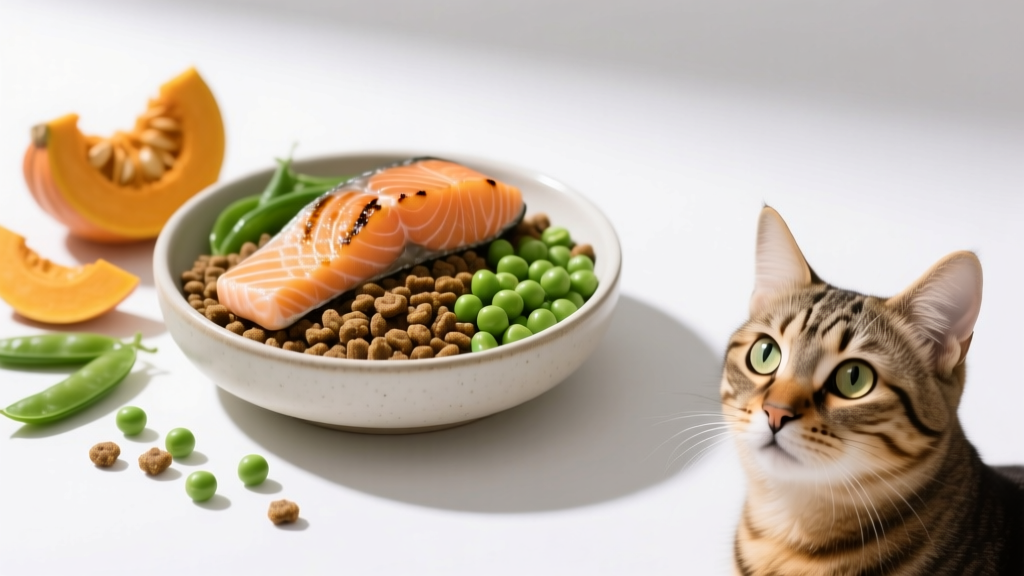
Homemade diets require veterinary nutritionist formulation. Dr. Lisa Weeth’s 2021 study in Journal of Feline Medicine and Surgery found 92% of owner-formulated recipes lacked taurine or calcium. A safe base: 3 oz boiled chicken breast (110 kcal), 1 tsp pumpkin puree (5 kcal), and prescribed feline multivitamin (e.g., Balance IT Feline, 2023 version). Always supplement with taurine (250 mg/day) and vitamin E (30 IU/day).
Supplements That Support Healthy Metabolism
L-carnitine (250 mg/day) may aid fat metabolism in sedentary cats, per a 2022 University of Tennessee trial. Omega-3s from fish oil (EPA+DHA ≥100 mg/day) reduce inflammation linked to obesity. Avoid human weight-loss supplements—green tea extract caused hepatotoxicity in 3 cats in a 2023 Cornell case series.
Real-world scenario #1: Luna, a 9-year-old domestic shorthair, lost 1.8 lbs over 14 weeks on Hill’s Metabolic + Mobility fed at ⅔ cup/day split into four portions. Her vet monitored ALT levels monthly.
Real-world scenario #2: Milo, a neutered 3-year-old Maine Coon, plateaued after 3 weeks on Blue Fit & Healthy. Switching to Royal Canin Satiety (fed at ⅓ cup + one 3-oz can daily) resumed steady loss at 0.75 lbs/week.
Always transition foods over 7 days. Monitor litter box output—reduced stool volume signals adequate fiber. If vomiting, lethargy, or refusal lasts >24 hours, stop the diet and consult your veterinarian immediately.
| Food Name | Calories (per serving) | Protein % | Fiber % | Year Updated |
|---|---|---|---|---|
| Royal Canin Satiety Support | 225 kcal/cup | 21% | 10.5% | 2022 |
| Hill’s Metabolic + Mobility | 275 kcal/cup | 28% | 6.8% | 2024 |
| Blue Fit & Healthy Dry | 290 kcal/cup | 30% | 5.2% | 2023 |