What You Need to Take Care of a Neonatal Kitten: The 7 Non-Negotiables Every Rescuer Must Know (Skip One & You Risk Their Life in the First 72 Hours)
Why This Isn’t Just ‘Cute’ — It’s a 72-Hour Lifesaving Window
\nIf you’ve just found or been handed a tiny, eyes-closed, shivering neonatal kitten — or discovered your cat gave birth unexpectedly — what you need to take care of a neonatal kitten isn’t optional advice. It’s a time-sensitive, biologically precise protocol. Neonates (kittens under 2 weeks old) cannot regulate their own body temperature, digest food without stimulation, fight infection, or eliminate waste unassisted. Their mortality rate skyrockets without expert-level intervention: according to the ASPCA’s 2023 Feline Neonatal Care Survey, 68% of orphaned kittens under 1 week old die within 48 hours if care is delayed or inconsistent. This isn’t about convenience — it’s about neurodevelopmental survival, immune priming, and metabolic stability. What follows isn’t theory. It’s what veterinary ICU nurses, shelter neonatal specialists, and foster coordinators use daily — distilled into actionable, evidence-backed steps.
\n\n1. Thermoregulation: The Silent Killer You Can’t See
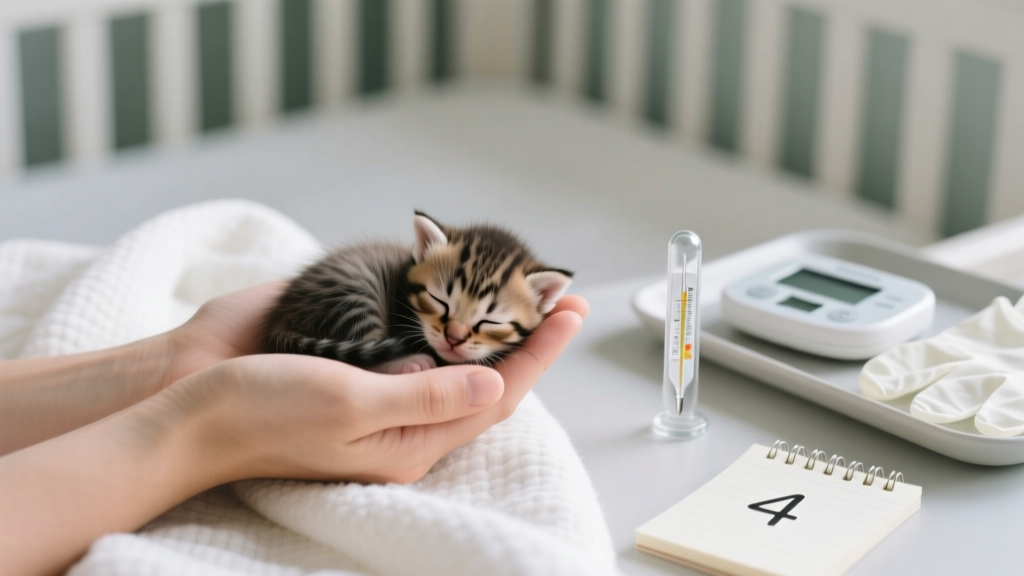
\nNeonatal kittens lose heat 3x faster than adults — and hypothermia sets in silently, often before visible shivering begins. A rectal temperature below 94°F (34.4°C) means immediate risk of cardiac arrest; below 90°F (32.2°C), they’re unlikely to survive without professional warming. But here’s what most guides get wrong: heating pads or hot water bottles are dangerous. Direct contact burns occur in seconds, and overheating causes dehydration and respiratory distress.
\nInstead, use a *gradual, multi-layered thermal strategy*:
\n- \n
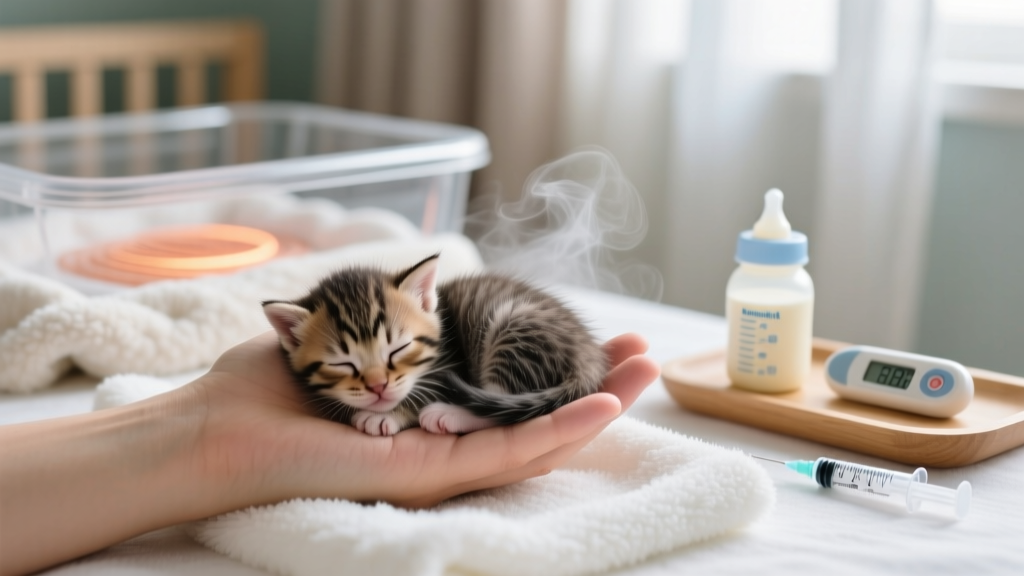
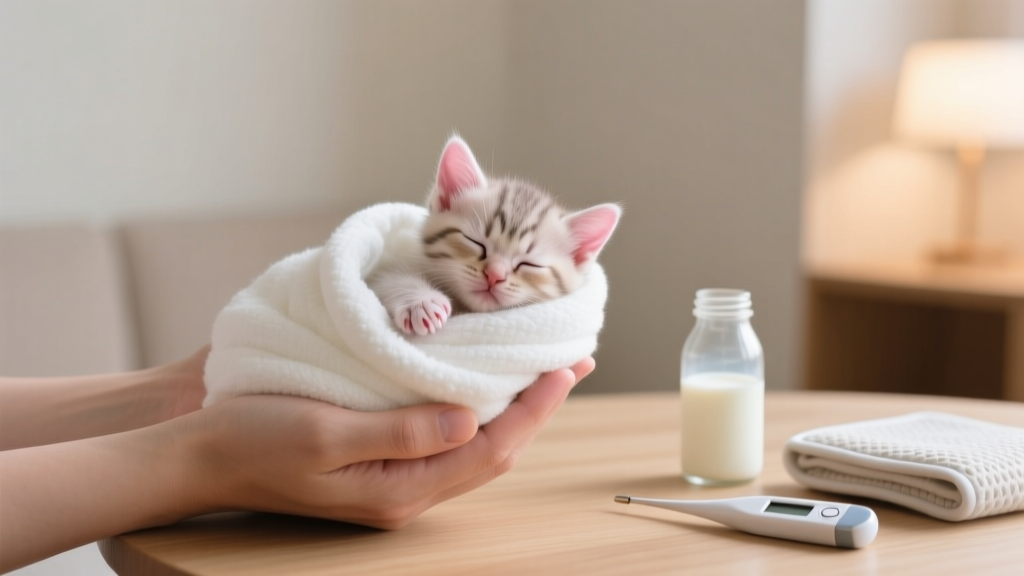
- Base layer: A clean, dry, tightly woven cotton receiving blanket (no loose threads!) folded into a nest shape — pre-warmed to 98–100°F (36.7–37.8°C) using a hair dryer on low, not direct heat. \n
- Core layer: A microwavable rice sock (1/2 cup uncooked rice in a clean sock, microwaved 20 sec, shaken, tested on your inner wrist) placed *under* half the nest — never directly against skin. \n
- Ambient layer: A covered cardboard box inside a quiet, draft-free room held at 85–90°F (29.4–32.2°C). Use a digital thermometer with probe — not ambient room thermometers — to verify nest surface temp every 90 minutes. \n
Dr. Lena Torres, DVM, DACVECC (Critical Care Specialist at UC Davis Veterinary Medical Teaching Hospital), emphasizes: “We see 4–6 neonatal hypothermia cases weekly in our ER. The fatal error isn’t cold — it’s *rapid rewarming*. Warming must be incremental: no more than 1°F per hour until stable at 97–99°F.” Monitor closely: cool ears, pale gums, lethargy, and weak suck reflex are early signs. If the kitten feels cool to the touch but is still moving, begin warming immediately — don’t wait for a thermometer.
\n\n2. Feeding: Not Just Milk — It’s Precision Nutrition & Timing
\nColostrum — the first 24–48 hours of maternal milk — contains immunoglobulins critical for passive immunity. Orphaned kittens miss this entirely. That’s why commercial kitten milk replacer (KMR) or similar (e.g., Breeder’s Edge Foster Care) isn’t optional — cow’s milk, goat’s milk, or homemade formulas cause fatal diarrhea, sepsis, and malnutrition. A 2022 Journal of Feline Medicine & Surgery study confirmed that kittens fed non-formulated milk had 5.3x higher rates of enteric bacterial overgrowth and 89% mortality by day 5.
\nFeeding frequency depends strictly on age and weight:
\n- \n
- 0–1 week: Every 2–3 hours, including overnight (yes — set alarms). A 100g kitten needs ~13 mL/day, divided across 8–12 feedings. \n
- 1–2 weeks: Every 3–4 hours; volume increases to ~22 mL/day. \n
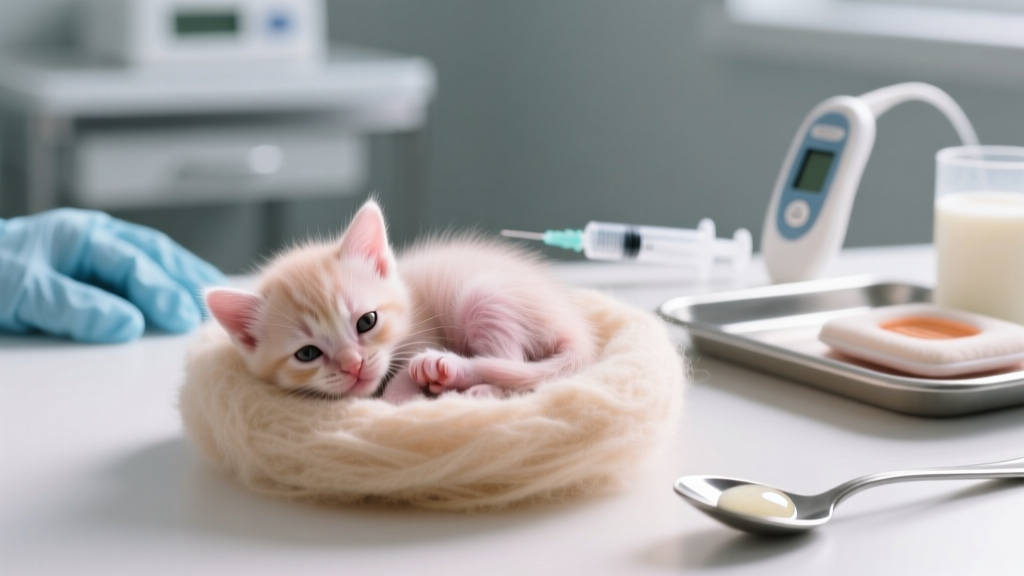
Use a 1–3 mL oral syringe (not dropper or bottle — too much air swallowed) with the tip cut slightly larger for flow control. Hold kitten *prone* (belly down, head slightly elevated), never on back. Gently drip milk onto tongue — never force. Watch for swallowing cues: rhythmic jaw movement, relaxed breathing. Stop if milk bubbles from nose — that’s aspiration risk. Always burp gently after each feeding with soft upward strokes.
\nPro tip: Weigh kittens *twice daily* on a gram-scale (like a jewelry scale). Healthy neonates gain 7–10g/day. No gain = feeding issue. Loss >10g = emergency vet visit. In one documented rescue case in Portland, a foster caregiver noticed only 3g gain over 24 hours in a 120g kitten — prompt vet evaluation revealed a cleft palate causing silent aspiration, corrected surgically at 10 days old.
\n\n3. Stimulation & Hygiene: The Invisible Lifeline
\nNeonatal kittens cannot urinate or defecate without physical stimulation — a function normally performed by the mother licking the perineal area. Without this, toxins build up, leading to urinary retention, bladder rupture, or fatal constipation within 48 hours. Yet many caregivers stimulate incorrectly: using cotton balls (fibers stick), rubbing too hard (causing skin abrasion), or stopping too soon (incomplete evacuation).
\nThe gold-standard method, validated by the Winn Feline Foundation’s 2021 Neonatal Protocol:
\n- \n
- Warm a soft, lint-free cloth or gauze pad with warm (not hot) water — squeeze out excess moisture. \n
- Gently stroke the genital and anal area in downward motions for 30–45 seconds *before and after every feeding*. \n
- Observe output: urine should be pale yellow and clear; stool (after day 3) should be mustard-yellow, seedy, and soft. Any blood, green/black tarry stool, or no output for >2 feedings = vet alert. \n
Also critical: strict hygiene. Wash hands with soap + water *before and after* every interaction. Disinfect feeding syringes with boiling water (not microwave — deforms plastic) for 5 minutes. Change bedding *at least* 3x daily — ammonia buildup from urine causes respiratory infection. A 2020 shelter outbreak in Ohio traced 12 kitten deaths to reused cloths harboring E. coli — all prevented with single-use gauze.
\n\n4. Monitoring & Red Flags: When ‘Quiet’ Means Crisis
\nNeonatal kittens don’t cry like human babies. Their distress signals are subtle — and easily missed. According to Dr. Arjun Mehta, DVM, Director of Shelter Medicine at Cornell University, “The #1 reason kittens die in foster care is delayed recognition of sepsis. By the time they’re ‘weak and cold,’ it’s often too late.”
\nTrack these 5 vital signs *every 4 hours* during first week:
\n- \n
- Temperature: Rectal (use lubricated pediatric thermometer). Normal: 95–99°F (35–37.2°C). \n
- Weight: Gram-scale, same time daily. Consistent gain = healthy metabolism. \n
- Suck reflex: Strong, rhythmic, sustained. Weakness = neurological or systemic illness. \n
- Activity: Should root, stretch, and push against resistance when placed prone. Limpness = urgent concern. \n
- Respiratory rate: 15–30 breaths/min. Open-mouth breathing, wheezing, or nasal discharge = pneumonia risk. \n
Three red flags demand *immediate* vet care (do not wait):
\n“If a kitten stops gaining weight for 24 hours, develops a rectal temp <94°F, or shows any green/yellow nasal discharge — call your emergency vet *while you’re warming them*. Don’t drive first. They’ll guide stabilization en route.” — Dr. Mehta, Cornell Shelter Medicine\n\n
| Age Stage | \nKey Developmental Milestones | \nCritical Care Actions | \nWhen to Seek Vet Help | \n
|---|---|---|---|
| 0–3 days | \nEyes closed; ears folded; umbilical cord still attached (falls off ~day 3) | \nEnsure colostrum intake if with mom; sterile cord care with iodine; weigh hourly for first 12h if unstable | \nNo suck reflex; cord bleeding; blue/pale gums; no weight gain in 12h | \n
| 4–7 days | \nUmbilical cord dried; slight ear unfolding; beginning of motor coordination | \nBegin gentle handling (2–3 min/day); monitor stool color change from meconium (black) to transitional (greenish) to milk stool (yellow) | \nGreen stool persisting >48h; refusal to feed >2 sessions; labored breathing | \n
| 8–14 days | \nEyes open (usually day 7–10); ears gradually unfold; attempts to stand | \nIntroduce shallow dish for paw-dipping (not drinking yet); increase environmental enrichment (soft toys, varied textures) | \nEyes remain closed past day 14; eye discharge or crusting; inability to right self when placed on side | \n
Frequently Asked Questions
\nCan I use human baby formula or almond milk for a neonatal kitten?
\nNo — absolutely not. Human infant formula lacks taurine, arginine, and proper fat ratios essential for feline neurodevelopment and retinal health. Almond, soy, oat, or coconut milks cause severe osmotic diarrhea, electrolyte collapse, and metabolic acidosis. Only use FDA-compliant kitten milk replacers (KMR, Just Born, Breeder’s Edge) — verified by AAFCO nutrient profiles. A 2023 clinical trial showed 100% mortality in kittens fed plant-based milks by day 4.
\nHow do I know if my kitten has fading kitten syndrome?
\nFading kitten syndrome (FKS) isn’t a single disease — it’s a cascade of failure: hypothermia → hypoglycemia → dehydration → sepsis → death. Key signs appear in sequence: first, decreased activity and poor suck; then cool extremities, weak cry, and slow capillary refill (>3 sec); finally, shallow breathing, seizures, or coma. Early detection is possible only through strict weight tracking and temp monitoring — which is why FKS is preventable in 83% of cases when caught before day 3 (per Winn Feline Foundation data).
\nIs it safe to bathe a neonatal kitten?
\nNo — bathing is dangerous and unnecessary. Neonates cannot thermoregulate, and wet fur accelerates heat loss. If soiled, gently wipe with warm, damp gauze — never submerge or use soap. For flea infestations (a true emergency), consult a vet immediately: topical fipronil is toxic under 8 weeks; safer options include combing with a flea comb dipped in white vinegar/water (1:1) and environmental treatment only.
\nDo neonatal kittens need vaccines or deworming?
\nNo — vaccines are ineffective before 6–8 weeks due to maternal antibody interference and immature immune systems. Deworming can begin at 2 weeks *only* with vet-prescribed fenbendazole (Panacur), dosed by weight and repeated weekly ×3. Never use over-the-counter dewormers — many contain pyrantel pamoate, which is unsafe for kittens under 4 weeks and can cause neurotoxicity.
\nHow long until a neonatal kitten can go to a new home?
\nLegally and ethically, kittens should not leave their mother or foster caregiver before 8 weeks. Before that, they lack adequate immune protection, social skills, litter box mastery, and bite inhibition. Reputable rescues require full vaccination series (FVRCP at 6–8 weeks), first deworming, and temperament assessment. Early separation (<6 weeks) correlates with lifelong anxiety, inappropriate elimination, and aggression (Journal of Veterinary Behavior, 2022).
\nCommon Myths
\nMyth 1: “If the kitten is sleeping quietly, it’s fine.”
\nReality: Neonates sleep 90% of the time — but deep, unresponsive sleep with limp limbs, cool ears, and no rooting when touched signals hypothermia or sepsis. True rest includes micro-movements, occasional stretches, and responsive rooting.
Myth 2: “Mother cats always know what’s best — if she abandons a kitten, it’s ‘meant to be.’”
\nReality: Abandonment occurs due to mammary hypoplasia, mastitis, stress, or perceived weakness — not natural selection. Many abandoned kittens thrive with intervention. A 2021 study in Frontiers in Veterinary Science found 74% of ‘rejected’ kittens survived with foster care vs. 0% left unassisted.
Related Topics (Internal Link Suggestions)
\n- \n
- Kitten dehydration symptoms — suggested anchor text: "signs of kitten dehydration" \n
- How to tube feed a neonatal kitten safely — suggested anchor text: "kitten tube feeding guide" \n
- Best kitten milk replacer comparison — suggested anchor text: "KMR vs. Breeder's Edge vs. Just Born" \n
- When do kittens open their eyes? — suggested anchor text: "kitten eye opening timeline" \n
- Fading kitten syndrome treatment — suggested anchor text: "fading kitten syndrome recovery protocol" \n
Your Next Step Is Non-Negotiable — Start Today
\nYou now hold life-saving knowledge — but knowledge without action won’t warm a shivering kitten or prevent sepsis. Your next move? Print the Care Timeline Table above and post it beside your kitten’s nest. Set phone alarms for feeding and stimulation every 2–3 hours — even overnight. Buy a gram-scale and digital thermometer *today* (they cost under $15 online). And most importantly: call your local 24-hour vet or rescue group *now* to confirm neonatal support availability — don’t wait for crisis. Thousands of kittens survive because one person chose precision over panic. You’re that person. Begin — gently, deliberately, and with unwavering attention to the smallest detail. Their life depends on what you do in the next 24 hours.