How to Take Care of a Kitten: The First 12 Weeks Explained by Veterinarians — What 92% of New Owners Miss (and Why It Puts Kittens at Risk)
Why Getting Kitten Care Right in the First 12 Weeks Changes Everything
If you're searching for how to take care of a kitten, you're not just looking for cute tips—you're holding fragile, rapidly developing life in your hands. A kitten’s immune system, neurological wiring, and emotional resilience are forged in the first three months. Get it right, and you’ll likely enjoy a confident, healthy, bonded companion for 15+ years. Get it wrong—even with good intentions—and you risk preventable illness, lifelong anxiety, or costly emergency vet visits. This isn’t theoretical: According to the American Veterinary Medical Association (AVMA), nearly 40% of kittens surrendered to shelters before 6 months old have underlying health or behavior issues directly tied to inadequate early care. In this guide, we go beyond basics—you’ll get vet-validated timelines, data-backed feeding protocols, and the exact warning signs most owners overlook.
Nutrition & Feeding: More Than Just ‘Kitten Food’
Feeding isn’t about convenience—it’s about metabolic precision. Kittens burn calories at twice the rate of adult cats and require significantly higher levels of protein (30–35% dry matter), taurine, arginine, and DHA for neural development. But here’s what most pet stores won’t tell you: Not all ‘kitten formulas’ meet AAFCO’s growth-stage nutritional standards. A 2023 study published in Journal of Feline Medicine and Surgery analyzed 47 commercial kitten foods and found that 28% fell short on minimum taurine or calcium-to-phosphorus ratios—key drivers of cardiac and skeletal health.
Start with mother’s milk or a vet-recommended milk replacer (e.g., KMR®) until week 4. Never use cow’s milk—it causes severe diarrhea and dehydration. At 4 weeks, begin introducing wet food mixed with warm water (1:1 ratio), gradually thickening over 10 days. By week 8, transition fully to high-quality wet food (at least 75% moisture) or a balanced raw diet—if formulated by a board-certified veterinary nutritionist. Dry kibble should be limited: its low moisture content stresses immature kidneys and contributes to urinary crystals later in life.
Portion size matters critically. Underfeeding stunts organ development; overfeeding leads to obesity and orthopedic damage. Use this rule of thumb: Feed 200–250 kcal per kg of body weight daily, split into 4 meals until 12 weeks, then reduce to 3 meals. For a 500g (1.1 lb) kitten, that’s ~110–140 kcal/day—roughly ½ oz of premium wet food per meal. Weigh your kitten weekly using a kitchen scale (yes—precision matters). A healthy gain is 10–15g/day. If gain drops below 7g/day for two consecutive days, consult your vet immediately.
Vaccination, Parasite Control & Preventive Health
Vaccines aren’t optional—they’re non-negotiable protection against fatal, highly contagious diseases. Yet timing is everything. Administering vaccines too early (before maternal antibodies wane) renders them ineffective; delaying them leaves dangerous windows open. According to Dr. Sarah Lin, DVM, DACVIM, who oversees kitten wellness programs at UC Davis Veterinary Medical Teaching Hospital, “The window between 6–16 weeks is the golden period for core vaccine priming—but only if deworming happens first.”
Kittens are almost universally born with roundworms (Toxocara cati), passed transplacentally or via milk. Left untreated, these parasites steal nutrients, cause intestinal blockage, and shed eggs that contaminate your home for years. Deworm every 2 weeks starting at 2 weeks old—using fenbendazole (Panacur®) or pyrantel pamoate—until week 12. Then test feces monthly for giardia and coccidia, especially if your kitten came from a shelter or multi-cat environment.
Vaccination schedule (non-negotiable):
- 6–8 weeks: FVRCP (feline viral rhinotracheitis, calicivirus, panleukopenia)
- 10–12 weeks: Second FVRCP + FeLV (feline leukemia virus) if outdoor access or multi-cat household
- 14–16 weeks: Final FVRCP + Rabies (required by law in most U.S. states)
Never skip the rabies vaccine—even indoor-only kittens need it. Why? Because bats, mice, or even escaped pets can enter homes, and rabies exposure carries zero treatment options once symptoms appear. Also: Spay/neuter at 12–16 weeks—not 6 months, as outdated advice suggested. Early-age desexing reduces mammary cancer risk by 91% (per Cornell Feline Health Center) and prevents unwanted litters before sexual maturity at 4–5 months.
Socialization, Litter Training & Environmental Enrichment
Socialization isn’t cuddling—it’s neuroscience. Between 2–7 weeks, a kitten’s brain is hyper-receptive to sensory input. This is when neural pathways for fear, trust, and curiosity are literally wired. Miss this window, and shyness or aggression may become permanent. Dr. Mikel Delgado, certified cat behaviorist and researcher at UC Berkeley, emphasizes: “It’s not about how much time you spend with the kitten—it’s about the quality and variety of experiences.”
Here’s your evidence-based socialization checklist (do daily, 10–15 minutes total):
- Introduce one new person (different age/gender/voice) with gentle handling
- Expose to one new sound (e.g., vacuum hum at low volume, doorbell chime)
- Let them explore one new texture (carpet, tile, cardboard, grass)
- Offer one novel toy (feather wand, crinkle ball, tunnel)
- Practice brief carrier loading with treats (never force)
Litter training starts at 3 weeks—when kittens begin walking steadily. Use unscented, clumping clay or paper-based litter (avoid crystal or scented varieties—irritating to sensitive paws and respiratory tracts). Place the litter box in a quiet, low-traffic area, away from food/water. After meals or naps, gently place the kitten inside and scratch their paws in the litter. Reward with soft praise—not treats—to avoid food/litter association. If accidents occur, clean with enzymatic cleaner (e.g., Nature’s Miracle), not vinegar or bleach, which leave residual odors that attract repeat soiling.
Enrichment isn’t luxury—it’s welfare. Kittens need vertical space (cat trees), hiding spots (cardboard boxes with holes), and daily predatory play (15 min, 2x/day) to prevent redirected aggression and obsessive behaviors. A 2022 study in Applied Animal Behaviour Science showed kittens with structured play sessions had 63% lower incidence of human-directed biting by 5 months.
Recognizing Red Flags: When ‘Normal’ Isn’t Normal
Kittens hide illness masterfully—a survival instinct. By the time lethargy or loss of appetite appears, they’re often critically dehydrated. Here are the five silent red flags every caregiver must monitor daily:
- Cool, dry nose + tacky gums: Gently lift the lip—gums should be moist and pink. Press lightly: capillary refill time should be <2 seconds. Delayed refill signals shock or anemia.
- Abdominal distension: A bloated belly in a nursing or recently weaned kitten suggests roundworm overload or intussusception—both emergencies.
- Labored breathing: Watch for flared nostrils, open-mouth breathing, or exaggerated rib movement. Can indicate pneumonia, heartworm, or feline herpesvirus.
- Diarrhea lasting >24 hours: Even mild cases cause rapid fluid loss. Weigh daily—if weight drops >5% in 24 hours, seek immediate care.
- No nursing or eating for >8 hours: Neonates (<2 weeks) cannot survive without intake. Hypoglycemia sets in fast—symptoms include tremors, weakness, seizures.
When in doubt, call your vet—or better yet, establish a relationship with a kitten-savvy clinic before crisis hits. Ask: Do you offer ‘kitten wellness packages’? Are staff trained in neonatal resuscitation? Do you stock pediatric IV fluids?
| Age | Key Developmental Milestones | Essential Care Actions | Risk if Missed |
|---|---|---|---|
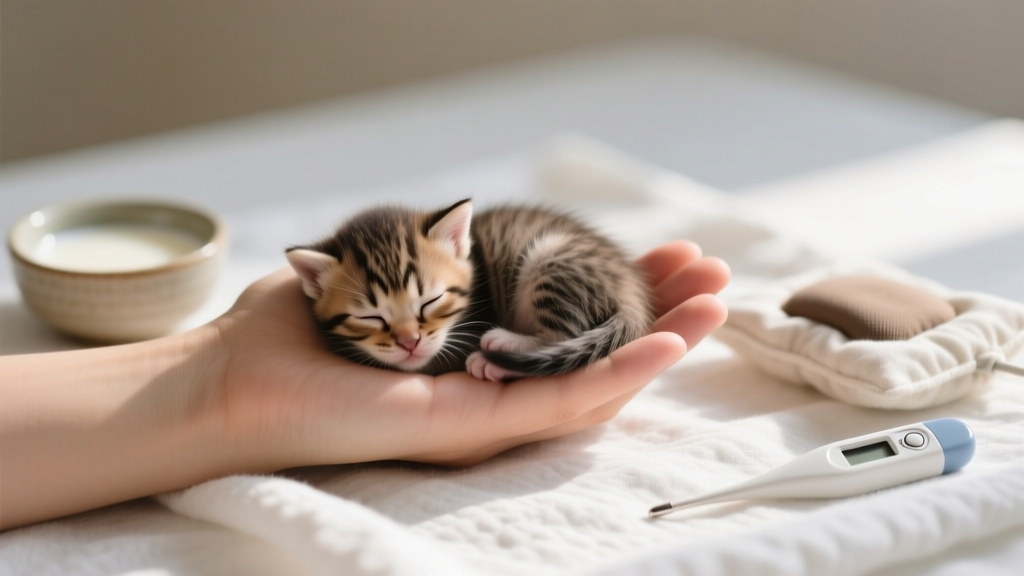
| 0–2 weeks | Eyes closed; ears folded; relies entirely on mom for warmth, stimulation, feeding | Monitor weight gain (≥10g/day); stimulate urination/defecation after each feed with warm damp cloth; keep ambient temp 85–90°F | Hypothermia, failure-to-thrive syndrome, sepsis |
| 3–4 weeks | Eyes fully open; begins crawling; teeth erupt; starts playing | Begin deworming; introduce shallow water dish; start litter box orientation; initiate gentle handling | Parasitic anemia, delayed motor development, fear imprinting |
| 5–8 weeks | Walking confidently; weaning complete; plays with littermates; begins vocalizing | First FVRCP vaccine; start socialization protocol; transition to wet food; spay/neuter consult | Preventable infectious disease, lifelong timidity, overpopulation |
| 9–12 weeks | Adult coordination; strong bond forming; explores independently; teething peaks | Second FVRCP + FeLV; fecal test; microchip implant; enroll in kitten kindergarten class | Chronic GI disease, vaccine failure, lost pet recovery delay |
Frequently Asked Questions
Can I bathe my kitten?
No—unless medically necessary (e.g., pesticide exposure). Kittens cannot regulate body temperature well and are prone to hypothermia. Their skin barrier is underdeveloped, making them vulnerable to chemical absorption and irritation. Instead, use a warm, damp washcloth to spot-clean. If severely soiled, consult your vet for safe, kitten-formulated cleansing wipes.
Is it okay to let my kitten sleep in bed with me?
Not before 12 weeks—and only if you’ve ruled out zoonotic risks like ringworm or intestinal parasites through vet testing. More importantly, sleeping in bed disrupts litter training consistency and encourages dependency that can lead to separation anxiety. Provide a cozy, warm sleeping den near your bed instead—this builds security without compromising boundaries.
My kitten bites and scratches during play—how do I stop it?
This is normal predatory behavior—not aggression. Redirect immediately to appropriate toys (never hands or feet). End play sessions before overstimulation occurs (watch for tail flicking, flattened ears, dilated pupils). Pair bite inhibition training with positive reinforcement: when kitten stops biting, reward with treat + calm praise. Consistency for 10–14 days yields dramatic improvement—per ASPCA’s kitten behavior study cohort.
Should I adopt two kittens instead of one?
Yes—if you’re adopting under 12 weeks and can commit to both. Kittens learn bite inhibition, social cues, and play boundaries from littermates. Single kittens often develop ‘redirected play aggression’ toward humans or furniture. However, avoid pairing unrelated kittens under 8 weeks—stress-induced illness spikes without maternal presence. Ideal: adopt siblings or same-age shelter mates.
What’s the best age to bring a kitten home?
8 weeks minimum—and ideally 10–12 weeks. Earlier separation increases risk of poor social skills, inappropriate elimination, and immune compromise. Reputable breeders and shelters hold kittens until this window to ensure full weaning, vaccine priming, and socialization. If you see kittens advertised at 4–6 weeks, walk away—it’s ethically and medically irresponsible.
Common Myths About Kitten Care
Myth #1: “Kittens don’t need vet visits until they’re older.”
False. The first vet visit should occur at 6–8 weeks—even if seemingly healthy. This allows baseline assessment, parasite screening, vaccine scheduling, and early detection of congenital issues (e.g., heart murmurs, cleft palate, umbilical hernias).
Myth #2: “Milk is good for kittens.”
Completely false—and potentially lethal. Cow’s milk contains lactose that kittens cannot digest post-weaning. It causes explosive diarrhea, dehydration, and electrolyte imbalance within hours. Only use approved kitten milk replacers under veterinary guidance.
Related Topics (Internal Link Suggestions)
- Kitten Vaccination Schedule — suggested anchor text: "what vaccines does my kitten need?"
- Best Kitten Food Brands Vet-Approved — suggested anchor text: "top-rated kitten wet food brands"
- How to Socialize a Shy Kitten — suggested anchor text: "helping a fearful kitten feel safe"
- Signs of Sick Kitten Emergency — suggested anchor text: "when to take kitten to emergency vet"
- Spaying a Kitten: Age, Cost & Recovery — suggested anchor text: "early spay benefits for kittens"
Your Next Step Starts Today—Not Tomorrow
You now hold actionable, vet-validated knowledge—not just internet folklore. But knowledge without implementation is like having a map without turning the key. Your very next action? Book a kitten wellness exam within 48 hours—even if your kitten seems perfect. Bring a fresh stool sample, note exact birthdate (or best estimate), and ask for a printed care timeline. Then, print the care timeline table above and tape it to your fridge. Check off each milestone as you go. Remember: Every day in those first 12 weeks compounds into lifelong health, trust, and joy. You’re not just raising a pet—you’re shaping a life. And you’ve already taken the bravest, smartest step: showing up with intention.