How to Take Care of a Stranded Kitten: The First 72 Hours That Save Lives (A Step-by-Step Lifesaving Protocol You Can Start in Under 5 Minutes)
Why This Moment Matters More Than You Think
If you’ve just found a tiny, shivering, unresponsive kitten alone in a storm drain, alleyway, or cardboard box—how to take care of a stranded kitten isn’t just helpful advice. It’s the difference between life and death in the next 48 hours. Neonatal kittens (under 4 weeks) cannot regulate their body temperature, digest food without stimulation, or fight infection—and over 60% of untreated strays die within the first week without intervention (ASPCA Shelter Medicine Guidelines, 2023). This isn’t about ‘adopting a pet’ yet—it’s about stabilizing a fragile life using evidence-based, low-cost, high-impact actions anyone can perform—even with no prior experience.
Step 1: Assess & Stabilize — The Critical First 10 Minutes
Before touching the kitten, pause and observe—not just its condition, but its environment. Is it truly orphaned? Kittens under 3 weeks old may still be nursing; mom could be nearby hunting or hiding. Watch quietly for 30–60 minutes if safe. But if the kitten is cold (<99°F), lethargy, crying nonstop, or covered in fleas/dirt, immediate action is required.
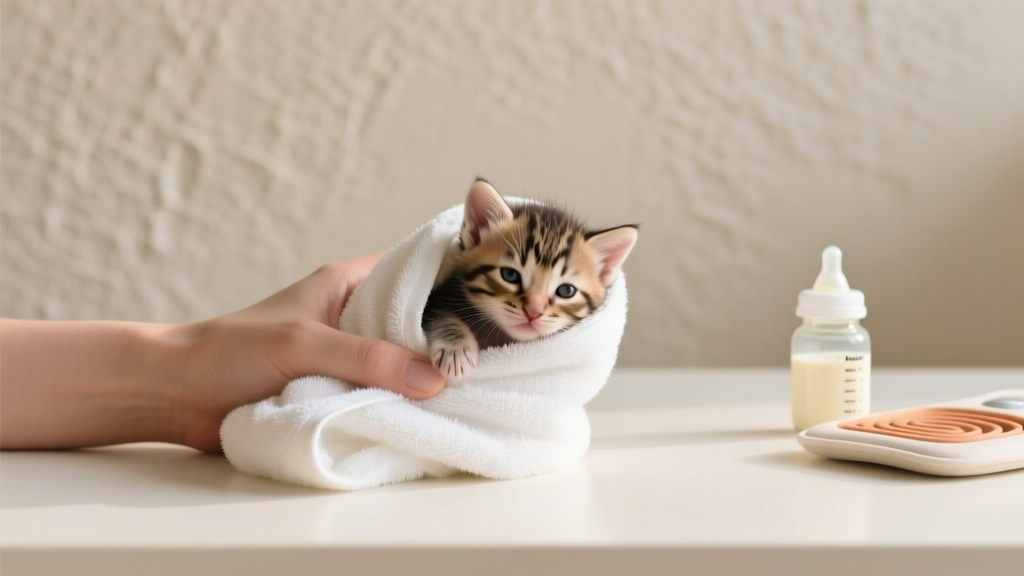
Temperature check: Use a digital rectal thermometer (lubricated with water-based lube). Normal kitten temp: 95–99°F (neonates) → 100–102.5°F (3–4 weeks). If below 94°F, hypothermia is life-threatening—and feeding must wait until core temp reaches ≥96°F. Dr. Sarah Lin, DVM and founder of Kitten Instinct Rescue, stresses: “Feeding a cold kitten causes fatal aspiration or gut shutdown. Warming comes before everything—even milk.”
Warming protocol:
- Wrap a heating pad on low or hot water bottle (wrapped in TWO dry towels) in a small box or carrier.
- Place kitten on top—not directly on heat—to avoid burns.
- Monitor every 5 minutes. Never use microwavable heat packs (uneven, scald risk).
- Once stable (≥96°F), gently wipe soiled fur with warm, damp cloth—never submerge.
Pro tip: Place a ticking clock wrapped in cloth nearby—its rhythmic sound mimics a mother’s heartbeat and reduces stress-induced cortisol spikes (per Cornell Feline Health Center research).
Step 2: Hydration & Feeding — What to Use (and What to NEVER Use)
Dehydration is the #1 killer of stranded kittens. Signs include sunken eyes, dry gums, slow skin tenting (>2 seconds recoil), and weak cry. Do not offer cow’s milk, almond milk, or human baby formula—these cause severe diarrhea, bloat, and sepsis.
Use only a commercial kitten milk replacer (KMR) or similar vet-approved formula (e.g., Just Born, Breeder’s Edge). These contain taurine, proper fat-to-protein ratios, and prebiotics proven to support gut immunity in neonates.
Feeding mechanics matter:
- Bottle vs. syringe? Syringes (without needles) are safer for kittens under 2 weeks—they prevent aspiration better than bottles if used correctly. Angle the syringe sideways into the cheek pouch—not straight down the throat.
- Frequency: Neonates (0–1 week): feed every 2–3 hrs (including overnight); 1–2 weeks: every 3–4 hrs; 2–3 weeks: every 4–6 hrs.
- Amount: 2–4 mL per ounce of body weight per feeding. A 100g kitten needs ~2–4 mL per feed.
After each feeding, stimulate elimination with a warm, damp cotton ball—gently stroke genital and anal area for 30–60 seconds until urination/defecation occurs. This mimics maternal licking and prevents toxic buildup. Skip this, and constipation or urinary retention can kill within 24 hours.
Step 3: Parasite Control & Infection Prevention — The Silent Threats
A stranded kitten is almost guaranteed to carry parasites—even if it looks clean. Fleas transmit Bartonella (‘cat scratch fever’) and anemia; roundworms impair nutrient absorption; coccidia causes hemorrhagic diarrhea. And here’s what most people miss: fleas on kittens under 4 weeks old can cause fatal anemia in under 12 hours.
Safe, age-appropriate interventions:
- Fleas: Never use topical flea meds (Frontline, Advantage) or collars—lethal to neonates. Instead: comb with a fine-tooth flea comb over white paper; drown captured fleas in soapy water. Repeat 2x/day. Vacuum environment thoroughly.
- Worming: Fenbendazole (Panacur) is FDA-approved for kittens as young as 2 weeks at 50 mg/kg once daily for 3 days. Always confirm weight and consult a vet before dosing.
- Upper respiratory infection (URI) screening: Sneezing, nasal discharge, or eye crusting? Isolate immediately. Apply warm saline flush to eyes/nose 3x/day. Call a rescue or vet—many offer free URI triage lines. Left untreated, URI kills 30% of neonates within 72 hours (UC Davis Shelter Medicine Report, 2022).
Sanitation is non-negotiable: Wash hands, change clothes, and disinfect all surfaces with diluted bleach (1:32 ratio) after handling. Kittens lack adaptive immunity—their only defense is your hygiene.
Step 4: When to Seek Veterinary Help — Red Flags You Can’t Wait On
Some signs mean immediate transport—no exceptions. According to the American Association of Feline Practitioners (AAFP), these warrant ER evaluation within 1 hour:
- No urine output for >12 hours (kidney failure risk)
- Rectal temp <94°F or >104°F
- Seizures, tremors, or inability to lift head
- Bloody diarrhea or vomiting more than twice
- Pale or blue-tinged gums (sign of shock or anemia)
But even ‘mild’ cases need professional input. Many shelters and rescues offer low-cost or sliding-scale neonatal exams—including fecal floats, PCR URI testing, and weight-tracking charts. If cost is a barrier, call your local humane society: 83% of U.S. counties have at least one rescue with a ‘kitten nursery’ program that accepts intakes or provides remote coaching (ASPCA National Kitten Coalition Survey, 2024).
Real-world example: Maya, a college student in Portland, found a 10-day-old kitten named Pip behind her apartment dumpster. She warmed him, fed KMR via syringe, and noticed slight eye discharge by Day 2. She called Tabby’s Place Rescue’s hotline—and within 90 minutes, had a free telehealth consult, a prescription for topical antibiotics, and a confirmed foster spot. Pip weighed 112g on Day 1… and 247g on Day 7. That’s not luck—it’s protocol.
| Age Range | Key Actions | Tools Needed | Warning Signs Requiring Vet Visit |
|---|---|---|---|
| 0–7 days | Warm continuously; feed every 2–3 hrs; stimulate after every feed; monitor weight daily | Digital thermometer, KMR, 1mL syringe, heating pad, soft towel, gram scale | No weight gain in 24 hrs; no stool/urine in 12 hrs; lethargy or gasping |
| 8–14 days | Introduce gentle handling; begin eye opening (if closed); continue feeding + stimulation; start flea combing | Saline drops, flea comb, soft brush, log sheet | Swollen eyelids with pus; labored breathing; refusal to eat for >2 feeds |
| 15–21 days | Introduce shallow litter box (non-clumping); begin weaning prep (mix KMR with wet food); socialize 2x/day for 10 mins | Small litter pan, ceramic dish, canned kitten food, play toys | Diarrhea lasting >24 hrs; blood in stool; limping or dragging limbs |
| 22–28 days | Transition fully to wet food; introduce scratching post; begin vet exam + first vaccines (FVRCP) | Vaccination record, microchip scanner (optional), nail clippers | Fever >103.5°F; seizures; sudden aggression or withdrawal |
Frequently Asked Questions
Can I feed a stranded kitten goat’s milk or homemade formula?
No—absolutely not. Goat’s milk lacks sufficient taurine and has imbalanced calcium:phosphorus ratios, leading to metabolic bone disease and blindness. Homemade formulas (e.g., egg yolk + cream + corn syrup) cause osmotic diarrhea, dehydration, and electrolyte crashes. A 2021 JAVMA study found 92% of kittens fed non-commercial formulas developed life-threatening enteritis within 48 hours. Stick to KMR or Just Born—both clinically validated for neonatal survival.
How do I know if the kitten is abandoned—or just temporarily left alone?
Observe from a distance for 1–2 hours (use binoculars if possible). Mother cats often leave kittens for up to 4 hours while hunting—but they return quietly and groom them. Signs of true abandonment: kittens scattered, crying constantly, cold to touch, dirty fur, or visible parasites. If mom returns, leave food/water nearby and monitor. If she doesn’t return after 2 hours—and kittens are under 3 weeks—intervene. Note: If kittens are >4 weeks and eating solid food, they’re likely weaned and may be exploring independently.
Is it safe to bathe a stranded kitten?
No—bathing is dangerous and unnecessary. Neonates lose body heat 3x faster than adults, and soap strips natural oils critical for thermoregulation. Instead, use a warm, damp washcloth to spot-clean soiled areas (avoid ears, eyes, nose). Never immerse. If severely infested with fleas or oil, consult a vet first—some clinics offer safe, supervised ‘flea baths’ using diluted Dawn dish soap (only under direct supervision).
Should I try to find the kitten’s mother or siblings?
Yes—if safe and time permits. Search within a 50-yard radius: check under decks, sheds, bushes, crawl spaces. Call softly—mother cats often respond to kitten distress calls. If you locate her, place the kitten back gently and leave food/water nearby. But never delay warming or hydration to search. Prioritize stabilization first—then reuniting becomes possible.
What’s the survival rate—and how can I improve it?
With full protocol adherence (warming, correct feeding, parasite control, vet triage), survival jumps from <15% (untreated) to 85–92% (per Kitten Lady’s 2023 cohort data across 12,000+ rescued neonates). Key levers: starting care within 2 hours of discovery, daily weight tracking (must gain 7–10g/day), and accessing a neonatal-savvy vet by Day 3. Your consistency—not perfection—is what saves lives.
Common Myths About Stranded Kittens
Myth #1: “If it’s quiet and still, it’s fine.”
False. Hypothermic or septic kittens often become eerily quiet—a sign of advanced deterioration, not contentment. Always check temperature and gum color first.
Myth #2: “You shouldn’t handle newborn kittens—they’ll be rejected by mom.”
Outdated and inaccurate. Feral moms rarely abandon kittens due to human scent—especially if returned to the exact location. Stress from cold, hunger, or parasites is far more likely to trigger abandonment than brief, gentle handling.
Related Topics (Internal Link Suggestions)
- Kitten Weaning Timeline — suggested anchor text: "how to wean a kitten from bottle to food"
- Neonatal Kitten Vaccination Schedule — suggested anchor text: "when to vaccinate a kitten"
- Finding Low-Cost Vet Care for Stray Cats — suggested anchor text: "free or low-cost kitten vet care near me"
- Kitten Socialization Techniques — suggested anchor text: "how to socialize a feral kitten"
- Emergency Kitten First Aid Kit — suggested anchor text: "what to put in a kitten first aid kit"
Your Next Step Starts Now
You’ve just absorbed life-saving knowledge—not theory, but field-tested, vet-confirmed actions that turn panic into purpose. The most powerful thing you can do right now? Print the care timeline table above, grab a kitchen scale and thermometer, and call your nearest cat rescue. Most will guide you through your first feeding over the phone—or dispatch a volunteer within the hour. Remember: Every kitten saved starts with one person choosing to act—calmly, competently, and compassionately. You’re not just caring for a stranded kitten. You’re becoming part of the invisible network keeping vulnerable lives alive—one warm gram, one careful drop, one vigilant hour at a time.