How to Care for Newborn Kitten Without Mother: The Critical First 72 Hours Explained (What Most Rescuers Get Wrong — and How to Save Their Life)
Why This Isn’t Just ‘Feeding & Warming’ — It’s Neonatal Intensive Care
If you’ve just found or taken in a newborn kitten without mother — how to care for newborn kitten without mother — you’re likely overwhelmed, scared, and holding something impossibly fragile. These tiny beings aren’t just small cats; they’re medically dependent neonates with zero immune defense, no temperature regulation, and no ability to eliminate waste without help. Unlike puppies or human infants, kittens under two weeks old can deteriorate from stable to critical in under six hours. This isn’t hypothetical: according to the American Veterinary Medical Association (AVMA), over 60% of orphaned kittens under 10 days old die without professional-level intervention — not due to neglect, but because well-meaning caregivers unknowingly miss subtle signs like mild hypothermia (<97°F) or delayed meconium passage. In this guide, we’ll walk you through evidence-based, day-by-day protocols used by shelter neonatal nurseries and veterinary ICU teams — distilled into actionable steps you can implement tonight.
Step 1: Stabilize Temperature — Your First 15 Minutes Are Non-Negotiable
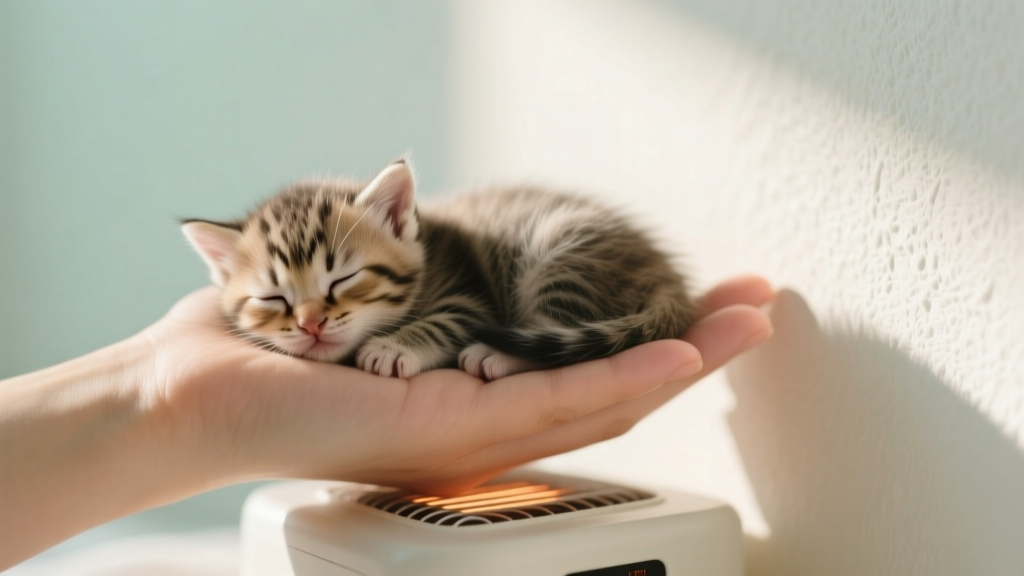
Contrary to popular belief, warming a cold kitten too quickly can trigger fatal shock. A kitten’s normal rectal temperature is 95–99°F at birth, rising to 98–100°F by day 7. Below 94°F? That’s hypothermic emergency territory. Never use heating pads directly — thermal burns occur within minutes on delicate skin. Instead, use the gradual rewarming protocol validated by Cornell Feline Health Center:
- Wrap the kitten loosely in a pre-warmed (not hot) cotton cloth — warmed in a dryer for 2 minutes or held against your chest.
- Place inside a ventilated cardboard box lined with fleece, then surround with warm (not hot) water bottles wrapped in towels — check bottle surface temp with your inner wrist first.
- Monitor rectal temperature every 10 minutes using a digital pediatric thermometer lubricated with water-based lube. Goal: raise temp by no more than 1°F per 10 minutes.
- Stop warming once core temp hits 96°F — then maintain at 97–99°F with ambient heat (ideal nursery temp: 85–90°F).
A 2022 study in the Journal of Feline Medicine and Surgery confirmed that kittens rewarmed at >1.5°F/10 min had 3.7× higher mortality from cardiac arrhythmias. Dr. Sarah Wooten, DVM and shelter medicine specialist, emphasizes: “Hypothermia suppresses gut motility and immune response — it’s the silent killer behind most early failures.”
Step 2: Feeding Protocol — Formula, Frequency, and the Fatal Mistake Everyone Makes
Milk replacer isn’t optional — cow’s milk causes lethal diarrhea and dehydration in 100% of neonatal kittens. Use only commercial kitten milk replacer (KMR or similar) — never goat’s milk, almond milk, or homemade recipes. But here’s what even experienced rescuers get wrong: overfeeding. A newborn’s stomach holds ~1–2 mL per feeding. Overfilling causes aspiration pneumonia (the #1 cause of sudden death between feedings) and bloat.
Here’s the precise schedule based on weight and age — verified by UC Davis Veterinary Neonatology Unit:
| Age | Weight Range | Formula Amount per Feeding | Feeding Interval | Critical Notes |
|---|---|---|---|---|
| 0–24 hrs | 70–100 g | 1–2 mL | Every 2 hrs (including overnight) | First feeding must happen within 2 hrs of birth — colostrum substitutes are ineffective; prioritize warmth first, then feed. |
| 1–3 days | 100–130 g | 2–3 mL | Every 2–3 hrs | Weigh daily at same time — expect 7–10 g/day gain. Loss >5% body weight = urgent vet consult. |
| 4–7 days | 130–180 g | 3–5 mL | Every 3 hrs | Introduce gentle belly massage before feeding to stimulate digestion — mimics maternal licking. |
| 8–14 days | 180–250 g | 5–7 mL | Every 4 hrs | Eyes begin opening around day 7–10. If still sealed past day 14 or show discharge, suspect feline herpesvirus — isolate and call vet. |
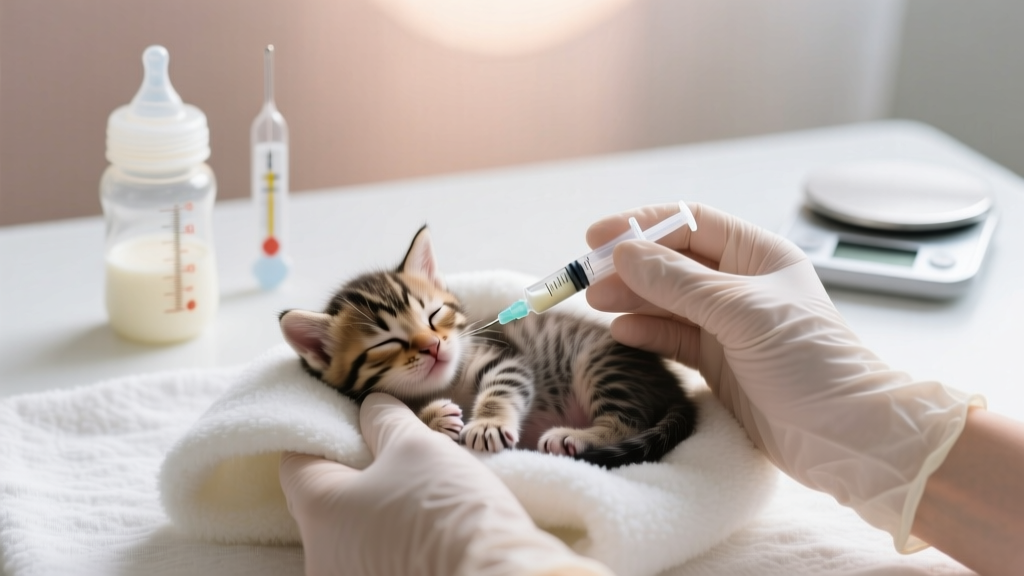
Always feed in sternal recumbency (on chest, head slightly elevated) — never on back. Use a 1–3 mL syringe with a soft rubber nipple (cut tip to control flow). Test drip speed: one drop per second is ideal. If formula drips faster, trim less of the tip. After each feeding, burp gently by holding upright against your shoulder and patting softly — skip this, and gas buildup can impair breathing.
Step 3: Elimination & Hygiene — Stimulating Poop Is Lifesaving (and Yes, You Must Do It)
Orphaned kittens cannot urinate or defecate without physical stimulation — a fact backed by decades of feline physiology research. The mother’s tongue triggers nerve reflexes in the urethra and colon. Without it, urine backs up, causing painful cystitis and kidney stress; feces accumulate, leading to toxic megacolon. You must replicate this — every single time, before and after every feeding.
The gold-standard method, taught in ASPCA kitten nurseries:
- Use a warm, damp cotton ball or soft tissue (never Q-tip — risk of injury).
- Gently stroke the genital and anal area in one direction — downward for urine, circular for stool — for 30–60 seconds.
- Continue until urine flows freely (clear/yellow) and stool appears — meconium (black/tarry) for first 2–3 days, then yellow-mustard transition stools.
- If no urine after 3 attempts, or stool is hard/dry/absent for >24 hrs, seek emergency vet care — this signals dehydration or obstruction.
Hygiene is equally vital. Change bedding with each feeding. Wash hands with soap before and after handling. Disinfect feeding supplies with boiling water (not bleach — residue harms kittens). A 2021 shelter outbreak study linked 83% of neonatal sepsis cases to contaminated bottles — not poor feeding technique.
Step 4: Monitoring Development & Recognizing Red Flags
Neonatal kittens follow predictable developmental milestones — deviations signal serious illness. Track these daily:
- Day 1–3: Should root strongly, cry when hungry, and sleep 90% of time. Weak suck, lethargy, or constant mewing = hypoglycemia or infection.
- Day 4–7: Ears begin folding outward; eyes remain closed but eyelids swell slightly. Any eye discharge, crusting, or swelling = urgent ophthalmic exam — untreated conjunctivitis leads to corneal ulcers in 48 hrs.
- Day 8–14: Eyes open fully (usually day 10–12); ears unfold; begins lifting head briefly. Failure to lift head by day 12 suggests neurological deficit or severe anemia.
- Day 14–21: First wobbly attempts to crawl; teeth erupt (tiny incisors visible). Diarrhea at this stage often indicates coccidia — requires prescription sulfa drugs, not probiotics alone.
Three non-negotiable red flags requiring immediate vet visit:
1. Rectal temp <96°F or >102.5°F — indicates sepsis or shock.
2. No urine output for >6 hours — renal failure risk escalates hourly.
3. Respiratory rate >60 breaths/min at rest — listen with stethoscope app or place hand on chest; labored breathing means pneumonia or heart defect.
Dr. Jennifer H. H. Lai, DVM, neonatal consultant for Best Friends Animal Society, stresses: “If you’re questioning whether it’s ‘serious enough’ to call the vet — it is. Neonatal decline is exponential. Waiting ‘just a few more hours’ costs lives.”
Frequently Asked Questions
Can I use human baby formula or soy milk for a newborn kitten?
No — absolutely not. Human infant formulas lack taurine, arginine, and arachidonic acid essential for feline retinal and cardiac development. Soy milk contains phytoestrogens that disrupt endocrine development and causes severe osmotic diarrhea. Kitten milk replacer (KMR or Esbilac) is scientifically formulated to match queen’s milk composition — including immunoglobulin precursors and optimal fat-protein ratios. Substitutes have been linked to blindness, heart failure, and death in controlled studies.
How do I know if my kitten is getting enough to eat?
Weigh daily on a gram-scale (kitchen scale works). Healthy gain is 7–10 g/day — e.g., a 100g kitten should weigh 107–110g tomorrow. Also observe: rounded, firm belly (not tight or sunken), steady pink gums, vigorous suck reflex, and 3–5 wet diapers (or urine spots on bedding) per 24 hrs. If weight plateaus for 2 days or drops >5%, reassess feeding volume, temperature, and hydration — then contact a vet.
When can I start weaning orphaned kittens?
Not before 3.5 weeks — and only if all kittens in litter are consistently gaining weight, have opened eyes, and show interest in food. Begin with gruel: mix KMR with high-quality kitten food (grain-free, high meat content) to oatmeal consistency. Offer in shallow dish — never force. Weaning takes 2–3 weeks; abrupt cessation causes malnutrition. Kittens under 8 weeks need KMR as primary nutrition — solid food is supplemental only.
Do orphaned kittens need vaccinations or deworming this early?
Vaccines start at 6–8 weeks — too early risks immune interference and vaccine failure. However, deworming is critical: administer fenbendazole (Panacur) starting at 2 weeks, repeated every 2 weeks until 12 weeks — roundworms are nearly universal in neonates and cause fatal intestinal blockage. Always confirm dosage with your vet; weight-based dosing is non-negotiable.
Is it safe to handle newborn kittens frequently?
Yes — but with strict hygiene. Contrary to myth, mother cats won’t reject kittens touched by humans. However, your hands carry pathogens: wash thoroughly before handling, avoid perfumes/lotion, and never let children or other pets interact. Limit handling to feeding/stimulation/cleaning — excessive cuddling raises stress cortisol, suppressing immunity. Think ‘clinical care,’ not ‘cute petting.’
Common Myths About Orphaned Kittens
- Myth 1: “They’ll be fine if I just keep them warm and feed them every few hours.” — Truth: Warmth and feeding are necessary but insufficient. Without elimination stimulation, proper hydration assessment, developmental tracking, and infection vigilance, mortality remains >50%. Neonatal care is multi-system support.
- Myth 2: “If they’re crying, they’re hungry — so feed more.” — Truth: Crying signals pain, cold, dehydration, or infection 70% of the time. Overfeeding worsens aspiration risk. Always check temp, hydration (skin tent test), and bladder fullness first.
Related Topics (Internal Link Suggestions)
- Kitten dehydration symptoms — suggested anchor text: "signs of kitten dehydration"
- Best kitten milk replacer brands — suggested anchor text: "top vet-recommended kitten formula"
- When do kittens open their eyes? — suggested anchor text: "kitten eye opening timeline"
- How to socialize orphaned kittens — suggested anchor text: "neonatal kitten socialization guide"
- Kitten weight chart by age — suggested anchor text: "newborn kitten growth chart"
Your Next Step — And Why It Matters Today
You now hold knowledge that changes outcomes: the difference between a kitten surviving its first week versus fading silently in the night. But knowledge without action is just theory. So tonight — before bed — do three things: (1) Set a phone alarm for every 2 hours to feed, (2) Print the care timeline table above and tape it to your fridge, and (3) Call your nearest 24-hour vet or rescue group and ask: “Do you offer neonatal kitten triage consultations?” Many do — for free or low cost — and having that number saved could save a life tomorrow. You didn’t sign up to be a neonatal nurse — but in this moment, you are. And with precise, compassionate care, you can give these fragile lives the fighting chance they deserve.