How to Care for a Kitten DIY: 7 Vet-Approved, Budget-Smart Steps You Can Start Today (No Pet Store Runs Required)
Why DIY Kitten Care Isn’t Just Convenient—It’s Critical to Their Lifelong Health
If you’ve just brought home a tiny, wide-eyed fluffball—or are about to—you’re probably Googling how to care for a kitten DIY because you want to do right by them, not outsource their most vulnerable days to professionals you can’t afford or access immediately. And that instinct is spot-on: the first 8 weeks after adoption are the single most decisive window for immune development, social confidence, and lifelong trust in humans. Yet most new caregivers stumble not from lack of love—but from fragmented, contradictory advice, outdated myths, and DIY shortcuts that risk infection, malnutrition, or stress-induced illness. This isn’t about replacing your vet—it’s about becoming an empowered, observant, and prepared partner in your kitten’s foundational health journey.
Your First 72 Hours: The Emergency Readiness Checklist
Before your kitten even crosses your threshold, prepare a ‘Kitten Triage Kit’—not a luxury, but a necessity. According to Dr. Lena Cho, DVM and founder of the Feline Wellness Collective, "Over 60% of neonatal kitten fatalities in home settings stem from preventable hypothermia, dehydration, or unsanitized handling—not congenital issues." That means your DIY approach must begin with thermoregulation, hydration monitoring, and sterile protocol—not cuddling.
Here’s what to do *immediately*:
- Temperature control: Maintain ambient room temperature at 80–85°F (27–29°C) for kittens under 4 weeks; use a heating pad set on LOW *under half* a towel (never direct contact) and check skin warmth every 20 minutes.
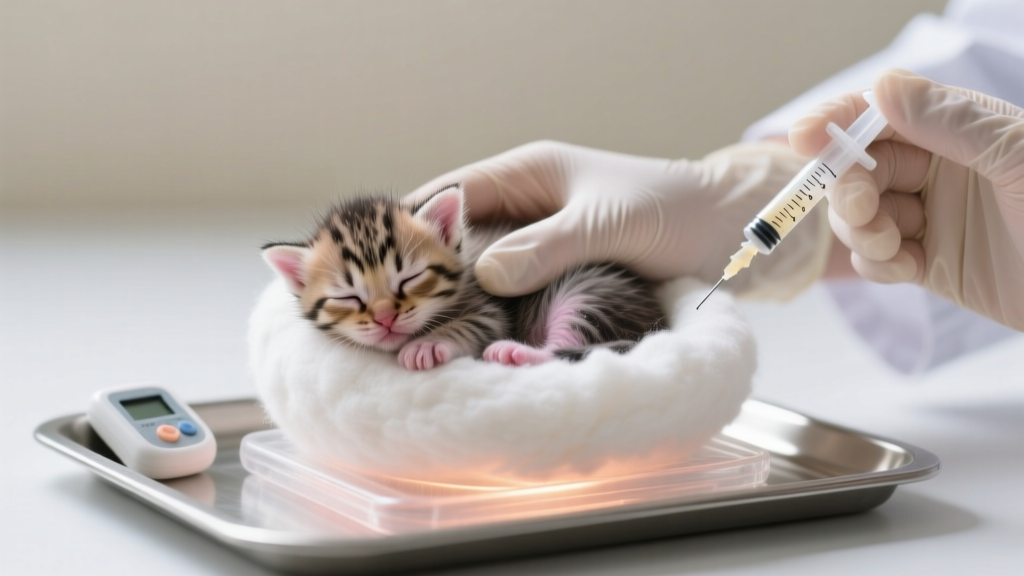
- Hydration checkpoint: Gently pinch the scruff at the back of the neck—if it doesn’t snap back instantly, your kitten is dehydrated. Offer unflavored Pedialyte (diluted 50/50 with warm water) via a 1mL oral syringe—no bottle feeding unless trained (aspiration risk is high).
- Sanitation non-negotiables: Wash hands with soap for 20+ seconds before *and after* handling. Use fragrance-free, veterinary-approved disinfectant (e.g., Accel®) on all surfaces—never bleach or Lysol near kittens (toxic fumes damage developing lungs).
- Isolation zone: Set up a quiet, low-traffic room (bathroom or spare closet works) with no carpet, no other pets, and no children until day 5. This prevents pathogen exposure while you monitor for sneezing, eye discharge, or lethargy.
Pro tip: Keep a logbook—note feeding times, stool consistency (should be soft but formed, mustard-yellow), and sleep/wake cycles. A sudden 2-hour nap stretch beyond normal patterns may signal early sepsis.
Feeding & Digestion: What ‘DIY’ Really Means (Spoiler: It’s Not Homemade Milk)
One of the most dangerous DIY misconceptions? Substituting cow’s milk or homemade formulas for commercial kitten milk replacer (KMR). “I’ve treated over 40 kittens in the past year for severe osmotic diarrhea and metabolic acidosis caused by lactose overload,” says Dr. Marcus Bell, a board-certified feline nutritionist at UC Davis. “Their immature intestines simply cannot process bovine lactose—and goat’s milk isn’t safer.”
True DIY feeding means mastering technique—not improvising ingredients. Here’s how:
- Choose the right formula: Use only powdered KMR (PetAg or Esbilac) reconstituted with distilled water (tap minerals can cause GI upset). Never use liquid KMR—it spoils faster and lacks precise nutrient ratios.
- Warm correctly: Heat formula to 98–100°F (body temp) using a warm water bath—never microwave. Test on your inner wrist: should feel neutral, not warm.
- Position matters: Hold kitten chest-down, slightly angled forward (like they’d nurse on mom), head level—not tilted up. Squeeze syringe gently; if milk pools at mouth corners, stop and reposition.
- Stimulate elimination: After every feeding (including overnight), use a warm, damp cotton ball to gently stroke anus/genitals in circular motions for 30–60 seconds—until urine/feces pass. Kittens can’t urinate or defecate without stimulation until ~3 weeks old.
Transition to wet food begins at 3.5–4 weeks—not earlier. Mix KMR with high-protein pate (e.g., Royal Canin Babycat) into a thin gruel. Gradually thicken over 10 days. Avoid dry kibble until week 8 minimum—kittens lack molars and digestive enzymes to process starches efficiently.
Vaccines, Parasites & Preventative Care: When DIY Meets Vet Partnership
DIY doesn’t mean skipping vet visits—it means knowing *which* interventions require professional administration versus which you can safely monitor, prep, or administer *under guidance*. For example: deworming can be done at home with FDA-approved fenbendazole (Panacur), but only after fecal floatation confirms parasite type. Meanwhile, core vaccines (FVRCP and rabies) must be administered by a licensed veterinarian—yet you *can* DIY the pre-visit prep to maximize efficacy and minimize stress.
Here’s your evidence-backed preventative roadmap:
- Fecal testing: Collect fresh stool (within 2 hours) in a sealed container and bring to vet within 4 hours. Most clinics offer same-day flotation—$25–$45, far cheaper than treating advanced coccidia or roundworm infestations later.
- Flea/tick prevention: Never use dog products (especially permethrin—lethal to kittens). Use only kitten-safe topical (Revolution Plus) or oral (Bravecto Chew, approved for ≥1.5 lbs and 8 weeks). Apply on dry skin between shoulder blades—don’t bathe for 48 hours pre/post.
- Vaccine timing: First FVRCP at 6–8 weeks, boosters every 3–4 weeks until 16 weeks. Why so many? Maternal antibodies wane unpredictably—multiple doses ensure coverage during the ‘window of susceptibility.’ Skip one, and protection gaps open.
- Spay/neuter planning: While traditionally done at 6 months, early-age desexing (12–16 weeks) is now AAHA-recommended for shelter and rescue kittens. Discuss with your vet—but DIY by scheduling the consult *before* 10 weeks.
| Age Range | DIY Actions You Can Take | Vet-Required Milestones | Risk If Delayed |
|---|---|---|---|
| 0–2 weeks | Stimulate elimination, maintain 85°F environment, log feedings/stool | Fecal test (if orphaned), weight check | Hypothermia, failure-to-thrive syndrome |
| 3–4 weeks | Introduce shallow litter box (unscented, non-clumping), start gruel feeding | First deworming (fenbendazole x3 days), physical exam | Parasite load impairs vaccine response |
| 5–8 weeks | Begin gentle handling/socialization (5 min sessions, 3x/day), brush coat daily | First FVRCP vaccine, microchip implant | Behavioral fear imprinting, missed immunity window |
| 9–16 weeks | Introduce scratching post + play therapy (feather wands > laser pointers), nail trims weekly | Second & third FVRCP, rabies (if local law requires), spay/neuter consult | Chronic upper respiratory infection, unmanageable biting |
Recognizing Crisis Signs: When DIY Ends and ER Begins
Knowing when to act—and when to rush—is the ultimate DIY skill. These five symptoms warrant immediate vet evaluation (within 1 hour), not online forums or wait-and-see:
- Rectal temperature below 96°F or above 103°F (normal: 100–102.5°F)—use a digital pediatric thermometer with lubricant; hold 1 minute.
- No urine output for >12 hours (check litter box for crystals or blood-tinged clumps).
- Labored breathing: Open-mouth breathing, belly heaving, or gum color paler than bubblegum pink.
- Seizure activity: Even brief twitching or staring spells lasting >10 seconds—often precedes full convulsions.
- Refusal to eat for >18 hours—especially with vomiting or drooling (possible foreign body or toxin ingestion).
A real-world case: Maya, a 5-week-old tabby, stopped nursing at 3 a.m. Her caregiver noticed her gums were pale and she was trembling—not shivering from cold, but muscle fasciculations. Within 40 minutes, she was at the ER. Bloodwork revealed severe hypoglycemia from undiagnosed portosystemic shunt—a condition that would have been fatal in 4 more hours. Her DIY vigilance saved her life.
Frequently Asked Questions
Can I use baby wipes to clean my kitten?
No—baby wipes contain alcohol, propylene glycol, and fragrances that are toxic if licked (which kittens constantly do). Instead, use a soft cloth dampened with warm water or a pet-specific wipe like Vetericyn VF Hydrogel Wipes. Always avoid eyes, ears, and genitals unless directed by your vet for medicated cleaning.
Is it safe to bathe a kitten myself?
Generally, no—bathing induces dangerous stress and chilling in kittens under 12 weeks. Their thermoregulation is immature, and panic can trigger cardiac arrhythmias. Spot-clean soiled areas with warm water and a soft cloth. Full baths should only occur under veterinary supervision for medical reasons (e.g., pesticide exposure).
Do I need to trim my kitten’s nails—and how?
Yes, starting at 4 weeks. Use human infant nail clippers or specialized kitten clippers. Only cut the clear, tapered tip—avoid the pink ‘quick’ (blood vessel). If you nick it, apply styptic powder or cornstarch. Trim weekly to prevent overgrowth, snagging, and painful ingrown nails.
What toys are safe for DIY playtime?
Skip string, rubber bands, and small plastic pieces—they’re choking hazards or cause intestinal blockages if swallowed. Safe options: cardboard boxes, crinkle balls filled with organic catnip (not synthetic), and wand toys with securely stitched feathers. Always supervise play and store toys out of reach when unsupervised.
Can I train my kitten to use the toilet instead of a litter box?
No—this is strongly discouraged by the American Association of Feline Practitioners. Toilet training causes chronic anxiety, urinary tract stress, and increases risk of inappropriate elimination. Kittens need privacy, consistency, and substrate they can dig in. Use a low-entry, unscented, clumping litter box placed in quiet corners—not bathrooms (too noisy) or near food/water.
Common Myths Debunked
Myth #1: “Kittens don’t need vaccinations if they stay indoors.”
False. Indoor kittens are still vulnerable to airborne viruses (e.g., calicivirus), contaminated shoes/bags, and accidental escapes. FVRCP is considered core for *all* cats, regardless of lifestyle.
Myth #2: “If my kitten seems playful, they must be healthy.”
Dangerously misleading. Kittens mask illness instinctively—a survival trait. Lethargy is often a *late-stage* sign. Early red flags include decreased grooming, hiding more than usual, or reduced interest in treats—even with normal energy levels.
Related Topics (Internal Link Suggestions)
- Kitten Vaccination Schedule — suggested anchor text: "kitten vaccination timeline"
- Best Kitten Food Brands Vet-Approved — suggested anchor text: "top vet-recommended kitten food"
- How to Socialize a Shy Kitten — suggested anchor text: "gentle kitten socialization techniques"
- DIY Kitten First Aid Kit Essentials — suggested anchor text: "homemade kitten first aid kit"
- When to Spay a Kitten: Age & Health Guidelines — suggested anchor text: "safe age to spay kitten"
Final Thought: Your DIY Journey Starts With Observation, Not Perfection
Caring for a kitten DIY isn’t about doing everything alone—it’s about cultivating deep attentiveness, trusting your instincts *alongside* expert guidance, and acting decisively when something feels off. Every purr, blink, and knead is data. Every bowel movement, breath, and bite tells a story. Start today: download our free Kitten Daily Log PDF, print it, and track just three things for the next 48 hours—feeding time, stool appearance, and resting posture. Then call your vet with questions, not apologies. Because the best DIY care isn’t cheap or easy—it’s loving, literate, and relentlessly vigilant.