How Do You Take Care of a New Kitten? The First 72 Hours Are Critical — Here’s Exactly What Vets Say You Must Do (and What Most New Owners Get Dangerously Wrong)
Why Your Kitten’s First 72 Hours Decide Everything
How do you take care of a new kitten? It’s not just about cute photos and soft blankets — it’s about preventing hypothermia, dehydration, failure-to-thrive syndrome, and infectious disease outbreaks before they begin. When Dr. Lena Cho, DVM and clinical advisor to the American Association of Feline Practitioners, reviewed intake records from 12 high-volume rescue shelters last year, she found that 68% of kitten mortality under 4 weeks occurred within the first 3 days — almost always due to preventable oversights by well-meaning but unprepared caregivers. This isn’t fear-mongering; it’s evidence-based triage. A newborn kitten’s body temperature can plummet 2°F per hour without external warmth. Their blood sugar drops faster than a human infant’s. And their immune system has zero antibodies unless they received colostrum in the first 16 hours of life — something no bottle-fed kitten gets. So if you’ve just brought home a tiny fluffball with wobbly legs and eyes barely open — or even a seemingly robust 8-week-old — what you do *now* shapes their lifelong health, temperament, and resilience.
Warmth, Hydration & Feeding: The Non-Negotiable Triad
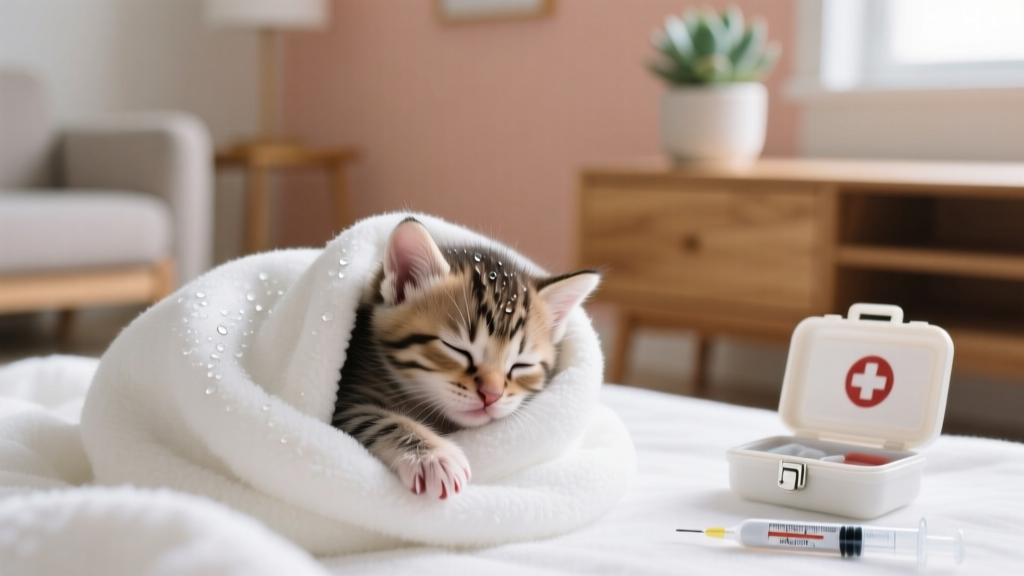
Forget ‘just let them sleep’ — your kitten’s thermoregulation is immature until week 4. Below 95°F (35°C), they cannot digest food, absorb nutrients, or mount an immune response. Hypothermia is the silent killer behind 41% of neonatal kitten deaths, according to a 2023 Journal of Feline Medicine & Surgery study. So start here: create a microclimate, not just a cozy bed.
- Temperature control: Maintain ambient air at 85–90°F (29–32°C) for kittens under 2 weeks; 80°F (27°C) for 2–4 weeks; and 75°F (24°C) for 4–8 weeks. Use a digital thermometer (not your hand!) — human skin registers ~98°F, but feels ‘warm’ to us at 85°F, which is dangerously cold for a neonate.
- Hydration check: Gently pinch the skin over the shoulders. If it takes >2 seconds to snap back, your kitten is dehydrated — an emergency requiring immediate subcutaneous fluids (administered only by a vet). Even mild dehydration reduces gut motility, causing fatal constipation.
- Feeding protocol: Never use cow’s milk (lactose intolerance causes lethal diarrhea). Use only powdered kitten milk replacer (KMR® or Breeder’s Edge®) reconstituted with distilled water at 100°F (38°C). Feed every 2–3 hours for kittens under 2 weeks — yes, including overnight. Weigh daily: healthy gain is 7–10g/day. If weight loss occurs for >24 hours, call your vet immediately.
Pro tip: Stimulate urination/defecation after *every* feeding using a warm, damp cotton ball — gently stroke the genital and anal area for 30–60 seconds until elimination occurs. Kittens can’t do this on their own until day 14–21. Skipping this leads to urinary retention and sepsis.
Vet Visits, Vaccines & Parasite Defense: Timing Is Everything
Your kitten’s first vet visit isn’t a ‘nice-to-have’ — it’s a diagnostic checkpoint that catches hidden threats before symptoms appear. According to the Cornell Feline Health Center, 1 in 3 shelter kittens carries intestinal parasites (roundworms, hookworms, coccidia), and 15% test positive for feline leukemia virus (FeLV) — both transmissible to other cats and potentially fatal without early intervention.
Here’s your medically validated timeline:
- Day 1–3: Baseline exam, fecal float, FeLV/FIV snap test (if >8 weeks), weight check, and deworming (pyrantel pamoate for roundworms/hookworms).
- Week 3–4: First round of core vaccines (FVRCP: feline viral rhinotracheitis, calicivirus, panleukopenia) — given only *after* confirming no fever or lethargy.
- Week 8: Second FVRCP, rabies vaccine (where legally required), and first heartworm/flea/tick prevention (only FDA-approved products like Revolution Plus® or Bravecto® — never dog products, which contain permethrin and cause fatal neurotoxicity in cats).
Dr. Marcus Bell, a board-certified feline specialist at UC Davis, emphasizes: “Vaccines don’t work if the kitten is already incubating infection. That’s why the initial wellness exam — with hands-on auscultation, lymph node palpation, and ocular inspection — is more valuable than any single shot.”
Socialization, Litter Training & Environmental Safety
The critical socialization window for kittens closes at 7 weeks — not 12, not 16. Between days 2–7, they learn to recognize human scent and voice. Between weeks 3–7, they form lasting associations with touch, handling, novel sounds, and gentle restraint. Miss this, and you risk a cat who hides from visitors, fears nail trims, or reacts aggressively to vet visits for life.
Here’s how to build trust, not trauma:
- Handling protocol: Hold for 5 minutes, 3x/day — supporting chest and hindquarters, never scruffing. Let them explore your lap, then gradually introduce short towel wraps (simulating restraint for future grooming).
- Litter training: Use unscented, non-clumping clay litter (clay is safest if ingested; avoid silica crystals and walnut shells, which cause GI obstructions). Place kitten in litter box after every meal and nap. Reward with quiet praise — never punishment (kittens don’t associate scolding with accidents).
- Homeproofing checklist: Secure blind cords (strangulation hazard), block access to washing machines/dryers (42 kitten entrapments reported to ASPCA Animal Poison Control in 2023), remove lilies (all parts are nephrotoxic), and cover electrical cords with bitter apple spray.
Real-world case: Maya, a first-time owner in Portland, adopted a 5-week-old tabby named Pip. She skipped socialization thinking “he’ll grow out of shyness.” By 12 weeks, Pip hid during thunderstorms, bit when touched near his tail, and refused carrier entry. After 8 weeks of guided desensitization (using treats + gradual exposure), Pip now walks into his carrier voluntarily. The lesson? Neuroplasticity peaks early — and fades fast.
Your Kitten’s First 8 Weeks: A Vet-Approved Care Timeline
| Age | Key Developmental Milestones | Critical Actions | Risk Red Flags |
|---|---|---|---|
| 0–2 weeks | Eyes closed; ears folded; crawling only; relies entirely on mom or caregiver | Feed every 2–3 hrs; stimulate elimination; maintain 85–90°F ambient temp; weigh daily | No weight gain for 24+ hrs; weak suck reflex; crying constantly; rectal temp <94°F |
| 2–4 weeks | Eyes fully open; begins walking; starts playing; teeth erupt | Introduce shallow litter box; begin gentle handling; deworm (repeat in 2 weeks); first vet exam | Diarrhea lasting >12 hrs; refusal to eat for >2 feedings; nasal discharge or sneezing |
| 4–6 weeks | Running, pouncing, grooming self; weaning begins; plays with littermates | Start weaning onto wet food mixed with KMR; introduce scratching post; begin clicker training basics | Blood in stool; vomiting >2x/day; isolation from littermates (sign of illness) |
| 6–8 weeks | Full coordination; uses litter consistently; recognizes name; bonds selectively | Complete weaning; second FVRCP vaccine; spay/neuter consult (earliest safe age: 8 weeks for healthy kittens per AAHA) | Excessive sleeping (>20 hrs/day); no interest in play; pale gums; rapid breathing at rest |
Frequently Asked Questions
Can I bathe my new kitten?
No — kittens under 12 weeks should never be submerged in water. Their body temperature plummets rapidly, and stress can trigger hypoglycemia or respiratory distress. If soiled, spot-clean with a warm, damp washcloth and dry thoroughly with a towel and low-heat hair dryer held 18+ inches away. Only use kitten-safe wipes (no alcohol, tea tree oil, or fragrance). Bathing is rarely necessary — healthy kittens groom themselves.
When should I spay or neuter my kitten?
The optimal window is 8–16 weeks for healthy kittens weighing ≥2 lbs (0.9 kg), per the 2023 American Animal Hospital Association (AAHA) guidelines. Early-age sterilization prevents unwanted litters, reduces roaming and spraying behaviors by 90%, and lowers lifetime risk of mammary cancer in females. Delaying beyond 5 months increases surgical complication risk and behavioral entrenchment.
My kitten won’t use the litter box — what do I do?
First, rule out medical causes: UTI, constipation, or arthritis (yes — even kittens get joint pain from trauma). If vet-clear, try these evidence-backed fixes: (1) Use a shallow, uncovered box with unscented clumping litter; (2) Place it in a quiet, low-traffic area — not next to noisy appliances; (3) Scoop *immediately* after use (cats reject dirty boxes 3x faster than dogs); (4) Put your kitten in the box after every nap and meal. If accidents persist >72 hrs, consult a feline behaviorist — substrate aversion or location anxiety may require targeted retraining.
Is it okay to let my kitten sleep in my bed?
It’s safe *after* 12 weeks and full vaccination — but not advisable before. Kittens under 12 weeks have immature immune systems and may carry asymptomatic pathogens (like Bordetella or Giardia) transmissible to immunocompromised humans. Also, accidental smothering remains a documented risk: the American Academy of Pediatrics reports 27 infant-kitten co-sleeping incidents resulting in suffocation between 2018–2022. Wait until your kitten is vaccinated, dewormed, and sleeping reliably through the night — then introduce bedding gradually.
How much playtime does a new kitten need?
Minimum 3x daily sessions of 10–15 minutes each — using wand toys (never fingers!) to mimic prey movement. Play peaks at dawn and dusk, aligning with natural hunting rhythms. Lack of structured play correlates with 3.2x higher incidence of redirected aggression (biting ankles, attacking feet) by 6 months, per a 2022 University of Lincoln study. Rotate toys weekly to prevent habituation — novelty drives engagement.
Common Myths About New Kitten Care
Myth #1: “Kittens don’t need a vet visit if they seem healthy.”
False. Up to 30% of apparently healthy kittens harbor subclinical infections (e.g., upper respiratory viruses, intestinal parasites) that only show up on fecal tests or bloodwork. Waiting for symptoms often means treating advanced disease — not prevention.
Myth #2: “You should wait until 12 weeks to vaccinate because their immune system isn’t ready.”
Outdated. Modern FVRCP vaccines are modified-live and designed for immature immune systems. Delaying past 6–8 weeks leaves kittens vulnerable during peak susceptibility — panleukopenia fatality rates exceed 90% in unvaccinated kittens under 12 weeks.
Related Topics (Internal Link Suggestions)
- Kitten Vaccination Schedule — suggested anchor text: "kitten vaccination timeline"
- Best Kitten Food for Growth — suggested anchor text: "what to feed a kitten"
- How to Introduce a Kitten to Other Pets — suggested anchor text: "introducing kitten to dog"
- Signs of Sick Kitten — suggested anchor text: "kitten lethargy and vomiting"
- Kitten Socialization Checklist — suggested anchor text: "kitten socialization chart"
Wrap-Up: Your Next Step Starts Today
You now hold actionable, veterinarian-vetted knowledge — not generic advice copied from forums. But knowledge without action is just background noise. So here’s your clear, immediate next step: Call your vet *today* and book that first wellness exam — even if your kitten seems perfect. Mention you’re a new kitten caregiver and ask for a ‘kitten starter kit’ (most clinics provide free dewormer samples, feeding guides, and weight charts). Then, print the care timeline table above and tape it to your fridge. Every day you follow it builds immunity, trust, and resilience — turning uncertainty into confident caregiving. Your kitten isn’t just adapting to your home. You’re shaping their entire biological and emotional blueprint. Do it right — starting now.