Feline Medullary Thyroid Calcitonin-Secreting Tumor
1. Introduction: Why this topic matters to cat owners
Most cat owners have heard about “thyroid problems” in cats, usually referring to hyperthyroidism. Much less commonly discussed are thyroid tumors—especially a type called a medullary thyroid tumor that can produce a hormone called calcitonin. While this condition is uncommon, understanding it can help you recognize subtle changes early, ask the right questions at the vet, and make confident decisions if your cat is diagnosed.
If your cat has a neck lump, unexplained weight loss, chronic vomiting, low energy, or lab tests showing calcium changes, your veterinarian may consider thyroid disease as part of the work-up. This article explains what a calcitonin-secreting medullary thyroid tumor is, what signs to watch for, what diagnostics are typically involved, and what treatment and home care may look like.
2. Overview: What is a calcitonin-secreting medullary thyroid tumor?
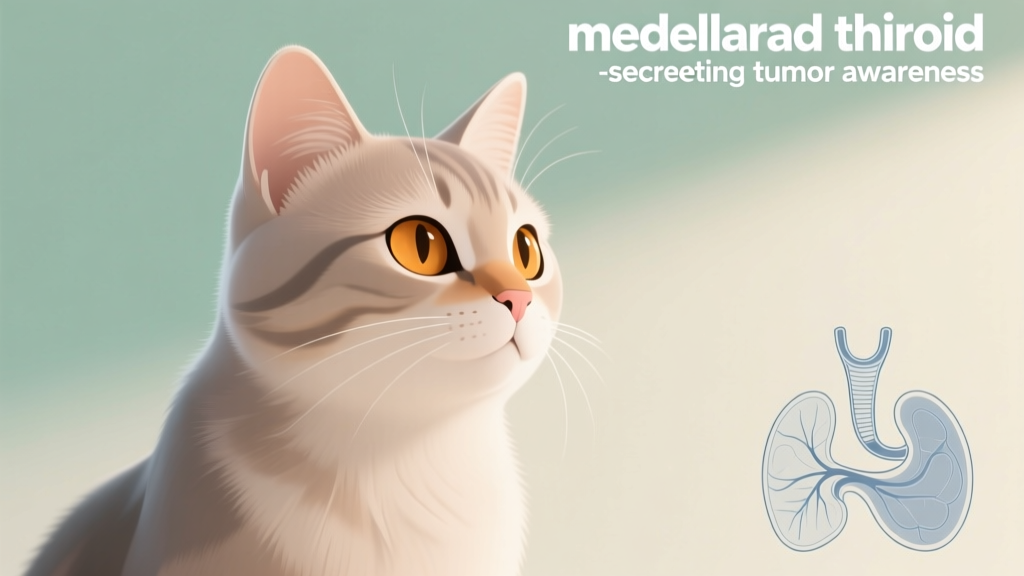
The thyroid glands are two small structures located in the neck, near the windpipe (trachea). In healthy cats, the thyroid primarily produces hormones (T4 and T3) that regulate metabolism—how the body uses energy.
A medullary thyroid tumor is a growth arising from specialized thyroid cells (often called C-cells or parafollicular cells). These cells produce calcitonin, a hormone involved in calcium regulation. When a tumor comes from these cells, it may secrete calcitonin in higher-than-normal amounts.
What calcitonin does (plain-language version)
- Calcitonin helps lower blood calcium by reducing calcium release from bones and increasing calcium movement into bones.
- In many animals, calcitonin plays a “backup” role; other hormones (especially parathyroid hormone and vitamin D) do much of the heavy lifting for calcium balance.
- Because of that, some cats with calcitonin-secreting tumors may have minimal calcium-related symptoms, while others can develop measurable calcium abnormalities.
Benign vs. malignant
Thyroid tumors can be benign (non-cancerous) or malignant (cancerous). Medullary thyroid tumors are generally treated seriously because they can behave aggressively in some cases, including spreading to nearby tissues or lymph nodes. Your veterinarian will rely on imaging and biopsy results to better predict behavior and choose treatment.
3. Symptoms and warning signs to watch for
Signs can vary widely. Some cats show a noticeable neck mass, while others are diagnosed after bloodwork changes are found during a routine exam. Contact your veterinarian if you notice any of the following:
Possible signs related to the neck or breathing/swallowing
- A lump or swelling on the underside or side of the neck
- Voice changes (hoarser meow)
- Coughing or noisy breathing
- Difficulty swallowing, gagging, or dropping food
- Open-mouth breathing (treat as urgent)
General signs you might see at home
- Weight loss or poor body condition
- Reduced appetite (or occasionally increased appetite, depending on concurrent thyroid issues)
- Lethargy or hiding more than usual
- Vomiting or diarrhea
- Changes in grooming habits; dull coat
Signs that could relate to calcium imbalance
Not every cat will have calcium changes, but if calcium drops (hypocalcemia), you may see:
- Muscle tremors or twitching
- Restlessness or unusual sensitivity
- Stiff gait or weakness
- Seizures (emergency)
Practical tip: If you feel a new lump in your cat’s neck, avoid frequent poking (it can be uncomfortable). Take a clear photo and schedule a veterinary appointment promptly.
4. Causes and risk factors
For most cats, the exact cause of a medullary thyroid tumor is not known. Cancer can develop from a mix of genetic and environmental influences, and often there is no single identifiable trigger.
Factors that may be associated (not guarantees)
- Age: Thyroid tumors are more likely in middle-aged to older cats.
- Breed/genetics: In some species, medullary thyroid carcinoma can be linked to inherited syndromes. In cats, a strong hereditary pattern is not well established, but genetics may still play a role.
- Pre-existing thyroid disease: Many feline thyroid problems involve hyperthyroidism from benign adenomas; this is a different condition, but any thyroid enlargement deserves evaluation.
What you can do now: Keep a written health log (weight, appetite, vomiting episodes, energy level). Even small trends can help your vet catch problems earlier.
5. Diagnosis: Methods and what to expect at the vet
If your veterinarian suspects a thyroid mass or a hormone-secreting tumor, the diagnostic plan usually includes a combination of physical exam, bloodwork, imaging, and sampling of the mass. The goal is to confirm what the mass is, assess whether it has spread, and check whether your cat is stable for treatment.
Common diagnostic steps
- Full physical exam: Careful palpation of the neck, lymph nodes, and body condition.
- Baseline bloodwork: CBC and chemistry panel to evaluate organ function and look for clues such as calcium changes.
- Ionized calcium testing: This is the most biologically relevant form of calcium and may be recommended if total calcium is abnormal or signs suggest a calcium problem.
- Thyroid hormone tests (T4, free T4, sometimes TSH): To evaluate concurrent hyperthyroidism or other thyroid dysfunction.
- Calcitonin testing: In some cases, a veterinarian or specialist may recommend measuring calcitonin. Availability varies by region and laboratory.
- Neck ultrasound: Helps visualize the thyroid glands, characterize the mass, and identify abnormal lymph nodes.
- Chest imaging (X-rays or CT): Looks for spread to the lungs and checks overall surgical risk.
- Fine-needle aspirate (FNA) or biopsy: A small sample is collected for cytology or histopathology. Histopathology (tissue biopsy) is often more definitive.
What to expect emotionally and practically
It’s normal to feel overwhelmed when you hear “tumor.” Ask your vet for a written plan and a list of priorities (what needs to happen this week vs. what can wait). If surgery is being considered, many cats benefit from referral to a veterinary surgeon or oncologist for staging and planning.
6. Treatment options (medical, surgical, home care)
Treatment depends on the tumor’s size, location, whether it has spread, and your cat’s overall health. Your veterinarian will tailor recommendations to your cat, and a specialist consult is often helpful.
Surgery
Surgical removal is often the main treatment when the tumor appears localized and operable. The goal is complete excision with clean margins when possible.
- Potential benefits: Removes the primary mass, can reduce hormone secretion, may improve comfort and swallowing/breathing if the mass is causing pressure.
- Potential risks: Bleeding, anesthesia risk (especially in older cats), and injury to nearby structures. Because the parathyroid glands are closely associated with the thyroid, post-operative calcium disturbances can occur and require monitoring and supplementation.
Medical management
Medical treatment varies and may include:
- Calcium support (if hypocalcemia is present): Oral calcium supplements and sometimes vitamin D analogs, guided by repeat blood tests.
- Pain control: Your vet may prescribe safe pain relief. Never give human pain medications unless specifically instructed.
- Anti-nausea and appetite support: Helpful if your cat is vomiting or eating poorly.
- Oncology therapies: Depending on the tumor type and spread, a veterinary oncologist may discuss options such as chemotherapy or targeted therapy. Availability and evidence vary, and the plan is individualized.
Radiation therapy
If surgery can’t remove the entire tumor or if it’s not safely operable, radiation therapy may be considered to control local disease. This typically requires referral to a specialty center.
Home care and day-to-day support
- Give medications exactly as prescribed and keep a checklist so doses aren’t missed.
- Track appetite and weight weekly (a baby scale works well).
- Offer softer foods if swallowing seems uncomfortable (only if your vet agrees and your cat is still swallowing safely).
- Reduce stress: Provide a quiet resting area, easy access to litter, and keep routines consistent.
- Monitor breathing: Any increase in effort, noise, or open-mouth breathing warrants prompt veterinary attention.
Practical tip: Ask your clinic whether they can schedule a follow-up call 3–5 days after starting a new medication or after surgery. Small adjustments early can make a big difference in comfort and recovery.
7. Prevention strategies and early detection tips
There is no guaranteed way to prevent a medullary thyroid tumor, but early detection is very realistic and often improves options.
Actionable steps you can start today
- Schedule routine wellness exams at least once yearly (twice yearly for seniors). Many thyroid and metabolic changes are found on routine bloodwork before a cat seems sick.
- Do a monthly “hands-on” check while petting: gently feel for new lumps around the neck and under the jaw.
- Weigh your cat monthly and record it. Unexplained weight loss is a key early clue for many diseases.
- Follow through on recommended lab rechecks if your vet finds abnormal calcium or thyroid values, even if your cat seems fine.
- Don’t ignore subtle eating changes (taking longer to chew, dropping kibble, preference for soft food), which can reflect discomfort or obstruction.
8. Prognosis and quality of life considerations
Prognosis depends on:
- Whether the tumor is benign or malignant (confirmed through histopathology)
- Size and local invasion (how much it involves nearby tissues)
- Whether it has spread to lymph nodes or lungs
- Your cat’s overall health (kidney function, heart health, concurrent hyperthyroidism)
Many cats can maintain a good quality of life with appropriate treatment and follow-up, even when ongoing monitoring is needed. Quality of life is not just about survival time—it’s about comfort, appetite, breathing ease, grooming, mobility, and enjoying daily routines.
Quality-of-life checkpoints to discuss with your vet
- Is your cat eating enough to maintain weight?
- Is breathing comfortable at rest and after mild activity?
- Are pain and nausea well controlled?
- Is your cat interacting normally (purring, seeking attention, resting comfortably)?
9. When to seek emergency veterinary care
Seek emergency care the same day (or immediately) if you notice:
- Open-mouth breathing, blue/pale gums, or severe breathing effort
- Sudden collapse, extreme weakness, or inability to stand
- Seizures or uncontrolled tremors
- Rapidly enlarging neck swelling, especially if paired with breathing or swallowing trouble
- Uncontrolled vomiting, refusal to eat for 24 hours (or more than 12 hours in a frail/senior cat), or signs of dehydration
If you’re unsure whether it’s an emergency, call your veterinarian or an emergency clinic—triage advice is part of their job, and it’s always okay to ask.
10. FAQ: Common questions cat owners ask
Is a calcitonin-secreting thyroid tumor the same as hyperthyroidism?
No. Hyperthyroidism usually involves overproduction of thyroid hormones (T4/T3) and is most often caused by benign thyroid enlargement. A medullary thyroid tumor arises from different cells and may secrete calcitonin instead. Some cats can have overlapping thyroid issues, so testing is important.
Will my cat always have abnormal calcium levels with this tumor?
Not always. Some cats maintain normal calcium due to the body’s balancing systems. Others may develop low calcium, especially after thyroid surgery if the parathyroid glands are affected. Your vet may recommend monitoring total and/or ionized calcium over time.
How is the diagnosis confirmed?
A neck mass may be suspected on exam and ultrasound, but confirmation typically requires sampling (FNA or biopsy). A biopsy with histopathology often provides the most definitive diagnosis and helps guide treatment.
Is surgery risky for older cats?
Any anesthesia carries some risk, especially in seniors, but modern monitoring and pre-anesthetic testing make surgery safer than many owners expect. Your veterinarian will evaluate heart health, kidney function, blood pressure, and other factors to reduce risk and decide if referral to a specialty center is best.
What can I do at home while we wait for tests or a specialist appointment?
- Keep your cat eating and hydrated (ask your vet about appetite support if needed).
- Track weight, appetite, vomiting, and breathing effort daily.
- Avoid neck collars if there is a mass; use a harness only if needed and tolerated.
- Give only vet-approved medications and supplements.
How often will follow-up visits be needed?
Follow-up depends on treatment. After surgery, rechecks may be needed within days to weeks to monitor calcium and healing. Long-term, your vet may recommend periodic physical exams, bloodwork (including calcium), and imaging to watch for recurrence or spread.
If you’re worried your cat may have a thyroid or neck issue, schedule a veterinary exam. Early evaluation is the best way to protect your cat’s comfort and options.
For more caring, vet-informed cat health articles and practical at-home tips, visit catloversbase.com.