Feline Dipylidium: Flea Tapeworm Life Cycle
1. Why this topic matters to cat owners
Seeing little “rice grains” near your cat’s tail or on their bedding can be unsettling. Many cat owners worry it means something serious—and it deserves attention—but the good news is that the most common tapeworm in cats is very treatable. The parasite is called Dipylidium caninum, often nicknamed the flea tapeworm because fleas play a central role in how cats get infected.
Understanding the life cycle is the key to stopping repeat infections. Treating the cat without addressing fleas (and the environment) can lead to an endless loop of reinfection. This guide explains what’s happening in plain language and gives practical steps you can take right away to protect your cat and your home.
2. Overview: What is Dipylidium (flea tapeworm) in cats?
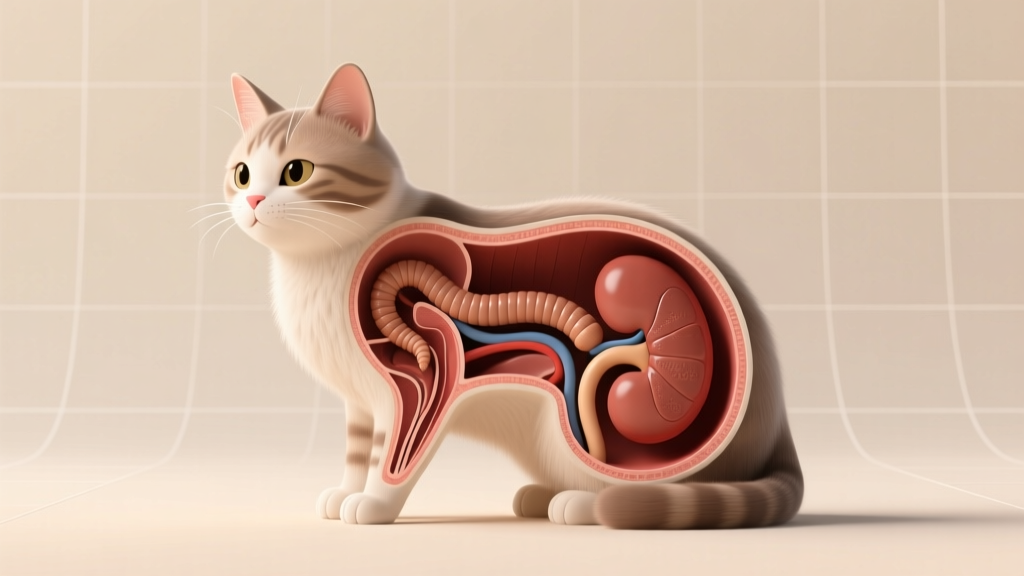
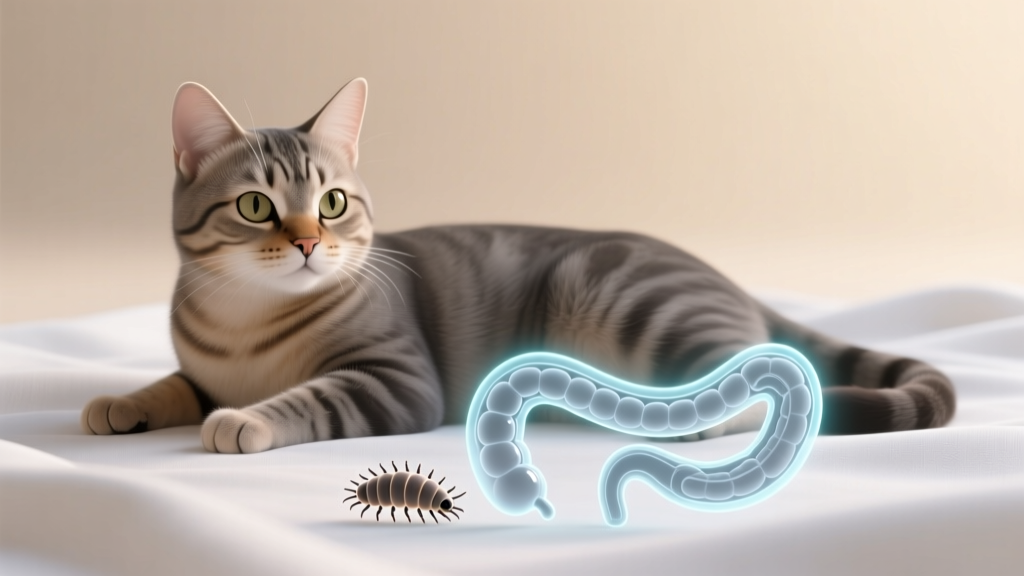
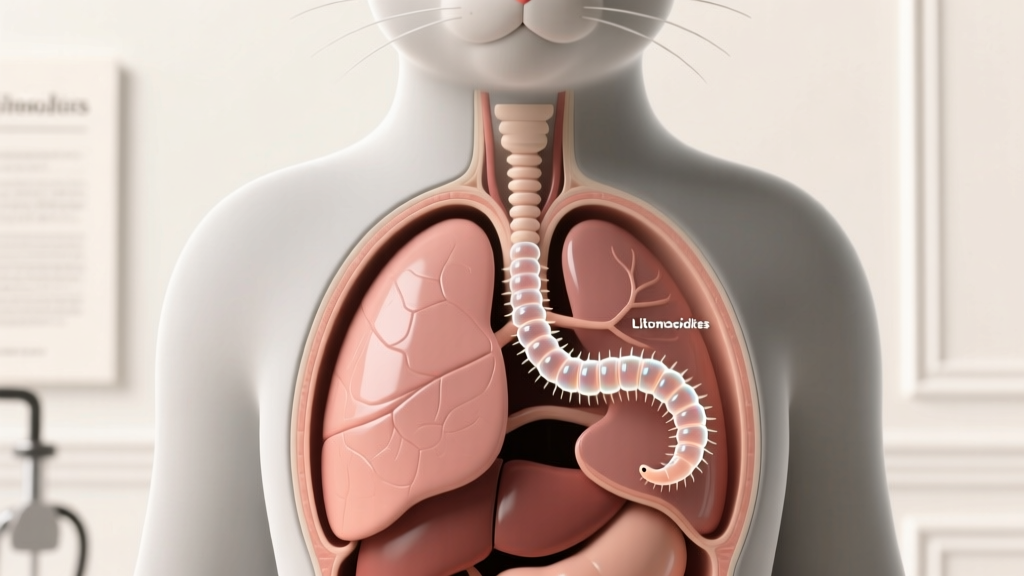
Dipylidium caninum is a tapeworm that lives in a cat’s small intestine. Adult tapeworms attach to the intestinal wall and absorb nutrients. They’re made up of many small segments called proglottids. Those segments contain eggs and periodically break off to pass out of the body.
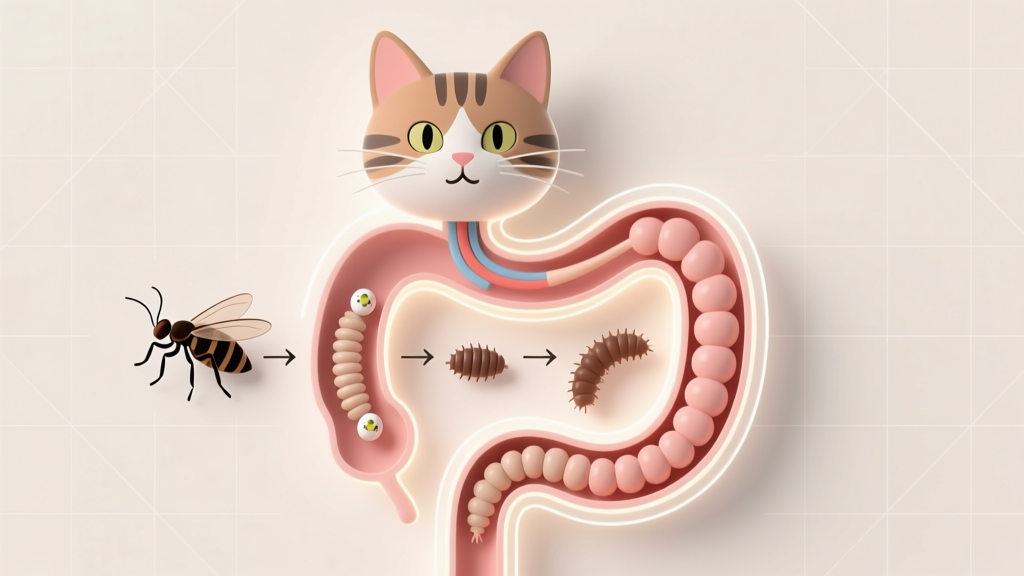
The flea tapeworm life cycle (step-by-step)
- Step 1: Tapeworm segments leave the cat. Segments (proglottids) containing eggs pass in the stool or crawl out around the anus. They may look like grains of rice or cucumber seeds.
- Step 2: Eggs enter the environment. Segments dry out and release egg packets into carpeting, bedding, floor cracks, and soil.
- Step 3: Flea larvae eat the eggs. Flea larvae (immature fleas in the environment) ingest tapeworm eggs as they feed on organic debris.
- Step 4: The tapeworm develops inside the flea. As the flea matures into an adult, the tapeworm becomes an infectious stage called a cysticercoid.
- Step 5: The cat swallows an infected flea. Cats usually ingest fleas while grooming, biting at itchy skin, or licking.
- Step 6: Adult tapeworm grows in the intestine. Once swallowed, the tapeworm matures in the cat’s intestine and begins releasing segments again—often within a few weeks.
This is why flea control is not “optional” when treating tapeworms. If an infected flea is still around, reinfection can happen quickly even after successful deworming.
3. Symptoms and warning signs to watch for
Many cats with Dipylidium look completely normal. When symptoms do happen, they’re often mild. Common signs include:
- Visible tapeworm segments on the fur around the anus, on bedding, or in the litter box (often described as “rice grains”)
- Scooting (dragging the rear end on the floor) due to irritation
- Excessive licking of the rear end
- Mild digestive upset such as soft stool or occasional vomiting (sometimes a segment is seen in vomit)
- Increased appetite in some cats, though many have no appetite changes
- Dull coat or mild weight loss (more likely with heavier parasite loads or in kittens)
Kittens may show more noticeable effects than healthy adults. If your kitten has diarrhea, poor growth, or a pot-bellied look, a veterinary exam is a smart next step.
4. Causes and risk factors
The direct cause of Dipylidium infection is simple: your cat swallowed a flea infected with tapeworm larvae. Several factors raise the risk:
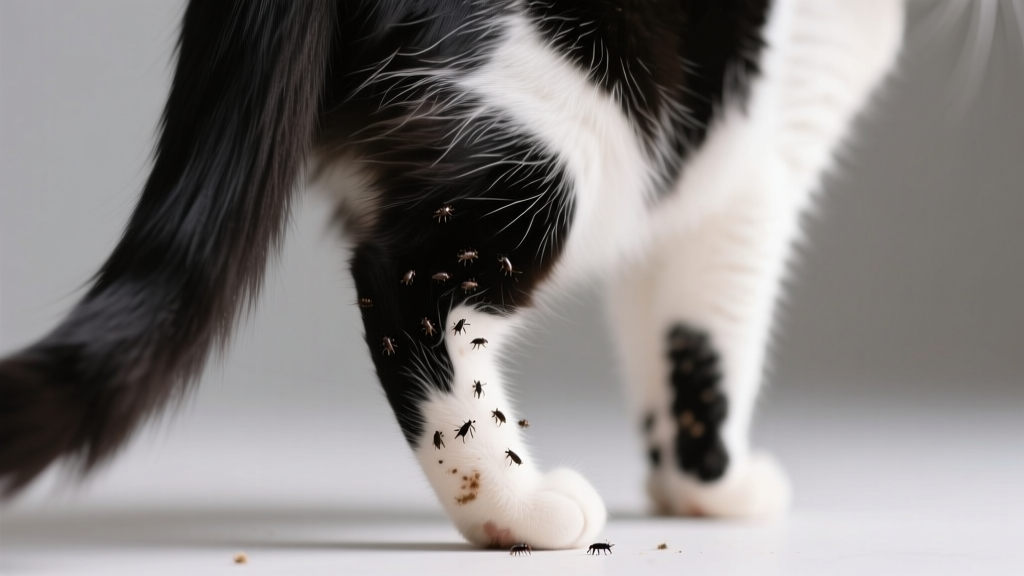
- Any flea exposure (even “just one flea” can be enough)
- Outdoor access or time in shared hallways/common areas (apartments can still have fleas)
- Living with other pets, especially if flea prevention is inconsistent
- Warm, humid environments that support flea reproduction
- Recent adoption from shelters/rescues where fleas may have been present
- Hunting behavior (less common for Dipylidium specifically, but outdoor cats often have more parasite exposure overall)
Indoor-only cats can still get fleas—fleas can hitchhike on clothing, other pets, or come in through screens and doorways. If you’re seeing tapeworm segments, assume fleas have been involved at some point, even if you haven’t noticed them.
5. Diagnosis: What to expect at the vet
Veterinarians often diagnose Dipylidium based on what you’re seeing at home plus a physical exam. Helpful things you can do before the visit:
- Take a clear photo of any segments you find (phone pictures are very useful)
- Bring a fresh stool sample if possible
- Bring the flea prevention product name you’re using (or used last)
Common diagnostic methods
- Visual identification of segments: Proglottids around the anus or in the stool are very suggestive of tapeworm.
- Fecal testing: A fecal flotation can detect some parasites, but Dipylidium eggs may be missed because eggs are released in packets and don’t always float consistently.
- Microscopic exam of segments: If you bring in a segment, the clinic may examine it to confirm.
Your vet may also check for fleas or flea dirt (black specks that turn reddish-brown when wet) and discuss the best flea-control plan for your household.
6. Treatment options (medical, surgical, home care)
Medical treatment (most common and very effective)
Dipylidium is typically treated with a prescription dewormer. The most commonly used active ingredient is praziquantel (your vet may use it alone or in combination products). Treatment may be given as:
- An oral tablet
- An injection administered at the clinic
- A topical product in certain cases (depends on region and product availability)
Many cats need only a single treatment, but your veterinarian may recommend a repeat dose depending on flea exposure, the cat’s age, and household risk.
Flea control (non-negotiable for lasting success)
If fleas are not addressed, tapeworms often come back. Your vet will recommend a veterinary-approved flea preventive tailored to your cat’s age, weight, and health status. This usually includes:
- Monthly flea prevention for every pet in the home (cats and dogs)
- Environmental cleaning to eliminate flea eggs/larvae
Home care and immediate steps you can take
- Wash bedding (your cat’s and yours, if the cat sleeps with you) in hot water and dry on high heat.
- Vacuum thoroughly (carpets, rugs, baseboards, under furniture). Empty the vacuum canister/bag promptly.
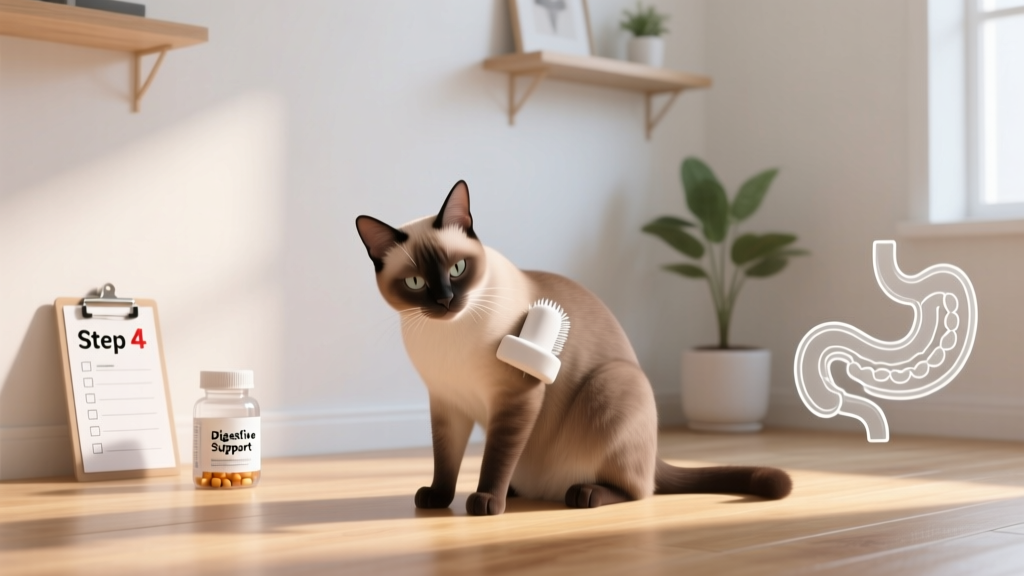
- Comb for fleas using a flea comb, especially around the neck and base of the tail.
- Clean litter boxes regularly and dispose of waste promptly.
Surgical treatment
Surgery is not used for Dipylidium infections. If your cat has severe vomiting, intestinal pain, or other concerning signs, your vet may investigate other conditions, but tapeworms themselves are treated medically.
Avoid over-the-counter dewormers unless your veterinarian recommends them. Many OTC products don’t treat tapeworms effectively, and some can be unsafe if misused. Always confirm the right medication and dose with your vet.
7. Prevention strategies and early detection tips
The best prevention is a two-part plan: consistent flea control plus routine monitoring.
Practical prevention checklist
- Keep your cat on year-round flea prevention recommended by your veterinarian.
- Treat all pets in the home consistently. One untreated pet can keep fleas circulating.
- Clean and vacuum regularly, especially during warmer months.
- Inspect your cat weekly:
- Check around the tail base for flea dirt
- Look for “rice-like” segments on bedding
- Watch for scooting or frequent rear-end licking
- Schedule regular wellness exams and ask your vet about appropriate fecal testing intervals.
Early detection tip
If you spot segments once, it’s easy to assume the issue is solved after deworming. Set a reminder to re-check bedding and the litter area over the next 2–4 weeks and confirm flea control is working. Seeing segments again often means fleas are still present or prevention was interrupted.
8. Prognosis and quality of life considerations
The prognosis for cats with Dipylidium is excellent when treated properly and paired with effective flea control. Most cats feel fine throughout the infection and return to normal quickly after treatment.
Quality-of-life issues are usually related to:
- Itchiness from fleas (often more uncomfortable than the tapeworm itself)
- Skin irritation from flea allergy dermatitis in sensitive cats
- Reinfection cycles causing recurring visible segments and owner stress
Once fleas are under control, recurrent tapeworm infections typically stop.
9. When to seek emergency veterinary care
Tapeworm infections are rarely an emergency, but cats can develop serious symptoms from other issues that may look similar or occur at the same time. Seek urgent veterinary care if your cat has:
- Repeated vomiting or cannot keep water down
- Severe lethargy, weakness, or collapse
- Signs of dehydration (tacky gums, sunken eyes, very low energy)
- Bloody stool or black, tarry stool
- Straining to defecate with little/no stool produced
- Marked weight loss, especially in kittens
- Swollen, painful abdomen or crying when picked up
If your cat is a kitten, elderly, pregnant, or has chronic illness, call your veterinarian sooner rather than later for individualized guidance.
10. FAQ: Common questions about Dipylidium in cats
Can humans catch Dipylidium from cats?
Dipylidium infection in people is uncommon, but it can happen if a person (most often a young child) accidentally swallows an infected flea. You don’t catch it from touching your cat’s fur or from the segments themselves. Keeping pets on reliable flea prevention and practicing good hygiene (handwashing, especially for kids) greatly reduces risk.
If I see “rice grains,” does that always mean tapeworm?
Not always, but it’s one of the most common explanations. Tapeworm segments can look like white rice when fresh and become more yellow and seed-like as they dry. If you’re unsure, take a photo and contact your veterinarian for confirmation and the right treatment.
Why did my indoor cat get flea tapeworm?
Indoor cats can still be exposed to fleas through other pets, visitors, shared laundry areas, or fleas entering through doors and windows. Also, you might not see fleas even when they’re present—cats groom them off quickly. The tapeworm segments are often the first obvious clue.
Will my cat poop out the whole tapeworm after treatment?
Usually you won’t see a full worm. The medication causes the tapeworm to break down in the intestine. You may still see segments for a short time, but they should stop appearing after effective treatment and flea control. If segments continue beyond a couple of weeks, call your vet.
Do I need to treat my house if my cat has Dipylidium?
Yes—at least with thorough cleaning and a flea-control plan. The tapeworm depends on fleas, so focusing on flea elimination in the home (vacuuming, washing bedding, treating all pets) is what prevents recurrence. Your veterinarian may recommend additional environmental flea control depending on the severity of the infestation.
Can I use an over-the-counter dewormer?
Some OTC products are ineffective against tapeworms, and dosing errors can be risky. The safest approach is to consult your veterinarian for a proven tapeworm medication and a flea prevention strategy that fits your cat’s age and health.
If you suspect your cat has tapeworm segments or fleas, schedule a veterinary visit for proper diagnosis and treatment. With the right dewormer plus consistent flea control, most cats recover quickly and stay comfortable.
For more practical cat health guides, parasite prevention tips, and behavior support, visit catloversbase.com.