Cat Patellar Luxation Grades: When Surgery Is Needed
1. Why patellar luxation matters to cat owners
If your cat has ever suddenly “skipped” a step, carried a back leg for a few strides, or seemed stiff after a jump, it can be worrying—and confusing—because the limp may come and go. One possible cause is patellar luxation, a condition where the kneecap slides out of its normal track. While patellar luxation is discussed more often in dogs, it does occur in cats and can range from mild and manageable to painful and mobility-limiting.
Understanding the grading system helps you know what your veterinarian is describing, what home care can help, and when surgery becomes the safest path to protect your cat’s comfort and long-term joint health.
2. Condition overview: what patellar luxation is (plain-language explanation)
The patella is the kneecap. It normally sits in a groove at the end of the thigh bone (femur) called the trochlear groove. When your cat bends and straightens the knee, the kneecap should glide smoothly in that groove, guided by the quadriceps muscle, patellar tendon, and surrounding soft tissues.
In patellar luxation, the kneecap moves (luxates) out of the groove—most commonly toward the inside of the leg (medial luxation), but sometimes toward the outside (lateral luxation). When the kneecap is out of place, it can cause:
- Temporary “catching” of the joint
- Pain or irritation of cartilage
- Progressive wear and tear (arthritis/degenerative joint disease)
- Changes in the alignment of the limb over time
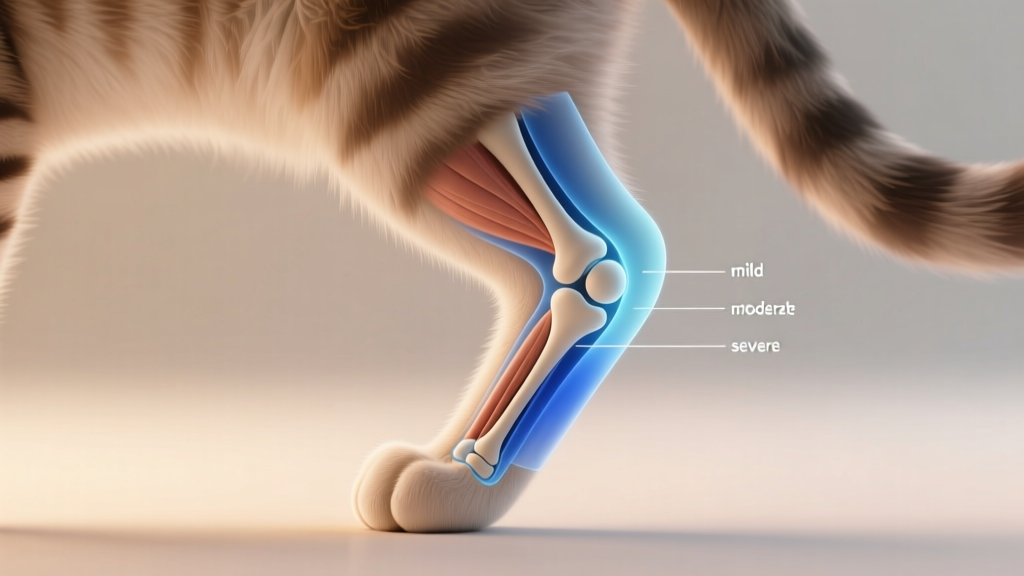
Patellar luxation grades (I–IV) explained
Veterinarians grade luxation based on how easily the kneecap moves out of place and whether it stays out of place.
- Grade I: Kneecap can be pushed out of the groove during an exam, but it returns to normal on its own. Many cats have minimal signs at home.
- Grade II: Kneecap luxates more easily and may stay out briefly, but it can return to place spontaneously or with leg movement. Intermittent limping is common.
- Grade III: Kneecap is out of place most of the time. It can sometimes be put back in place during an exam, but it tends to pop back out. Cats may show persistent gait changes and reduced jumping.
- Grade IV: Kneecap is permanently out of place and cannot be manually put back. Limb deformity and significant mobility impairment may be present.
When surgery is typically needed
Surgery is not automatically required for every cat, especially in mild cases. In general, surgery is more strongly considered when:
- Luxation is Grade III or IV
- Your cat has frequent limping, pain, or reduced quality of life
- There is evidence of progressive arthritis or worsening instability
- Your cat experiences repeated episodes that do not respond to medical management
- There is a concern for secondary injuries (cartilage damage, ligament strain, muscle wasting)
Your veterinarian will weigh the grade, your cat’s symptoms, age, overall health, and lifestyle to recommend the safest plan.
3. Symptoms and warning signs to watch for
Patellar luxation can be subtle in cats—many are masters at hiding pain. Signs may be intermittent at first and become more consistent over time.
Common symptoms
- Skipping gait or sudden “hop” for a few steps
- Intermittent lameness that resolves quickly
- Holding up a hind leg briefly, then walking normally again
- Stiffness after rest or after vigorous play
- Reluctance to jump to favorite spots (bed, windowsill, cat tree)
- Reduced activity, less play, or avoiding stairs
- Behavior changes: irritability, hiding, or sensitivity when touched around the knee/hip
What owners often miss
- Short episodes that look like your cat “shook it off”
- More time spent resting in low spots rather than climbing
- Gradual muscle loss in one hind leg (thigh looks smaller)
4. Causes and risk factors
Patellar luxation is often related to anatomy and alignment. In many cats it is congenital or developmental—meaning they are born with (or grow into) a limb structure that makes luxation more likely.
Potential causes
- Shallow trochlear groove that doesn’t hold the kneecap securely
- Malalignment of the quadriceps mechanism (muscle-tendon-bone line isn’t straight)
- Soft tissue imbalance (tight structures on one side, stretched on the other)
- Trauma (less common): a fall or collision may trigger luxation or worsen a mild underlying issue
Risk factors
- Small body size (seen more often in smaller cats, though any cat can be affected)
- Genetics (suspected in some lines; responsible breeding matters)
- Excess weight (increases stress on joints and can worsen symptoms)
- Concurrent orthopedic issues (hip problems, arthritis, cruciate ligament strain)
5. Diagnosis: what to expect at the vet
If you suspect a kneecap problem, schedule a veterinary visit. Intermittent limping is still a medical sign worth evaluating—early treatment can slow joint wear.
History and home observations
Your vet team will ask about:
- When the limping started and how often it happens
- Whether it’s one leg or both
- Any falls, injuries, or recent activity changes
- Jumping ability and behavior changes
Action you can take now: If possible, record a short video of your cat walking during an episode. This is extremely helpful because many cats walk normally once they arrive at the clinic.
Physical and orthopedic exam
- Palpation of the knee to feel if the patella can be moved out of place
- Assessment of pain, range of motion, and joint stability
- Evaluation of hips and spine (cats may limp due to other problems)
- Muscle condition scoring (checking for thigh muscle loss)
Imaging
- X-rays (radiographs): Look for arthritis, bone alignment, and other joint changes. They can also help plan surgery if needed.
- Advanced imaging (occasionally): CT may be recommended in complex cases or for surgical planning, depending on the specialty center.
Some cats need mild sedation for accurate imaging and a stress-free experience.
6. Treatment options (medical, surgical, home care)
Treatment is based on both the grade and the cat in front of us: symptoms, pain level, age, and lifestyle. A Grade II cat who is painful and frequently lame may need more aggressive treatment than a comfortable Grade III cat who functions well—though Grade III–IV cases are more likely to worsen over time.
Medical management (often for Grade I and some Grade II)
Medical care aims to reduce pain and inflammation, improve mobility, and protect the joint.
- Pain relief/anti-inflammatory medications: Only use medications prescribed by your veterinarian. Many human pain relievers are dangerous to cats.
- Joint-support supplements: Your vet may recommend options such as omega-3 fatty acids (EPA/DHA) or other joint products. These are supportive, not instant fixes.
- Weight management: If your cat is overweight, even modest weight loss can reduce joint strain.
- Activity modification: Controlled play is better than explosive jumping until pain is controlled.
- Physical rehabilitation: Gentle strengthening and range-of-motion exercises guided by a vet or rehab professional can support stability.
Home care you can start today (safe, practical steps)
- Add a step or ramp to favorite high spots to reduce repeated impact
- Use a low-entry litter box if squatting/climbing seems uncomfortable
- Place food, water, and resting areas on the same floor temporarily
- Provide non-slip footing (rugs, runners) on slick floors
- Track episodes in a notebook: date, duration, triggers, which leg
Surgical treatment (more common for Grades III–IV, and some symptomatic Grade II)
Surgery aims to keep the kneecap tracking correctly and reduce abnormal wear. The exact techniques depend on your cat’s anatomy and surgeon preference. Procedures may include:
- Trochlear deepening: Deepening the groove so the patella sits more securely
- Tibial tuberosity transposition: Repositioning where the patellar tendon attaches to improve alignment
- Soft tissue balancing: Tightening loosened tissues and releasing overly tight structures to center the patella
When surgery is usually recommended:
- Grade III–IV luxation, especially with pain or mobility limitations
- Grade II with frequent episodes, discomfort, or progression despite medical management
- Evidence of significant joint changes on X-ray and clinical signs affecting daily life
Post-op care (what most owners should expect)
- Strict rest for several weeks (crate or small room) to protect the repair
- Pain control plan and follow-up visits
- Gradual return to activity with rehab exercises if recommended
- Incision monitoring and preventing licking (cone or recovery suit)
Most complications are preventable with good aftercare. If you’re worried about keeping your cat calm, ask your vet ahead of time about environmental set-up and, if appropriate, temporary calming medications.
7. Prevention strategies and early detection tips
Not every case can be prevented, especially congenital ones, but you can reduce the impact and catch problems earlier.
Prevention and protection
- Keep your cat lean: Ask your vet for a target weight and feeding plan
- Encourage steady, low-impact movement: Frequent gentle play sessions rather than intense bursts
- Support safe jumping: Provide intermediate steps and stable cat trees
- Choose traction-friendly surfaces: Reduce slipping that can strain joints
Early detection
- Schedule regular wellness exams; mild luxations may be found before symptoms are obvious
- Watch for subtle changes: less jumping, hesitation before leaping down, or grooming less around the hips
- Bring videos of gait changes to your vet
8. Prognosis and quality of life considerations
The outlook for cats with patellar luxation is often good, especially when pain is addressed and the joint is protected.
- Grade I: Many cats live comfortably with monitoring and joint-friendly lifestyle choices.
- Grade II: Some do well with medical management; others progress and benefit from surgery if episodes are frequent or painful.
- Grade III–IV: Surgery often improves stability and comfort, though arthritis may still develop over time.
Quality of life is the center of decision-making. Signs that your cat’s comfort is slipping include reduced play, avoiding family interaction, appetite changes, litter box accidents due to mobility discomfort, or persistent limping.
Your veterinarian can help you set measurable goals (for example: jumping to a low perch, walking without skipping, comfortable litter box use) and adjust the plan if those goals aren’t being met.
9. When to seek emergency veterinary care
Patellar luxation is not always an emergency, but certain signs need urgent attention. Seek prompt veterinary care (same day or emergency clinic) if your cat:
- Cannot bear weight on a leg or is dragging the limb
- Cry outs in pain, becomes suddenly very withdrawn, or won’t allow touch
- Has a swollen, hot joint or a visibly abnormal limb position
- Shows signs of shock or severe distress (pale gums, rapid breathing, collapse)
- Has had recent trauma (fall from height, car accident) with any limping
If you’re unsure, call your veterinary clinic for guidance—describing the exact signs and how quickly they started helps them triage correctly.
10. FAQ: common questions about cat patellar luxation grades and surgery
How can I tell if my cat’s luxation is mild or severe?
The grade is determined during a veterinary orthopedic exam, sometimes supported by X-rays. At home, frequent limping, difficulty jumping, persistent gait changes, or obvious discomfort suggest a more clinically significant problem—even if the limp comes and goes.
Does Grade II always need surgery?
No. Some Grade II cats do well with weight management, pain control, and activity modification. Surgery becomes more likely if episodes are frequent, painful, worsening, or if your cat’s daily activities (jumping, playing, using the litter box) are affected. Your veterinarian can help you decide based on symptoms, not just the number.
Can patellar luxation cause arthritis?
Yes. Repeated kneecap slipping can irritate cartilage and contribute to degenerative joint disease. Keeping your cat comfortable, lean, and appropriately treated (medical or surgical) helps reduce wear over time.
Is patellar luxation painful for cats?
It can be. Some cats show minimal signs, while others experience discomfort during luxation episodes or develop chronic pain from joint inflammation and arthritis. Because cats often hide pain, behavior changes and reduced activity are important clues.
What is recovery like after surgery?
Expect several weeks of restricted activity and follow-up visits. Most cats need a controlled environment, consistent pain management, and gradual reconditioning. Many cats regain improved comfort and function, especially when post-op instructions are followed closely.
Should I limit my cat’s jumping if they have patellar luxation?
It depends on severity and pain level. For symptomatic cats, reducing repetitive high jumps can help, and adding steps/ramps is a practical, cat-friendly compromise. Your veterinarian can recommend the right activity level and whether rehab exercises are appropriate.
If you suspect your cat may have patellar luxation—or you’ve already received a diagnosis—partner with your veterinarian early. With the right plan, many cats stay active and comfortable for years.
For more cat health guides, wellness tips, and supportive resources, visit catloversbase.com.