Cat Kidney Disease Symptoms: Early Detection and Management
Chronic kidney disease stands as one of the leading causes of illness and death in domestic cats. The condition develops when the kidney's filtering units, called nephrons, progressively lose function over months or years. Because the kidneys possess enormous functional reserve, a cat may lose up to two-thirds of total kidney function before any clinical signs become apparent. This remarkable compensatory capacity is both a blessing and a curse: cats continue to feel relatively normal until a significant portion of kidney tissue is irreversibly damaged.
Estimates from the International Renal Interest Society (IRIS) suggest that one in three cats will develop chronic kidney disease at some point during its life. The condition is strongly age-related, with prevalence increasing from less than 1% in cats under age four to approximately 35-50% in cats over age ten. A landmark 2020 study led by Dr. Jody L. Lulich at the Minnesota Urolith Center analyzed medical records of over 54,000 cats and found that the median age at diagnosis was 13.2 years, though younger cats can develop kidney disease secondary to toxin exposure, congenital abnormalities, or untreated infections.
How Kidney Disease Develops in Cats
The kidneys perform several vital functions: filtering waste products from the blood, regulating fluid balance, maintaining electrolyte concentrations, producing hormones that stimulate red blood cell production, and activating vitamin D for calcium metabolism. Chronic kidney disease occurs when progressive, irreversible damage to nephrons impairs these functions. The underlying cause is often never identified definitively, but contributing factors include genetic predisposition, chronic infections, toxin exposure, immune-mediated diseases, and the cumulative effects of aging on renal tissue.
Polycystic kidney disease (PKD) represents one identifiable genetic cause. This inherited condition causes fluid-filled cysts to develop within the kidneys, gradually replacing normal kidney tissue. PKD is particularly prevalent in Persian and Persian-cross breeds, with studies reporting prevalence rates of 36-49% in these populations, according to a 2018 genetic survey by Dr. Clare Rusbridge at the University of Surrey. A genetic test is available, and responsible breeders now screen breeding stock for the PKD1 mutation.
Early Warning Signs of Chronic Kidney Disease
The earliest symptom that owners typically notice is increased water consumption. As kidney function declines, the kidneys lose their ability to concentrate urine. The cat produces larger volumes of dilute urine and must drink more to compensate for the fluid loss. Normal feline urine specific gravity ranges from 1.035 to 1.060. In early kidney disease, it drops below 1.030 and may fall as low as 1.008, approaching the specific gravity of pure water at 1.000.
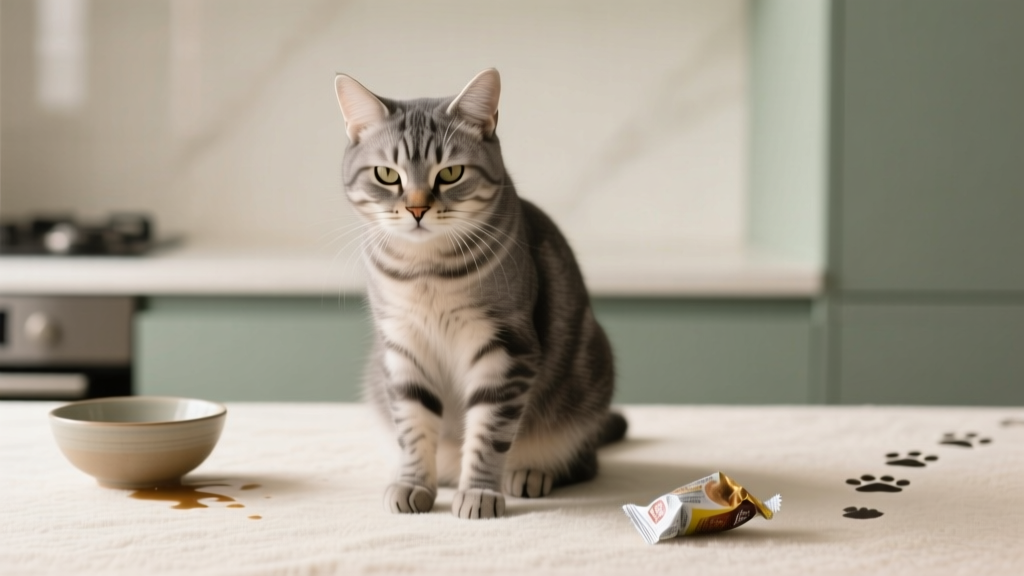
Subtle changes in appetite often accompany increased drinking. A cat may approach its food bowl with interest, take a few bites, then walk away. This partial anorexia results from the accumulation of urea and other waste products in the blood that alter taste perception and cause mild nausea. Weight loss follows as caloric intake decreases and the body begins breaking down fat and muscle for energy.
| IRIS Stage | Creatinine (mg/dL) | Common Symptoms | Expected Duration |
|---|---|---|---|
| Stage 1 (Early) | < 1.6 | Usually asymptomatic; may show mildly decreased urine concentrating ability | Months to years before progression |
| Stage 2 (Mild) | 1.6 - 2.8 | Increased thirst, mild weight loss, decreased appetite, occasional vomiting | 1 to 3 years on average |
| Stage 3 (Moderate) | 2.9 - 5.0 | Significant weight loss, persistent vomiting, lethargy, poor coat quality, anemia begins | 6 months to 2 years on average |
| Stage 4 (Severe) | > 5.0 | Severe weight loss, persistent nausea and vomiting, profound lethargy, oral ulcers, uremic crisis possible | Weeks to months |
Changes in urination habits are another early indicator. You may notice your cat spending more time in the litter box, producing noticeably larger clumps of urine, or having accidents outside the box. Some owners report that their cat's urine seems clearer or less odorous than before, reflecting the dilution of urine as the kidneys lose concentrating ability.
"The earliest changes in kidney disease are detectable in blood and urine tests long before the cat shows any outward signs. That is why we recommend biannual screening for cats over seven years old. The SDMA test can detect a 25% loss of kidney function, compared to traditional creatinine testing which only identifies problems after 75% of function is lost. That difference of 50 percentage points translates to months or even years of earlier intervention."
— Dr. Steve Yerramilli, former Director of IDEXX Laboratories' Renal Research Division, 2019
Diagnostic Testing and Staging
Diagnosis of chronic kidney disease relies on a combination of blood tests, urinalysis, and sometimes imaging. The blood panel evaluates creatinine, blood urea nitrogen (BUN), SDMA, phosphorus, and electrolyte levels. Creatinine is a waste product of muscle metabolism that the kidneys normally filter out; elevated blood creatinine indicates reduced filtration capacity. However, creatinine only rises after approximately 75% of kidney function is lost, making it a late-stage marker.
SDMA (symmetric dimethylarginine) has revolutionized early detection. This biomarker increases when as little as 25% of kidney function is lost, providing a critical window for early intervention. The SDMA test was validated in a 2015 study published in the Journal of Veterinary Internal Medicine by Dr. Hall and colleagues, who analyzed samples from 166 cats and demonstrated that SDMA correlated more closely with measured glomerular filtration rate than creatinine did.
Interpreting Key Laboratory Values
- SDMA: Normal range is 0-14 micrograms per deciliter; values above 14 indicate decreased kidney function
- Creatinine: Normal range is 0.8-2.4 mg/dL; values above 2.4 suggest significant kidney dysfunction
- BUN: Normal range is 16-36 mg/dL; elevations occur with dehydration and kidney disease
- Phosphorus: Normal range is 2.5-6.0 mg/dL; elevated phosphorus (hyperphosphatemia) accelerates kidney damage and is a key treatment target
- Potassium: Normal range is 3.5-5.5 mEq/L; low potassium (hypokalemia) is common in CKD cats and causes muscle weakness and further kidney damage
- Urine specific gravity: Normal is 1.035-1.060; values consistently below 1.035 indicate decreased concentrating ability
The IRIS staging system classifies chronic kidney disease into four stages based primarily on fasting creatinine levels, with substaging based on blood pressure and the presence of protein in the urine (proteinuria). This staging system guides treatment decisions and provides prognostic information. Blood pressure measurement is essential because systemic hypertension, which affects 20-65% of cats with CKD according to a 2021 review by Dr. Anne E. Buglass at the Royal Veterinary College in London, accelerates kidney damage and can cause blindness through retinal detachment.
Treatment and Management Strategies
While chronic kidney disease is progressive and irreversible, appropriate treatment can significantly slow its progression and maintain quality of life. The cornerstone of management is a kidney-supportive diet. These diets are formulated with restricted phosphorus (0.2-0.5% on a dry matter basis), moderate high-quality protein levels, added omega-3 fatty acids, and B-vitamin supplementation. A landmark study published in the Journal of Veterinary Internal Medicine in 2002 by Dr. Scott A. Brown at the University of Georgia demonstrated that cats with IRIS Stage 2 and 3 CKD fed a renal diet had a median survival time of 661 days compared to 339 days for cats fed a maintenance diet, effectively doubling survival time.
Fluid Therapy
Subcutaneous fluid administration is a mainstay of CKD management in moderate to advanced stages. Fluids help maintain hydration, support blood pressure, and assist the remaining functional nephrons in clearing waste products. Most owners can be trained to administer subcutaneous fluids at home using a bag of lactated Ringer's solution, a fluid administration set, and a needle. The typical dose ranges from 100 to 150 milliliters per session, administered once daily to every other day depending on the cat's hydration status and stage of disease.
The learning curve for subcutaneous fluid administration is shorter than most owners expect. Most cats tolerate the procedure well once they become accustomed to it. The fluid creates a small temporary bump under the skin that absorbs within a few hours. Many owners report that their cat becomes more active, eats better, and seems more comfortable within hours of fluid administration.
Managing Complications
Several complications commonly arise as kidney disease progresses, each requiring specific management approaches. Hypertension is treated with amlodipine besylate, a calcium channel blocker administered at 0.625 to 1.25 mg per cat once daily. A 2018 study published in the Journal of Veterinary Pharmacology and Therapeutics by Dr. Jonathan Elliott at the Royal Veterinary College demonstrated that amlodipine successfully reduced systolic blood pressure to below 160 mmHg in 92% of hypertensive cats with CKD within 7 to 14 days of initiating treatment.
- Hypokalemia: Treated with oral potassium gluconate supplementation (typically 2-4 mEq twice daily), which often improves muscle strength and may slow disease progression
- Anemia: As kidney disease progresses, decreased erythropoietin production leads to non-regenerative anemia. Treatment options include darbepoetin or recombinant human erythropoietin, along with iron supplementation
- Metabolic acidosis: Damaged kidneys cannot adequately excrete acid, leading to blood pH changes. Oral sodium bicarbonate or potassium citrate supplementation may be needed when blood bicarbonate falls below 16 mEq/L
- Nausea and vomiting: Managed with antiemetic medications such as maropitant (Cerenia) at 1 mg/kg daily, mirtazapine which serves as both an appetite stimulant and antiemetic, and gastric protectants like famotidine or omeprazole
- Proteinuria: Excess protein in the urine damages remaining nephrons. Treatment with angiotensin-converting enzyme inhibitors (enalapril or benazepril) or angiotensin receptor blockers (telmisartan) reduces proteinuria and may slow disease progression
Environmental and Home Care Modifications
Managing a cat with chronic kidney disease extends well beyond medications and diet. Environmental modifications reduce stress and make daily life more comfortable for cats that feel unwell. Ensure fresh water is always available from multiple sources, including cat water fountains, which many cats prefer over still water bowls. The additional water intake helps maintain hydration and supports kidney function.
Litter box accessibility becomes increasingly important as cats with CKD produce larger volumes of urine. Provide at least one additional litter box beyond the standard recommendation, use low-entry boxes for cats with concurrent arthritis, and scoop at least twice daily. Cats with CKD may urinate up to three times their normal volume, so soiled litter boxes become uncomfortable much faster.
Home monitoring tip: Keep a daily journal noting your cat's water intake, food consumption, vomiting episodes, litter box habits, activity level, and body weight. Weekly weight measurements on a baby scale provide objective data that helps your veterinarian adjust treatment protocols. Trends over time are far more valuable than isolated measurements.
Prognosis and Quality of Life
The prognosis for cats with chronic kidney disease varies widely depending on the stage at diagnosis, the rate of progression, and the response to treatment. Median survival times reported in the veterinary literature range from over three years for Stage 2 disease to approximately two to three months for Stage 4 disease, though individual outcomes vary considerably. A 2022 study by Dr. Sarah E. White at the University of Bristol Veterinary School followed 412 cats with CKD and found that cats diagnosed at Stage 2 had a median survival of 1,151 days, while Stage 3 cats had a median survival of 575 days.
Quality of life assessment should guide ongoing treatment decisions. The HHHHHMM Scale (Hurt, Hunger, Hydration, Hygiene, Happiness, Mobility, More good days than bad), developed by Dr. Alice Villalobos, provides a structured framework for evaluating feline quality of life. Regular scoring using this or a similar system helps owners and veterinarians make informed decisions about whether current management strategies are providing acceptable quality of life or whether adjustments are needed.
Living with a cat that has chronic kidney disease requires commitment and attention to detail, but many cats with CKD enjoy excellent quality of life for years after diagnosis. The combination of early detection through regular screening, appropriate dietary management, proactive treatment of complications, and attentive home care gives cats with kidney disease the best possible outcome. Your veterinarian is your most valuable partner in this process, providing the expertise and support needed to navigate each stage of the disease.