Cat Feline Asthma Long-Term Inhaler Therapy
1. Introduction: Why This Matters for Cat Owners
Watching your cat cough, wheeze, or breathe with effort can be scary. Feline asthma is a common, treatable respiratory condition, and many cats do very well with the right long-term plan. Inhaler therapy has changed asthma management for cats because it can deliver medication directly to the lungs with fewer whole-body side effects than some oral medications.
This article explains what feline asthma is, how it’s diagnosed, what long-term inhaler therapy looks like, and what you can do at home to reduce flare-ups. It’s written for cat owners who want clear guidance and reassurance while still taking the condition seriously. Your veterinarian is always your best partner for diagnosis and treatment decisions, especially because breathing problems can have multiple causes.
2. Overview: What Feline Asthma Is (Plain-Language Medical Explanation)
Feline asthma is a chronic inflammatory disease of the lower airways (the bronchial tubes in the lungs). In an asthmatic cat, the airway lining becomes inflamed and overly sensitive. When triggered, the airways can:
- Swelling (inflammation): The airway lining thickens, narrowing the space for air to move.
- Bronchoconstriction: The small muscles around the airways tighten, squeezing them smaller.
- Mucus production: Extra mucus can plug already-narrow airways.
These changes make it harder for your cat to move air, especially when exhaling. Some cats have occasional mild episodes; others have frequent flare-ups or even life-threatening attacks. Asthma is typically long-term (chronic), but control is often very achievable with consistent therapy, trigger reduction, and veterinary monitoring.
You may also hear related terms:
- Allergic bronchitis: Similar airway inflammation, sometimes used interchangeably with asthma.
- Lower airway disease: A broader label that can include asthma and chronic bronchitis.
3. Symptoms and Warning Signs to Watch For
Asthma signs can be subtle at first and may be mistaken for hairballs or “normal” coughing. Keep a simple log of symptoms (date, time, trigger, severity) to help your veterinarian tailor treatment.
Common signs
- Coughing (often dry and persistent; sometimes mistaken for gagging up a hairball)
- Wheezing or whistling sounds when breathing
- Fast breathing or increased effort, especially during exhale
- Exercise intolerance (tiring easily during play)
- Open-mouth breathing (not normal for cats except during high stress or heat; should be treated as urgent)
Classic asthma posture
- Neck extended, body low to the ground, elbows slightly away from the body, appearing to “work” to breathe
At-home check: resting respiratory rate
When your cat is asleep or very relaxed, count breaths for 30 seconds and multiply by 2:
- Typical range: Often under 30 breaths per minute at rest (some variation is normal).
- Call your vet: If your cat is consistently above your cat’s usual baseline, or repeatedly over ~30–35 at rest, especially with cough or effort.
If you notice breathing distress, don’t wait—seek veterinary care promptly.
4. Causes and Risk Factors
Asthma is usually caused by an overly strong immune response to inhaled triggers rather than an infection. Many cats have multiple triggers, and finding the big ones for your household can reduce flare-ups.
Common triggers
- Cigarette, vape, or cannabis smoke
- Dusty litter (especially clay dust)
- Aerosols and sprays (air fresheners, cleaning sprays, perfume, hair spray)
- Dust, pollen, mold, and household mites
- Scented candles and essential oils (some are also toxic to cats)
- Fireplace smoke, incense
- Stress (can worsen breathing patterns and trigger episodes)
- Obesity (adds strain to the respiratory system)
Risk factors
- Age: Commonly seen in young adult to middle-aged cats, though any age is possible.
- Environment: Indoor allergens and poor ventilation can contribute.
- Previous airway irritation: Past infections or chronic inflammation may predispose some cats.
Asthma is not contagious. However, other diseases can look similar, so a veterinary exam is essential.
5. Diagnosis: Methods and What to Expect at the Vet
Because coughing and breathing trouble can also be caused by heart disease, pneumonia, parasites, foreign material, tumors, or other conditions, your veterinarian will likely recommend a structured workup.
Common diagnostic steps
- History and physical exam: Your vet will ask about cough frequency, triggers, home environment, and any open-mouth breathing episodes.
- Chest X-rays (radiographs): May show an “asthmatic pattern” (bronchial thickening), air trapping, or over-inflated lungs. X-rays can also help rule out other problems.
- Response to treatment: Sometimes asthma is supported by improvement with bronchodilators and/or steroids.
- Bloodwork: Helps assess overall health and screen for infection/inflammation or other issues.
- Fecal test and/or deworming plan: Lungworms or other parasites can cause coughing in some regions.
- Airway sampling (bronchoscopy or bronchoalveolar lavage): In select cases, especially if the diagnosis is unclear or control is poor. This requires anesthesia and is not needed for every cat.
What to bring to your appointment
- Videos of coughing or breathing episodes (very helpful)
- Brand/type of litter used and any recent changes
- List of cleaning products, sprays, diffusers, candles used at home
- Any prior medical records and medications
If your cat is actively struggling to breathe, contact the clinic immediately; diagnostics may be postponed until your cat is stable.
6. Treatment Options: Medical, Home Care, and When Other Approaches Matter
Asthma treatment has two goals:
- Control inflammation long-term (reduce airway sensitivity and mucus)
- Relieve acute bronchoconstriction (open airways during flare-ups)
Long-term inhaler therapy (core of many asthma plans)
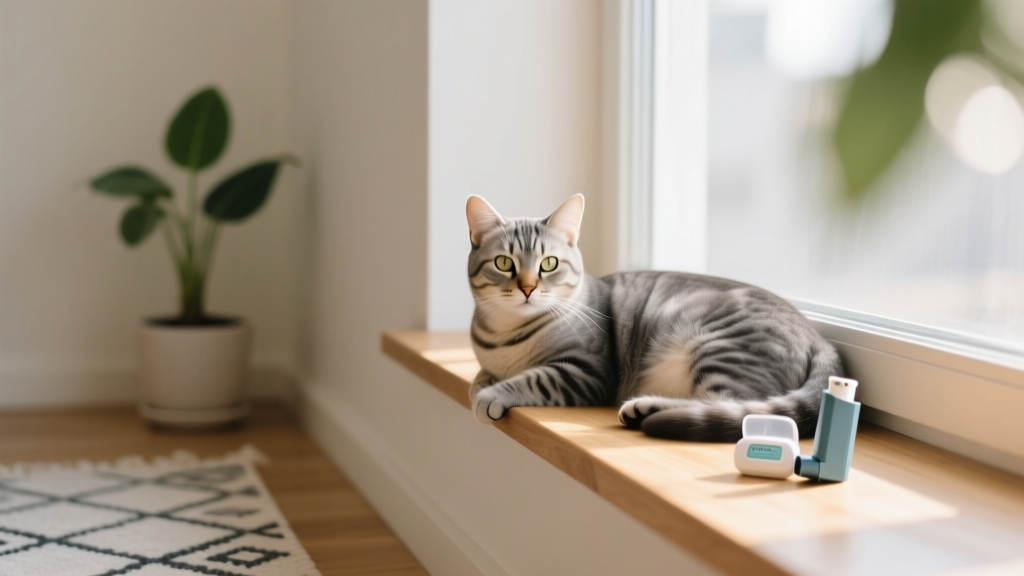
Inhalers deliver medication directly into the lungs using a metered dose inhaler (MDI) attached to a spacer chamber and a cat-sized mask. Many cats adapt well with gentle training.
1) Inhaled corticosteroids (ICS): maintenance/control medication
- Purpose: Reduce airway inflammation over time, decreasing cough and flare-ups.
- How they’re used: Often daily; some cats need twice daily at first.
- What owners notice: Improvement may take days to a few weeks because inflammation calms gradually.
- Advantages: Less systemic steroid exposure than long-term oral steroids for many cats.
2) Inhaled bronchodilators: rescue medication for flare-ups
- Purpose: Relax airway muscles quickly when your cat is tight/wheezy.
- How they’re used: As directed by your veterinarian for sudden symptoms, not as the only long-term plan (frequent need can mean inflammation isn’t controlled).
- Important: If your cat needs rescue doses often, contact your veterinarian—this is a sign the plan may need adjusting.
How to give an inhaler to a cat (practical, step-by-step)
Your clinic can demonstrate the technique. A calm routine makes a big difference.
- Step 1: Assemble the spacer and mask; check the inhaler is seated properly.
- Step 2: Gently place the mask over your cat’s nose and mouth, making a good seal.
- Step 3: Press the inhaler once to release a puff into the chamber.
- Step 4: Keep the mask in place while your cat takes the recommended number of breaths (your vet will tell you the count; many cats need several breaths to inhale the medication).
- Step 5: Reward immediately (treat, affection, play) to build a positive association.
Training tip: Practice with the mask without medication first—just brief “touch and treat” sessions—until your cat accepts the routine.
Oral or injectable medications
Some cats need additional medications, especially early in treatment or during severe flare-ups.
- Oral corticosteroids: Often used short-term to get inflammation under control quickly, then transitioned to inhaled steroids when possible. Long-term oral use can increase risks such as diabetes, weight gain, and skin fragility in some cats.
- Antibiotics: Only if a bacterial infection is suspected or confirmed; asthma itself is not bacterial.
- Other therapies: Your vet may consider additional medications based on response, side effects, and any concurrent disease.
Oxygen therapy and hospitalization
For moderate to severe attacks, oxygen support, injectable medications, and monitoring may be needed. This is common in emergency care and can be lifesaving.
Surgery?
Surgery is not a treatment for asthma. If imaging reveals another problem (such as a mass, foreign body, or severe nasal disease contributing to breathing issues), surgical or procedural intervention may be discussed, but that’s separate from asthma management.
Home care: immediate changes that often help
- Switch to low-dust, unscented litter (paper, corn, wheat, or low-dust clay alternatives; avoid fragrances)
- Stop smoking indoors (ideally stop entirely; at minimum, smoke outside and change outer layers before handling your cat)
- Reduce aerosols: Use unscented cleaners; avoid sprays and plug-ins
- Improve air quality: HEPA air purifier in main rooms; replace HVAC filters regularly
- Control weight: Ask your vet for a safe weight-loss plan if needed
- Lower stress: Predictable routines, safe hiding spots, gentle play, and slow introductions to new pets
7. Prevention Strategies and Early Detection Tips
You can’t always prevent asthma, but you can often reduce flare-ups and catch worsening control early.
- Track symptoms: Note cough frequency, wheeze, triggers, and rescue inhaler use.
- Monitor resting respiratory rate: Learn your cat’s normal and watch for trends upward.
- Schedule rechecks: Follow your veterinarian’s plan for follow-ups and periodic imaging if recommended.
- Parasite prevention: Use veterinarian-recommended preventatives; ask about lungworms in your region.
- Avoid trigger build-up: Regular dusting with cat-safe products; wash bedding; address any indoor mold/moisture issues.
8. Prognosis and Quality of Life Considerations
Many cats with asthma live full, happy lives. The outlook depends on severity, how early treatment starts, and how consistently inflammation is controlled.
What good control looks like
- Little to no coughing
- Normal energy and play tolerance
- Rare or no need for rescue bronchodilator
- Stable resting respiratory rate
Long-term inhaler therapy: what owners should expect
- Consistency matters: Skipping maintenance doses can allow inflammation to rebuild, making flare-ups more likely.
- Technique matters: A poor mask seal or not allowing enough breaths can reduce medication delivery. Ask your vet team to review technique at rechecks.
- Side effects are still possible: Inhaled steroids generally have fewer systemic effects, but cats can still experience issues. Report increased thirst/urination, appetite changes, lethargy, or behavior changes to your vet.
If your cat also has heart disease, chronic infections, or other conditions, management may be more complex, but a tailored plan can still offer a good quality of life.
9. When to Seek Emergency Veterinary Care
Breathing trouble can become urgent quickly. Seek emergency care right away if you see any of the following:
- Open-mouth breathing or panting (especially at rest)
- Blue/gray gums or tongue
- Severe effort to breathe (heaving sides, extended neck, unable to settle)
- Collapse, extreme weakness, or inability to stand
- Breathing rate very high at rest and not improving quickly
- A sudden, dramatic change from your cat’s normal asthma pattern
Safety tip: Keep your cat calm and minimize handling during a breathing crisis. Stress can worsen airway constriction. Transport in a well-ventilated carrier and call the clinic on the way so they can prepare oxygen support.
10. FAQ: Common Questions About Long-Term Inhaler Therapy for Cats
1) Is an inhaler really better than pills for feline asthma?
For many cats, inhaled therapy is preferred because it targets the lungs directly, which can mean effective control with fewer whole-body side effects than long-term oral steroids. Some cats still need oral medication at first or during flare-ups. Your veterinarian will recommend what fits your cat’s severity and overall health.
2) How long will my cat need inhaler treatment?
Asthma is usually a lifelong condition. Many cats stay on a maintenance inhaled steroid long-term. The dose may be adjusted over time based on symptom control, recheck exams, and how often rescue medication is needed. Never stop or reduce prescribed medication without your veterinarian’s guidance.
3) My cat coughs like a hairball—how can I tell the difference?
Hairball coughing often ends with a hairball being produced, and it’s usually occasional. Asthma coughing can be repetitive, dry, and may come with wheezing or breathing effort. If your cat “coughs like a hairball” but rarely brings anything up, schedule a veterinary visit and bring a video of the episode.
4) What if my cat won’t tolerate the mask and spacer?
Many cats can learn with short, reward-based training sessions. Start by letting your cat sniff the spacer and mask, then briefly touch the mask to the face, rewarding each calm step. Ask your vet team to demonstrate. If tolerance remains difficult, your veterinarian can discuss alternative approaches while you continue training.
5) Can I use a human inhaler on my cat?
Only under veterinary direction. Some medications and devices are similar, but the drug choice, dosing plan, and technique must be cat-appropriate. Never start or share prescription inhalers without your veterinarian’s instructions.
6) How do I know if my cat’s asthma isn’t well controlled?
Signs of poor control include frequent coughing, regular wheezing, decreased activity, nighttime symptoms, and needing rescue medication often. Also watch for an increasing resting respiratory rate. If you see these patterns, schedule a recheck—your veterinarian may adjust the maintenance dose, check inhaler technique, or reassess for additional conditions.
Feline asthma can feel overwhelming at first, but with the right inhaler routine, trigger reduction, and regular veterinary support, many cats breathe easier and stay active for years. For more cat health guides, medication tips, and wellness resources, visit catloversbase.com.