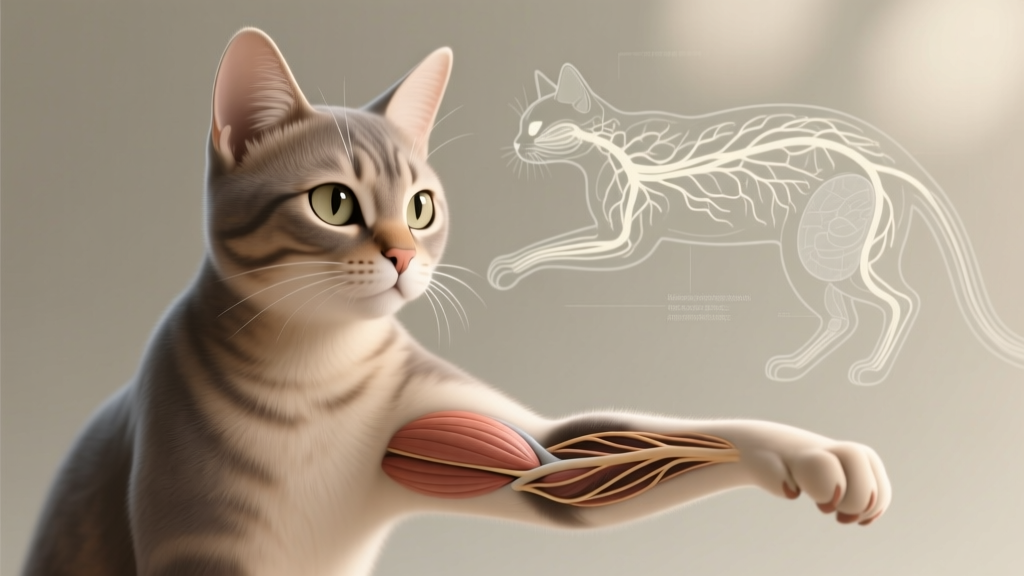
Cat Brachial Plexus Schwannoma: Forelimb Nerve Sheath Mass
1) Why this topic matters to cat owners
If your cat suddenly starts limping, seems painful when you touch a front leg, or gradually “stops using” a forelimb, it’s natural to worry about injuries like sprains, arthritis, or a broken claw. While those are common issues, there’s another, less familiar cause that can look similar at first: a mass affecting the nerves that control the front limb. One of these masses is a brachial plexus schwannoma, a type of tumor that grows from the protective sheath around nerves.
This condition matters because it can cause progressive pain and weakness, and it’s most treatable when addressed early. Understanding the warning signs helps you seek veterinary care promptly, which can improve comfort and quality of life for your cat.
2) Overview: What is a brachial plexus schwannoma?
The brachial plexus is a bundle of nerves located near the shoulder and armpit area that carries signals between the spinal cord and the front leg. These nerves control:
- Movement of the shoulder, elbow, wrist, and toes
- Sensation (touch, pain, temperature) in the forelimb
- Reflexes and muscle tone
A schwannoma is a tumor that develops from Schwann cells, which form the insulating “coating” (sheath) around nerves. Schwannomas are a type of peripheral nerve sheath tumor.
In cats, nerve sheath tumors can occur in different locations. When they affect the brachial plexus, they may be called:
- Brachial plexus schwannoma
- Peripheral nerve sheath tumor (PNST) of the forelimb
- Nerve sheath mass near the shoulder
Some nerve sheath tumors are benign (slow-growing and less invasive), while others behave more aggressively. Even when a schwannoma is not spreading to distant organs, its location around important nerves can still cause serious discomfort and loss of limb function.
3) Symptoms and warning signs to watch for
Signs often start subtly and can look like an orthopedic problem. Many cats compensate well at first, so changes may be gradual over weeks to months.
Common signs
- Limping or lameness in one front leg
- Reluctance to jump or climb, especially onto favorite furniture
- Holding the paw up or “not weight-bearing” on the leg
- Pain when the shoulder/armpit area is touched or when the leg is extended
- Weakness or wobbliness in the affected leg
- Knuckling (walking on the top of the paw) or scuffing nails
- Muscle wasting (the affected shoulder/forelimb looks thinner)
- Behavior changes: hiding, irritability, less grooming, decreased appetite (often due to pain)
More advanced signs
- Severe limb dysfunction (dragging the leg)
- Noticeable swelling near the shoulder or armpit (not always present)
- Self-trauma such as licking or chewing at the limb due to abnormal sensation
- Signs of chronic pain: tense posture, flattened ears when handled, avoiding touch
What you can do today
- Take a short video of your cat walking from the side and from the front.
- Note when it started and whether it’s worsening.
- Check the paw for obvious issues (broken nail, pad injury), but avoid forcefully manipulating the leg.
- Schedule a veterinary exam promptly—nerve problems are easier to manage when caught early.
4) Causes and risk factors
In many cats, the exact cause of schwannomas isn’t known. These tumors occur when nerve sheath cells begin to grow abnormally.
Potential risk factors
- Age: Peripheral nerve sheath tumors are more often diagnosed in middle-aged to older cats (though they can occur at other ages).
- Genetics: Some species and breeds may have predispositions to nerve sheath tumors, but clear breed patterns are not well defined in cats.
- Prior injury or inflammation: Trauma is not proven to cause schwannomas, but owners sometimes notice signs after a seemingly minor injury because discomfort brings the issue to attention.
Most importantly: if your cat has persistent limping or unexplained forelimb pain, it deserves a full workup rather than assuming it’s a simple sprain.
5) Diagnosis: What to expect at the vet
Because brachial plexus schwannomas involve nerves, diagnosis often requires a step-by-step approach. Your veterinarian’s goal is to confirm whether the problem is orthopedic (bones/joints), neurologic (nerves/spinal cord), or a combination.
Typical diagnostic steps
- History and physical exam: You’ll be asked about onset, progression, indoor/outdoor status, falls, and pain behaviors.
- Orthopedic exam: Checking the shoulder, elbow, and wrist for pain, swelling, range of motion, and joint instability.
- Neurologic exam: Testing paw placement, reflexes, muscle tone, and sensation to identify nerve involvement.
- X-rays (radiographs): Useful to rule out fractures, arthritis, bone tumors, and some shoulder issues. Nerve sheath masses may not show clearly on X-rays unless there’s secondary change.
- Advanced imaging:
- MRI is often the best test to evaluate nerves and soft tissue masses in the brachial plexus area.
- CT scan can be helpful, especially to assess surrounding structures and for surgical planning.
- Ultrasound may detect a mass in some cases and can help guide sampling, depending on location and expertise.
- Sampling the mass:
- Fine-needle aspirate (FNA) sometimes provides clues, but nerve sheath tumors can be difficult to diagnose this way.
- Biopsy (taking a tissue piece) provides a more definitive diagnosis, but must be planned carefully due to nearby nerves and vessels.
- Bloodwork: Helps assess overall health, anesthesia safety, and rule out other issues.
Practical tips for your appointment
- Bring your videos and a list of changes you’ve noticed (jumping, grooming, appetite, litter box habits).
- Tell your vet if your cat has had sedation/anesthesia before and how they did.
- Ask whether a referral to a veterinary neurologist or surgeon is recommended for imaging and planning.
6) Treatment options (medical, surgical, and home care)
Treatment depends on the size and location of the tumor, how much nerve function remains, whether the tumor appears benign or aggressive, and your cat’s overall health.
Medical management (pain control and comfort care)
Medical treatment won’t remove the tumor, but it can improve comfort and function—sometimes significantly.
- Pain medications: Your vet may prescribe a combination approach:
- Medications for nerve pain (often different than standard pain meds)
- Anti-inflammatory medication when appropriate
- Additional analgesics if pain is moderate to severe
- Activity modification:
- Limit high jumps; use pet steps or ramps
- Keep essentials (food, water, litter box) on one level
- Physical support: Soft bedding, non-slip rugs, and easy-access resting areas.
Never give human pain medications (such as ibuprofen, naproxen, acetaminophen) unless your veterinarian specifically directs you—many are dangerous or fatal to cats.
Surgical options
Surgery can be challenging because the tumor is associated with critical nerves. The goal may be complete removal, debulking, or, in some cases, addressing pain by removing the affected limb and associated nerves when function is already poor.
- Tumor removal: Sometimes possible, especially if the mass is well-defined and accessible. Risk includes nerve damage and recurrence.
- Forequarter amputation (removal of the front limb, and potentially more extensive tissue depending on tumor involvement): This sounds overwhelming, but some cats do very well as three-legged pets, especially when the painful limb is no longer functional. Your surgeon will discuss whether this is likely to relieve pain and whether margins are achievable.
Radiation therapy
Radiation may be recommended when the tumor cannot be fully removed or if surgery is not an option. It may slow progression and reduce pain in some cases. A veterinary oncologist can advise on expected outcomes, number of treatments, and side effects.
Chemotherapy
Chemotherapy is not always the primary treatment for nerve sheath tumors, but an oncologist may discuss it depending on tumor type, biopsy results, and whether there are concerns for more aggressive behavior.
Home care that helps immediately
- Make a “recovery zone”: quiet room, low-sided litter box, food/water nearby.
- Improve traction: rugs or yoga mats to prevent slips.
- Monitor pain: keep a daily log of appetite, mobility, grooming, and willingness to be touched.
- Use a carrier-friendly setup: leave the carrier out with bedding so vet visits are less stressful.
7) Prevention strategies and early detection tips
There is no guaranteed way to prevent schwannomas. The best “prevention” is early detection and prompt management of pain and mobility issues.
Early detection checklist
- Watch for subtle changes in jumping and landing.
- Check for asymmetry: compare muscle mass of both shoulders/forelimbs every couple of weeks.
- Pay attention to nail wear: scuffed nails on one front paw can indicate dragging or knuckling.
- Schedule veterinary visits when limping lasts more than 24–48 hours, recurs, or steadily worsens.
Home monitoring tips
- Weigh your cat monthly if possible (unexpected weight loss can happen with chronic pain).
- Keep seniors on a regular wellness schedule so mobility changes are caught early.
8) Prognosis and quality of life considerations
Prognosis varies widely. Key factors include:
- Tumor behavior (benign vs more aggressive features on biopsy)
- Size and location within the brachial plexus
- Ability to remove the tumor or achieve clean margins
- Degree of nerve damage at the time of diagnosis
- Response to pain control
Even when cure isn’t possible, many cats can have a good quality of life with a plan focused on comfort, mobility support, and minimizing stress.
Quality of life signs that treatment is helping
- Eating well and showing interest in family routines
- Comfortable resting posture and normal sleep
- Grooming (or allowing gentle assisted grooming)
- Moving around the home without obvious distress
Ask your veterinarian to help you create a personalized pain and mobility scorecard so you can make confident decisions over time.
9) When to seek emergency veterinary care
Contact an emergency clinic or urgent veterinary service right away if you notice:
- Sudden, severe pain (crying out, rapid breathing, inability to settle)
- Rapid loss of limb function or inability to stand/walk
- Trauma (fall, car accident, suspected bite wound) with limping or swelling
- Open wounds, bleeding, or significant swelling of the limb
- Self-mutilation (chewing the limb/paw) or a tight bandage/foreign material causing swelling
- Not eating for 24 hours or signs of dehydration, especially in a painful cat
If you’re unsure whether it’s an emergency, call your veterinarian or the nearest emergency clinic—describing the symptoms over the phone can help determine the safest next step.
10) FAQ: Common questions from cat owners
Can a brachial plexus schwannoma be mistaken for arthritis or a sprain?
Yes. Early signs often look like a mild limp or reluctance to jump. The clue that raises concern for nerve involvement is progressive weakness, knuckling, muscle wasting, or persistent pain near the shoulder/armpit area. A veterinary exam is the best way to sort out orthopedic versus neurologic causes.
Is a schwannoma cancer?
“Cancer” can mean different things. Some schwannomas are benign and don’t spread to distant organs, but they can still cause serious problems by compressing or invading local nerves. Some peripheral nerve sheath tumors behave more aggressively. Biopsy and imaging help your veterinarian understand what type of tumor it is and how it’s likely to behave.
Will my cat need an MRI?
Not every case requires an MRI, but MRI is often the most informative test for brachial plexus disease because it shows nerves and soft tissues in detail. Your veterinarian may start with X-rays and a thorough exam, then recommend referral imaging if the pattern suggests a nerve sheath mass.
If amputation is recommended, can cats still have a good life?
Many cats adapt very well to three legs, especially when the removed limb was painful or not functional. Your veterinarian will evaluate your cat’s overall mobility, weight, and any arthritis or other conditions that might affect adjustment. Home setup changes (ramps, traction, easy-access litter boxes) make a big difference.
How do I keep my cat comfortable at home while we’re waiting for tests or a specialist visit?
Use only veterinarian-prescribed pain relief, keep your cat on one floor if possible, provide non-slip surfaces, and minimize jumping. Track daily comfort and mobility, and call your clinic if pain seems to break through medication or if function declines quickly.
Could this be something else besides a schwannoma?
Yes. Other possibilities include shoulder injuries, arthritis, infections/abscesses, blood clots (less common in the forelimb), spinal cord disease, or other tumor types. That’s why a stepwise veterinary workup—exam, imaging, and sometimes biopsy—is so valuable.
If your cat has ongoing forelimb limping, weakness, or pain, schedule a veterinary appointment—professional evaluation is always the safest path for nerve-related problems. For more practical cat health guides, symptom check tips, and supportive care articles, visit catloversbase.com.