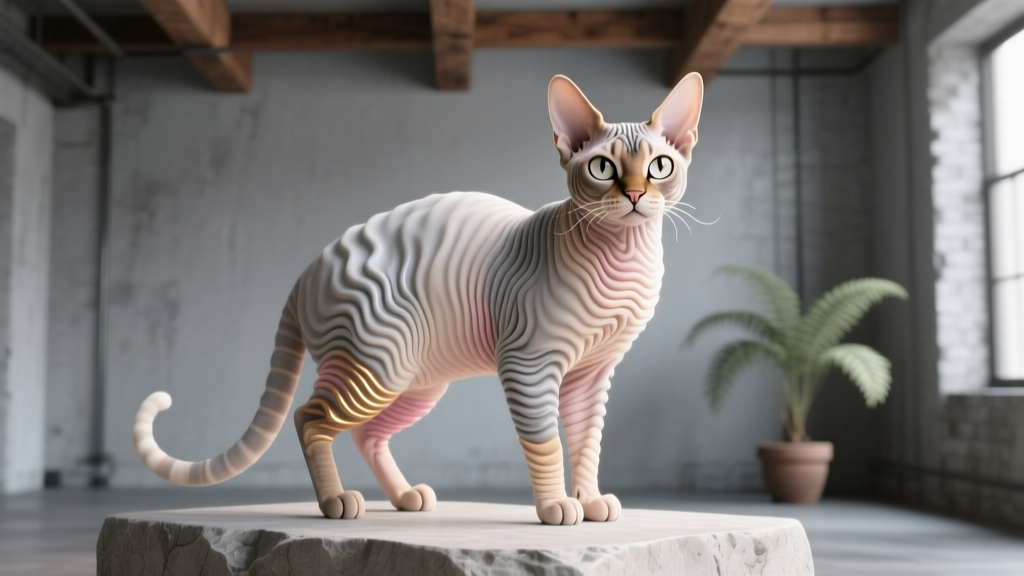
Oregon Rex: Extinct Curly-Coated Ancestor
If you love curly-coated cats, you’ve probably heard of the Cornish Rex and Devon Rex—those big-eared, velvet-soft charmers that look like they stepped out of a fairy tale. But there’s another Rex chapter that’s both fascinating and a little bittersweet: the Oregon Rex. This rare curly-coated cat breed appeared in the United States, charmed everyone who met it, and then quietly vanished as a distinct breed.
The Oregon Rex is often described as an “extinct” Rex breed, but it still matters today. Why? Because it sits at the crossroads of Rex history—an American-born curly mutation that briefly shone, influenced conversations about Rex genetics, and left behind a trail of devoted fanciers and memorable cats.
If you’re a cat enthusiast, a breed researcher, or a potential owner looking for Rex-like traits, this profile will give you a clear, cat-lover-friendly look at what the Oregon Rex was, what made it special, and what to consider if you’re drawn to curly-coated cats in general.
Breed History and Origin
The Oregon Rex originated in the United States (Oregon) during the mid-20th century, when a naturally occurring coat mutation produced kittens with a distinctively curly coat. Like other Rex cats, the Oregon Rex wasn’t “designed” by people at first—it appeared by chance, and then breeders recognized how unusual and appealing those curls were.
The most famous early Oregon Rex foundation cat is widely cited as a curly-coated kitten born in Oregon in the 1950s. Enthusiasts began breeding to preserve the trait and establish a consistent type. For a time, Oregon Rex cats drew attention as a potential American counterpart to European-born Rex lines.
So why is the Oregon Rex considered extinct as a breed? A few factors likely contributed:
- Small founding population: With limited numbers, it’s difficult to build and maintain a healthy, sustainable gene pool.
- Competition with other Rex breeds: As the Cornish Rex and Devon Rex gained international recognition and organized breeding programs, they became the Rex breeds most people focused on.
- Genetic and registration challenges: Cat fancy recognition, record-keeping, and establishing a stable “breed type” can be tough—especially for a rare regional line.
- Absorption into other lines: Some Oregon Rex cats may have been bred into other Rex or domestic lines, diluting the identity of the Oregon Rex as a distinct breed.
Today, you won’t find Oregon Rex kittens from established breed registries, and you’re unlikely to meet a cat formally labeled “Oregon Rex” outside historical references. Still, the breed remains a beloved piece of Rex history and an intriguing example of how spontaneous mutations can create entirely new looks in the cat world.
Physical Characteristics
Because the Oregon Rex is no longer maintained as a standardized, widely recognized breed, descriptions can vary depending on which historical lines are referenced. That said, it is consistently remembered for one headline feature: a curly, Rex-type coat.
| Feature | Typical Description |
|---|---|
| Size | Small to medium |
| Weight | Often cited in the general Rex range: roughly 6–10 lb (2.7–4.5 kg) |
| Coat | Soft, curly or wavy (Rex coat texture) |
| Coat length | Short to medium, with visible wave/curl pattern |
| Colors | Varied; likely many domestic-cat colors and patterns depending on lineage |
| Distinctive features | Curled coat; a refined, athletic “Rex-like” look often described by fanciers |
Coat and Colors
The defining trait was the curl—a plush, rippled coat that gave the Oregon Rex its name and its fan club. Like many Rex coats, the hair can feel:
- Velvety to the touch
- Fine and soft, sometimes with less guard hair than typical shorthaired cats
- Wavy across the body, with curls often more visible along the back and sides
Color-wise, historical Oregon Rex cats were not typically restricted to a narrow palette. Many sources describe them in the way we describe naturally occurring lines: a range of common cat colors and patterns depending on what domestic cats were in the background.
Personality and Temperament Traits
Because there isn’t a large modern population to survey, temperament descriptions rely heavily on historical accounts and what’s generally seen in Rex-type cats bred for companionship. Oregon Rex cats were commonly described as:
- People-oriented: enjoying attention and preferring to be near their humans
- Playful and curious: quick to investigate a new sound, visitor, or toy
- Affectionate without being clingy: happy to cuddle, but also content to lounge nearby
- Bright and interactive: responsive to routines and often interested in what you’re doing
If you’re drawn to the Oregon Rex because you love curly coats, you’ll likely appreciate the vibe that many Rex fans adore: a cat that’s engaged, expressive, and eager to be part of daily life—whether that’s supervising your chores or curling up beside you at the end of the day.
Health Considerations and Common Issues
With extinct or extremely rare breeds, there’s a big limitation: we don’t have robust, modern veterinary data for the Oregon Rex as a distinct population. Still, there are practical health themes that often come up with Rex-coated cats and small gene pools:
- Skin and coat sensitivity: Fine, sparse, or uniquely structured coats may come with more sensitive skin in some cats.
- Temperature sensitivity: Curly coats can be thinner; some Rex-type cats seek warmth and may chill more easily in cold homes.
- Earwax buildup: Some Rex breeds are prone to waxy ears and need regular gentle cleaning.
- Genetic bottlenecks: Rare lines can face higher risk of inherited issues if breeding stock is limited.
If you ever encounter a cat marketed as an “Oregon Rex” today, treat the claim carefully and focus on the individual cat’s health: ask for veterinary records, observe coat/skin condition, and prioritize ethical breeding or adoption. For most people, the practical path is choosing a recognized Rex breed (or a curly-coated domestic) and working closely with a vet on coat and skin care.
Care Requirements
While you likely won’t be caring for a true Oregon Rex today, many readers come here because they love Rex coats. These care tips reflect what typically works well for curly-coated cats and Rex-like coats.
Grooming
- Gentle grooming only: Over-brushing can break delicate Rex hairs. A soft hand, a damp microfiber cloth, or minimal combing is often enough.
- Bathing may be occasional: Some curly-coated cats get oily coats or mild buildup. If needed, use a cat-safe shampoo and keep baths calm and warm.
- Ear care: Check ears weekly; clean only the visible area with vet-approved cleaner if wax builds up.
- Nail trimming: Every 2–4 weeks is typical, depending on scratching habits.
Exercise and Enrichment
- Interactive play: Wand toys, fetch-style games, and puzzle feeders help satisfy busy Rex energy.
- Climbing spots: Cat trees and shelves support athletic bodies and curious minds.
- Warm lounging areas: Heated cat beds (low/safe settings) or sunny window perches are often a huge hit.
Diet
- High-quality protein: Look for meat-forward diets appropriate to your cat’s life stage.
- Portion control: Many playful cats stay lean naturally, but indoor lifestyles still call for measured feeding.
- Hydration: Fresh water, fountains, and wet food can help support urinary health.
Compatibility with Families, Children, and Other Pets
Historical descriptions of the Oregon Rex often paint a picture of a friendly, people-loving cat—qualities that tend to do well in busy homes when properly introduced and socialized.
- Families: Rex-type cats typically thrive when included in family life rather than left alone for long stretches.
- Children: Often a good match with respectful kids who understand gentle handling (especially important for delicate coats and skin).
- Dogs: Many social cats do well with cat-friendly dogs after slow introductions.
- Other cats: Playful, curious temperaments can fit nicely with another friendly cat—particularly if you match energy levels.
As always, compatibility comes down to the individual cat’s personality and the care taken during introductions. Calm, gradual scent swapping and supervised meetings work wonders.
Pros and Cons of Owning This Breed
Because the Oregon Rex is considered extinct as a distinct breed, “owning one” today is more of a historical fascination than a realistic goal. Still, many people searching Oregon Rex are deciding whether they want a Rex-type curly-coated cat in general. Here’s a balanced look at the appeal and the realities.
| Pros (Rex-Type Appeal) | Cons (Real-World Considerations) |
|---|---|
| Unique curly coat with a soft, velvety feel | Oregon Rex is not available as a recognized, established breed today |
| Often affectionate, social, and interactive | Curly coats can require specialized gentle grooming and skin/ear care |
| Playful, bright personality that fits enrichment-focused homes | Some Rex-type cats are sensitive to cold and need warm home setups |
| Conversation-starter “rare breed history” for cat lovers | Be cautious of misleading labels; prioritize ethics and health over a name |
FAQ: Oregon Rex Cats
Is the Oregon Rex truly extinct?
The Oregon Rex is generally considered extinct as a distinct, recognized breed line. That means you won’t typically find registered Oregon Rex breeding programs today, even though curly-coated cats (and other Rex breeds) absolutely still exist.
What made the Oregon Rex different from the Cornish Rex or Devon Rex?
The Oregon Rex was a separate curly-coat occurrence in the United States. Historically, it’s discussed as its own Rex mutation and breeding effort. In practice, modern curly-coat enthusiasts usually focus on recognized breeds like the Cornish Rex and Devon Rex, which have established standards and populations.
Can I buy an Oregon Rex kitten today?
In most cases, no. If you see “Oregon Rex” advertised, ask for documentation and be skeptical—many such listings are likely curly-coated domestic cats or other Rex mixes being marketed with a rare name.
Are Oregon Rex cats hypoallergenic?
No cat breed is truly hypoallergenic. Curly-coated cats may shed differently, but allergies are usually triggered by Fel d 1 (a protein in saliva and skin oils), not just fur length or curl.
What’s the best alternative if I love the Oregon Rex look?
If you want a curly-coated companion, consider a reputable breeder (or rescue) connected to recognized Rex breeds like the Devon Rex or Cornish Rex, or adopt a cat with a naturally unusual coat. The “Rex vibe” is often as much about personality as it is about curls.
A Warm Signoff for Rex Fans
The Oregon Rex may be gone as an established breed, but its legacy lives on every time a cat lover falls for a soft wave of curls and that unmistakably curious Rex spark. It’s a reminder that cats never stop surprising us—and that even brief chapters in breed history can leave a lasting pawprint.
If you’re curious about more curly-coated cats and other fascinating felines, explore more breed profiles on catloversbase.com and keep discovering the cats that make the world a little more magical.