Toyger: Designer Breed That Looks Like a Tiger
If you’ve ever looked at a tiger and thought, “I wish I could share my couch with a tiny version of that,” the Toyger might feel like a dream come true. With bold, tiger-like striping, a sleek athletic body, and a confident little swagger, the Toyger is one of the most eye-catching “designer” cat breeds you’ll ever meet.
But the Toyger isn’t just a pretty coat. This breed was developed to pair a wild-inspired look with a truly domestic, people-friendly personality. Toygers tend to be outgoing, affectionate, and surprisingly trainable—often happy to follow you from room to room like a striped shadow (and pose for photos like they know exactly how gorgeous they are).
Whether you’re a breed researcher, a cat lover who enjoys rare breeds, or a future Toyger parent looking for real-life details, here’s a full guide to the Toyger cat: history, temperament, health, care, and what it’s really like to live with a “toy tiger.”
Breed History and Origin
The Toyger cat breed began in the United States in the late 1980s and 1990s, created by breeder Judy Sugden. The goal was clear and deliberate: develop a domestic cat that resembles a miniature tiger—without using wild cat hybrids. Toygers are fully domestic cats.
Early breeding programs used domestic shorthairs with distinct tabby striping. A key milestone was the introduction of a cat from Kashmir (often cited in breed histories) with small, spot-like markings between the ears—an influence that helped shape the Toyger’s head and facial striping pattern over time.
The name “Toyger” blends toy and tiger, reflecting the breed’s playful, tiger-like appearance in a compact, household-friendly package. The breed has been developed with an emphasis on:
- Bold, vertical striping (instead of classic “bullseye” tabby swirls)
- A long, muscular body with fluid movement
- A more tiger-like head pattern, including facial markings
- A confident, social temperament suited to modern family life
The Toyger is recognized by The International Cat Association (TICA). Because it’s still relatively rare, you’ll most often encounter Toygers through dedicated breeders rather than shelters (though the occasional rehome does happen).
Physical Characteristics
The Toyger’s “wow factor” is undeniable. Everything about this breed—coat pattern, body shape, even the way they carry themselves—is aimed at a tiger impression in miniature.
| Feature | What to Expect |
|---|---|
| Size | Medium to large |
| Weight | Typically 7–15+ lbs (males often larger than females) |
| Build | Muscular, athletic, long-bodied; substantial feel |
| Coat Length | Short coat (plush, dense, and sleek) |
| Colors | Brown mackerel tabby is the hallmark; rich orange-brown background with darker stripes |
| Eyes | Often medium-sized; color can vary (commonly shades of green or hazel) |
| Lifespan | Often 12–16 years, sometimes longer with great care |
Coat, Colors, and Pattern
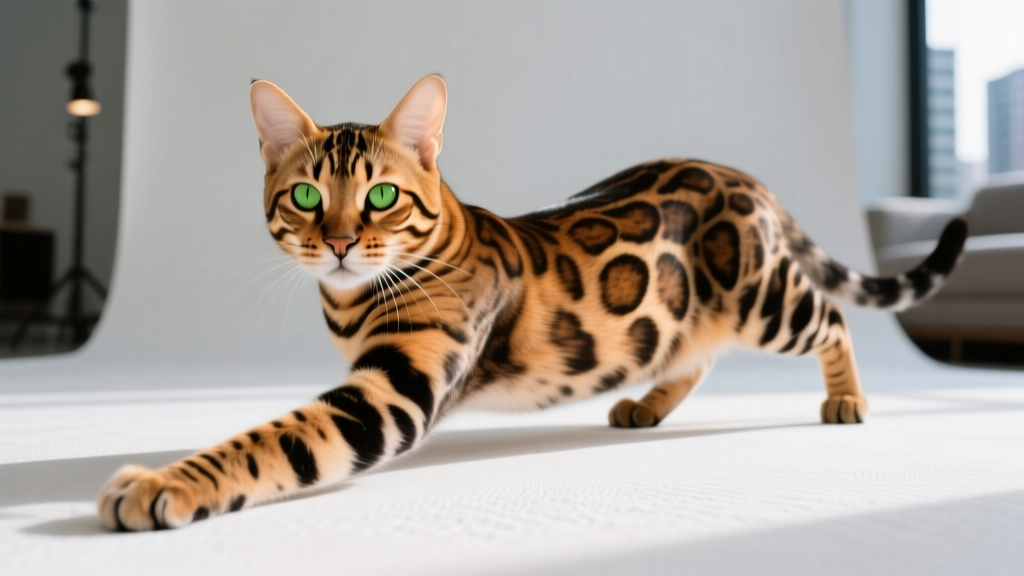
The Toyger’s coat is its signature. Unlike many tabbies with classic swirls, the Toyger aims for vertical striping that feels more “tiger-like.” You’ll often see:
- Bold, dark stripes that stand out sharply from the background color
- High contrast between stripes and base coat
- Glitter in some lines—a subtle sparkle in the coat under light
- Facial striping that enhances the wild look
Distinctive Features
- Powerful, flowing movement—Toygers often “prowl” in a way that looks intentionally dramatic
- Strong shoulders and chest, giving a sturdy, athletic silhouette
- Rounded contours and a confident stance that reads “mini predator,” even when they’re begging for treats
Personality and Temperament Traits
Living with a Toyger is usually a mix of affectionate companion and energetic entertainer. Most Toygers are known for being social and people-focused, often enjoying interaction with visitors rather than hiding.
Common Toyger personality traits include:
- Friendly and outgoing: Many Toygers greet their people at the door and like being part of the action.
- Smart and trainable: This is a breed that can often learn tricks, leash skills, and routines quickly.
- Playful into adulthood: Expect a cat who still loves interactive games well past kittenhood.
- Affectionate without being clingy: Plenty enjoy lap time, but they also appreciate having a window to watch and a toy to “hunt.”
- Confident: Many Toygers handle new situations with curiosity rather than fear.
If you enjoy an interactive cat—one who wants to be involved, talk back a little, and learn games—Toygers often fit that lifestyle beautifully.
Health Considerations and Common Issues
Toygers are generally considered healthy, especially when bred responsibly with a focus on sound structure and temperament. Still, no breed is completely free of health concerns, and rare breeds require extra attention to breeder practices and genetic screening.
Potential health considerations seen in domestic cats and sometimes discussed in Toyger lines include:
- Heart disease (including HCM): Hypertrophic cardiomyopathy is a concern in many breeds. Ask breeders about cardiac screening in their lines.
- Dental disease: Common across cats—Toygers benefit from dental-friendly diets, home tooth brushing if tolerated, and regular vet checks.
- Weight gain: Their sturdy build can hide extra pounds. Portion control and daily play help keep them lean and athletic.
When researching a Toyger breeder, look for transparency about health testing, veterinary care, and how kittens are socialized. A well-raised Toyger kitten should be curious, confident, and comfortable being handled.
Care Requirements (Grooming, Exercise, Diet)
Grooming
That gorgeous tiger coat is relatively low-maintenance. Toygers have short coats that don’t mat easily, but they still enjoy—and benefit from—regular brushing.
- Brushing: 1–2 times per week with a soft slicker or rubber curry brush helps reduce shedding and keeps the coat glossy.
- Nails: Trim every 2–4 weeks, especially for indoor cats.
- Ears and eyes: Check weekly and clean gently as needed with vet-approved products.
- Dental: Consider tooth brushing several times per week and dental chews formulated for cats.
Exercise and Enrichment
Toygers are athletic, curious cats. A bored Toyger may invent their own fun (which can include redecorating your shelves). Plan for daily play and environmental enrichment.
- Interactive play: Wand toys, feather teasers, and “prey” games help satisfy hunting instincts.
- Climbing options: Cat trees, shelves, and window perches let them survey their territory like a tiny jungle cat.
- Puzzle feeders: Great for keeping sharp minds engaged and slowing down fast eaters.
- Leash training: Many Toygers take to harness training well with patient, positive reinforcement.
Diet
A Toyger’s diet should support lean muscle and steady energy. Choose a high-quality cat food with animal-based protein as the first ingredient, and keep treats as treats—no matter how convincing those striped faces are.
- Protein-forward nutrition: Supports their muscular build.
- Measured portions: Helps prevent creeping weight gain.
- Hydration: Wet food and water fountains can help increase water intake.
- Vet guidance: Especially for kittens, seniors, or cats with specific needs.
Compatibility with Families, Children, and Other Pets
The Toyger’s sociable personality often makes them a great match for active households. Many enjoy family life and do well when given attention, play, and respectful handling.
- With children: Usually good with cat-savvy kids who understand gentle touch and give the cat space when needed.
- With other cats: Often compatible, especially with proper introductions and enough territory (multiple litter boxes, feeding stations, and resting spots).
- With dogs: Many Toygers can coexist nicely with calm, cat-friendly dogs. Slow introductions are key.
The biggest “compatibility” factor is engagement. If you want a cat who mostly keeps to themselves, a Toyger may feel a bit too interactive. If you want a cat who’s part of the family’s daily rhythm, they can be a joyful fit.
Pros and Cons of Owning a Toyger
| Pros | Cons |
|---|---|
| Striking tiger-like appearance with bold striping | Rare breed—finding an ethical breeder can take time |
| Friendly, social temperament that enjoys human company | Often more expensive than common domestic kittens |
| Smart and trainable; can enjoy leash walks and tricks | Needs daily play and enrichment to prevent boredom |
| Short coat with relatively easy grooming | Can become demanding if under-stimulated |
| Often good with families and other pets when introduced well | Not as widely recognized by every cat registry worldwide |
FAQ: Toyger Cats
Are Toyger cats actually part wild tiger?
No. Toygers are domestic cats bred for a tiger-like look. They are not wild cat hybrids.
How much does a Toyger cat cost?
Prices vary by region, pedigree, and breeder goals. Because Toygers are rare, they’re typically more expensive than non-pedigreed cats. Expect to join waitlists, and always prioritize health testing and ethical breeding practices over a “quick buy.”
Do Toyger cats like to be held?
Many Toygers are affectionate and tolerate handling well, especially when raised with lots of gentle socialization. Individual personality matters—some are lap cats, others prefer to sit close by.
Are Toygers good for first-time cat owners?
They can be, as long as you want an interactive, playful cat and are ready to provide daily enrichment. If you prefer a low-energy, independent cat, a Toyger may feel like more work than expected.
Do Toyger cats shed a lot?
They have a short coat and typically shed a moderate amount. Weekly brushing helps reduce loose hair and keeps the coat sleek and shiny.
Can Toygers be leash trained?
Many Toygers do well with harness training because they’re confident and people-oriented. Start slowly, use positive reinforcement, and keep early sessions short and fun.
A Warm Sendoff for Future “Toy Tiger” Families
The Toyger is a head-turner with a heart of gold: a designer breed that captures a tiger’s bold beauty in a fully domestic, family-friendly cat. If you love the idea of a smart, social companion with a striking striped coat and an energetic, playful spirit, the Toyger may be your perfect match.
Ready to keep exploring? Browse more cat breed profiles, care guides, and personality deep-dives on catloversbase.com and find the feline that fits your life and your heart.