Birman Cat: Sacred Temple Cats of Burma
There’s something quietly magical about a Birman. Maybe it’s the deep sapphire-blue eyes that seem to look straight through you, or the soft, silky coat that feels like a warm cloud under your fingers. Maybe it’s the way a Birman will pad after you from room to room—not clingy, not aloof—just… devoted.
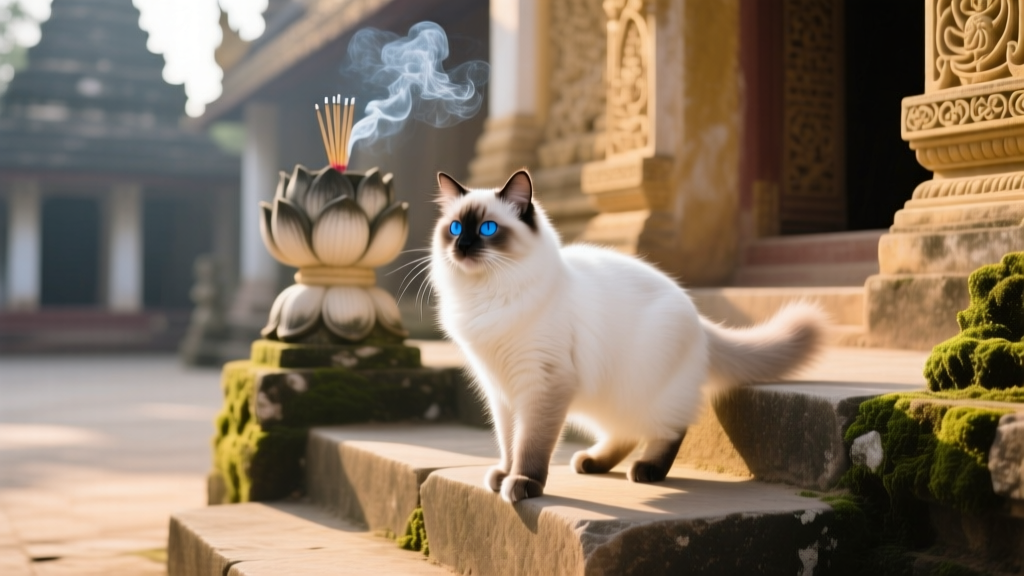
Often called the “Sacred Cat of Burma,” the Birman cat breed has an aura of legend around it, but it also shines in everyday life: gentle companionship, sweet manners, and a gorgeous colorpoint coat topped off with those famous white “gloves.” If you’ve ever wanted a cat that feels like a calm presence in your home (while still enjoying playtime and people), the Birman may steal your heart.
This guide covers Birman history, appearance, temperament, health, care needs, and what it’s really like to share your home with one of these affectionate blue-eyed beauties.
Breed History and Origin
The Birman’s nickname—Sacred Temple Cat of Burma—comes from a beloved origin story linking the breed to temples in Burma (now Myanmar). The tale varies by retelling, but it often includes temple cats, monks, and a divine blessing that gifted these cats their striking colorpoints and pure white paws. It’s a romantic legend, and it’s part of why people fall for the breed before they even meet one.
Historically, the modern Birman as we know it was developed in Europe in the early 20th century. Cats believed to be from the region were brought to France, and careful breeding established consistent traits: a semi-long, silky coat; blue eyes; colorpoint patterning; and those distinctive white gloves. The breed’s progress was disrupted during World War II, when numbers dropped dramatically, but dedicated breeders rebuilt the Birman line using selective outcrossing and meticulous standards.
Today, the Birman is recognized by major cat associations worldwide and is cherished as a loving companion cat with a regal look and an easygoing nature.
Physical Characteristics
The Birman cat is often described as “golden mean” in the best way: not as slender as a Siamese, not as heavily built as some longhaired breeds, and blessed with a coat that’s luxurious without being a constant battle.
| Trait | Typical Birman Features |
|---|---|
| Size | Medium to large |
| Weight | Females: ~6–10 lb (2.7–4.5 kg); Males: ~8–15 lb (3.6–6.8 kg) |
| Body Type | Sturdy, balanced, slightly longer than tall |
| Coat Length/Texture | Semi-long, silky, low matting compared to many longhairs |
| Eye Color | Deep blue (a hallmark of the breed) |
| Color Pattern | Colorpoint (darker “points” on face, ears, legs, and tail) |
| Distinctive Feature | White “gloves” on front paws; “laces” on the back feet |
Coat, Colors, and Markings
Birmans are colorpoint cats, meaning their bodies are lighter while the “points” (mask, ears, legs, and tail) are darker. Kittens are typically born quite pale and develop their points gradually as they grow.
- Common Birman colors: seal point, blue point, chocolate point, lilac point
- Also seen (varies by registry/lines): red/flame, cream, tortie point, lynx/tabby point
The white gloves are non-negotiable in the breed standard and are one reason Birman breeding is considered both an art and a science. Ideally, the front gloves are even and stop at the toes, while the back feet show a white “lace” that extends up the back of the hock in a neat point.
Face and Expression
Birmans have a sweet, open expression: a gently rounded head, medium ears, and a nose that typically shows a slight curve rather than a flat, brachycephalic look. Their overall appearance reads “soft and kind,” which matches their temperament beautifully.
Personality and Temperament Traits
If you’re searching for a friendly, people-oriented breed that doesn’t constantly demand the spotlight, the Birman cat is a standout. Many Birman owners describe them as affectionate shadows—happy to be near you, happy to be held (on their terms), and genuinely interested in family life.
- Affectionate and loyal: Birmans bond deeply and often choose a “favorite person,” while still loving the whole household.
- Gentle and polite: They’re typically not as loud or insistent as some other colorpoint breeds.
- Playful without being wild: Expect bursts of play, then long stretches of lounging close by.
- Social and steady: Many do well with visitors once properly introduced.
- Emotionally tuned-in: They often seem to sense when you’re having a rough day and will settle close.
Most Birmans don’t love being left alone for very long. They can handle a working household, but they thrive when they have companionship—humans, another friendly cat, or even a respectful dog.
Health Considerations and Common Issues
The Birman cat breed is generally robust, especially when sourced from a responsible breeder who prioritizes health testing and strong lines. Like all pedigreed cats, though, Birmans can be predisposed to certain conditions.
- Hypertrophic cardiomyopathy (HCM): A heart condition seen in many breeds. Reputable breeders screen breeding cats when possible and track family history.
- Kidney concerns: Some lines may show a higher tendency toward kidney disease as cats age. Regular wellness checks help catch issues early.
- Dental disease: Common in many cats; prevention with dental care and routine vet checks is key.
- Weight gain: Birmans can be enthusiastic about food and may become overweight if portions aren’t managed.
Smart owner habits that make a big difference:
- Schedule annual vet visits (twice yearly for seniors).
- Ask your vet about heart screening if you have concerns or family history.
- Keep vaccines and parasite prevention current.
- Monitor weight—Birmans look plush even when slim, so use a hands-on body check.
Care Requirements (Grooming, Exercise, Diet)
Grooming
The Birman’s semi-long coat is famously manageable compared to many longhaired cats. It’s silky, with less of the dense undercoat that tends to tangle. That said, regular grooming keeps it glossy and reduces shedding around the home.
- Brushing: 2–3 times per week is usually enough; daily during seasonal shedding is a treat (for you and your cat).
- Tools: A soft slicker brush or stainless steel comb works well for the ruff and britches.
- Bathing: Optional; most Birmans do fine with occasional baths if they’re shown, or if they get into something messy.
- Nails: Trim every 2–4 weeks.
- Ears/eyes: Check weekly; wipe gently if needed.
Exercise and Enrichment
Birmans enjoy play, but they’re not typically extreme athletes. Think “happy indoor companion” with a playful streak. The goal is consistent daily movement and mental stimulation.
- Daily play: 10–20 minutes once or twice a day (wand toys, chase games, soft balls).
- Climbing and scratching: Cat trees, window perches, sturdy scratching posts.
- Puzzle feeders: Great for slowing down fast eaters and preventing boredom.
- Gentle training: Many Birmans can learn “sit,” “come,” or leash walking with patience and treats.
Diet
Feed a high-quality diet appropriate for your cat’s life stage (kitten, adult, senior). Birmans do well on balanced wet food, dry food, or a combination—what matters most is nutritional completeness, portion control, and consistency.
- Portion control: Measure meals to prevent slow creep weight gain.
- Protein-forward nutrition: Cats thrive on animal-based protein as the foundation.
- Hydration: Wet food and water fountains can boost water intake.
- Treats: Keep to under 10% of daily calories.
Compatibility with Families, Children, and Other Pets
Birmans are famously family-friendly. They tend to be patient, affectionate, and curious—excellent traits for a busy home, as long as everyone respects the cat’s boundaries.
- With children: Often wonderful. Teach kids gentle handling and let the Birman choose when to interact. Many Birmans enjoy joining calm play and story time.
- With other cats: Usually very good, especially with another friendly, social cat. Slow introductions still matter.
- With dogs: Can do well with cat-savvy dogs that are calm and respectful. Supervise early interactions and provide safe vertical spaces.
- For seniors or quieter households: A fantastic match—Birmans love companionship without constant chaos.
If you want a cat who feels like part of the group (and not a decorative roommate), the Birman cat fits beautifully.
Pros and Cons of Owning a Birman
| Pros | Cons |
|---|---|
| Affectionate, gentle, people-focused temperament | Can become lonely if left alone too often |
| Stunning blue eyes and iconic white gloves | Quality breeders may have waitlists |
| Semi-long coat that’s usually easy to maintain | Still needs regular brushing (especially during shedding season) |
| Generally good with kids and other pets | May gain weight if overfed or under-stimulated |
| Moderate energy—playful but not hyper | Potential genetic health risks (e.g., heart issues) mean you should choose breeders carefully |
FAQ: Birman Cats
Are Birman cats the same as Burmese cats?
No. Despite the “Burma” reference in the Birman’s nickname, Birman and Burmese are different cat breeds with different coats, body types, and personalities. Birmans are semi-longhaired colorpoints with white gloves; Burmese cats have short coats and solid colors.
Do Birman cats shed a lot?
Birmans do shed, especially seasonally, but their coat is often easier to manage than many longhaired breeds. Brushing a few times a week usually keeps shedding under control and prevents tangles.
Are Birman cats cuddly lap cats?
Many are affectionate and enjoy cuddling, though individuals vary. A Birman is often more of a “close companion” than a constant lap-sitter—expect a cat who wants to be near you, follow you, and lean into affection.
How big do Birman cats get?
Most adult Birmans are medium to large. Females commonly weigh around 6–10 lb, while males often range from 8–15 lb, with some larger individuals. They mature gradually and may take a few years to fully fill out.
Do Birman cats need a lot of grooming?
Compared to many fluffy breeds, no. Their silky semi-long coat typically needs 2–3 brushings per week and a bit more during shedding seasons. Regular nail trims and basic dental care round out their routine.
Is the Birman a good indoor cat?
Yes. The Birman cat breed is well-suited to indoor life, especially with enrichment like climbing trees, window perches, interactive toys, and dedicated daily playtime.
Final Thoughts on the Sacred Birman
The Birman is a rare mix of elegance and approachability: a cat that looks like a storybook treasure and acts like a devoted friend. With their blue eyes, colorpoint coat, and signature white gloves, they turn heads—yet it’s their sweet temperament and steady affection that truly make them unforgettable.
If you’re dreaming of a gentle, social, and beautifully plush companion, the Birman cat might be your perfect match. Wishing you many soft purrs and peaceful head-butts ahead—and when you’re ready, come explore more breed profiles on catloversbase.com.