Maine Coon: Gentle Giants of the Cat World
If you’ve ever met a Maine Coon, you probably remember the moment. Maybe it was the impressive size—like a cat who accidentally got the “large” setting turned on. Or maybe it was the way they strolled up with an easy confidence, chirped a friendly hello, and acted like they’d been part of your household forever.
Maine Coons have a special kind of magic: they look wild and majestic, yet they’re famously affectionate and people-oriented. They’re often called the “gentle giants” of the cat world, and that nickname isn’t hype—these big, fluffy companions are known for their sweet temperament, playful intelligence, and knack for fitting into busy family life.
Whether you’re researching cat breeds, planning your next feline addition, or already living with a tuft-eared shadow who follows you from room to room, this Maine Coon cat guide covers what makes the breed so beloved: history, traits, health, care, and what it’s really like sharing a home with one of these magnificent cats.
Breed History and Origin
The Maine Coon is one of the oldest natural cat breeds in North America and is strongly associated with the state of Maine (where it’s the official state cat). Unlike many modern breeds created through deliberate crossing, the Maine Coon developed through natural selection—survival of the fluffiest, cleverest, most cold-weather-ready cats.
Farmers and homesteaders valued these cats for their strong hunting instincts, hardy constitution, and ability to thrive in harsh New England winters. Over time, their thick coats, tufted paws, and sturdy bodies became hallmarks of the breed.
You’ll hear plenty of colorful legends about Maine Coons—such as tales involving raccoons (biologically impossible) or royal cats sent from Marie Antoinette. The truth is less dramatic but far more believable: long-haired cats likely arrived with sailors and settlers, then mixed with local cats and evolved into the rugged, large, sociable breed we know today.
Maine Coons were popular in early cat shows in the late 1800s, then saw a dip in attention as other long-haired breeds rose in popularity. Thankfully, dedicated breed fans kept them going, and today the Maine Coon is one of the most popular pedigreed cats worldwide.
Physical Characteristics
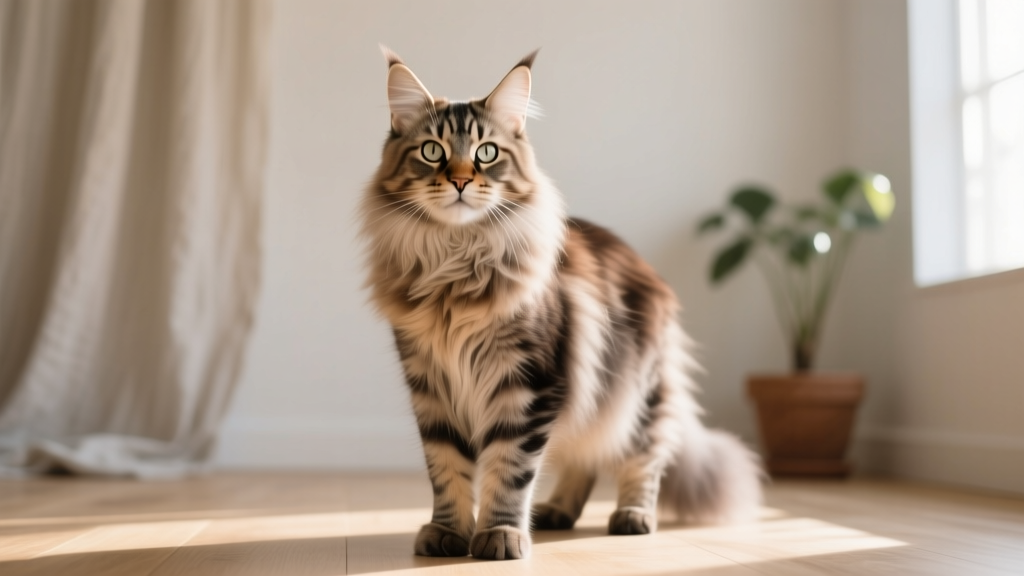
Maine Coons are instantly recognizable: big bodies, luxurious coats, expressive faces, and those famous lynx-like ear tufts. They aren’t just large—they’re long, powerful, and athletic, built more like a “working cat” than a delicate lap ornament.
| Trait | Typical Maine Coon Details |
|---|---|
| Size | Large to extra-large; long body and substantial bone structure |
| Weight | Males often 13–18+ lbs (sometimes more); females commonly 8–12 lbs |
| Height/Length | Noticeably tall and long; slow-maturing with full size reached around 3–5 years |
| Coat | Medium-long, shaggy, water-resistant; heavier ruff around the neck; longer britches on hind legs |
| Colors | Many colors and patterns (tabby common); eye color varies with coat |
| Distinctive Features | Tufted ears, tufted paws, long plumed tail, square-ish muzzle |
Coat and Colors
The Maine Coon’s coat is designed for weather: thicker on the belly and legs, a bit shorter on the shoulders, and generally “shaggy” rather than silky-flat. Many have a dramatic chest ruff that gives them a lion-like look, especially in winter.
- Common patterns: Brown tabby, silver tabby, black, blue, red, cream, tortoiseshell, and combinations with white.
- Eyes: Green, gold, copper—plus blue or odd eyes in some white or predominantly white cats depending on genetics.
- Tail: Long and fluffy—often used like a built-in blanket when they curl up.
Size and Growth
A Maine Coon kitten may look oversized early on, but what surprises many owners is how long they keep developing. This breed matures slowly, often reaching full muscle and body size between 3 and 5 years. That means your “kitten” may act like a kitten while already looking like a full-grown cat—an entertaining combination.
Personality and Temperament Traits
Maine Coons are known for being social, affectionate, and pleasantly “dog-like” in their devotion—without losing their cat independence. They tend to enjoy being near their people, supervising daily activities, and participating in the household routine.
- Friendly and people-oriented: Often greets visitors, follows family members, and likes being part of the action.
- Gentle temperament: Typically patient and tolerant, especially when well-socialized.
- Playful and intelligent: Many enjoy puzzle toys, interactive play, and learning routines.
- Communicative: Known for chirps and trills more than loud meows—like they’re narrating their day.
- Moderate lap cat energy: Some love cuddles; others prefer to sprawl next to you rather than on you (they’re big, after all).
Many Maine Coon cats also have a quirky relationship with water—some paw at faucets, investigate showers, or “help” with dishwashing. It varies by individual, but the curiosity is common.
Health Considerations and Common Issues
Maine Coons are generally robust, but like all pedigreed breeds, they have certain inherited health risks. Choosing a reputable breeder (or a rescue that provides medical history when available), keeping up with vet visits, and maintaining a healthy weight goes a long way.
Common Maine Coon Health Concerns
- Hypertrophic cardiomyopathy (HCM): A heart condition seen in many cat breeds, including Maine Coons. Responsible breeders often screen breeding cats with echocardiograms and may test for known genetic markers.
- Hip dysplasia: More associated with dogs, but it can occur in Maine Coons due to their size. Watch for stiffness, reluctance to jump, or reduced activity.
- Spinal muscular atrophy (SMA): An inherited condition affecting muscle strength; genetic testing exists.
- Dental disease: Common in cats generally; larger breeds aren’t immune. Regular dental care helps.
- Obesity: Big cats can gain too much weight if free-fed calorie-dense food and not encouraged to move.
Lifespan: Many Maine Coons live around 12–15 years, and some live longer with excellent care, genetics, and a healthy lifestyle.
Care Requirements (Grooming, Exercise, Diet)
Maine Coons are plush, but they’re not “impossible” to maintain. Think of them as moderately high-maintenance compared to short-haired cats—worth it for the glorious fluff and the cuddle factor.
Grooming
- Brushing: Aim for 2–3 times per week; daily during seasonal shedding. Focus on the belly, armpits, and behind the legs where mats can form.
- Comb choice: A stainless-steel comb plus a slicker brush works well for the thick coat.
- Hairballs: Regular brushing reduces hair ingestion; your vet may recommend dietary adjustments if hairballs become frequent.
- Nails and ears: Trim nails every 2–4 weeks; check ears periodically for wax buildup.
Exercise and Enrichment
This is an athletic, playful breed. They don’t need nonstop entertainment, but they do best when their brains and bodies get regular action.
- Daily interactive play: Wand toys, feather teasers, and chase games help satisfy hunting instincts.
- Vertical space: Provide sturdy cat trees and shelves rated for larger cats (stability matters).
- Puzzle feeders: Great for mental stimulation and slowing fast eaters.
- Leash training: Many Maine Coons take well to harness training with patience.
Diet
Maine Coons need quality nutrition that supports muscle mass, heart health, and a healthy coat. Because they’re large, portion control is essential—big frame doesn’t mean unlimited calories.
- Protein-forward food: Look for diets where animal protein is a primary ingredient.
- Weight monitoring: Ask your vet about ideal body condition; adjust portions if your cat is getting “softer” than intended.
- Hydration: Wet food can help increase water intake; many also enjoy pet fountains.
- Kitten to adult transition: They grow slowly, so your vet may recommend staying on kitten food longer than with other breeds.
Compatibility with Families, Children, and Other Pets
Maine Coons are often an excellent fit for families. Their patient, social nature and playful spirit can make them wonderful companions in lively homes.
- With children: Generally tolerant and gentle, especially when kids are taught respectful handling (no tail pulling, no surprise hugs).
- With dogs: Many do well with cat-friendly dogs when introductions are slow and supervised. Their confident temperament helps.
- With other cats: Often sociable, particularly when introduced properly and provided enough resources (litter boxes, food stations, resting spots).
- Busy households: They enjoy company and may not love being alone all day with no stimulation—consider enrichment or a compatible pet companion.
Because of their size, they can accidentally bowl over a small child or a wobbly side table when zoomies strike. Sturdy furniture and stable cat trees are your friends.
Pros and Cons of Owning a Maine Coon
| Pros | Cons |
|---|---|
| Affectionate, friendly “gentle giant” personality | More grooming than short-haired breeds |
| Playful, intelligent, often easy to train | Large size means bigger litter boxes, sturdier gear, higher food costs |
| Usually great with families, kids, and other pets | Potential inherited health issues (HCM, hip dysplasia, SMA) |
| Striking looks: tufted ears, fluffy tail, majestic coat | Slow maturity—may act like a kitten for years (fun, but sometimes chaotic) |
| Often communicative with charming chirps and trills | Can get bored without interaction and enrichment |
FAQ: Maine Coon Cats
Do Maine Coon cats get along with everyone?
Many Maine Coons are social with family members and even visitors, but each cat has their own comfort zone. Early socialization, gentle handling, and a calm introduction to new people make a big difference.
How big do Maine Coons get compared to typical house cats?
They’re noticeably larger and longer than most domestic cats. Adult males commonly land in the 13–18+ pound range, while females are often 8–12 pounds, with some cats outside those ranges. They also have a long body and a big, fluffy presence that makes them look even larger.
Are Maine Coons good indoor cats?
Yes—Maine Coons can thrive indoors as long as they get enough enrichment: climbing space, scratching posts, interactive play, and puzzle toys. Indoor living also helps protect them from cars, predators, parasites, and infectious diseases.
Do Maine Coons require professional grooming?
Not always. Many owners manage with at-home brushing several times a week. Professional grooming can help during heavy shedding seasons or if mats form, especially around the belly and hindquarters.
Are Maine Coons hypoallergenic?
No cat breed is truly hypoallergenic, and Maine Coons are not considered hypoallergenic. If allergies are a concern, spend time with the breed first and talk with your allergist; frequent cleaning and air filtration may help in some homes.
Why does my Maine Coon “chirp” instead of meow?
That’s classic Maine Coon communication. Many Maine Coons use chirps and trills as friendly, conversational sounds—often when greeting you, watching birds, or asking to be included in whatever you’re doing.
A Warm Signoff for Future Maine Coon Fans
The Maine Coon isn’t just a big cat—it’s a big-hearted companion with a playful brain, a gentle spirit, and a presence that fills a home in the best way. If you want a breed that’s striking to look at, wonderful to live with, and genuinely engaged with its people, the Maine Coon cat is hard to beat.
If you’re considering one, take your time: look for ethical breeders who prioritize health testing, consider adoption and breed-specific rescues, and set up your home with sturdy cat furniture and plenty of enrichment. Then get ready for chirps, fluff, and a loyal shadow who makes everyday life feel a little more special.
Want to compare the Maine Coon with other popular long-haired and family-friendly cats? Explore more breed profiles on catloversbase.com.