California Spangled: Endangered Lookalike Project
If you’ve ever wished you could share your home with a “mini leopard” without supporting exotic pet trade—or stressing out a truly wild animal—you’re exactly the kind of cat lover who will appreciate the California Spangled. This rare, striking breed was created with a mission: to make people fall in love with the look of endangered wild cats and, in doing so, care more about protecting them.
The California Spangled isn’t just about spots (though the spots are fabulous). It’s an athletic, people-focused companion with a confident, playful vibe and a body built for motion. For breed researchers, it’s also a fascinating snapshot of 1980s cat fancy culture—part activism, part artistry, part bold experiment.
Today, finding a California Spangled cat is challenging, which only adds to the mystique. If you’re lucky enough to meet one, you’ll understand why enthusiasts still talk about them with real affection: they look like a jungle cat, but they’re very much a family cat.
Breed History and Origin
The California Spangled Cat was developed in the United States in the early 1980s by Paul Casey. The origin story is often tied to conservation awareness—accounts commonly reference Casey’s interest in wildlife and the idea of creating a domestic cat whose wild look would inspire empathy for endangered spotted cats (such as leopards, ocelots, and cheetahs). The “endangered lookalike” concept was central: a household pet that visually echoes wild species, encouraging people to value living wild cats more than their fur.
The breed drew attention in the 1980s and was famously promoted in a high-profile marketing push, which helped the California Spangled become a pop-culture curiosity. Despite that visibility, the breed did not become widely established in the way Bengals or Ocicats did. Over time, the California Spangled became rare, and it’s often described as an uncommon or even “near-vanished” breed in modern cat circles.
Because population numbers are limited and records vary by source, prospective owners should expect that availability is very low. Some cats may be marketed as “California Spangled-type” rather than verifiably pedigreed California Spangled, so careful documentation matters for anyone seeking a true representative of the breed.
Physical Characteristics
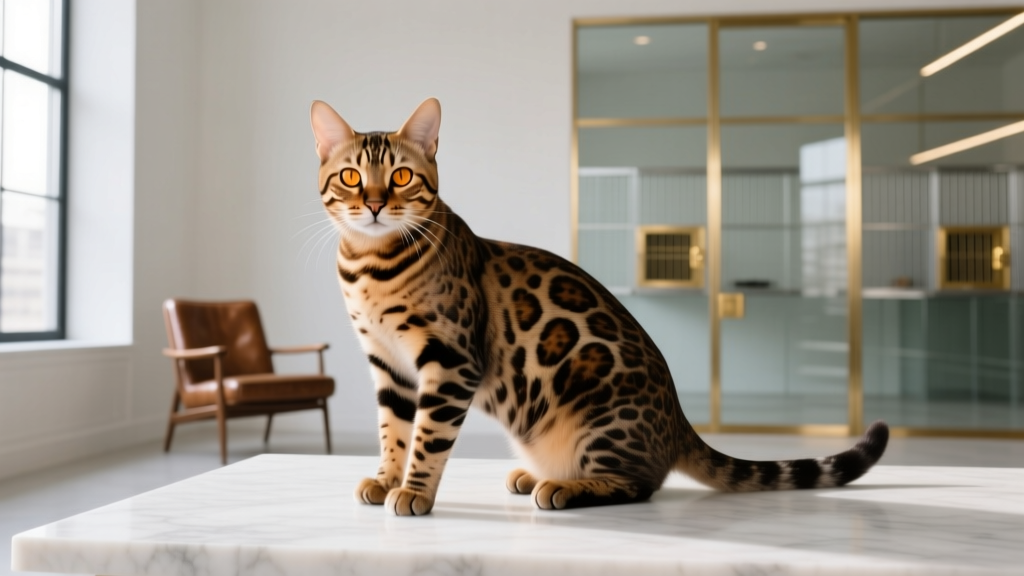
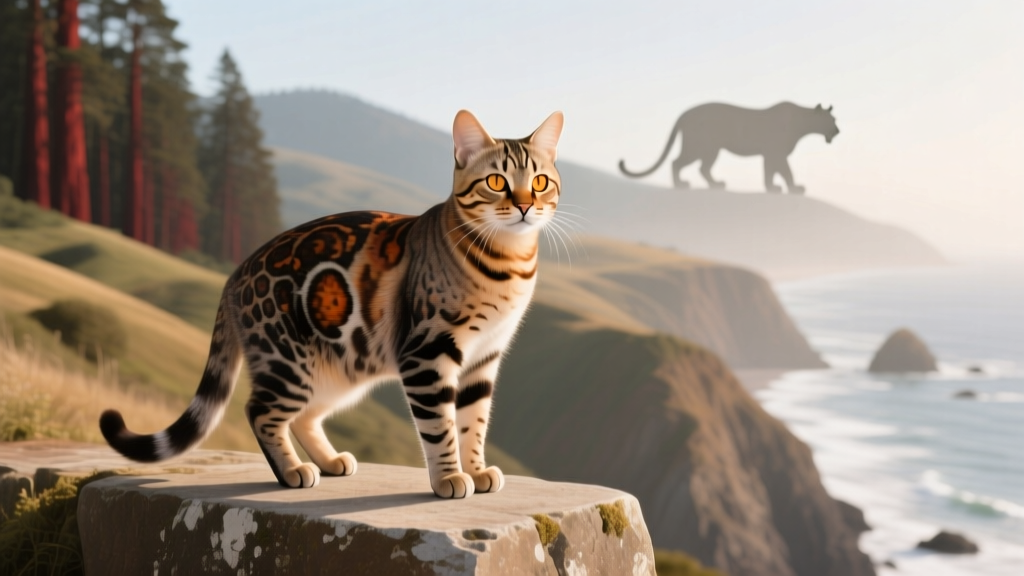
The California Spangled cat is all about a spotted wildcat silhouette paired with domestic-cat approachability. Their build is athletic and agile, with a low-slung, ready-to-pounce look—like a tiny predator casually strolling across your living room.
| Feature | Typical Description |
|---|---|
| Size | Medium; athletic and muscular |
| Weight | Often around 8–15 lbs (varies by sex and lineage) |
| Body | Long, lean, powerful; “wildcat” posture |
| Coat length | Short coat (sleek, close-lying) |
| Coat feel | Soft and smooth; designed to highlight pattern |
| Pattern | Spotted (the signature look); spots may be round, square-ish, or slightly elongated |
| Common colors | Spotted in a range of tones; often seen in brown/bronze, gold, silver, charcoal, black, and variations with contrast |
| Eyes | Expressive; colors vary (often complementing coat) |
Distinctive Features
- Spotted coat designed to resemble small wild cats (the “leopard look” that made the breed famous).
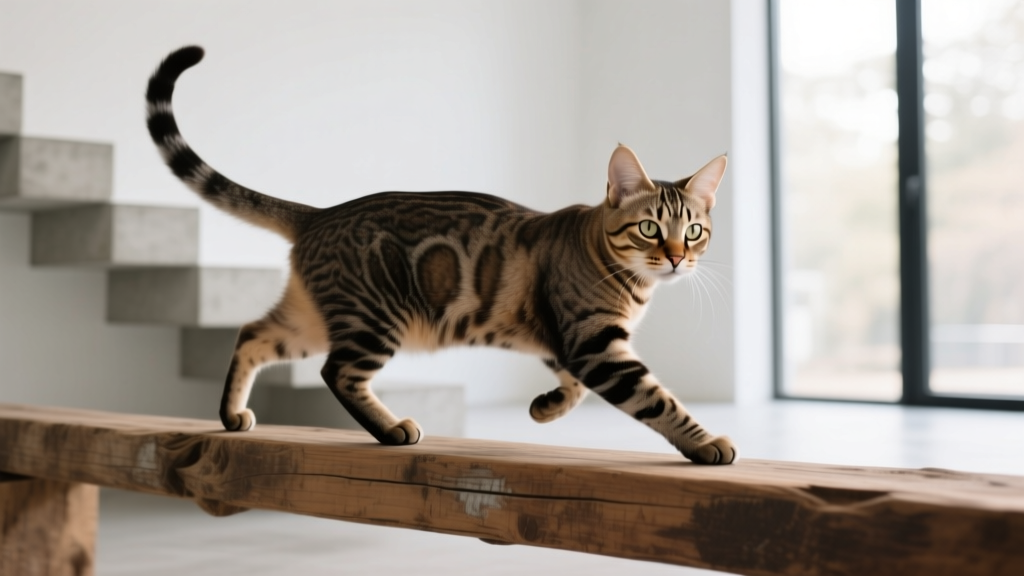
- Lean, athletic frame with strong musculature—this is a cat built for climbing and sprinting.
- Confident stance and fluid movement that adds to the wildcat illusion.
Because the breed is rare, you may see variation from one line to another. When evaluating a California Spangled, the overall impression should still be: spotted, sleek, athletic, and “wild” in appearance.
Personality and Temperament Traits
Behind that exotic-cat look is a companion that tends to be engaged, curious, and active. California Spangled cats are often described as social with their people, eager to participate in household routines, and quick to investigate anything new.
- Playful and energetic: Expect zoomies, athletic jumps, and a love of interactive games.
- People-oriented: Many enjoy being near their humans—“supervising” is a favorite hobby.
- Smart and alert: Puzzle feeders, clicker training, and new toys are usually a hit.
- Confident: They often carry themselves like they own the place (and honestly, they kind of do).
- Not a couch ornament: This breed’s vibe is more “let’s do something” than “watch me nap all day.”
If you love cats with presence—cats that make eye contact, follow you around, and turn your home into a playground—the California Spangled temperament is likely to charm you.
Health Considerations and Common Issues
Because the California Spangled is rare and not as widely tracked as more common pedigreed breeds, there isn’t a single short list of “breed-defining” genetic issues that is universally agreed upon. Many individuals may enjoy robust health, especially when responsibly bred and kept at a healthy weight.
Still, every prospective owner should approach health thoughtfully:
- General feline risks: Dental disease, obesity, parasites, and chronic kidney disease can affect cats of many breeds.
- Heart health: Some breeds have higher rates of heart conditions like hypertrophic cardiomyopathy (HCM). For a rare breed, it’s wise to ask breeders what screening they do, even if the breed isn’t famous for a specific condition.
- Limited gene pool concerns: Rarity can mean fewer breeding lines; responsible outcrossing practices and health testing become even more valuable.
Best practice: choose a veterinarian you trust, schedule regular wellness exams, keep vaccinations and parasite prevention up to date, and ask for dental checks. For any breeder or adoption source, request full health records and transparency.
Care Requirements (Grooming, Exercise, Diet)
Grooming
The California Spangled’s short coat is typically low-maintenance, but a little routine goes a long way—especially for shedding control and skin health.
- Brushing: 1–2 times a week with a soft brush or grooming mitt.
- Nails: Trim every 2–4 weeks (or as needed).
- Ears: Check weekly; clean only if debris is visible and your vet has shown you how.
- Teeth: Brush regularly if possible; dental treats can help but don’t replace brushing.
Exercise and Enrichment
This is an athletic cat. Without outlets, they may invent their own entertainment (which can look like parkour off your bookshelf). Plan to provide:
- Daily interactive play: Wand toys, chasing games, and short training sessions.
- Vertical territory: Cat trees, shelves, and window perches.
- Puzzle feeders: Great for mental stimulation and slowing fast eaters.
- Safe exploration: Some do well with harness training if introduced gently and early.
Diet
California Spangled cats thrive on the same foundations as other energetic domestic cats: high-quality, protein-forward nutrition with portion control.
- Protein focus: Look for diets where animal protein is a primary ingredient.
- Weight management: An athletic build should look lean and fit, not rounded.
- Hydration: Wet food, water fountains, and multiple water stations help many cats drink more.
- Treats: Keep treats to a small percentage of daily calories—save the big rewards for training sessions.
Your vet can help you choose the right calorie level and food format (wet, dry, or mixed) based on age, activity, and health status.
Compatibility with Families, Children, and Other Pets
With proper introductions and respectful handling, the California Spangled can make a wonderful family companion—especially for homes that enjoy an interactive, playful cat.
- Families and kids: Often a good match for cat-savvy children who understand gentle touch and boundaries. Their play drive can be a plus in busy homes.
- Other cats: Many can coexist well with other cats, especially if introductions are gradual and there are enough resources (litter boxes, perches, feeding stations).
- Dogs: Potentially compatible with cat-friendly dogs. A confident, athletic cat may adapt well, but slow introductions matter.
- Small pets: Due to strong prey drive in many active cats, use caution around birds, rodents, or reptiles—secure habitats are essential.
One key to harmony: provide lots of vertical escape routes and “cat-only” spaces so your Spangled can retreat and observe when they want quiet time.
Pros and Cons of Owning This Breed
| Pros | Cons |
|---|---|
|
|
FAQ: California Spangled Cats
Are California Spangled cats good pets?
For the right home, yes. They tend to be playful, people-focused, and athletic. If you want a calm lap cat with minimal exercise needs, this may not be your best match.
Is the California Spangled the same as a Bengal?
No. Bengals have a different origin and are more widely established today. The California Spangled is a separate, rarer breed developed to mimic the look of wild spotted cats while remaining fully domestic.
How much does a California Spangled cat cost?
Prices vary widely due to rarity and availability. Because the breed is uncommon, you may see higher prices or difficulty finding verified lineage. Always prioritize health records, ethical practices, and clear documentation over bargain listings.
Do California Spangled cats shed a lot?
They’re short-haired, so shedding is usually manageable, but they still shed like most cats. Weekly brushing helps keep hair off furniture and reduces hairballs.
Are California Spangled cats hypoallergenic?
No cat breed is truly hypoallergenic. Some individuals may trigger fewer allergies than others, but allergies are usually linked to proteins in saliva and skin rather than coat length or pattern.
Can a California Spangled live in an apartment?
Yes—if you provide ample enrichment. Think tall cat trees, climbing shelves, daily play sessions, puzzle feeders, and window perches. An athletic cat can thrive in smaller spaces when their environment is designed for movement.
A Warm Wrap-Up
The California Spangled is a love letter to wild beauty—spots, swagger, and all—wrapped in a domestic cat who wants to share your life. It’s also a reminder of a unique moment in cat history, when a breed was shaped not only by looks, but by a message: admire endangered animals by protecting them, not possessing them.
If you’re captivated by the California Spangled cat’s rare status and leopard-like pattern, keep researching, ask thoughtful questions, and connect with reputable sources. And if you simply love learning about extraordinary breeds, you’re in the right place—come explore more cat breed profiles on catloversbase.com.