Himalayan Cat: Persian Meets Siamese
If you’ve ever wished for a cat that looks like a living plush toy but still carries a touch of Siamese-style sparkle, the Himalayan cat might steal your heart on the spot. With their dreamy colorpoint markings, big round eyes, and cloud-soft coat, Himalayans have a “wow” factor that never really wears off—whether you’re seeing one for the first time or living with one curled up on your sofa.
What makes the Himalayan truly special is the blend of two iconic breeds: the Persian’s sweet, laid-back charm and the Siamese’s striking points and expressive presence. The result is a cat that’s both glamorous and affectionate—often happiest when they’re close to their favorite people, ideally on a cozy lap.
This guide covers everything cat lovers want to know: Himalayan cat history, personality and temperament, grooming and care, common health issues, family compatibility, and the real-life pros and cons of sharing your home with this beautiful colorpoint companion.
Breed History and Origin
The Himalayan cat’s story begins with a simple goal: create a Persian-type cat with Siamese colorpoint markings. Early breeding efforts started in the 1930s in the United States, where breeders crossed Persians with Siamese cats and then selectively bred for the long coat, round “Persian” body type, and the signature points (darker coloration on the face, ears, legs, and tail).
After years of careful breeding, the “Himalayan” became recognized as a distinct type. Depending on the cat registry, the Himalayan may be treated as its own breed or considered a variety of Persian (often called the “Colorpoint Persian”). The name “Himalayan” is a nod to the colorpoint pattern seen in Himalayan rabbits—not because the cats originated in the Himalayas.
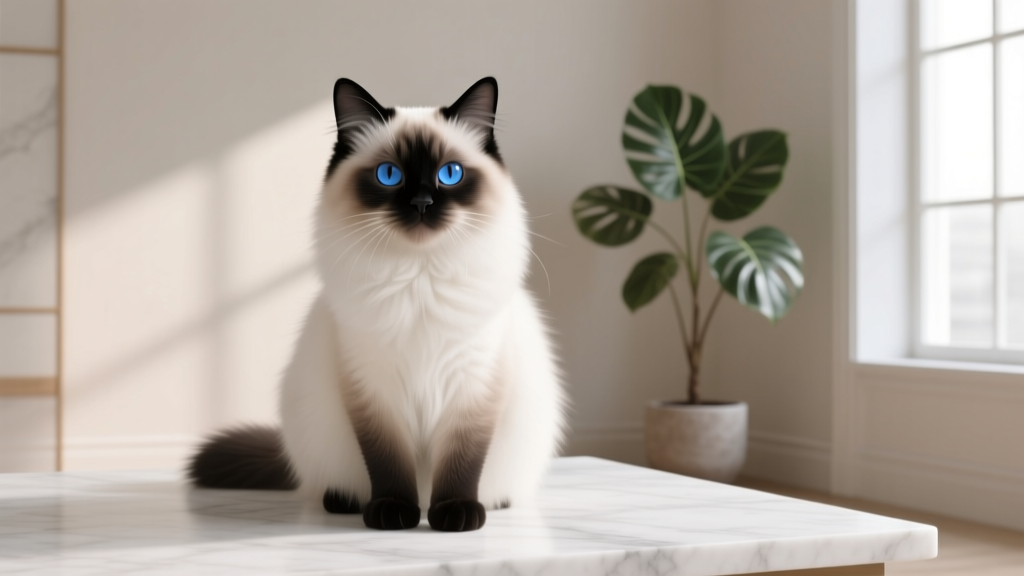
Today, the Himalayan remains one of the most recognizable longhaired colorpoint cats, beloved for its luxurious coat, gentle demeanor, and those unforgettable blue eyes.
Physical Characteristics
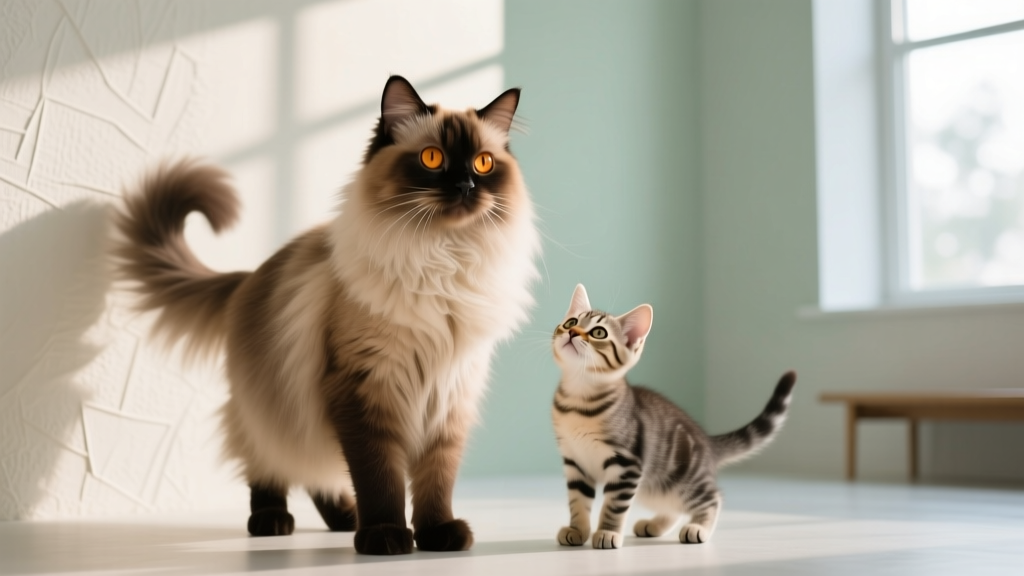
The Himalayan cat is essentially a Persian with Siamese points: a sturdy, cobby body; a plush, flowing coat; and a face that ranges from traditional (doll-face) to ultra-flat (peke-face), depending on breeding lines.
| Trait | Typical Himalayan Cat |
|---|---|
| Size | Medium to large |
| Weight | Usually 7–12 lb (some males may be larger) |
| Body type | Cobby, solid, low to the ground, broad chest |
| Coat length | Long, thick, flowing double coat |
| Eye color | Blue (a hallmark of the colorpoint pattern) |
| Distinctive features | Colorpoint markings, round head, small ears, short legs, plush tail |
Coat and Colors
Himalayans are famous for their long, dense coat with a soft undercoat that can mat if neglected. Their coloration is “pointed,” meaning the coolest parts of the body develop darker pigment. Kittens are often born mostly pale and their points deepen over time.
Common Himalayan cat colors and point varieties include:
- Seal point: dark brown points with a creamy body
- Blue point: slate-gray points with a frosty white body
- Chocolate point: warm brown points with an ivory body
- Lilac point: pale gray-pink points with a bright white body
- Flame (red) point: reddish points on a light body
- Cream point: soft cream points
- Tortie point: mottled points with red/cream mixed with darker color
- Blue-cream point: diluted tortie pattern on the points
- Lynx point: tabby striping within the points
Face Types: Doll-Face vs. Flat-Face
One thing you’ll notice quickly when researching Himalayan cats is facial structure. Some have a more traditional “doll-face” with a visible nose and a less extreme profile. Others have a flatter face (often called “peke-face”), which can be associated with more breathing and tear-related issues. If you’re choosing a kitten, ask the breeder about face type and health screening—your future cat’s comfort matters more than a trendy look.
Personality and Temperament Traits
Himalayans are typically gentle, affectionate, and people-oriented. Think of them as devoted homebodies: they enjoy company, prefer calm routines, and often pick a favorite person (or two) to follow from room to room.
Many Himalayan cats are:
- Sweet-natured: more likely to purr than protest
- Quiet to moderately vocal: usually softer than the classic Siamese voice
- Playful in short bursts: they’ll chase a wand toy, then happily lounge
- Affectionate lap cats: cuddling is a common love language
- Comfort-loving: warm blankets and sunny windows are prime real estate
They tend to do best in homes where people are around often. A Himalayan cat can feel lonely if left alone for long days without companionship or enrichment.
Health Considerations and Common Issues
Himalayan cats can be healthy, long-lived companions, but they do have a few breed-associated health concerns—many related to their Persian heritage and facial structure. Working with reputable breeders and maintaining regular veterinary care makes a big difference.
Common Himalayan cat health issues include:
- Brachycephalic airway concerns: flatter-faced cats may snore, breathe noisily, or struggle in heat
- Eye tearing and staining: due to facial anatomy; may require daily wiping
- Dental crowding: short jaw structures can lead to tartar buildup and gum disease
- Polycystic kidney disease (PKD): an inherited condition seen in Persian lines; responsible breeders DNA-test or screen breeding cats
- Hypertrophic cardiomyopathy (HCM): can occur in many breeds; cardiac screening is a plus
- Skin and coat issues: mats can cause skin irritation; some cats are prone to seborrhea
- Obesity: their calm nature can make weight gain easy if food isn’t portioned
If you’re adopting a Himalayan kitten, ask what health tests have been done in the breeding program (especially PKD screening). If you’re adopting an adult, a baseline wellness exam—including dental evaluation—can set your cat up for a comfortable life.
Care Requirements (Grooming, Exercise, Diet)
Owning a Himalayan is a little like owning a tiny, affectionate show cat. Their care is absolutely manageable, but it’s not hands-off. Daily grooming and a clean environment are the secrets to keeping that coat glorious and your cat feeling great.
Grooming
That long, thick coat is stunning—and it mats easily. Most Himalayans do best with consistent grooming habits from kittenhood.
- Brushing: ideally daily (or at least 4–5 times per week) using a wide-tooth comb and a gentle slicker brush
- Mat checks: behind ears, under the armpits, along the belly, and around the ruff
- Baths: occasional bathing can help manage oil and keep the coat fluffy (many owners do monthly or as needed)
- Eye cleaning: wipe tear stains daily with a soft damp cloth or vet-approved wipe
- Nail trims: every 2–4 weeks
- Ear care: check weekly for wax/debris; clean gently if needed
Some families opt for a “lion cut” or shorter trim, especially for cats that mat easily or dislike brushing. It’s not required, but it can be a practical choice.
Exercise and Enrichment
Himalayans aren’t typically extreme athletes, but they still need movement for healthy joints, weight control, and mental wellness.
- Interactive play: 10–15 minutes once or twice daily (wand toys, soft balls, gentle chase games)
- Cat trees and steps: choose stable, easy-to-climb perches rather than very tall, challenging setups
- Puzzle feeders: helpful for indoor enrichment and slowing down eating
- Window perches: bird-watching is premium entertainment
Diet
A Himalayan cat’s diet should support coat health, lean muscle, and a healthy weight. Because some Himalayans can be less active, portion control matters.
- High-quality protein: look for named animal proteins as primary ingredients
- Wet food support: many cats benefit from wet food for hydration, especially if prone to urinary issues
- Weight monitoring: keep an eye on body condition; ask your vet about ideal calories
- Dental-friendly habits: dental treats approved by your vet and tooth brushing help—especially for flatter-faced cats
Compatibility with Families, Children, and Other Pets
Himalayans often thrive in loving, calm homes and can be wonderful family cats when their preferences are respected. They’re generally tolerant, affectionate, and less likely to be “busy” or intense compared to more high-energy breeds.
| Household Type | Himalayan Compatibility |
|---|---|
| Families with children | Often excellent with gentle, respectful kids; prefers calmer handling |
| Other cats | Usually gets along well, especially with similarly relaxed cats |
| Dogs | Can do well with calm, cat-savvy dogs and slow introductions |
| Apartment living | Great fit; indoor lifestyle suits them |
| Busy/noisy household | May feel overwhelmed; provide quiet zones and predictable routines |
With children, the key is teaching “gentle cat manners”: no chasing, no forced cuddles, and no grabbing the fluffy tail. Himalayans prefer to choose affection on their own terms—and when they do, they tend to be deeply devoted.
Pros and Cons of Owning This Breed
Himalayan cats bring a lot of joy, but they also come with real responsibilities. Here’s an honest snapshot for anyone considering this breed.
Pros
- Stunning looks: luxurious long coat, colorpoint pattern, vivid blue eyes
- Affectionate temperament: loving, loyal, often a true lap cat
- Gentle energy level: happy in quieter homes and apartments
- Social without being chaotic: enjoys companionship, typically not overly demanding
- Great for routine-lovers: thrives with predictable daily life
Cons
- High grooming needs: mats happen fast without regular brushing
- Tear staining and facial care: many need daily eye wiping
- Potential breathing issues: especially in very flat-faced lines
- Health screening matters: inherited issues like PKD make responsible sourcing crucial
- Not ideal for very hot climates: heavy coat and brachycephalic traits can make heat stressful
FAQ: Himalayan Cats
Are Himalayan cats hypoallergenic?
No. Himalayan cats produce allergens (like Fel d 1) and their long fur can carry dander. Some allergy sufferers do better with consistent grooming and air filtration, but the breed isn’t considered hypoallergenic.
Do Himalayan cats shed a lot?
Yes—Himalayans are moderate to heavy shedders, especially seasonally. Daily brushing helps catch loose hair and prevents mats.
How long do Himalayan cats live?
Many Himalayan cats live around 12–15 years, and some live longer with excellent care. Genetics, weight management, dental health, and kidney/heart screening all play a role.
Do Himalayan cats meow a lot like Siamese?
Usually not. While they can be talkative with their favorite people, their voices tend to be softer and less constant than a classic Siamese.
Is a Himalayan cat the same as a Persian?
They’re closely related. In some registries, the Himalayan is classified as a Persian color variation (Colorpoint Persian). In others, it’s recognized as a distinct breed type. Either way, Himalayans share the Persian’s body and coat style, plus the Siamese-style colorpoints and blue eyes.
What’s better: doll-face or flat-face Himalayan?
“Better” often comes down to health and comfort. Doll-face Himalayans typically have fewer breathing and tear issues. If you’re choosing a kitten, prioritize health-focused breeding, clear nostrils, and bright eyes over extreme facial features.
Life with a Himalayan: A Cozy Kind of Magic
Living with a Himalayan cat is like sharing your home with a soft, affectionate little presence that’s always ready to lounge nearby. They’re not usually the cat doing parkour off the furniture—but they are often the cat quietly waiting for you to sit down so they can settle in close, purring like they’ve been saving that warmth just for you.
If you love longhaired cats, enjoy grooming as a bonding ritual, and want a gentle companion with show-stopping colorpoint beauty, the Himalayan may be exactly the “Persian meets Siamese” dream you’ve been looking for.
Want to meet more amazing breeds? Explore more cat breed profiles on catloversbase.com and find the perfect feline match for your home.