Genetta: Spotted Dwarf Cat Experiment
If you’ve ever wished for a cat that looks like a tiny, spotted wild creature but lives happily as a playful housecat, the Genetta cat might stop you in your tracks. This rare, experimental breed was developed to capture the look of the African genet (a small, spotted carnivore) in a fully domestic, affectionate companion.
The Genetta is best known for its small size, lively personality, and spotted coat that gives it a “mini wildcat” vibe. Because Genettas are uncommon and not recognized by all major cat registries, they’re also a breed that sparks curiosity, debate, and a lot of questions from cat lovers and breed researchers alike.
Let’s get into what makes the Genetta “spotted dwarf cat experiment” so fascinating—its origin story, appearance, temperament, care needs, and what life is really like with one of these energetic little charmers.
Breed History and Origin
The Genetta is a relatively modern experimental cat breed developed in the United States. The goal was specific: create a domestic cat with the look of an African genet—small, spotted, sleek, and “exotic”—while keeping a friendly, trainable, pet-quality temperament.
Unlike some “wild-looking” breeds that rely on wildcat ancestry, Genettas are typically described as fully domestic in foundation, using carefully selected domestic breeds and lines to achieve the desired patterning and petite build. Depending on the breeding program and generation, you’ll see certain types show up repeatedly in discussions of Genetta development, including:
- Munchkin influence (for short legs in some lines)
- Bengal-type spotting (for bold spots/rosettes and high-contrast patterning)
- Oriental/Siamese-type refinement in body style in some cats (sleek lines, longer necks, expressive faces)
Because “Genetta” can refer to cats from specific breeding programs rather than a single universally standardized registry definition, it’s smart to ask breeders detailed questions about lineage, health testing, and whether a kitten is short-legged or long-legged.
| Quick context | What it means for owners |
|---|---|
| Experimental/rare | Availability is limited; quality varies by program—research matters. |
| “Genet-like” look | Expect spotting, a sleek silhouette, and an alert, athletic vibe. |
| Short- and long-legged varieties | Short-legged Genettas may have different mobility and orthopedic considerations. |
Physical Characteristics
The Genetta cat is often described as a spotted dwarf cat—especially when the cat has short legs. Even long-legged individuals tend to read “small and sleek,” with a bright, curious expression and an agile body built for motion.
Size and Weight
- Overall size: Small to small-medium
- Typical weight: Often around 4–8 pounds (some may be slightly outside this range depending on sex, build, and leg type)
- Build: Athletic, refined, and light on the feet
Coat Type
- Length: Usually short to medium
- Texture: Sleek, close-lying, often glossy
- Shedding: Moderate (varies by individual and line)
Colors and Patterns
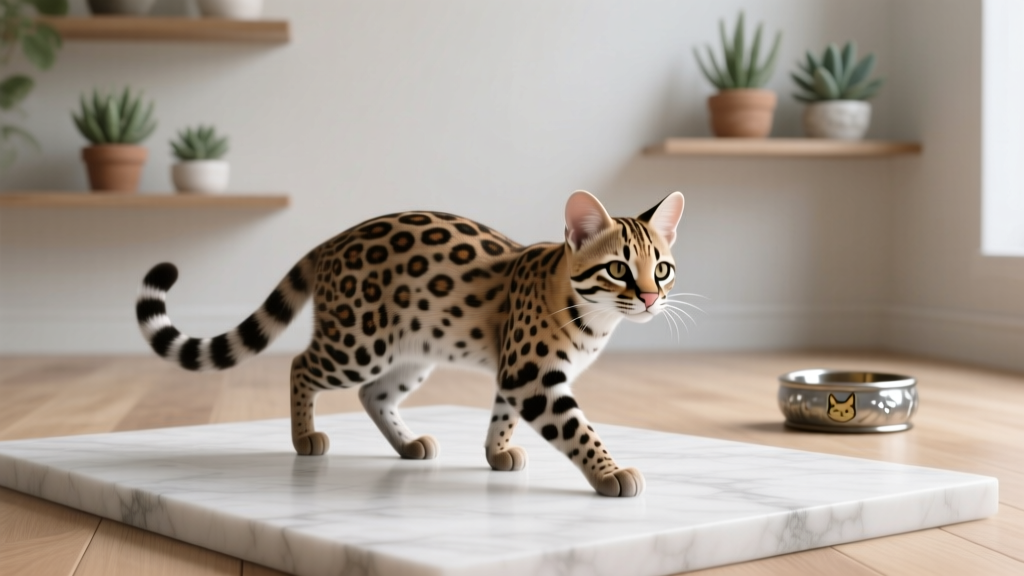
The showstopper feature is the spotted pattern. Many Genettas are bred for high-contrast spotting that resembles a genet or small wildcat.
- Patterns: Spots, broken spots, sometimes rosettes
- Common color families: Brown/black spotted tabby tones, silver spotted looks, and other tabby-based variations depending on lineage
Distinctive Features
- Spotted “exotic” coat that reads wild while staying domestic
- Petite frame (especially noticeable in females)
- Short legs in some cats, giving that “dwarf cat” silhouette
- Alert ears and bright eyes that enhance the curious, lively expression
- Longer tail relative to body in many individuals, adding to the sleek look
| Trait | What you’ll typically see |
|---|---|
| Body | Small, agile, athletic; often refined rather than chunky |
| Legs | Either short-legged (dwarf type) or standard/long-legged |
| Coat | Short to medium, sleek, patterned for contrast |
| Pattern | Spots/broken spots; sometimes rosettes depending on lines |
Personality and Temperament Traits
Living with a Genetta is rarely boring. This is typically a high-energy, people-focused cat that wants to be where the action is. Many owners describe Genettas as inquisitive and bold—cats that greet you at the door, supervise chores, and instantly investigate any new sound, bag, or box.
Common personality traits include:
- Playful and busy (interactive toys are a must)
- Smart and trainable (many learn routines quickly)
- Affectionate on their terms (often cuddly, but also independent)
- Curious and fearless (expect counter inspections and cabinet checks)
- Social with their chosen people; some are chatty depending on ancestry
If you love a cat with presence—one that makes eye contact, communicates, and wants engagement—the Genetta’s temperament can be a wonderful match.
Health Considerations and Common Issues
Because the Genetta is an experimental, program-based breed, health traits can vary widely depending on the specific lines used. Your best protection is choosing a responsible breeder who prioritizes health and can clearly explain what conditions they screen for.
Potential considerations may include:
- Orthopedic concerns in short-legged cats: Dwarf-legged varieties can be more prone to mobility stress or joint wear over time, especially if kept overweight.
- Spinal alignment and posture: Any cat with shortened limbs should be evaluated for comfortable movement and normal activity levels as it grows.
- General domestic-cat issues: Dental disease, obesity, and urinary tract concerns can affect any cat without good preventive care.
- Inherited conditions from foundation breeds: If Bengal-type lines were used, ask what genetic screening is done in that cattery’s program.
Helpful health questions to ask a breeder:
- What veterinary checks are completed before kittens go home?
- Do you track orthopedic health and mobility in adult cats you’ve bred?
- What genetic tests (if any) are performed in your lines?
- Can you describe the typical adult size and activity level from your program?
Care Requirements (Grooming, Exercise, Diet)
Grooming
Most Genettas have a short, sleek coat that’s easy to maintain. That said, these cats are often active explorers, so routine checks (ears, nails, coat) help keep them comfortable.
- Brushing: 1–2 times per week for most coats
- Nails: Trim every 2–4 weeks (active cats still need trims)
- Teeth: Aim for regular brushing or dental-support routines
- Bathing: Occasional, only as needed
Exercise and Enrichment
The Genetta’s mind is as active as its paws. Plan daily play sessions and give them plenty of vertical and horizontal territory to explore.
- Daily interactive play: Wand toys, chase games, puzzle feeders
- Climbing options: Cat trees, wall shelves, sturdy perches
- Safe sprint space: Hallway runs and open floor areas
- Training: Many enjoy clicker training and can learn sit, touch, and leash basics
Tip for short-legged Genettas: Provide ramps or step-stools to favorite spots so they can climb safely without repeated big jumps.
Diet
Feed for lean muscle and long-term joint comfort—especially if you have a dwarf-legged cat. Choose a complete, high-quality diet and keep treats under control (these bright cats can be excellent beggars).
- Protein-forward nutrition: Helps support active bodies
- Portion control: Prevents weight gain that can stress joints
- Hydration support: Water fountains and wet food can help many cats drink more
Compatibility with Families, Children, and Other Pets
A well-socialized Genetta is often a fun match for households that enjoy an interactive, “involved” cat. They tend to do best with people who like to play, train, and engage rather than expect a decorative couch cat.
- Families: Often great in active homes with predictable routines and enrichment.
- Children: Can do well with respectful kids who understand gentle handling and appropriate play.
- Dogs: Many adapt well to calm, cat-savvy dogs when introductions are slow and supervised.
- Other cats: Often enjoy feline companionship, especially if they’re high-energy and like to wrestle/play.
Because the Genetta can be bold and curious, slow introductions still matter. Give them a safe room, scent swaps, and gradual visual meetings so confidence doesn’t turn into pushiness.
Pros and Cons of Owning This Breed
| Pros | Cons |
|---|---|
| Eye-catching spotted coat with an “exotic” look | Rare and experimental; availability and standards vary |
| Small size that suits many homes and apartments | High energy—needs daily play and stimulation |
| Smart, curious, and often trainable | Can get into everything if bored (cabinet locks aren’t silly!) |
| People-oriented, often social and engaging | Short-legged varieties may require extra care around jumping and weight management |
| Great choice for cat lovers who enjoy interactive companionship | You’ll need to carefully vet breeders and health practices |
FAQ: Genetta Cat Breed
Is the Genetta cat a wild hybrid?
Genettas are typically described as domestic cats bred to resemble the African genet, rather than a direct wild hybrid. Always ask the breeder for clear lineage details and what breeds are in their specific program.
Do all Genetta cats have short legs?
No. Some Genettas are short-legged (dwarf type), while others are standard/long-legged. If short legs are part of what you want, confirm with the breeder and ask about mobility and adult structure.
How big do Genetta cats get?
Most are on the smaller side, often around 4–8 pounds, though individuals can vary depending on sex, diet, and lineage.
Are Genetta cats good with kids?
They can be great with respectful children, especially if the cat is well-socialized and the kids are taught to avoid rough handling. Because Genettas tend to be active, they often enjoy structured playtime.
Is the Genetta cat high maintenance?
Grooming is usually easy, but they’re high maintenance in the fun way: they need daily play, enrichment, and attention. A bored Genetta will invent its own entertainment.
What should I look for in a Genetta breeder?
Look for transparency: health screening practices, veterinary records, socialization methods, a written contract, and a willingness to discuss both the joys and challenges of the breed—especially if the kitten is short-legged.
Warm Signoff
The Genetta is a captivating mix of “wild look” and domestic heart—a spotted little explorer with a big personality. For the right home, this rare spotted dwarf cat experiment can be a joyful, interactive companion that keeps you laughing, moving, and constantly impressed by feline athleticism in a compact package.
If you’re considering a Genetta cat, take your time, ask lots of questions, and choose ethical breeding and good health practices over hype. Your future best friend is worth the extra effort.
Ready to meet more amazing cats? Explore more breed profiles and cat-lover guides on catloversbase.com.