Tonkinese: Siamese Meets Burmese
If you’ve ever wished for a cat with the chatty sparkle of a Siamese and the velvety warmth of a Burmese, you’re describing the Tonkinese. This breed feels like the best of both worlds—bright-eyed, people-focused, and always ready to be part of whatever you’re doing (including the parts you thought were private).
Tonkinese cats are affectionate without being clingy 24/7, playful without being frantic, and social without being overwhelming—though they do have opinions, and they’ll share them. For many cat lovers, a Tonk (as fans call them) is the “just right” companion: interactive, loving, and wonderfully present in day-to-day life.
This guide covers Tonkinese cat history, appearance, personality, health, care, and what it’s really like to live with one—plus a helpful FAQ for anyone researching the breed.
Breed History and Origin
The Tonkinese is a deliberate blend of two iconic breeds: the Siamese and the Burmese. Cats resembling this mix have existed for a long time, but the modern Tonkinese breed took shape in the mid-20th century when breeders began pairing Siamese with Burmese to create a cat with a balanced temperament and a distinctive “in-between” look.
One often-cited early influence is a cat named Wong Mau, brought to the United States in the 1930s. Wong Mau is closely tied to the Burmese foundation lines, and her descendants helped shape the Burmese as we know it today. As breeders explored crosses between Burmese and Siamese types, kittens appeared with a soft, intermediate pattern—neither the high-contrast Siamese points nor the solid Burmese coat.
In the 1960s and 1970s, Canadian and American breeders worked to standardize the Tonkinese. The goal wasn’t simply “a mix,” but a consistent breed with predictable traits: medium build, silky short coat, and a signature color expression often called mink. Over time, cat associations recognized the Tonkinese, and today it’s loved for its lively personality and its gorgeous, glowing coat colors.
Physical Characteristics
The Tonkinese cat is a medium-size, athletic breed with a sleek outline and surprising heft when you pick one up—often described as “solid” or “muscular” rather than delicate. They’re built for action: springy legs, balanced proportions, and a tail that seems to help steer during zoomies.
Size, Weight, and Build
| Trait | Typical Tonkinese Range |
|---|---|
| Size | Medium |
| Adult weight | About 6–12 lbs (females often smaller; males often larger) |
| Body type | Muscular, balanced, “moderate” (between Siamese and Burmese) |
| Head and ears | Slightly rounded wedge; alert ears |
| Eyes | Almond-shaped; often aqua/blue-green in mink varieties |
Coat Texture and Grooming Feel
The Tonkinese has a short, close-lying coat with a silky, satin-like feel. It’s a low-maintenance coat—more “polish” than “fluff”—and tends to look glossy with minimal grooming.
Colors and Patterns (Including the Famous Mink)
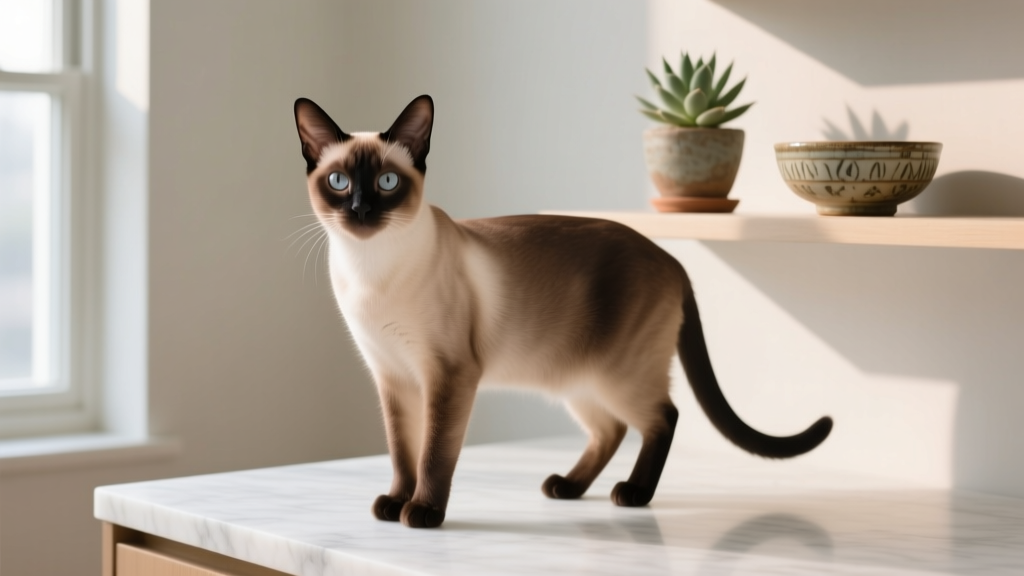
Tonkinese coloring is one of the breed’s biggest calling cards. Their coat is influenced by temperature-sensitive genetics, similar to Siamese and Burmese, but Tonkinese cats commonly display an intermediate shading that looks softly blended.
- Mink: The signature Tonkinese look—soft contrast between body and points, often paired with striking aqua eyes.
- Point: Higher contrast, more Siamese-like, often with blue eyes.
- Solid: Lower contrast, more Burmese-like, often with green to gold-toned eyes.
Common Tonkinese colors include (names can vary by registry and breeder):
- Natural: A warm brown range
- Champagne: A honey-beige tone
- Blue: A cool gray-blue shade
- Platinum: A pale, silvery-gray tone
Distinctive features you’ll notice right away:
- A bright, expressive face that looks like it’s always “in conversation”
- Eyes that can be mesmerizing—aquas and blue-greens are especially prized in mink Tonkinese
- That sleek, compact athletic build that makes them feel heavier than they look
Personality and Temperament Traits
If you’re looking for a cat who treats you like their favorite teammate, the Tonkinese delivers. They’re affectionate, social, and tuned in to their people. Many Tonks follow you from room to room—not necessarily because they’re anxious, but because they genuinely want to be part of the action.
They often inherit:
- The Siamese side: curiosity, vocal communication, quick learning, and a love for interaction
- The Burmese side: warmth, cuddliness, steadiness, and a “people are my hobby” vibe
Typical Tonkinese temperament highlights:
- People-oriented: they thrive on companionship and can get lonely if left alone too much
- Playful and athletic: expect leaps, sprints, and a love of interactive toys
- Smart: many learn tricks, puzzle feeders, and even leash training with patience
- Communicative: they “talk,” often with a slightly softer voice than some Siamese lines
- Confident and friendly: often good with visitors once properly introduced
A Tonkinese cat isn’t usually a decorative pet who keeps to the sidelines. They prefer to be included—on your desk, near your feet, or perched somewhere high to supervise.
Health Considerations and Common Issues
Tonkinese cats are generally robust, but as a breed developed from Siamese and Burmese lines, they can share vulnerabilities seen in their parent breeds. A reputable breeder who health-tests and tracks lines is your best ally.
Health concerns that may be seen in Tonkinese cats include:
- Dental disease (gingivitis/periodontal disease): common in many cats; proactive dental care makes a big difference
- Upper respiratory sensitivity: sometimes seen in more refined lines; good ventilation and low-dust litter can help
- Heart disease (including hypertrophic cardiomyopathy/HCM): present across many breeds; ask breeders about screening and family history
- Hereditary conditions from related lines: responsible breeding aims to reduce risk through careful selection and transparency
Signs that warrant a vet visit include appetite changes, sudden weight loss or gain, persistent bad breath, coughing, labored breathing, reduced activity, or changes in litter box habits.
Typical lifespan: Many Tonkinese cats live into their teens with good care, and some reach the mid-to-late teens.
Care Requirements (Grooming, Exercise, Diet)
Grooming
Tonkinese grooming is refreshingly simple. Their short coat doesn’t mat easily and tends to shed moderately.
- Brushing: once a week (or a quick rubdown with a grooming glove) keeps the coat sleek and reduces loose hair
- Nails: trim every 2–4 weeks, depending on growth
- Ears: check weekly for wax/debris; clean only if needed and as your vet recommends
- Teeth: brushing several times a week (daily if possible) plus dental checkups helps prevent dental issues
Exercise and Enrichment
This is an active, interactive breed. A bored Tonkinese will invent a hobby—often one you didn’t approve. The good news: they’re easy to engage.
- Play sessions: 2–3 short interactive sessions daily (wand toys, fetch-style games, chase toys)
- Climbing: cat trees, window perches, and shelves are Tonkinese-approved
- Puzzle toys: great for mental stimulation and slowing fast eaters
- Training: clicker training and leash training are often surprisingly successful
Diet and Feeding
Tonkinese cats do best on a high-quality, protein-forward diet appropriate for their life stage (kitten, adult, senior). Because they’re energetic and muscular, they need steady nutrition—but they can still gain weight if treats and free-feeding get out of hand.
- Portion control: measured meals help maintain healthy weight
- Wet food benefits: can support hydration (especially helpful for cats who don’t drink much)
- Treat strategy: use treats for training and enrichment rather than constant snacking
- Fresh water: many enjoy fountains
For any diet changes, transition gradually over 7–10 days to avoid stomach upset.
Compatibility with Families, Children, and Other Pets
Tonkinese cats often shine in busy homes because they like company and activity. They tend to bond strongly with their humans and frequently do well with respectful children who want an interactive pet.
- Families: excellent match if the household enjoys an engaged, social cat
- Children: typically good with kids who understand gentle handling and give the cat breaks
- Dogs: often compatible with cat-friendly dogs after thoughtful introductions
- Other cats: many Tonkinese enjoy a feline friend, especially if humans are away during the day
If you work long hours, consider adopting two compatible cats (or ensuring your Tonkinese has daily interactive time and enrichment). This breed can become lonely and may develop attention-seeking behaviors when understimulated.
Pros and Cons of Owning This Breed
| Pros | Cons |
|---|---|
| Affectionate, people-focused companion | Can become lonely or vocal if left alone too much |
| Playful, smart, and trainable | Needs daily interactive play and enrichment |
| Low-maintenance coat with a sleek, glossy look | May get into mischief if bored (they’re creative) |
| Often great with families, kids, and other pets | Some lines may be prone to dental or hereditary issues—choose breeders carefully |
| Beautiful coloring, especially the Tonkinese mink pattern | Not ideal for someone wanting a very independent “hands-off” cat |
FAQ: Tonkinese Cats
Are Tonkinese cats hypoallergenic?
No cat is truly hypoallergenic, and Tonkinese cats are not considered hypoallergenic. Their short coat may shed less than some longhaired breeds, but allergens come mainly from proteins in saliva and skin. If you’re sensitive, spend time with the breed before committing and consider using HEPA filtration and frequent cleaning.
Do Tonkinese cats meow a lot like Siamese?
Many Tonkinese are talkative and communicative. They often “chat” with their humans, but some have a softer voice and a slightly less intense style than certain Siamese lines. Individual personality matters a lot—some are little commentators, others are more quietly expressive.
What is a “mink” Tonkinese?
Mink refers to the Tonkinese coat pattern with gently blended shading—more contrast than a solid Burmese-style coat, less contrast than a Siamese-style point. Mink Tonkinese cats are especially known for their aqua or blue-green eye color.
How much exercise does a Tonkinese cat need?
Plan on at least 20–30 minutes of interactive play daily (often best split into a few sessions), plus climbing options and puzzle toys. Many Tonkinese cats also enjoy learning tricks, which doubles as mental exercise.
Are Tonkinese cats good lap cats?
Often, yes—especially once they’ve had a chance to burn off energy. Many Tonks love cuddling, sleeping near you, and being carried around, though they also like to get up and play. Expect a mix of lap time and action time.
Should I adopt one Tonkinese or two?
If your schedule keeps you away from home for long stretches, two can be a wonderful idea (as long as personalities match). Tonkinese cats are social and frequently enjoy feline companionship, which can reduce boredom and loneliness.
A Warm Signoff
The Tonkinese is the kind of cat who makes a home feel more alive. With their silky coat, glowing colors, and people-loving personality, they’re a standout choice for anyone who wants a truly interactive companion. Give them attention, play, and a cozy spot near your daily routine, and they’ll repay you with loyal company—and plenty of entertaining commentary.
Curious about other affectionate, people-focused breeds or want to compare the Tonkinese to the Siamese and Burmese? Explore more breed profiles on catloversbase.com.