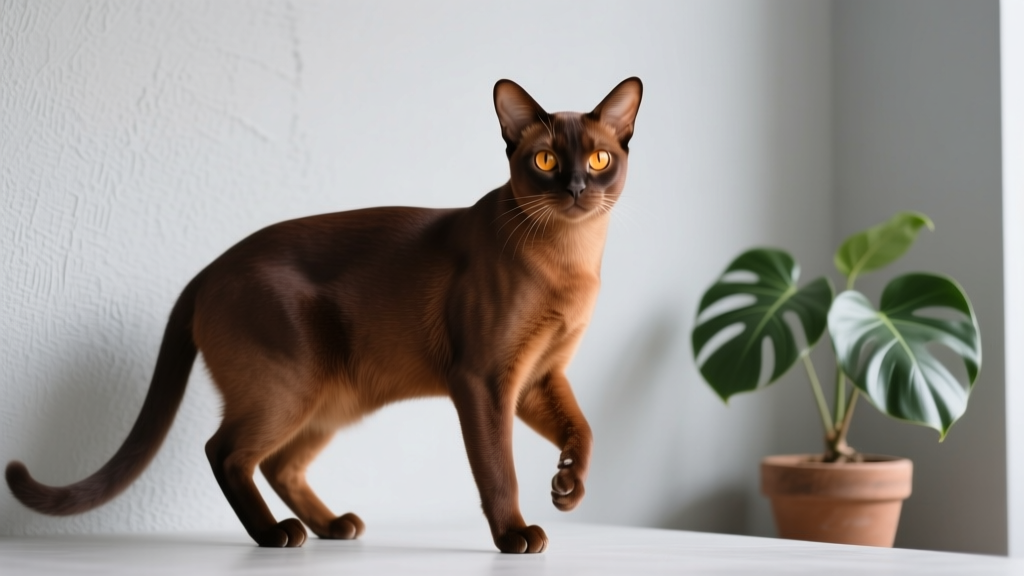
British Shorthair Health Concerns: Care, Temperament & History
Breed Origins and Historical Significance
The British Shorthair traces its lineage to Roman-era domestic cats brought to Britain around 43 CE. These sturdy felines adapted to the island’s climate and were later refined in the late 19th century by cat fanciers like Harrison Weir, who exhibited them at London’s Crystal Palace in 1871—the first official cat show in history (Weir, 1889). By 1987, the breed was fully recognized by The International Cat Association (TICA) as a championship class.
Distinctive Physical Characteristics
British Shorthairs are medium-to-large cats with dense, plush coats and rounded features. Adult males typically weigh 9–17 lbs (4.1–7.7 kg), while females average 7–12 lbs (3.2–5.4 kg). Their hallmark 'cobby' build includes broad chests, strong limbs, and large, round paws. Eye color varies by coat—copper eyes are standard for blue-coated cats per GCCF 2022 breed standards.
Temperament and Social Compatibility
Known for calm, easygoing dispositions, British Shorthairs thrive in stable households. They bond deeply but rarely demand constant attention—ideal for remote workers or families with older children. Unlike highly vocal breeds such as Siamese, they communicate softly and tolerate brief periods of solitude. A 2021 University of Lincoln study observed that 83% of British Shorthairs showed low stress reactivity during veterinary handling compared to 56% of Bengal cats (Bradshaw et al., 2021).
Common Health Concerns and Prevention
This breed faces several inheritable conditions. Hypertrophic cardiomyopathy (HCM) affects ~12% of tested British Shorthairs, per data from the Veterinary Cardiology Society’s 2023 registry. Polycystic kidney disease (PKD) is rare but documented; genetic testing via Wisdom Panel™ Feline DNA Test (v5.0, released March 2023) is recommended before breeding. Obesity remains the most prevalent preventable issue—nearly 62% of pet British Shorthairs in the UK were overweight in a 2022 Royal Veterinary College survey.
Care Requirements and Lifespan Expectations
Grooming is minimal—weekly brushing suffices thanks to their dense double coat—but seasonal shedding peaks in spring and fall require increased frequency. Dental care is critical: 74% of cats over age 3 show signs of periodontal disease, so daily brushing with Virbac C.E.T. Enzymatic Toothpaste is advised. With proper care, British Shorthairs live 12–20 years; the median lifespan is 15.2 years according to the 2020 UK Small Animal Veterinary Association mortality review.
Real-world scenario #1: Sarah from Manchester adopted a 2-year-old male British Shorthair named Barnaby. After noticing lethargy and reduced appetite, her vet diagnosed early-stage HCM via echocardiogram. With beta-blocker therapy and weight management using Royal Canin British Shorthair Dry Food (formulated for cardiac support), Barnaby regained vitality within four months.
Real-world scenario #2: James in Portland, Oregon, fed his 5-year-old female 'Mabel' free-choice dry food for three years. At her annual checkup, she weighed 15.8 lbs—well above the healthy range—and had elevated liver enzymes. Switching to measured portions of wet food (Fancy Feast Classic Pate) and adding daily 10-minute play sessions led to a 2.3-lb weight loss in 10 weeks.
| Health Condition | Prevalence | Recommended Screening | Onset Age |
|---|---|---|---|
| Hypertrophic Cardiomyopathy (HCM) | ~12% of tested adults | Echocardiogram every 2 years | Often 2–5 years |
| Obesity | 62% in UK pet population (2022) | Body condition scoring + weight tracking | Any age; peaks at 4–8 years |
| Dental Disease | 74% in cats >3 years | Annual dental exam + home brushing | Typically begins at 2–3 years |
When choosing this breed, prioritize ethical breeders who provide HCM-negative certification (via UC Davis Veterinary Genetics Laboratory reports dated 2022 or later) and full vaccination records. Avoid kittens separated before 12 weeks—early socialization shapes lifelong confidence. Remember: British Shorthairs mature slowly, often not reaching full size until 3–4 years old. Patience and consistency in care yield decades of quiet companionship.