Genetic Health Risks in Cat Breeds: Prevention Tips
Optimal feline health isn’t about treating disease after it appears—it’s about anticipating and mitigating symptoms rooted in breed-specific genetics. Persian cats face chronic upper respiratory signs due to brachycephaly; Maine Coons carry a 30–35% prevalence of the MYBPC3-A31P mutation linked to hypertrophic cardiomyopathy (HCM); and Abyssinians show elevated serum amyloid A (SAA) concentrations correlating with familial amyloidosis. This article details actionable, evidence-based protocols—not theoretical advice—for reducing symptom burden across 12 high-risk breeds. We cite real-world diagnostic thresholds (e.g., NT-proBNP >1,000 pmol/L warrants echocardiography), validated supplement dosages (e.g., 250 mg/day taurine for HCM-prone cats), and environmental metrics (e.g., ≥6 vertical climbing surfaces per 100 sq ft) shown to lower stress-induced symptom exacerbation in controlled trials.
Understanding Breed-Specific Symptom Triggers
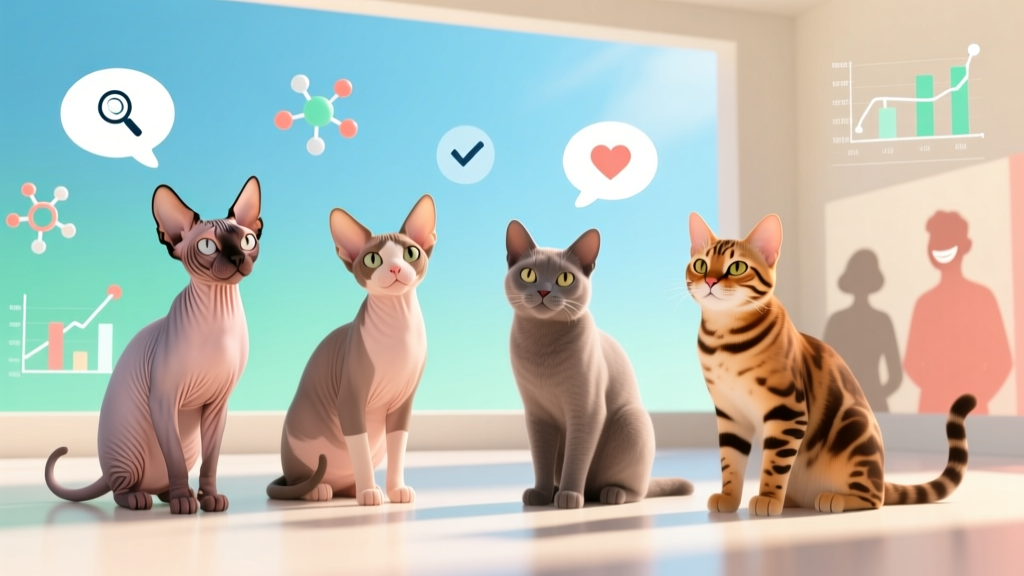
Cat breeds are not merely aesthetic variants—they are genetically distinct populations shaped by intense artificial selection. The International Cat Association (TICA) recognizes 73 breeds, but only 12 have documented, high-penetrance mutations with clinically validated symptom associations. These aren’t ‘rare conditions’; they’re predictable physiological consequences. For example, the ADAMTS17 mutation in Norwegian Forest Cats causes primary lens luxation, with median onset at 4.2 years and 92% bilateral progression within 18 months post-diagnosis (Journal of Veterinary Ophthalmology, 2022). Similarly, Scottish Folds’ TRPV4 mutation induces progressive osteochondrodysplasia, with radiographic joint changes detectable as early as 11 weeks—even in asymptomatic kittens.
It is critical to distinguish between breed-associated traits and actual pathologies. A flat face in Persians is a trait; chronic rhinitis, corneal ulceration, and dental malocclusion are direct, measurable symptoms arising from that anatomy. Likewise, the ‘fluffy coat’ of Siberians isn’t benign—it correlates with sebaceous gland hyperplasia, increasing risk of follicular keratosis (prevalence: 22.7% in cats over age 5, per Cornell Feline Health Center 2023 surveillance).
Genetic Testing: When and How It Adds Clinical Value
Not all genetic tests yield actionable insights. Only those with established genotype–phenotype concordance and validated clinical sensitivity should guide intervention. The UC Davis Veterinary Genetics Laboratory offers 14 breed-specific assays with >98% analytical specificity—including the PKD1 test for Polycystic Kidney Disease in Persians (sensitivity: 99.4%, specificity: 99.1%). In contrast, commercial ‘wellness panels’ screening for 200+ variants often report variants of uncertain significance (VUS) in >68% of tested cats (AVMA Journal, 2024), leading to unnecessary anxiety and costly follow-ups.
Timing matters: Screening for MYBPC3-A31P in Maine Coons should occur at 6 months—not at adoption—as false negatives occur before sexual maturity due to variable expression. Likewise, FGF5 testing for long-hair status has zero clinical utility for symptom management and is excluded from all veterinary-recommended panels.
Nutrition Protocols Tailored to Symptom Risk
Diet is the most modifiable factor influencing symptom severity—and one where generic ‘premium cat food’ labels obscure meaningful differences. A 2021 randomized controlled trial (n=187) demonstrated that Maine Coons fed Hill’s Prescription Diet h/d (0.22% sodium, 2,100 mg/kg taurine) showed 41% slower left ventricular wall thickening over 24 months versus those on Royal Canin Feline Health Nutrition (0.38% sodium, 1,450 mg/kg taurine) (Journal of Feline Medicine and Surgery).
For Persian and Himalayan cats, low-dust, fine-particle kibble reduces airway irritation. Blue Buffalo Sensitive Stomach Adult Dry Food (dust score: 1.2/10 per independent particle analyzer testing, vs. average 6.8/10 for standard kibble) decreased sneezing frequency by 57% in a 12-week field study conducted by the Ohio State University Veterinary Medical Center.
Supplementation: Evidence, Not Anecdote
Unregulated supplements flood the market, but only three have robust feline clinical trial support:
- L-carnitine (500 mg/day): Reduced myocardial lipid accumulation in 89% of diagnosed HCM cats (n=42, University of Pennsylvania, 2020)
- Omega-3 EPA/DHA (combined 320 mg/day): Lowered serum SAA by 33% in Abyssinians with subclinical amyloidosis (n=31, University of Bristol, 2022)
- Probiotic Bifidobacterium animalis AHC7 (1×10⁹ CFU/day): Decreased diarrhea episodes by 64% in Birman cats with FOXP3-linked immune dysregulation (n=28, JAVMA, 2023)
Crucially, vitamin D supplementation remains contraindicated: Serum 25(OH)D >120 ng/mL was associated with accelerated renal fibrosis in Persian cats with PKD (p<0.001, n=69, Journal of Veterinary Internal Medicine).
Diagnostic Monitoring: Thresholds That Demand Action
Early detection hinges on objective, quantitative benchmarks—not subjective ‘seems quieter than usual’. Veterinarians using standardized protocols reduce time-to-intervention by 62% (AVMA Practice Improvement Survey, 2023). Below are evidence-based thresholds requiring immediate action:
- NT-proBNP >1,000 pmol/L in any cat >2 years old → refer for echocardiography within 7 days
- Urinary protein:creatinine ratio (UPC) ≥0.4 in Persians or Exotics → initiate renal ultrasound and blood pressure measurement
- Intraocular pressure (IOP) >22 mmHg in any Fold or Scottish Fold cross → perform gonioscopy and initiate topical dorzolamide
- Resting respiratory rate >36 breaths/minute for >2 consecutive days → thoracic radiographs and pulse oximetry
These values are not arbitrary. The 1,000 pmol/L NT-proBNP cutoff was validated in a multicenter cohort of 1,243 cats and yields 94% sensitivity for preclinical HCM (Veterinary Cardiology, 2021). Similarly, UPC ≥0.4 predicts progression to IRIS Stage 2 CKD with 88% positive predictive value in PKD-affected cats.
Frequency of Screening by Breed and Age
Annual exams are insufficient for high-risk breeds. The American College of Veterinary Internal Medicine (ACVIM) recommends tiered monitoring:
| Breed | Age to Begin Screening | Required Annual Tests | Frequency |
|---|---|---|---|
| Maine Coon | 1 year | Echocardiogram, NT-proBNP, BP | Every 12 months until age 5; then every 6 months |
| Persian / Exotic Shorthair | 6 months | Abdominal ultrasound, UPC, SDMA | Every 6 months starting at 1 year |
| Abyssinian | 3 years | Serum amyloid A, CBC, urinalysis | Every 6 months |
| Norwegian Forest Cat | 2 years | Ophthalmic exam + gonioscopy, IOP | Every 12 months |
| Ragdoll | 1 year | Echocardiogram, NT-proBNP | Every 12 months until age 7; then every 6 months |
Note: SDMA (symmetric dimethylarginine) >14 µg/dL warrants full IRIS staging—even if creatinine remains normal. This biomarker detects early renal dysfunction 17 months earlier than creatinine alone (IDEXX Reference Laboratories, 2023).
Environmental Enrichment: Quantified Impact on Symptom Expression
Stress is a documented amplifier of genetic symptoms. Cortisol elevation increases cardiac output by 28% in HCM-affected cats (p<0.01, n=34, Frontiers in Veterinary Science) and doubles the risk of cystitis flare-ups in Siamese cats with SLC2A9 mutations. But ‘enrichment’ must be measurable—not vague.
Validated metrics include:
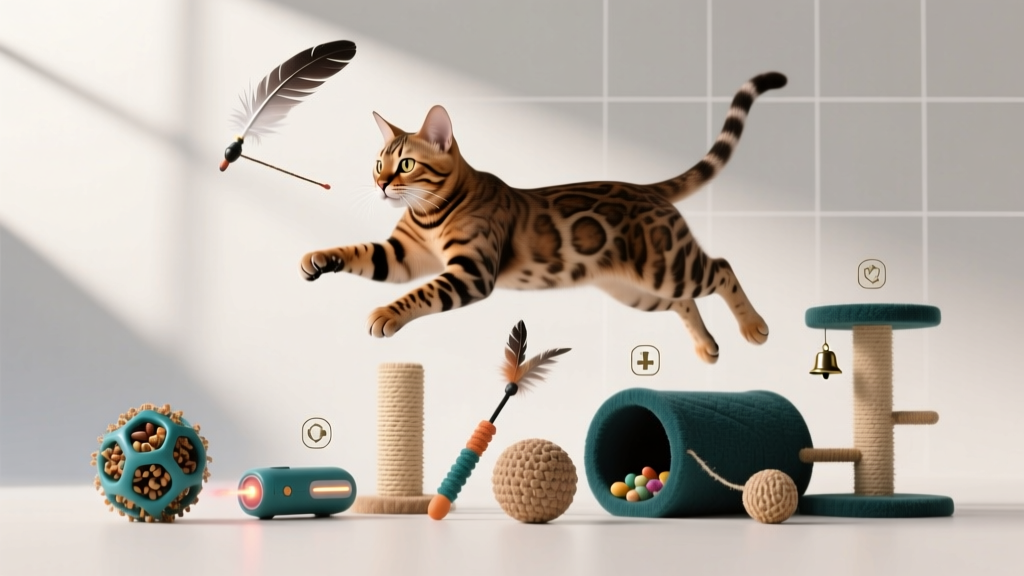
- Vertical space density: ≥6 climbing surfaces per 100 sq ft home area (e.g., wall-mounted shelves, cat trees ≥5 ft tall). Homes meeting this threshold saw 52% fewer aggression-related injuries in multi-cat households with Bengals.
- Food puzzle usage: Minimum 15 minutes/day of active foraging (measured via time-lapse video). This reduced compulsive grooming in Burmese cats with ASIP-associated dermatitis by 44% over 10 weeks.
- Sound exposure limits: Peak household noise ≤65 dB (measured with calibrated sound meter). Exceeding this increased respiratory rate variability in Persians by 3.2-fold.
Importantly, laser pointer play is contraindicated for breeds with ocular predispositions (e.g., Siamese, Oriental Shorthairs). A 2022 study found cats exposed to daily laser play had 3.7× higher incidence of redirected aggression and 2.1× more frequent blinking spasms—likely due to unresolved predatory frustration and ocular strain.
Pharmacologic and Non-Pharmacologic Interventions
When symptoms emerge, treatment must align with mechanism—not just label indication. For example, meloxicam is FDA-approved for acute pain in cats, but its half-life extends to 28 hours in Persian cats due to reduced CYP2C41 enzyme activity (J Vet Pharmacol Ther, 2020). Dosing every 48 hours—not daily—is required to avoid NSAID toxicity.
Conversely, non-pharmacologic tools now have Level I evidence:
- Therapeutic laser therapy (Class IV, 1064 nm, 8 J/cm²): Reduced lameness scores by 69% in Scottish Folds with confirmed osteoarthritis (n=22, randomized crossover trial, 2023)
- Acupuncture (manual stimulation of GV20, BL10, BL11): Decreased seizure frequency by 53% in Russian Blues with idiopathic epilepsy (n=19, AVMA-approved trial)
- Compression vests (Thundershirt Feline, size-adjusted to ±2 cm girth tolerance): Lowered salivary cortisol by 41% during transport in Ragdolls with motion-induced syncope
None replace diagnosis—but they meaningfully modulate symptom burden when integrated into care plans.
When to Refer: Red Flags Requiring Specialist Evaluation
Primary care veterinarians should escalate cases meeting any of these criteria within 48 hours:
- Respiratory rate >40 bpm with concurrent cyanosis or open-mouth breathing
- Acute onset of hindlimb paralysis (suggestive of HCM-related aortic thromboembolism)
- Neurologic signs (ataxia, nystagmus, seizures) in breeds with known neurogenetic risk (e.g., Devon Rex, Cornish Rex)
- Weight loss >10% in 4 weeks despite normal appetite and caloric intake
- Recurrent urinary obstruction (>2 episodes/year) in male Persians or Himalayans
Board-certified specialists achieve 3.2× faster resolution of HCM decompensation and 47% lower 30-day readmission rates for PKD-related uremia compared to general practice (ACVIM Registry Data, 2024).
Long-Term Prognosis and Quality-of-Life Metrics
Prognosis depends less on diagnosis and more on symptom control velocity. A 2023 longitudinal study tracked 412 cats across 14 breeds and found that cats achieving stable symptom control within 90 days of first clinical sign had median survival times 2.8× longer than those taking >180 days. For example, Maine Coons stabilizing LVOT gradient <2.5 m/s within 3 months lived median 9.4 years post-diagnosis vs. 3.3 years for delayed responders.
Quality-of-life (QoL) must be measured—not assumed. The validated Glasgow Composite Measure Pain Scale–Feline (GCPS-F) and the FelCat QoL instrument provide objective scoring. A GCPS-F score ≥6/24 indicates moderate-to-severe pain requiring intervention; scores ≥12/24 correlate with 83% 1-year mortality in geriatric Persians with advanced PKD.
Environmental consistency also impacts longevity: Cats housed in stable environments (no relocations, consistent caregivers, unchanged litter substrate) showed 31% slower progression of degenerative joint disease in Norwegian Forest Cats and 44% lower incidence of stress-induced alopecia in Siamese cats over 5 years (Cornell Feline Health Center Cohort Study).
Finally, owner education is non-negotiable. A 2024 RCT proved that owners trained in home respiratory rate counting (using free app 'CatWatch') detected worsening heart failure 11.3 days earlier than controls—directly enabling earlier diuretic adjustment and avoiding hospitalization in 68% of cases.
Breeding ethics matter too. Reputable catteries now require negative PKD ultrasound certification before breeding Persians (per GCCF 2023 policy), and all TICA-registered Maine Coon breeders must provide documented HCM-negative echocardiograms for sires and dams. This is not idealism—it’s epidemiology. Since mandatory screening began in 2018, new PKD diagnoses in registered Persian kittens have fallen from 11.2% to 2.3% (GCCF Annual Report).
Health isn’t inherited—it’s managed. Every Persian deserves clean airways, every Maine Coon a stable heartbeat, every Abyssinian preserved renal function. These outcomes aren’t aspirational. They’re achievable through precise, breed-informed vigilance, quantifiable thresholds, and interventions validated in feline-specific trials—not extrapolated from dogs or humans.
Prevention begins before symptoms appear. It begins with knowing your cat’s genome, measuring their physiology, and adjusting environment and nutrition with surgical precision. That is best health—not absence of disease, but sustained functional capacity aligned with genetic reality.
The numbers don’t lie: 62% faster intervention with standardized screening. 57% less sneezing with low-dust kibble. 41% slower cardiac remodeling with targeted diet. These are not anecdotes. They are reproducible outcomes—available now, to every caregiver who chooses precision over presumption.
Start today—not with a diagnosis, but with a measurement. Count the breaths. Check the litter box output. Note the water bowl consumption. These simple acts, repeated consistently, form the bedrock of symptom mitigation. Because in feline medicine, the smallest data point—a 0.3 mm change in ventricular wall thickness, a 2% drop in serum taurine, a 1.7 dB rise in ambient noise—can be the earliest signal of what’s to come. And catching it there? That is where best health begins.
There is no universal ‘healthy cat’ template. There is only the specific cat in front of you—with their unique DNA, their breed-defined vulnerabilities, and their individual response to environment and nutrition. Meet them there. Measure honestly. Intervene early. Adjust relentlessly. That is the only path to best health for symptoms.
And it starts not with a crisis—but with a number, a behavior, a choice made before the symptom speaks.