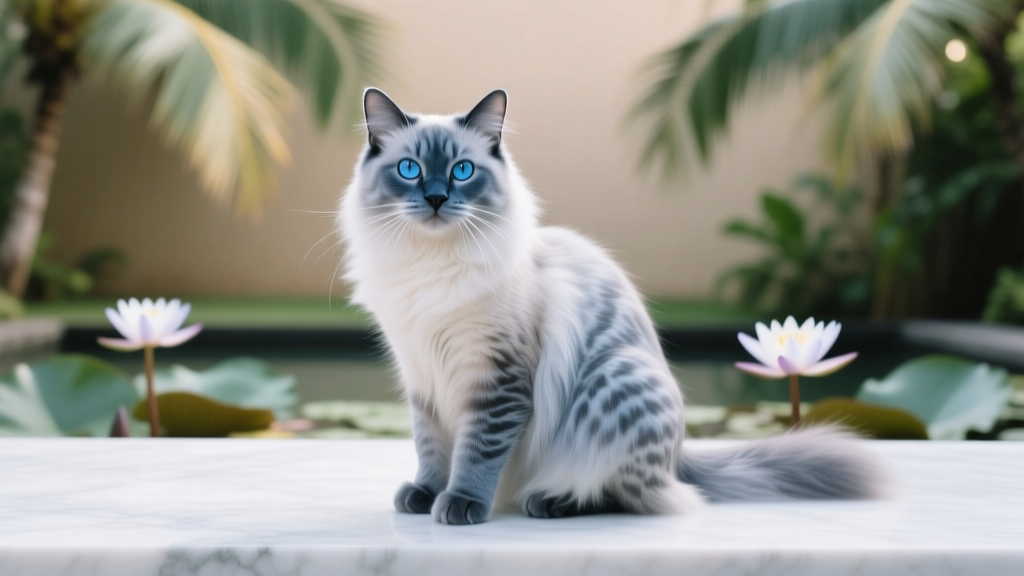
Balinese Cat: Long-Haired Siamese Relative
If you love the sleek elegance and chatty charm of the Siamese but crave a softer, flowing coat, the Balinese cat might feel like the breed you’ve been waiting for. Often described as the long-haired Siamese relative, the Balinese brings the same bright mind, people-first devotion, and striking colorpoint beauty—wrapped in a silky, feathered coat that moves like it was made for spotlight moments.
Balinese cats don’t do “background character.” They want to be where you are, involved in what you’re doing, and consulted on every major decision (like opening a cabinet, moving a chair, or choosing a blanket). For cat enthusiasts and potential cat owners who enjoy an interactive, affectionate companion, the Balinese is a true heart-stealer.
This breed profile covers Balinese cat history, temperament, coat and colors, health, grooming, and everyday care—plus a practical pros-and-cons list and an FAQ to help you decide if this long-haired Siamese-type cat fits your home.
Breed History and Origin
The Balinese cat’s story begins with the Siamese. In the early-to-mid 1900s, Siamese litters occasionally produced kittens with longer coats due to a recessive gene. Rather than being viewed as “wrong,” these long-haired kittens caught the attention of breeders who saw something special: the same refined body type and vivid point coloring, with a coat that looked elegant and plush without being heavy.
Breeding programs in the United States helped establish the Balinese as a distinct breed. The name “Balinese” wasn’t chosen because the cats came from Bali; it was inspired by the grace of Balinese dancers—an artistic nod to the breed’s flowing movement and refined silhouette.
Today, the Balinese is recognized by major cat associations and is closely tied to the Siamese family. Many registries consider the Balinese essentially a long-haired version of the Siamese, sharing the same general standard aside from coat length and feathering.
Physical Characteristics
The Balinese cat is all about refined lines: a long, slender body; long legs; a wedge-shaped head; and large, expressive ears. Add a plume-like tail and silky coat, and you get a cat that looks like it’s always gliding—even when it’s racing down the hallway at top speed.
| Trait | What to Expect |
|---|---|
| Size | Medium (long and fine-boned, often looks larger due to length) |
| Weight | Typically 5–10 lb (females often smaller; males may be sturdier) |
| Body Type | Svelte, athletic, long torso and legs |
| Coat Length/Texture | Medium-long, fine and silky; lies close to the body; minimal undercoat |
| Tail | Long with a noticeable plume (“feathered” look) |
| Eyes | Almond-shaped, vivid blue |
Coat and Colors
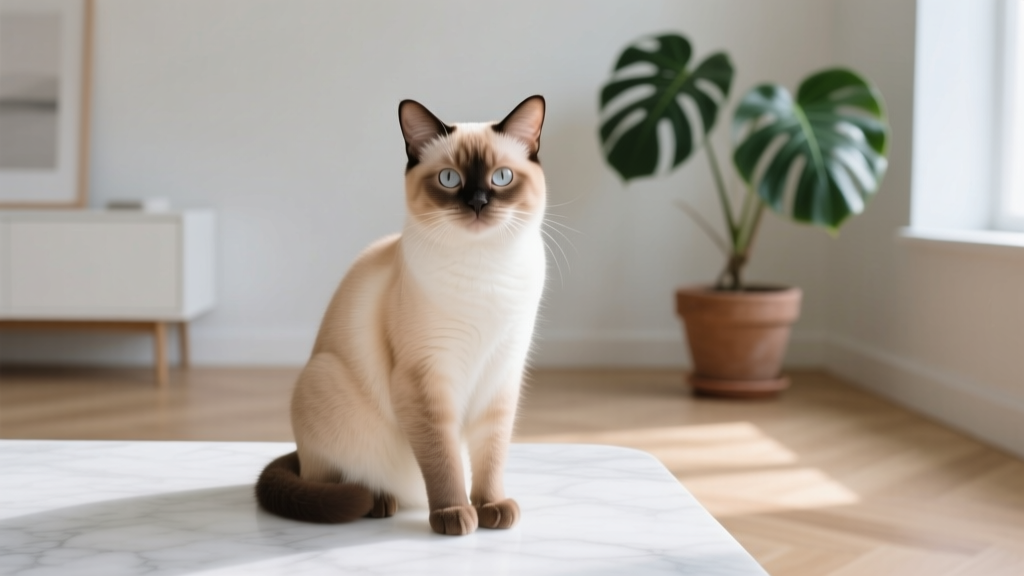
Balinese cats are famous for their colorpoint pattern: a lighter body with darker “points” on the face mask, ears, legs, and tail. Kittens are usually born pale and develop deeper points as they grow. The coat is typically not as thick as many long-haired breeds, which helps keep grooming manageable and reduces matting.
Classic Balinese colors commonly include:
- Seal point (deep brown points)
- Chocolate point (warmer, lighter brown points)
- Blue point (slate-gray points)
- Lilac point (pale gray with a pinkish cast)
Some registries also recognize additional point colors and patterns under related breed groupings (such as “Javanese” in certain associations), including red/flame, cream, tortie point, and lynx point. If you’re researching a specific color, check how your local cat association defines Balinese versus closely related categories.
Distinctive Features
- Graceful wedge head with large ears that continue the triangle shape
- Bright blue eyes that give an alert, intelligent expression
- Plumed tail that looks like a soft feather duster in motion
- Silky coat with little to no thick undercoat—less “puffy,” more “flowing”
Personality and Temperament Traits
The Balinese cat temperament is one of the biggest reasons people fall hard for this breed. Think: affectionate, people-focused, highly intelligent, playful, and—yes—talkative. If you want a cat who greets you at the door, follows you from room to room, and “chats” about their day, you’re in the right neighborhood.
Common Balinese personality traits include:
- Social and bonding: Many Balinese choose a favorite person, but they’re typically friendly with the whole household.
- Very communicative: Expect a cat with opinions. Their voice may be softer than some Siamese, but they’re still enthusiastic conversationalists.
- Smart and curious: Puzzle feeders, clicker training, and new toys are usually big hits.
- Playful and agile: They love climbing, jumping, and supervised interactive play.
- Sensitive: They often do best in homes where they get plenty of attention and routine.
Balinese cats can become lonely or bored if left without companionship or stimulation for long stretches. Many owners find that a second cat (or a friendly dog) helps—assuming introductions are done thoughtfully.
Health Considerations and Common Issues
Balinese cats are generally healthy and can be long-lived, with many reaching their mid-to-late teens (and sometimes beyond) when well cared for. Like all pedigreed cats, they may have predispositions worth knowing—especially because they share ancestry with Siamese-type breeds.
Potential health considerations seen in Siamese/Balinese lines can include:
- Dental disease (gingivitis/periodontal issues): regular dental care and professional cleanings may be needed.
- Hypertrophic cardiomyopathy (HCM): a heart condition found in many breeds; reputable breeders often screen lines.
- Progressive retinal atrophy (PRA) in some lines: can affect vision; ask breeders about genetic testing.
- Amyloidosis (liver-related in some Siamese-family lines): not universal, but worth discussing with breeders.
- Respiratory sensitivity: not all Balinese are affected, but overly “extreme” head types in some lines can be associated with issues.
When choosing a Balinese kitten or adult, a responsible breeder or rescue should be open about health history and veterinary care. For extra peace of mind, schedule a new-pet vet visit shortly after adoption and discuss any breed-specific screening your veterinarian recommends.
Care Requirements
Grooming
Good news for fans of long-haired cats: Balinese grooming is usually easier than you’d expect. Their coat is fine, silky, and typically lacks a heavy undercoat, so mats are less common than in many fluffier breeds.
- Brushing: 1–2 times per week is often plenty; increase during seasonal shedding.
- Focus areas: behind the ears, under the collar area, and the feathering on the tail.
- Nails: trim every 2–4 weeks, depending on growth and scratching habits.
- Dental care: brush teeth regularly if possible; dental treats are helpful but not a replacement for brushing.
- Ear and eye care: check weekly; wipe gently if needed (ask your vet for safe products).
Exercise and Enrichment
Balinese cats are athletes in elegant packaging. They thrive with daily play and environments that encourage climbing and exploration.
- Interactive play: wand toys, fetch-style games, and chase toys for 10–20 minutes once or twice a day.
- Vertical territory: cat trees, wall shelves, and window perches.
- Brain work: puzzle feeders, treat balls, and clicker training.
- Safe outdoor time: many Balinese enjoy harness training or a secure catio.
Diet
A Balinese cat’s diet should support lean muscle and steady energy. Choose a complete and balanced food (wet, dry, or a combination) that matches your cat’s life stage.
- Protein-forward nutrition helps maintain their athletic build.
- Portion control matters—some Balinese stay naturally slim, but any cat can gain weight with free-feeding.
- Hydration support: wet food and water fountains can be great for cats who don’t drink much.
- Slow feeding tools help clever Balinese who inhale meals like it’s a competitive sport.
Your veterinarian can help you tailor calories and feeding schedules, especially for kittens, seniors, or cats with dental or digestive sensitivities.
Compatibility with Families, Children, and Other Pets
The Balinese cat tends to be an affectionate, family-friendly breed—especially in households that enjoy an interactive pet. They often do well with respectful children who understand gentle handling and play appropriate games (think wand toys rather than chasing or grabbing).
With other pets, the Balinese is usually social, but introductions matter:
- Other cats: many Balinese enjoy a feline buddy, particularly another playful, confident cat.
- Dogs: can be a great match with calm or friendly dogs who respect boundaries.
- Small animals: as with most cats, prey drive may be present; keep birds and small mammals securely housed and never allow unsupervised contact.
If your home is quiet and you’re away frequently, a Balinese may feel understimulated. They typically shine in homes where someone is around often, works from home, or where they have a compatible animal companion.
Pros and Cons of Owning a Balinese Cat
| Pros | Cons |
|---|---|
| Deeply affectionate and people-oriented | Can become lonely or vocal if under-stimulated |
| Highly intelligent; often trainable | Needs daily play and enrichment (boredom = mischief) |
| Silky semi-long coat with relatively easy grooming | Not ideal for someone wanting a very independent cat |
| Striking blue eyes and elegant colorpoint coat | Potential breed-related health risks; choose breeders carefully |
| Often social with kids and other pets when introduced well | Can be “helpful” in the kitchen and on counters |
FAQ: Balinese Cats
Are Balinese cats hypoallergenic?
No cat is truly hypoallergenic, but Balinese are sometimes described as a better choice for some allergy sufferers because they often produce less of the Fel d 1 allergen than many breeds. That said, reactions vary a lot. If allergies are a concern, spend time with adult Balinese cats before committing.
Do Balinese cats shed a lot?
They do shed, but many owners find it manageable. The Balinese coat is fine and usually has minimal undercoat, which often means less heavy shedding than thicker double-coated breeds. Weekly brushing helps keep loose hair under control.
How vocal are Balinese cats compared to Siamese?
Many Balinese are talkative like Siamese, though some people find their voice a bit softer. Expect plenty of communication—greetings, commentary, reminders about dinner, and updates on household activity.
How big do Balinese cats get?
Most Balinese are medium-sized and typically weigh around 5–10 pounds. They look larger than the scale suggests because they’re long-bodied and long-legged.
Do Balinese cats like to be held?
Many do enjoy cuddling and being close, but preferences vary by individual. A typical Balinese loves lap time and shoulder rides once trust is built—just be sure handling is gentle and never forced.
Are Balinese cats good for first-time cat owners?
They can be, especially for people who want an interactive companion and have time for play and attention. If you’re hoping for a low-maintenance, independent cat, a Balinese may feel like more “cat” than you bargained for—in the most loving way.
Balinese Cat: A Silky-Coated Shadow with a Big Personality
The Balinese cat combines the glamour of a flowing coat with the heart of a devoted companion. You get the signature colorpoint beauty and blue-eyed intensity of the Siamese family, plus a plush tail plume and soft feathering that turns every leap into a little performance. For cat lovers who want a smart, affectionate, communicative friend, the Balinese is a breed that truly bonds—and keeps life entertaining.
Want to compare the Balinese to other affectionate, people-focused breeds or explore more colorpoint cats? Browse more breed profiles on catloversbase.com and find the cat that fits your life (and your lap) perfectly.