Hawk Cat: Sharp-Eyed Hunter Breed Type
Some cats seem to notice everything—the flick of a curtain, the tiniest bug skittering under the fridge, a bird landing two houses away. That’s the vibe cat lovers mean when they talk about a “Hawk Cat”: a sharp-eyed, alert, athletic hunter type with laser focus and a brain that never really clocks out.
Before we go further, a quick clarification for breed researchers and potential adopters: “Hawk Cat” is not a single, officially standardized pedigree recognized by major registries (like CFA, TICA, or GCCF). It’s a breed type—a descriptive label often used by owners, rescuers, and enthusiasts for cats that share a consistent set of traits: keen vision and attention, strong prey drive, sleek athletic build, high intelligence, and a confident, watchful presence.
If you’re drawn to cats that act like tiny raptors—perching high, scanning the room, and pouncing with precision—this guide will help you understand what to expect from a Hawk Cat, what they need to thrive, and which recognized breeds and mixes most commonly fit the “sharp-eyed hunter” profile.
Breed History and Origin
Because the Hawk Cat is a type rather than a formal breed, there isn’t one founding cattery or single origin story. Instead, the Hawk Cat profile shows up again and again across regions and bloodlines, especially where cats were valued for their working abilities—keeping barns, homes, and ships free of rodents.
Historically, humans have selected (intentionally or not) for traits that make a great hunter:
- Excellent visual tracking and fast reaction time
- Muscular, agile bodies built for sprinting and climbing
- Curiosity and problem-solving (to outsmart prey)
- Confidence in new environments
Over time, these traits became common in certain breed lines and landrace populations. Today, you’ll most often see the Hawk Cat look and behavior in:
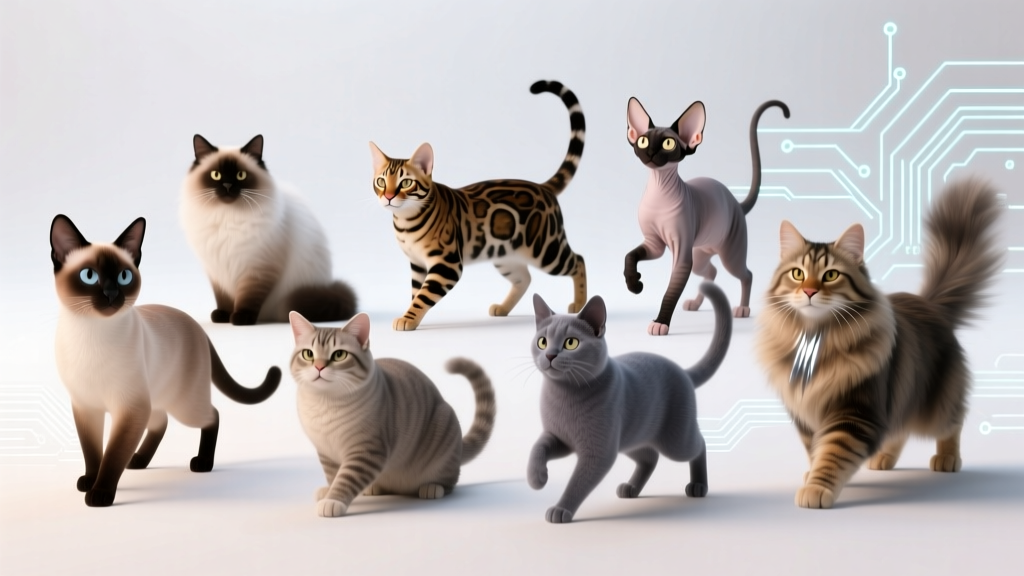
- Abyssinian-type cats and mixes (busy, athletic, observant)
- Oriental Shorthair/Siamese-type lines (smart, intense, engaged)
- Bengal-type cats and mixes (high drive, athleticism, visual fixation)
- Domestic Shorthairs with strong working-cat ancestry (barn cat lines)
In shelters and rescues, “Hawk Cat” may also be used informally for cats that perch high, stare with remarkable intensity, and show an obvious desire to stalk, chase, and “hunt” toys with precision.
Physical Characteristics
Hawk Cats tend to look like they’re built for action: streamlined bodies, powerful hindquarters, and heads that seem perpetually “on task.” While individuals vary (especially mixes), there are some common physical themes.
| Trait | Typical Hawk Cat Range |
|---|---|
| Size | Medium to medium-large |
| Weight | 7–12 lb (3.2–5.4 kg), occasionally 13–15 lb in larger lines |
| Build | Lean, athletic, high muscle definition; long legs common |
| Coat length | Most often short; sleek and close-lying |
| Common coat patterns | Ticked tabby, mackerel tabby, spotted, solid, and classic tabby; “wild-type” looks frequent |
| Eye shape | Large, bright, and expressive; wide-set and “watchful” |
| Distinctive features | High perching behavior, intense gaze, quick head turns, strong pounce mechanics |
Coat and Colors
Hawk Cats can come in many colors because the “type” is behavior-and-body driven more than color-driven. That said, certain looks are especially common in hunter lines:
- Brown ticked tabby (Abyssinian-like “agouti” ticking)
- Spotted tabby (Bengal-inspired vibe, though many domestics have spots too)
- Mackerel tabby (classic working-cat pattern)
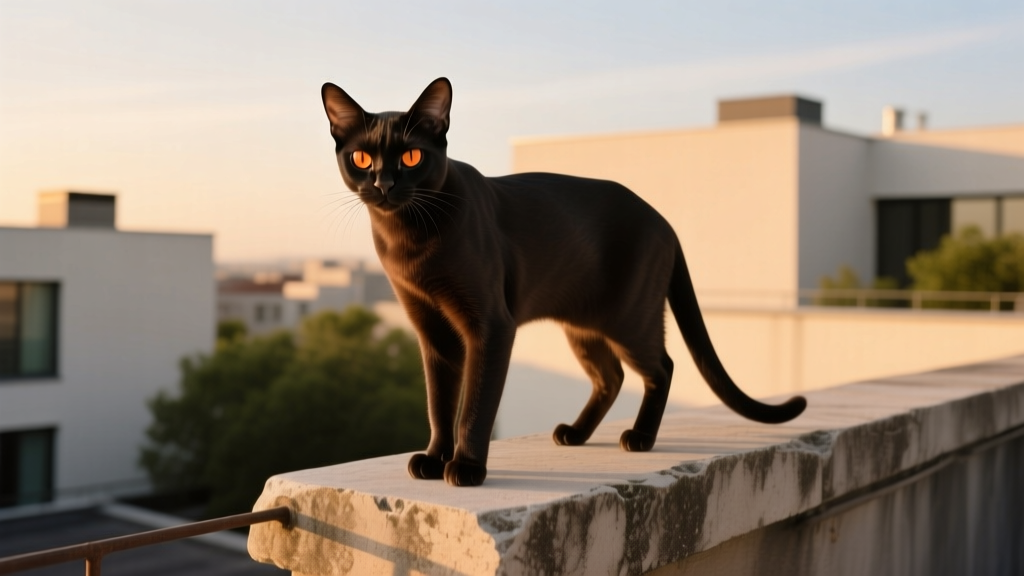
- Solid black (sleek, stealthy silhouette)
- Ruddy, cinnamon, blue, and fawn in some lines
The overall impression is “sleek predator”: a cat that looks like it could sprint, pivot, and leap at a moment’s notice.
Personality and Temperament Traits
If you’re looking for a cat who’s content to snooze all day and politely observe life from the couch, a Hawk Cat may surprise you. These cats tend to be interactive, curious, and highly engaged with their environment.
Common Hawk Cat temperament traits include:
- Sharp focus: they lock onto movement and track it with impressive intensity
- Play-driven: play isn’t optional—it’s a daily need
- Problem-solving smarts: puzzle feeders, latches, and “how do I get up there?” are their specialty
- Confident explorer: they patrol, perch, and investigate new sounds
- Strong prey drive: wand toys, chase games, and hunting-style play bring out their best
- People bonds: many become loyal “shadow cats,” following their favorite human from room to room
Because they’re so alert, Hawk Cats can be sensitive to boredom. When under-stimulated, they may invent their own entertainment—like rearranging your countertop items at 2 a.m. or ambushing ankles (playfully, but still).
Health Considerations and Common Issues
Since Hawk Cat is a breed type that includes mixed ancestry, overall health can be quite robust—especially in well-bred or well-selected lines. Still, the breeds most associated with this sharp-eyed hunter style can share a few common concerns.
Potential health considerations to watch for:
- Dental disease: active cats still need routine dental care; tartar and gingivitis are common in many cats
- Obesity risk (yes, even athletes): if indoor life doesn’t match their energy needs, weight can creep up
- Stress-related behaviors: understimulation can lead to over-grooming, midnight zoomies, or attention-seeking mischief
- Breed-linked issues (depending on ancestry):
- Abyssinian-type lines: may have higher risk for progressive retinal atrophy (PRA) and pyruvate kinase (PK) deficiency in some pedigrees
- Bengal-type lines: can have risk for hypertrophic cardiomyopathy (HCM) in some breeding populations
- Oriental/Siamese-type lines: sometimes associated with dental crowding and respiratory sensitivity
If you’re adopting a Hawk Cat from a shelter, ask about any known background and request a baseline vet exam. If you’re buying from a breeder (for a related recognized breed), look for health testing appropriate to that breed line, plus a transparent, cat-first approach.
Care Requirements (Grooming, Exercise, Diet)
Grooming
Most Hawk Cats have short coats that are easy to maintain, but their active lifestyle can mean they’re constantly on the move—and sometimes into dusty corners.
- Brushing: 1–2 times per week (more during seasonal shedding)
- Nail trims: every 2–4 weeks (they climb; nails can get sharp fast)
- Dental care: brushing several times per week if possible; dental treats alone aren’t enough
- Ear checks: weekly quick look; clean only if needed and vet-approved
Exercise and Enrichment
This is where Hawk Cats truly shine—and where many homes fall short. They don’t just want to play; they want to hunt.
Aim for a daily routine that includes:
- Two play sessions of 10–20 minutes each (wand toys are gold)
- Vertical territory: tall cat trees, wall shelves, window perches
- “Stalk and pounce” setups: tunnels, boxes, and hiding spots
- Puzzle feeders and treat hunts to satisfy their foraging brain
- Rotating toys: keep a few out and swap weekly to prevent boredom
If your Hawk Cat is harness-trained and enjoys it, supervised outdoor walks can be a wonderful outlet. Bird-watching from a secure catio is another perfect match for their sharp-eyed personality.
Diet
Hawk Cat types do best on a high-quality, protein-forward diet that supports lean muscle. Exact needs vary by age and activity level, but these guidelines help:
- Prioritize animal protein as the main ingredient
- Use wet food daily for hydration support (especially for cats that don’t drink much)
- Measure portions—athletic cats can still overeat if food is always available
- Use treats strategically for training and puzzle play
For fast, high-drive cats, feeding part of their daily calories through puzzle feeders can reduce “snack begging” while keeping their brain satisfied.
Compatibility with Families, Children, and Other Pets
Hawk Cats can be fantastic family companions—especially for households that enjoy an interactive, playful cat. They typically do best with people who appreciate a cat that’s “in the action,” not just nearby.
- With children: Often a great match for respectful kids who like to play. Teach kids to use wand toys instead of hands to avoid accidental nips during high excitement.
- With dogs: Many do well with calm, cat-savvy dogs. Slow introductions and safe vertical escape routes are essential.
- With other cats: Frequently compatible, especially with another active cat. A bored Hawk Cat may pester a mellow senior cat, so match energy levels when possible.
- With small pets: Caution. Their prey drive can be intense around birds, rodents, or fish. Secure enclosures and strict supervision are non-negotiable.
If you want a peaceful, low-motion household, you can still live happily with a Hawk Cat—but you’ll need to provide structured play and plenty of climbing options so their instincts have a safe outlet.
Pros and Cons of Owning a Hawk Cat
| Pros | Cons |
|---|---|
| Highly intelligent and engaging companion | Can become bored and mischievous without daily enrichment |
| Athletic, playful, and fun to train | Strong prey drive may not suit homes with small pets |
| Often affectionate with “their person” | May demand attention and interaction on their schedule |
| Usually easy grooming (short coat common) | Needs vertical space; may climb curtains if not provided alternatives |
| Great for active households and enrichment lovers | Not always the best match for people wanting a very quiet, sedentary cat |
FAQ: Hawk Cat Breed Type
Is the Hawk Cat an official cat breed?
No. “Hawk Cat” is a descriptive breed type, not a recognized pedigree. People use it to describe cats with sharp-eyed, hunter-like behavior and athletic traits. Your cat may resemble recognized breeds like Abyssinian, Bengal, or Oriental types, but the label itself is informal.
Do Hawk Cats make good indoor cats?
Yes—if their environment meets their needs. They thrive indoors when given climbing space, daily hunting-style play, and puzzle enrichment. Without that, they’re more likely to act out from boredom.
Are Hawk Cats affectionate or more independent?
Many are both: confident and self-directed, yet deeply bonded to their favorite humans. Affection often shows up as following you around, supervising your tasks, and asking for interactive play rather than constant lap time.
How much exercise does a Hawk Cat need?
Plan on at least 20–40 minutes of interactive play per day, split into sessions, plus free access to climbing structures and enrichment toys. Think “daily hunt,” not just casual batting at a ball.
Can Hawk Cats live with other cats?
Often yes, especially with another active cat that enjoys play. If paired with a shy or senior cat, introductions should be slow and you’ll want multiple resources (litter boxes, feeding spots, vertical space) to prevent stress.
What’s the best way to mentally stimulate a Hawk Cat?
Puzzle feeders, clicker training, treat scavenger hunts, and rotating wand-toy “prey” games work wonderfully. These cats love a challenge—and they love “winning” it.
Final Thoughts
A Hawk Cat brings a special kind of magic to a home: the thrilling, bright-eyed presence of a little hunter who’s always observing, always learning, always ready to play. If you love an athletic, clever cat who makes everyday life feel more lively (and who will absolutely keep you on your toes), this sharp-eyed hunter type can be a deeply rewarding companion.
Wishing you many happy pounces, perfect perches, and cozy post-hunt naps with your feline sidekick. If you’re curious about related hunter-leaning breeds and lookalikes, explore more breed profiles on catloversbase.com.