Why Cats Sit on Your Lap During Video Calls
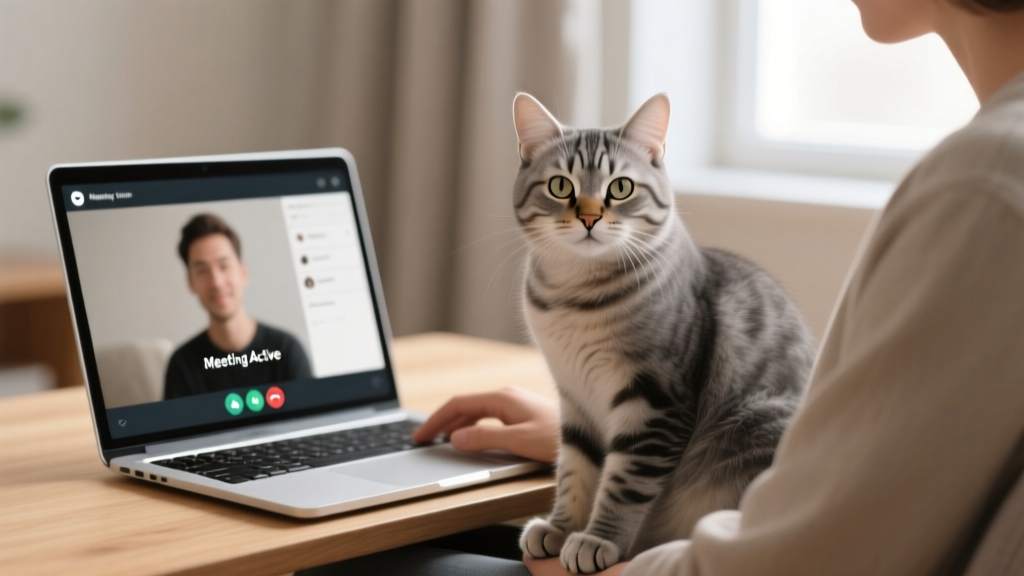
You’ve got your camera angled just right. You’re mid-sentence, sounding competent and calm, and then—thump—your cat hops onto your lap like they’ve been scheduled on the agenda. Their tail swishes across your keyboard, their whiskers drift into frame, and you can practically hear your coworkers thinking, “Aw,” while you think, “Why now?”
If this feels oddly consistent—like your cat has a sixth sense for meetings—you’re not imagining it. Cats are brilliant at noticing patterns, drawn to warmth and attention, and surprisingly tuned in to the way video calls change you. Sitting on your lap during a call is usually a normal, very cat-like behavior… and it often says more about their comfort (and your habits) than it does about “needing to be the center of attention.”
1) The scientific and evolutionary “why” behind the lap takeover
Cats are small predators, but they’re also prey animals to larger creatures in the wild. That combination shaped a brain that constantly evaluates: Where is the safest spot? What’s warm? What’s predictable? Where is my social group? Your lap during a video call checks a surprising number of boxes.
- Warmth and energy efficiency: Cats conserve energy whenever possible. Your body heat, plus the fact that you’re sitting still for longer than usual, makes your lap a premium heating pad.
- Security through elevation and anchoring: Being on you can feel like a stable “base.” From a cat’s perspective, your lap is both a lookout point and a safe platform that reduces vulnerability.
- Social bonding: Domestic cats may have independent reputations, but many are deeply social with their chosen humans. Sitting on you can be a form of affiliative contact—like feline “we’re together” behavior.
- Pattern learning: Cats are masters of routine. If “human sits down + stares at glowing rectangle + uses a particular voice” predicts long stretches of stillness, your cat will learn that video calls equal prime lap time.
- Attention economics: During calls, your attention is divided—yet your body is stationary. For some cats, that’s the perfect moment to request contact: you’re not walking away, and your hands may be available for automatic petting.
In short: video calls create an environment that screams “excellent nap spot” and “ideal bonding opportunity” in cat language.
2) A detailed breakdown: different contexts, different motives
Not every lap visit means the same thing. The “why” often depends on what your cat does before they climb up, how they settle, and what else is happening in the home.
When your cat arrives the moment you click “Join meeting”
This is classic pattern recognition. Your cat has learned that you become a statue right after that sound, that posture, or the way you adjust your headset. Many cats also respond to the slight ritual: you sit in the same chair, in the same spot, often at the same time of day.
What it tends to mean: “Ah, my favorite warm perch is about to be available for 30–60 minutes.”
When your cat only does it during important calls
It can feel personal, but it’s often about your body language. People behave differently during calls: shoulders tense, voice changes, breathing shifts, eye contact stays fixed on a screen, and you may stop casually interacting with your cat. Your cat notices.
What it tends to mean: “You sound different. I’m checking in,” or “You’re focused elsewhere; I’m re-connecting.”
When your cat parks directly on your keyboard or in front of the camera
From your cat’s view, the keyboard and laptop are warm, elevated, and smell like your hands. Also, objects that command your attention can become “social magnets.” Cats don’t always understand that you’re talking to people through a screen—but they understand you’re invested in it.
What it tends to mean: “This object is important. I will sit on it to share in the importance,” or “If it holds your attention, it should hold mine, too.”
When your cat kneads, drools, purrs, and melts into you
This is the cozy version: comfort behavior layered on comfort behavior. Kneading is often a leftover kitten behavior associated with nursing and relaxation. Purring can signal contentment, but it can also be self-soothing.
What it tends to mean: “I feel safe. I’m settling in. Don’t move your legs, ever.”
When your cat is restless, shifts constantly, or swats at your hands
Sometimes lap time is a request for interaction rather than cuddling. A cat who can’t settle may be under-stimulated or a little anxious. They might also be frustrated that your hands are typing instead of petting.
What it tends to mean: “I want engagement,” or “I’m conflicted: I want closeness, but I’m on edge.”
When your cat only does this during noisy calls
Voices from your computer can sound like intruders in your cat’s territory. Some cats respond by approaching you for reassurance, positioning themselves between you and the “sound source,” or monitoring.
What it tends to mean: “I’m keeping tabs on the weird voices,” or “Are we safe?”
3) What it says about your cat’s mood and feelings
Your cat’s body language will tell you whether this is pure affection, strategic comfort-seeking, or mild stress management.
- Relaxed and happy: Soft eyes (slow blinks), loose body, paws tucked, steady purr, tail resting or gently curled around them.
- Affectionate and bonded: Head-butting, cheek rubbing (scent marking), kneading, choosing your lap even when other warm spots exist.
- Seeking safety: Crouched posture, ears slightly to the side, scanning the room, gripping with claws a bit more than usual, staying close to your torso.
- Overstimulated or conflicted: Tail flicking, tense muscles, ears rotating back, sudden nips when you pet too long, frequent repositioning.
Most of the time, lap-sitting during calls is a vote of confidence. Your cat is essentially saying: “You are my safe place, and this is my routine now.”
4) Related behaviors you might also notice
If your cat is a serial video-call crasher, you may also see:
- Headphone investigation: Sniffing, rubbing, or batting at wires and earbuds—interesting textures plus your scent.
- Keyboard loafing: The laptop is warm and central, so it becomes a cat landing pad.
- Screen-watching: Some cats track movement on screen, especially if your coworkers gesture a lot.
- Vocal “participation”: Meowing when you talk (you’re making social sounds, so they join in).
- Zoom-time zoomies: A burst of energy right before or after a call, especially if your schedule disrupted playtime.
- Door drama: If you take calls behind a closed door, your cat may scratch or meow because access to you is part of their security map.
5) When lap-sitting is normal vs when it might be a concern
In most households, this behavior is completely normal and even healthy—cats seek social contact on their terms. Still, it’s worth noticing changes.
Usually normal:
- They settle quickly and seem content.
- They choose your lap during predictable “quiet times.”
- They’re otherwise eating, using the litter box, and behaving normally.
Potentially concerning (consider a vet check or a behavior consult):
- Sudden clinginess: If a normally independent cat becomes unusually attached, it can sometimes signal pain, illness, or anxiety.
- Signs of stress: Hiding more, overgrooming, dilated pupils, frequent startle responses, or litter box changes.
- Aggression or panic when moved: If your cat bites, scratches, or seems frantic when you shift them off your lap, they may be feeling insecure or overstimulated.
- Heat-seeking beyond normal: Constantly seeking warmth could be benign—or could relate to discomfort. Context matters.
If lap-sitting comes with major behavior changes (appetite loss, vomiting, lethargy, litter box issues), treat it as a health question first.
6) Tips for responding to (or encouraging) the behavior—without derailing your call
You don’t have to choose between being a good cat parent and looking professional on camera. A few small adjustments can make video-call lap time smoother for both of you.
Create a “yes spot” near you
If your cat wants closeness but you need your lap, offer a nearby perch: a chair beside you, a cat tree, or a bed on the desk corner. Add a small blanket that smells like you. Many cats will happily choose the next-best option if it’s comfortable and consistent.
Use warmth strategically
Place a heated pet pad (on low, designed for pets) or a warm blanket on the alternative spot. Warmth is persuasive. If your laptop is the magnet, you’re essentially competing with a tiny furnace.
Reinforce calm settling
If your cat sits quietly, reward them—soft pets, a calm “good,” or a treat after the call. You’re teaching: “When you settle, good things happen.” If they climb onto the keyboard, gently redirect to their bed and reward when they choose it.
Schedule a quick “pre-call” connection ritual
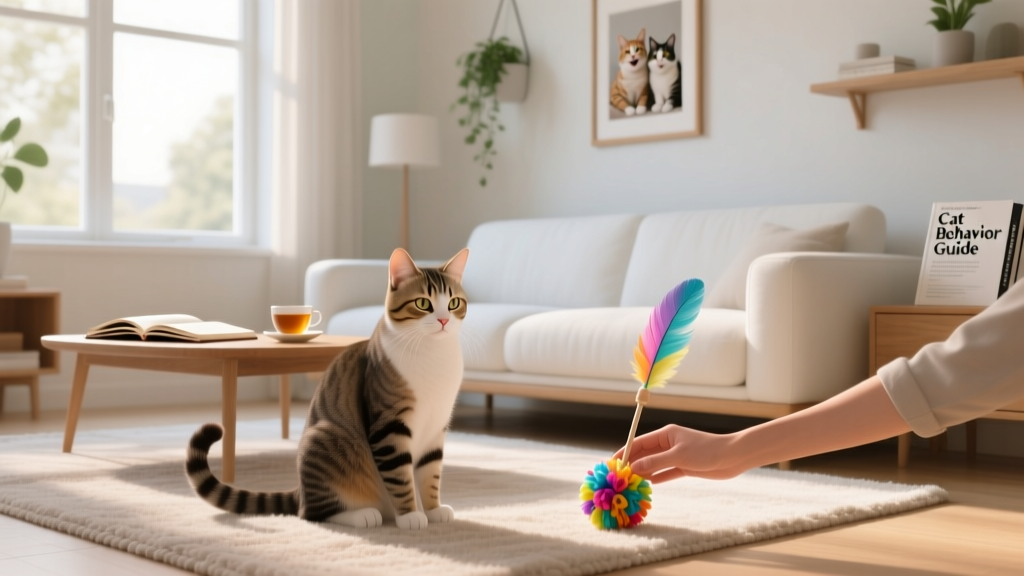
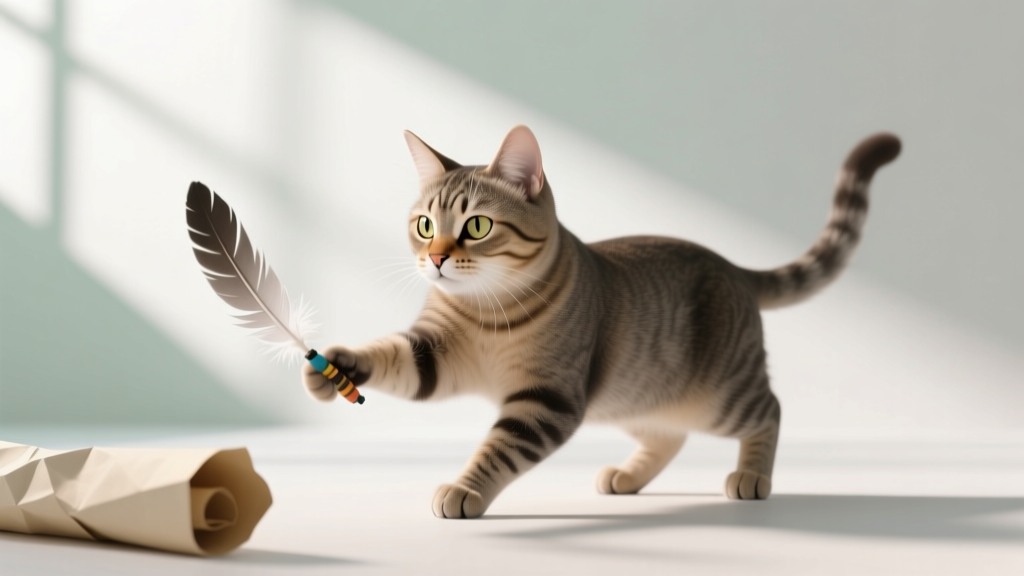
Two minutes of play (wand toy, chase, pounce), a snack, and a few strokes can fill the attention tank before you’re unavailable. Many lap invasions happen because your cat is trying to restore the usual flow of interaction.
Mind the petting threshold
During calls you may absentmindedly pet longer than your cat actually enjoys. Watch for tail flicks, skin rippling, ear turns, or a sudden stillness—common “I’m done” signals. Short, gentle strokes are safer than constant petting.
Plan for the “pick-up and place” politely
If you must move your cat, do it calmly and predictably. Support their body, set them onto their designated spot, and offer a small reward. Cats cope better with changes when they can predict what comes next.
7) Fun facts and research-adjacent nuggets to impress your coworkers
- Cats are routine detectives: They can learn daily schedules quickly—down to the sound of a notification chime that predicts you’ll be stationary.
- Purring isn’t only “happy”: Cats purr during relaxation, but they also purr when stressed or in pain, likely as a self-soothing mechanism.
- Scent is social: When your cat rubs on you or settles on your lap, they’re mixing scents. It’s part comfort, part “we belong together.”
- Your posture changes the invitation: A seated, still human is more approachable to many cats than a moving, unpredictable one. Video calls turn you into prime furniture.
8) FAQ: Common questions about cats and video calls
Is my cat jealous of my laptop?
Why does my cat only sit on me when I’m busy?
Because “busy” often equals “still.” When you’re cooking or walking around, your lap is unavailable. On calls, you’re stationary, warm, and predictable—ideal conditions for a cat who wants closeness.
What does it mean if my cat kneads on my lap during meetings?
Kneading is usually a comfort behavior linked to early kittenhood. It often indicates relaxation and positive association with you. If claws are an issue, keep a thick blanket on your lap or trim nails regularly.
How can I stop my cat from walking across the keyboard?
Give them a better option: a warm bed beside you, a perch at your level, or a “decoy keyboard” (yes, this works for some cats). Reward them for choosing the approved spot. Blocking access without providing an alternative often makes the keyboard even more interesting.
My cat bites me if I move them off my lap—what should I do?
First, watch for overstimulation signals and reduce petting. Use a calm, consistent “transfer” to a nearby bed with a treat. If the biting is sudden or escalating, consider pain or anxiety and talk with your veterinarian or a qualified behavior professional.
Do cats understand I’m talking to people on the screen?
Some cats may recognize voices, especially familiar ones, but most are responding to your tone, body language, and the unusual sounds in their territory. They may not understand “coworkers,” but they understand “my human is socially engaged and slightly tense.”
Final thought
When your cat settles onto your lap during a video call, it’s often the feline equivalent of pulling up a chair: warmth, security, routine, and a little social bonding—served all at once. With a few simple tweaks (a nearby perch, a warm “yes spot,” and a pre-call play session), you can keep your cat feeling connected without turning every meeting into a furry hostage situation.
Does your cat have a signature move—lap flop, keyboard sprawl, camera boop, dramatic tail across the mic? Share your funniest video-call cat stories with us at catloversbase.com. Your coworkers aren’t the only ones who deserve a good laugh.