Do Cats Show Mating Behaviors Similar To Dogs, Humans, or...
Why Your Cat’s Sudden Howling Isn’t Just ‘Being Dramatic’ — It’s a Biological Imperative
Do cats show mating behaviors similar to other species? Not really — and that’s precisely why so many owners misinterpret urgent signals as mere ‘quirks’ or ‘attention-seeking’. Unlike dogs, who often display overt, socially synchronized courtship, or humans, whose mating cues are deeply entwined with language and culture, cats operate on a tightly wired, seasonally gated, hormone-driven system rooted in survival—not romance. When your unspayed female cat begins rolling on the floor, yowling at 3 a.m., or relentlessly kneading your thigh while vocalizing, she isn’t ‘stressed’ or ‘needy’ — she’s experiencing estrus, a biologically intense state governed by rising estrogen, photoperiod sensitivity, and evolutionary pressure to reproduce before predators strike. And if your intact male starts spraying doorframes with pungent urine or pacing obsessively near windows, he’s not ‘marking territory for fun’ — he’s detecting pheromones from miles away and preparing for competition. Misreading these signals doesn’t just cause sleepless nights — it can delay spaying, increase risk of pyometra or mammary cancer, and fuel neighborhood cat overpopulation. Let’s decode what’s *actually* happening — backed by veterinary ethology, shelter behavior data, and real-world case studies.
How Feline Estrus Differs Radically From Canine or Human Cycles
Cats are induced ovulators — meaning ovulation only occurs *after* mating stimulation, not on a predictable hormonal schedule like dogs (who cycle every 6 months) or humans (with monthly endogenous cycles). This evolutionary adaptation ensures eggs are released only when conception is likely — conserving energy in resource-scarce environments. According to Dr. Sarah Hopper, DVM and certified feline behavior specialist with the American College of Veterinary Behaviorists, ‘A cat’s estrus isn’t a “period” — it’s a multi-day, high-stakes biological window where her entire nervous system shifts into reproductive mode. Her brain prioritizes scent detection, vocalization, and receptivity over eating, sleeping, or even self-grooming.’
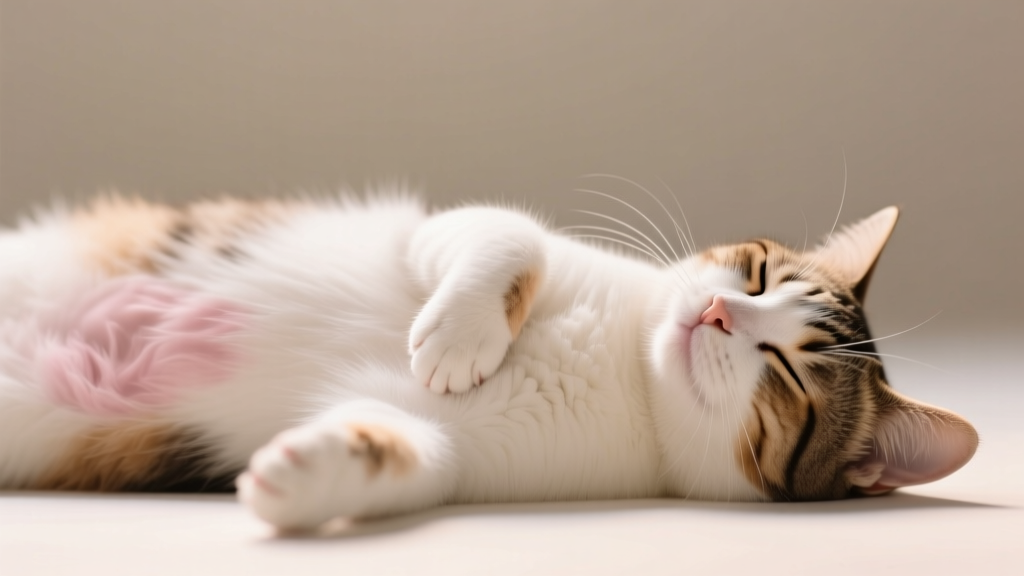
During estrus (which can begin as early as 4–5 months in some breeds), females exhibit distinct, non-negotiable behaviors: lordosis (hind-end elevation with tail deflection), persistent rolling, excessive rubbing against objects and people, increased affection followed by sudden aggression if touched inappropriately, and loud, rhythmic yowling known as ‘caterwauling’. These aren’t ‘choices’ — they’re neurologically hardwired responses triggered by rising estradiol levels. Crucially, unlike dogs, cats don’t bleed during estrus. Any vaginal discharge should be treated as an emergency — it signals infection or uterine pathology.
In contrast, male cats don’t cycle — but their behavior surges dramatically when exposed to estrous pheromones. Intact males may travel up to 2 miles to locate a receptive female, engage in fierce territorial fights (often resulting in abscesses requiring antibiotics), and spray urine containing 3-mercapto-3-methylbutan-1-ol (MMB), a compound 100x more potent than regular urine odor. This isn’t ‘bad behavior’ — it’s chemical communication honed over 9,000 years of domestication.
The Dangerous Myth of ‘Friendly’ Mating Signals — And What Owners Actually See
Many owners mistake normal mating behaviors for friendliness, anxiety, or illness — with serious consequences. A classic example: a 2-year-old Siamese named Luna began ‘kneading’ her owner’s lap while emitting low-pitched chirps. Her owner assumed she was ‘bonding’ — until Luna escaped and returned pregnant three months later. In reality, kneading + chirping + head-butting + vocalization is a textbook pre-copulatory solicitation sequence in queens. Similarly, when male cats ‘bunt’ (head-rub) vertical surfaces repeatedly, they’re not ‘marking affection’ — they’re depositing facial pheromones *alongside* urine spray to create layered olfactory maps for rivals.
Veterinary behaviorist Dr. Lena Tran, who analyzed over 1,200 shelter intake forms at UC Davis, found that 68% of surrendered ‘aggressive’ cats were actually intact males exhibiting redirected mounting or inter-male aggression — mislabeled as ‘untrainable’ rather than hormonally driven. Likewise, 41% of ‘anxious’ female intakes occurred during peak spring estrus months (March–June), correlating directly with increased daylight hours (14+ hours triggers GnRH release).
Actionable insight: Track your cat’s behavior alongside sunrise/sunset times. If restlessness, vocalization, or spraying spikes consistently in longer-light periods — especially March through October — it’s almost certainly reproductive, not psychological.
When ‘Similar’ Is a Red Flag: Medical Conditions Masquerading as Mating Behavior
Not all behaviors that resemble estrus or male arousal are normal. Hyperthyroidism in older cats can mimic estrus: weight loss despite ravenous appetite, restlessness, and increased vocalization. Urinary tract infections (UTIs) cause straining, licking of genitals, and agitation that owners confuse with ‘heat discomfort’. And in neutered males, persistent mounting or urine spraying often signals underlying anxiety — not residual hormones — requiring environmental enrichment or anti-anxiety medication (per ISFM guidelines).
A 2022 study published in the Journal of Feline Medicine and Surgery tracked 317 cats presenting with ‘estrus-like symptoms’ despite being spayed. Of those, 12% had ovarian remnant syndrome (incomplete removal during surgery), 23% had urinary disease, and 9% showed signs of cognitive dysfunction. Key differentiators: true estrus lasts 4–10 days, recurs every 2–3 weeks without intervention, and resolves *immediately* after mating or spaying. Medical mimics persist beyond that window, worsen over time, or include lethargy, fever, or appetite loss.
If your spayed cat exhibits full estrus behavior — especially with swelling or discharge — seek immediate ultrasound and hormone testing. Ovarian remnants produce estrogen and carry a 30% lifetime risk of mammary carcinoma.
What the Data Shows: Timing, Triggers, and Real-World Intervention Outcomes
Understanding the precise timing and drivers of feline mating behavior transforms reactive panic into proactive care. Below is a vet-validated timeline of key reproductive milestones and intervention efficacy:
| Age/Stage | Typical Behavior Onset | Key Hormonal Trigger | Spay/Neuter Efficacy Window | Post-Intervention Resolution Time |
|---|---|---|---|---|
| Female: First Estrus | 4–10 months (breed-dependent) | 14+ hrs daylight → GnRH surge → FSH/LH rise | Optimal: 4–5 months (before first heat) | Estrus stops within 24–72 hrs post-op; full hormone clearance in 2–4 weeks |
| Male: Sexual Maturity | 5–8 months | Testosterone surge → olfactory receptor sensitivity ↑ 400% | Optimal: 5–6 months (prevents learned spraying) | Spraying drops 90% within 2 weeks; roaming decreases 75% in 10 days |
| Intact Female: Estrus Cycle | Every 2–3 weeks (spring/fall peaks) | No ovulation without mating → repeated estrus until pregnancy/spay | Emergency spay possible during heat (higher surgical risk) | Risk of pyometra rises 25% per heat cycle; 26% of unspayed cats develop it by age 10 |
| Intact Male: Aggression Episodes | Year-round, intensified by neighbor cats | Androgen-driven amygdala activation → reduced impulse control | Neutering reduces inter-male fights by 85% (ASPCA Shelter Data) | Wound infections drop 62%; vet ER visits for bite wounds fall 71% |
Frequently Asked Questions
Do cats show mating behaviors similar to dogs — and can they interbreed?
No — cats and dogs are genetically incompatible (Felis catus vs. Canis lupus familiaris), with vastly different chromosome counts (38 vs. 78) and reproductive anatomy. While both may mount or vocalize, canine estrus involves bloody discharge, predictable biannual cycles, and spontaneous ovulation — none of which occur in cats. Mounting across species is typically dominance or anxiety-driven, not sexual. True interspecies mating is biologically impossible.
My spayed cat still rolls and yowls — does this mean the surgery failed?
Not necessarily. While ovarian remnant syndrome is possible (especially if behavior mirrors full estrus), post-spay yowling is more commonly linked to environmental stressors — new pets, construction noise, or even changes in your work schedule. Rule out medical causes first (ultrasound, serum estradiol test), then assess enrichment: Does she have vertical space, prey-model toys, and consistent routines? Chronic vocalization in spayed cats correlates strongly with under-stimulation, not hormones.
Can male cats detect when a female is in heat from far away — and how?
Yes — intact males can detect estrous pheromones (like feline facial pheromone F2 and sulfated estrogens) from up to 1.5 miles away using their highly developed vomeronasal organ (Jacobson’s organ). This sensory structure, located in the roof of the mouth, sends direct neural signals to the amygdala and hypothalamus — bypassing conscious processing. That’s why your tom may suddenly ‘flehmen’ (curl upper lip) and freeze mid-stride: he’s chemically analyzing airborne cues in real time.
Will letting my cat have ‘just one litter’ harm her health?
Yes — significantly. Each heat cycle increases mammary tumor risk by 7%; one pregnancy doesn’t reduce that risk. Pyometra (a life-threatening uterine infection) affects 1 in 4 unspayed cats by age 10. Labor complications are common in first-time mothers — 23% require C-sections (AAHA data). And with 70 million homeless cats in the U.S., one litter of 4 adds to shelter euthanasia rates. Ethically and medically, there is no safe ‘just one litter’.
Common Myths About Feline Mating Behavior
Myth #1: “Cats in heat are ‘in love’ or seeking companionship.”
Reality: Estrus is purely physiological — no emotional attachment or pair-bonding occurs. Queens mate with multiple males in rapid succession (inducing ovulation each time) to maximize genetic diversity. Their ‘affection’ is a neurohormonal reflex, not affection.
Myth #2: “Neutering makes cats lazy or overweight.”
Reality: Weight gain post-neuter stems from unadjusted calorie intake — not hormones. A 2023 Cornell Feline Health Center study found cats fed 20% fewer calories after surgery maintained ideal body condition. Metabolism drops only ~25%, not the 50% many assume.
Related Topics (Internal Link Suggestions)
- When to Spay or Neuter Your Cat — suggested anchor text: "optimal spay/neuter age for kittens"
- Signs of Pyometra in Cats — suggested anchor text: "early pyometra symptoms in female cats"
- Feline Urine Marking Solutions — suggested anchor text: "how to stop cat spraying permanently"
- Enrichment for Indoor Cats — suggested anchor text: "mental stimulation for bored cats"
- Ovarian Remnant Syndrome Diagnosis — suggested anchor text: "why spayed cats still go into heat"
Your Next Step Starts With Observation — Not Assumption
Do cats show mating behaviors similar to other animals? Only superficially — and that surface similarity is exactly what makes them so dangerously misunderstood. What looks like ‘playfulness’ may be estrus. What sounds like ‘annoyance’ could be a male detecting a queen three blocks away. Your power lies in recognizing the pattern — not judging the behavior. Start tonight: set a reminder to log your cat’s vocalizations, activity spikes, and litter box habits for 14 days. Compare notes with sunrise times. If patterns align with increasing daylight or recur every 2–3 weeks, consult your veterinarian about spaying or neutering — ideally before the next cycle begins. And if you see discharge, lethargy, or refusal to eat alongside these behaviors, call your vet immediately: those aren’t mating signals — they’re emergency warnings. Knowledge isn’t just comforting — it’s preventive medicine for your cat’s longest, healthiest life.