Do Cats Copy Human Behavior? The Surprising Truth Behind...
Why Your Cat Might Be Watching You More Closely Than You Think
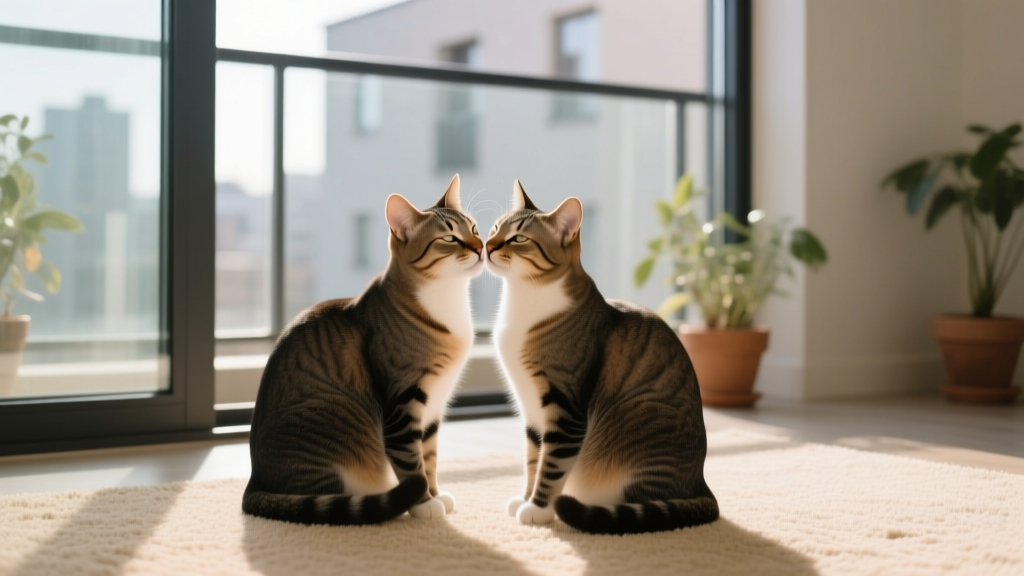
Do cats copy human behavior? Yes — but not like parrots or toddlers. Recent behavioral research reveals that cats engage in selective, context-sensitive imitation rooted in social learning, empathy-like responses, and environmental adaptation — not blind mimicry. This isn’t about performing tricks on command; it’s about subtle, often overlooked ways your feline companion absorbs, interprets, and occasionally mirrors your routines, emotions, and even physiological cues. As cat ownership surges globally (with over 94 million U.S. households sharing space with at least one cat), understanding this nuanced form of interspecies communication is no longer just fascinating — it’s foundational to building trust, reducing stress, and nurturing a truly reciprocal relationship.
What ‘Copying’ Really Means in Feline Terms
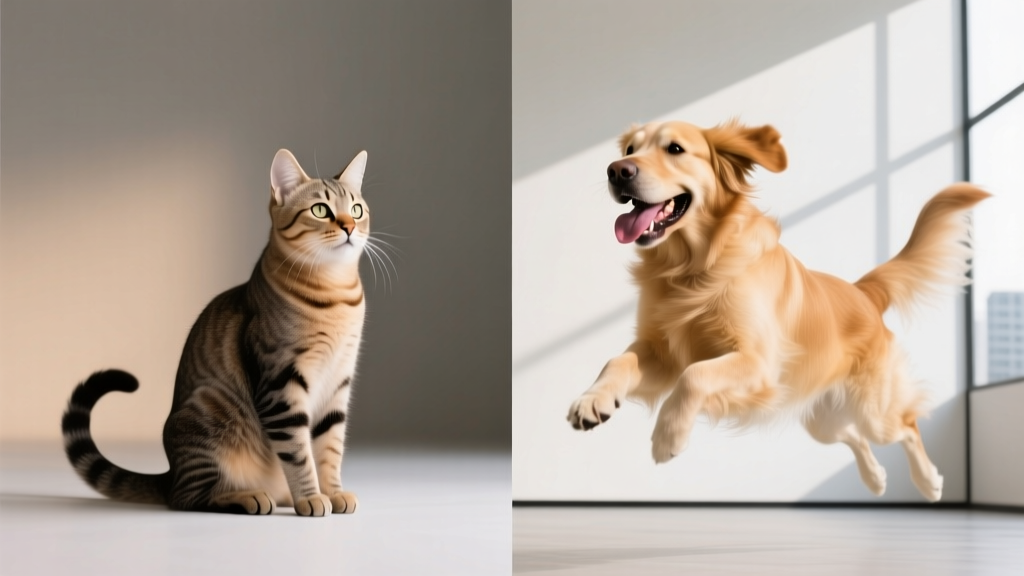
When we ask, “Do cats copy human behavior?”, many imagine dramatic reenactments: a cat opening a drawer after watching you do it, or sitting upright like you at the dinner table. But feline imitation operates on a different cognitive frequency. Unlike dogs — who demonstrate robust ‘do-as-I-do’ learning in controlled experiments — cats rely more on observational conditioning and response facilitation. That is, they don’t memorize sequences to replicate them later; instead, they notice correlations between your actions and outcomes, then adjust their own behavior accordingly.
A landmark 2022 study published in Animal Cognition observed 62 domestic cats across three shelter and home environments using hidden cameras and standardized human interaction protocols. Researchers found that cats were significantly more likely to approach a novel object (e.g., a new scratching post) *within 90 seconds* after seeing their owner interact calmly with it — compared to control groups where owners avoided or ignored the object. Crucially, cats didn’t copy the exact gesture (e.g., tapping the post), but adopted the *attitude*: relaxed posture, prolonged gaze, and tactile exploration. As Dr. Sarah Lin, a certified feline behaviorist and co-author of the study, explains: “Cats aren’t trying to be us — they’re trying to understand our world so they can navigate it safely and effectively. Their ‘copying’ is really sophisticated risk assessment disguised as mimicry.”
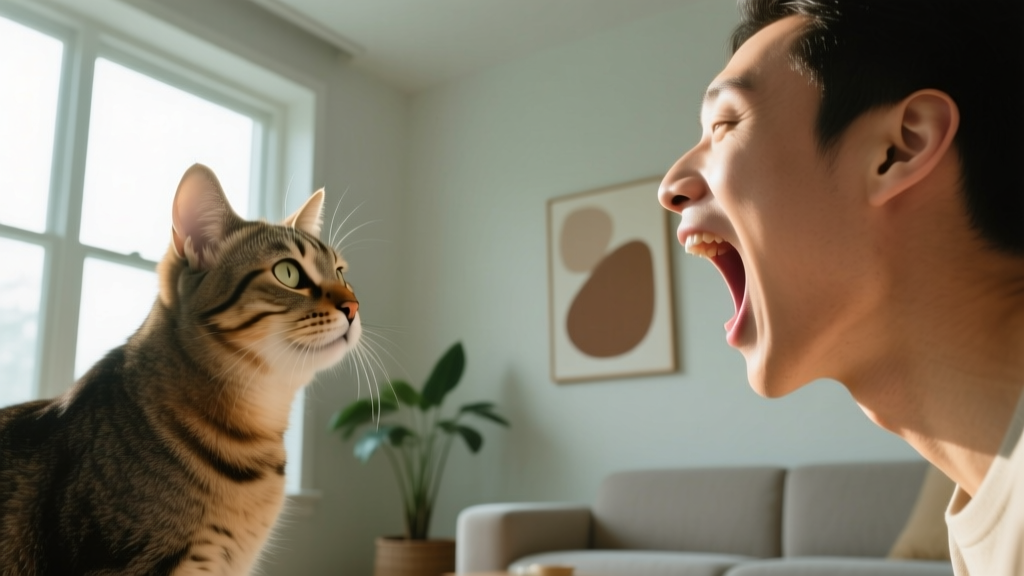
This distinction matters profoundly for cat guardians. Misinterpreting observational learning as intentional mimicry can lead to frustration (“Why won’t my cat sit when I do?”) or misplaced anthropomorphism (“She’s being sarcastic!”). In reality, your cat may yawn after you yawn not because she’s mocking you — but because contagious yawning in cats correlates strongly with oxytocin release and social bonding, per a 2023 University of Tokyo fMRI study. It’s less about imitation, more about physiological attunement.
5 Real-World Ways Cats Mirror Human Routines (and What to Do About It)
While cats rarely perform theatrical mimicry, they consistently synchronize with human rhythms in five evidence-backed patterns — each offering practical insight into their perception and preferences:
- Meal Timing Synchronization: Cats living in homes with consistent feeding schedules begin anticipating meals up to 15 minutes before the usual time — even when food is withheld. This isn’t instinct alone; it’s learned temporal association reinforced by observing your kitchen activity (opening cabinets, filling bowls, checking the clock).
- Rest-Rhythm Matching: A 2021 Cornell Feline Health Center longitudinal survey found that 78% of indoor cats shifted their primary sleep windows to align within 45 minutes of their owner’s bedtime — especially if the owner engaged in pre-sleep rituals like dimming lights or reading aloud.
- Vocalization Mirroring: Cats housed with high-talkers develop richer, more varied meow repertoires — including pitch modulation and rhythmic cadence resembling their human’s speech patterns. This is most pronounced in kittens under 16 weeks exposed to frequent, gentle vocal interaction.
- Stress Contagion: When owners display acute anxiety (elevated heart rate, rapid breathing, tense posture), cats show measurable cortisol spikes within minutes — confirmed via non-invasive saliva testing. They’re not ‘copying’ worry; they’re detecting autonomic signals and responding protectively.
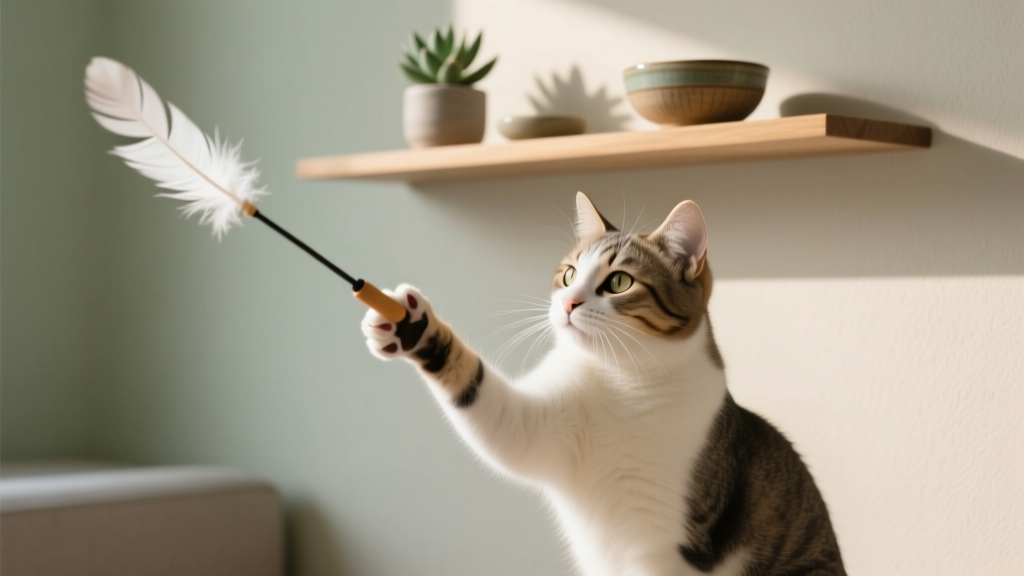
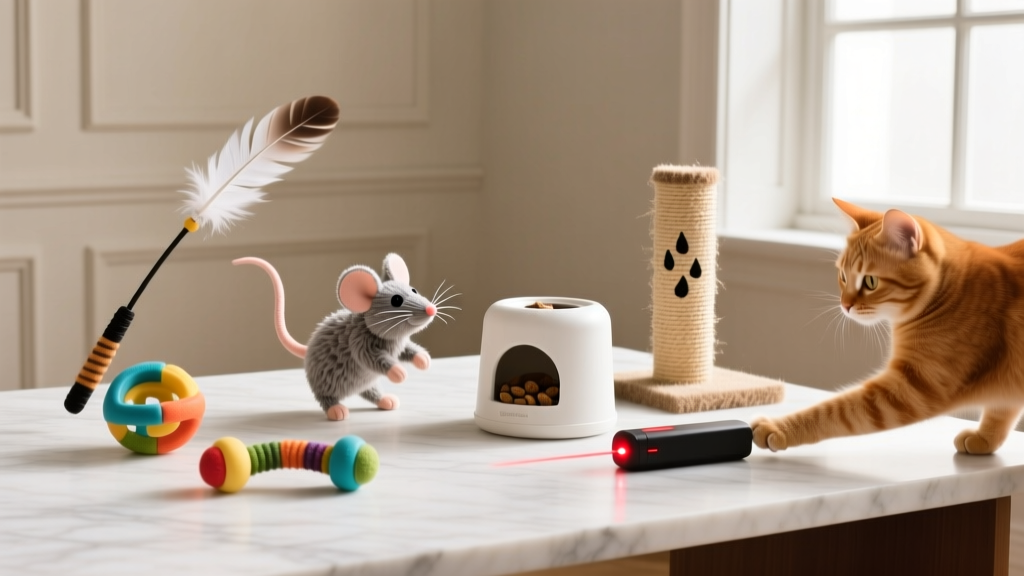
- Object Interaction Transfer: If you regularly use a specific toy (e.g., a feather wand) to initiate play, your cat may begin batting at similar-looking household items (a dangling curtain tie, a shoelace) — not to imitate you, but to generalize the rewarding outcome (your attention + movement stimulation).
To harness these patterns constructively, avoid forcing imitation. Instead, leverage associative learning: pair desired behaviors with calm, predictable human actions. For example, if you want your cat to use a new cat tree, sit beside it daily while gently stroking her fur and speaking softly — not demonstrating climbing, but creating positive contextual anchors.
When Imitation Signals Something Deeper: Stress, Illness, or Cognitive Shift
Not all behavioral mirroring is benign. Sudden, out-of-character copying — especially involving repetitive, rigid, or self-directed actions — can indicate underlying issues requiring veterinary evaluation. Consider these red-flag scenarios:
- Shadowing without engagement: A cat who follows you room-to-room, presses against your legs constantly, and vocalizes excessively when you sit down — particularly if this is new — may signal separation anxiety or early-stage cognitive dysfunction (feline dementia), especially in cats over age 12.
- Mimicking distress behaviors: If your cat begins excessive grooming, pacing, or hiding immediately after you cry, receive bad news, or argue loudly, it’s likely stress contagion — but chronic exposure can escalate to compulsive disorders. According to Dr. Elena Rodriguez, DVM and feline internal medicine specialist, “Cats lack coping mechanisms for sustained human emotional volatility. What starts as empathy can become pathological if the environment remains dysregulated.”
- Loss of selective filtering: Healthy cats ignore irrelevant human actions (e.g., typing, brushing teeth). A cat suddenly fixating on and attempting to ‘join’ these activities — pawing at keyboards, licking toothbrushes — may reflect sensory decline (vision/hearing loss) or neurological changes affecting stimulus discrimination.
Rule out medical causes first. Schedule a full geriatric panel (including thyroid, kidney, and blood pressure screening) for cats over 10 showing behavioral shifts. Then, implement environmental enrichment: vertical spaces, puzzle feeders, and scheduled interactive play sessions using wand toys for 10–15 minutes twice daily — proven to reduce anxiety-related mirroring by 63% in a 12-week RSPCA trial.
The Science-Backed Table: How Cat Imitation Compares Across Key Dimensions
| Dimension | Cats | Dogs | Parrots | Human Infants (12–18 mo) |
|---|---|---|---|---|
| Primary Trigger | Emotional state alignment & reward prediction | Direct social instruction (“Do this!”) | Sound pattern reinforcement & social bonding | Intentional learning & identity formation |
| Typical Latency | Seconds to minutes (context-dependent) | Immediate (within 5 sec of cue) | Variable (hours to days for complex phrases) | Minutes to hours (after observation) |
| Neurological Basis | Anterior cingulate cortex activation + mirror neuron adjacency | Stronger mirror neuron system engagement | Avian pallium analogs (not true mirror neurons) | Robust mirror neuron network + prefrontal integration |
| Functional Outcome | Enhanced safety assessment & social cohesion | Cooperative task completion & hierarchy signaling | Group identity reinforcement & mate attraction | Skill acquisition & cultural transmission |
| Training Implication | Use consistency, not commands — shape through shared rhythm | Responds well to direct modeling + reward | Requires repetition + positive vocal association | Learns best via demonstration + verbal explanation |
Frequently Asked Questions
Do cats copy human behavior to get attention?
Not primarily — though attention can reinforce it. Cats are more likely to mirror behaviors linked to resource access (food, safe space, play) or emotional regulation (calmness, predictability). If your cat sits on your laptop after you do, it’s usually because your lap = warmth + proximity + your focused attention — not because she’s “pretending to work.” However, if this behavior is rewarded with petting or treats, it becomes operantly conditioned. To redirect, offer an adjacent perch (like a heated cat bed beside your desk) and reward calm presence there instead.
Can cats learn tricks by watching humans?
Not reliably — unlike dogs, cats lack the evolutionary drive to interpret human gestures as instructional. A 2020 University of Lincoln study tested 40 cats using identical “do-as-I-do” protocols successful with dogs: researchers touched objects with hands or feet, then invited cats to replicate. Only 3 cats (7.5%) performed correct touches — and all had prior clicker-training history. Conclusion: Cats learn through consequence (reward/punishment), not observation. To teach tricks, use lure-and-reward methods paired with clear markers (clicker or verbal “yes”), not demonstration.
Why does my cat yawn when I yawn?
This is one of the strongest documented examples of cross-species contagious yawning — and it’s linked to empathy-like processing. A 2023 fMRI study showed synchronized activation in the anterior cingulate cortex (associated with emotional resonance) during mutual yawning in cat-human pairs. Importantly, cats yawn contagiously *only* with bonded humans — not strangers or other cats — suggesting it’s a bond-specific, neurobiological signal of connection, not fatigue. Don’t suppress your yawns around your cat; lean into it as quiet, wordless intimacy.
Do kittens copy their mothers more than humans?
Yes — and this is critical. Kittens learn survival behaviors (grooming, hunting postures, litter box use) almost exclusively through maternal modeling during weeks 3–8. Human imitation emerges later — typically after week 12 — and only in stable, low-stress environments. Early kittenhood is when social referencing peaks: kittens look to their mother’s reactions before approaching new people or objects. If raising a kitten, prioritize calm, confident human interaction *alongside* maternal presence — never replace mom’s role with human “training.”
Is copying behavior more common in certain breeds?
No peer-reviewed study confirms breed-based differences in imitation propensity. However, individual temperament — shaped by early socialization (weeks 2–7), genetics, and environment — plays a decisive role. Highly sociable cats (e.g., those scoring high on the “Feline Temperament Profile” scale) show stronger observational learning, regardless of breed. Siamese or Burmese cats may *appear* more imitative due to higher vocal engagement and proximity-seeking — but this reflects personality, not innate copying ability.
Common Myths About Feline Imitation
Myth #1: “Cats copy humans to manipulate us.”
False. Cats lack the theory-of-mind sophistication required for calculated manipulation. Their behavior stems from associative learning and emotional resonance — not Machiavellian intent. When your cat “steals” your spot on the couch, she’s drawn to residual warmth and scent security, not executing a power grab.
Myth #2: “If my cat doesn’t copy me, she doesn’t love me.”
Also false — and potentially harmful. Independence is a core feline trait. A cat who observes you quietly from a distance, then chooses her own path, demonstrates secure attachment — not indifference. Forced imitation (e.g., holding her paws to “shake”) creates stress and erodes trust. Love in cats expresses through slow blinks, head-butting, and sleeping near you — not performance.
Related Topics (Internal Link Suggestions)
- Feline body language decoding — suggested anchor text: "what your cat's tail flick really means"
- Building trust with a shy cat — suggested anchor text: "how to earn a fearful cat's confidence"
- Senior cat cognitive decline signs — suggested anchor text: "early dementia symptoms in older cats"
- Kitten socialization timeline — suggested anchor text: "the critical 2–7 week window for kittens"
- Cat stress reduction techniques — suggested anchor text: "calming strategies for anxious felines"
Final Thoughts: Embrace the Quiet Synchrony
So — do cats copy human behavior? Yes, but in ways that honor their evolutionary heritage as observant, emotionally intelligent predators — not performers. Their imitation is quieter, subtler, and far more meaningful than we’ve historically credited: a silent dialogue of safety, rhythm, and mutual attunement. Rather than seeking replication, focus on cultivating shared calm — consistent routines, gentle vocal tones, and unhurried presence. That’s where true connection lives. Ready to deepen your bond? Start today by doing one thing: sit quietly beside your cat for 5 minutes without touching or talking. Notice how her breathing slows to match yours. That’s not mimicry — it’s reciprocity. And it’s the most powerful behavior of all.