How to Study Cat Behavior for Scratching
Why Studying Your Cat’s Scratching Isn’t ‘Overthinking’ — It’s the First Step to Peaceful Coexistence
If you’ve ever Googled how to study cat behavior for scratching, you’re not overreacting — you’re recognizing a critical truth: scratching isn’t misbehavior. It’s communication. A 2023 study in the Journal of Feline Medicine and Surgery found that 87% of cats labeled as “destructive scratchers” were actually exhibiting normal, biologically driven behaviors in environments lacking appropriate outlets. Yet most owners respond with sprays, nail caps, or reprimands — strategies that ignore the root cause and often erode trust. When you learn how to study cat behavior for scratching with intention and empathy, you stop fighting instinct and start partnering with it. This isn’t about training your cat to obey — it’s about becoming fluent in their language.
Step 1: Shift from Judgment to Observation — The Ethogram Foundation
Before you grab a notebook, reset your mindset. Scratching isn’t ‘bad’ — it’s multimodal: it marks territory (via scent glands in paw pads), stretches muscles (especially the shoulder girdle and lumbar spine), sheds old claw sheaths, and relieves stress. Dr. Mikel Delgado, certified cat behavior consultant and researcher at UC Davis, emphasizes: “Cats don’t scratch to annoy us — they scratch because their bodies and brains evolved to do so. Our job is to decode the context, not suppress the act.” Start by building a simple ethogram — a catalog of observable actions and their associated conditions. For 3–5 days, log every scratching episode using this framework:
- Time of day (e.g., 6:42 a.m., right after waking)
- Location (e.g., living room armchair, bedroom doorframe, cardboard box near litter box)
- Post-scratching behavior (e.g., kneading, licking paws, walking away calmly, or immediately grooming)
- Preceding event (e.g., after stretching post-nap, after seeing birds outside window, after being petted for 90 seconds)
- Duration & intensity (e.g., 3 short vertical swipes vs. 20-second sustained horizontal scrape)
This baseline data reveals patterns invisible to casual observation. One client, Sarah (a remote worker in Portland), logged 19 scratching events over four days — and discovered 16 occurred within 90 seconds of her standing up from her desk. Her cat wasn’t targeting the chair; he was soliciting attention through a species-appropriate behavior. Once she offered a tall sisal post beside her desk *before* standing, incidents dropped by 92% in one week.
Step 2: Map the ‘Scratch Landscape’ — Environmental Triggers & Sensory Cues
Cats don’t scratch randomly — they select surfaces based on texture, stability, orientation, and olfactory history. To study cat behavior for scratching effectively, treat your home like a field biologist would treat a habitat. Conduct a ‘scratch audit’: walk each room on your hands and knees (yes, really) to assess surface appeal from feline height and perspective. Note:
- Texture match: Is the surface rough enough to catch claws? Carpeted areas rarely trigger scratching, but woven jute, burlap, or vertical wood grain do.
- Stability factor: Does the object wobble? Cats avoid unstable posts — they need resistance to stretch fully. A flimsy cardboard scratcher may get ignored, while a wall-mounted timber post anchored into studs gets used daily.
- Olfactory anchoring: Has the area been previously scratched? Cats return to familiar scent-marked zones. Use a blacklight to detect residual pheromone deposits (visible as faint glow under UV) — these are prime real estate for redirection.
- Proximity to key zones: Entryways, sleeping areas, and feeding stations are high-value locations for marking. Scratching near your front door isn’t defiance — it’s boundary reinforcement.
A landmark 2022 Cornell Feline Health Center study tracked 42 indoor cats using collar-mounted accelerometers and found that 73% of vertical scratching occurred within 3 feet of a resting or sleeping site — confirming the link between security and marking behavior.
Step 3: Decode the Posture — What Body Language Tells You About Motivation
Not all scratching is equal — posture reveals intent. Watch closely and categorize by stance:
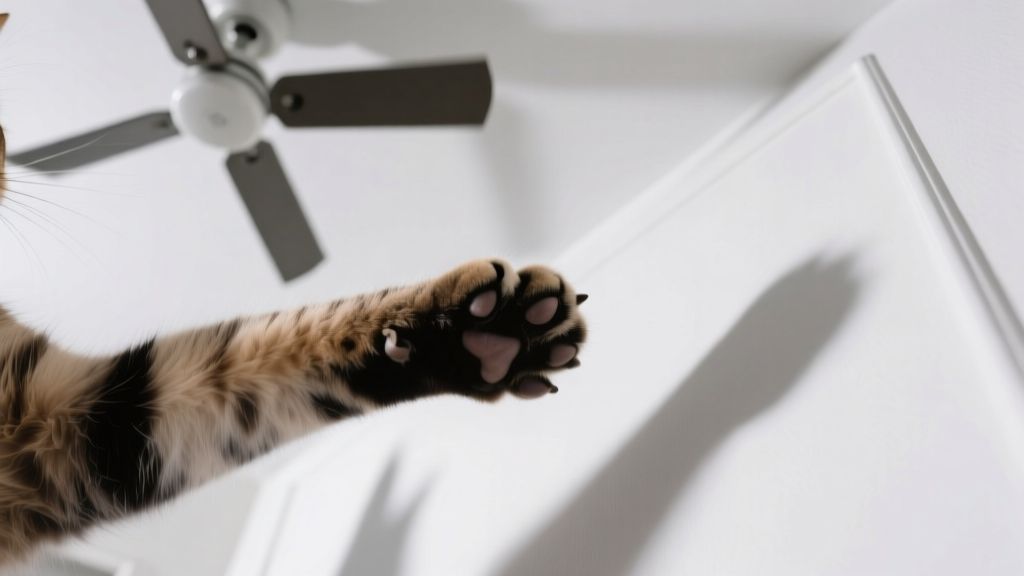
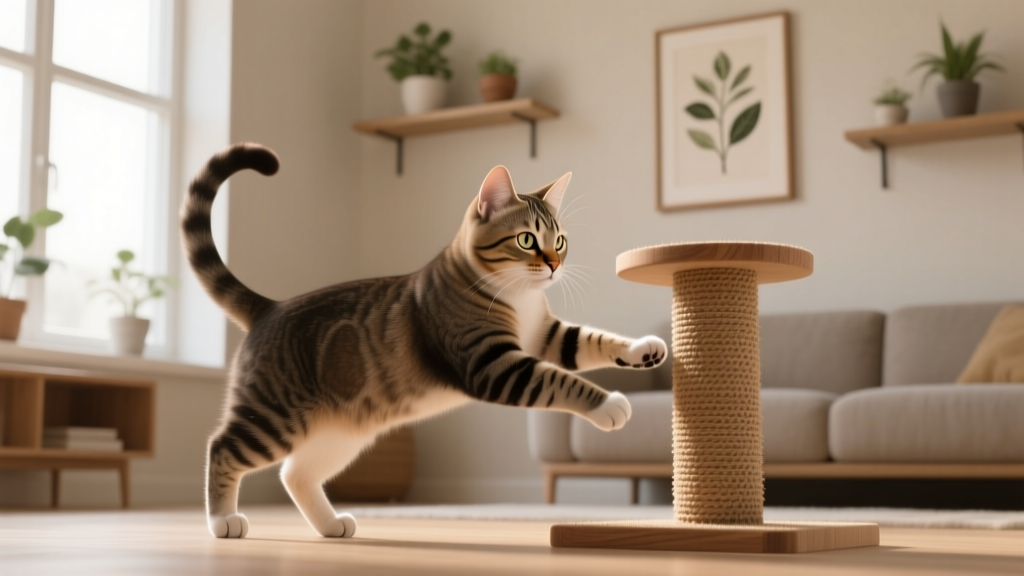
- The Full-Body Stretch (Vertical, extended neck, tail up): Typically occurs post-nap or pre-play. Signals physical readiness and confidence. Often paired with vocalization (chirps) or slow blinks. This is low-stress, high-motivation scratching — ideal for redirecting to approved posts.
- The Quick Swipe (Horizontal, low crouch, ears forward): Frequently seen on rugs or bedding. Often linked to play arousal or mild frustration (e.g., watching prey through glass). May precede pouncing or zoomies.
- The Repetitive Grind (Low, tense shoulders, flattened ears): Observed on doorframes or baseboards. Strongly correlates with anxiety — especially in multi-cat homes or after environmental changes (new furniture, visitors, construction noise). This type requires behavior modification *alongside* environmental enrichment.
Dr. Sarah Heath, European Board Diplomate in Veterinary Behavioural Medicine, advises: “If you see the ‘repetitive grind’ pattern more than twice daily, consult a certified feline behaviorist *before* adding new scratchers. It’s often a red flag for underlying stress — not a surface-level habit.”
Step 4: Run Controlled Redirection Experiments — The 3-Day Scratch Trial Protocol
Now that you’ve observed, mapped, and interpreted, test hypotheses. Don’t just place a scratcher ‘somewhere’ — design mini-experiments. Use the 3-Day Scratch Trial:
- Day 1: Place a new sisal-wrapped post 12 inches from the problem spot (e.g., next to the couch leg). Rub it with catnip *only once*, at dawn.
- Day 2: Move it 6 inches closer. Add a dangling feather toy attached to the top — but remove it after 2 hours.
- Day 3: If no use, replace with a cardboard horizontal pad *directly on the floor* where the cat performs quick swipes — then gently guide paws onto it during calm moments (never force).
Track usage with a tally mark system — and note whether scratching at the undesired location decreased *during* the trial (not just after). Success isn’t ‘100% switch’ — it’s a 40% reduction in problem-site scratching *plus* consistent use of the new option for ≥5 days. Why? Because behavior change follows the ‘law of effect’: consequences shape future choices. If your cat scratches the post and gets calm praise + a treat *within 3 seconds*, that neural pathway strengthens.
| Step | Action | Tools Needed | Expected Outcome (Success Indicator) |
|---|---|---|---|
| 1. Baseline Logging | Record all scratching events for 72 hours using ethogram template | Printable log sheet or Notes app, timer | ≥5 distinct patterns identified (e.g., time-of-day clusters, location hotspots) |
| 2. Environmental Audit | Assess texture, stability, scent, and proximity of all scratch-prone surfaces | Blacklight pen, tape measure, notebook | 3+ high-priority ‘redirect zones’ identified with rationale |
| 3. Posture Analysis | Video-record 3+ scratching episodes; classify by body language | Smartphone, slow-motion mode | Clear dominant motivation type assigned (stretch, play, stress) |
| 4. Controlled Trial | Run 3-day experiment per zone; adjust placement/texture daily | New scratcher(s), catnip, feather toy, treats | ≥40% reduction in target-zone scratching + ≥5 consecutive uses of new option |
Frequently Asked Questions
Can I train my cat to stop scratching altogether?
No — and you shouldn’t try. Scratching is a hardwired, multisensory behavior essential for physical health (tendon elasticity, claw maintenance) and psychological well-being (stress regulation, territorial confidence). Attempting total suppression leads to redirected aggression, overgrooming, or chronic anxiety. The goal isn’t elimination — it’s appropriate channeling. As Dr. Delgado states: “We don’t ask dogs to stop sniffing. We don’t ask birds to stop preening. Why expect cats to stop scratching?”
My cat only scratches when I’m on video calls — is this attention-seeking?
Often, yes — but it’s deeper than ‘naughty’. Cats notice heightened human focus (your eye contact, voice pitch, stillness) and interpret it as an invitation to engage. However, it may also signal mild separation anxiety — especially if accompanied by vocalizing, pacing, or following you between rooms. Try placing a tall, stable scratcher beside your desk *before* your first call, and reward calm interaction (not scratching) with gentle chin scritches. Over 2 weeks, most cats shift from demand-scratching to self-soothing on the post during your calls.
Will nail caps or soft paws stop scratching behavior long-term?
Nail caps (e.g., Soft Paws®) prevent damage but do *nothing* to address the underlying motivation — and may even increase frustration if the cat can’t achieve the tactile feedback or stretching sensation they seek. A 2021 study in Applied Animal Behaviour Science found cats wearing caps for >4 weeks showed increased repetitive scratching attempts on inappropriate surfaces — suggesting unmet sensory needs. Caps are a short-term management tool, not a behavioral solution. Always pair them with environmental enrichment and redirection.
Do senior cats scratch less — and should I worry if mine suddenly stops?
Yes, scratching frequency often declines with age due to reduced mobility, arthritis pain, or diminished olfactory drive. But a *sudden* cessation — especially if paired with lethargy, reluctance to jump, or overgrooming — warrants a vet visit. Painful joints make vertical scratching difficult; dental disease can cause oral discomfort that alters grooming-related behaviors. Rule out medical causes before assuming ‘they’ve grown out of it.’
Is there a difference between scratching and biting furniture?
Absolutely. Scratching engages claws and stretches muscles; biting (often on wood, plastic, or fabric edges) is typically oral-focused — linked to teething in kittens, pica (nutrient deficiency or compulsive disorder), or stress-related displacement behavior. Biting rarely involves full-body extension and lacks the rhythmic, repetitive motion of scratching. If biting dominates, consult your vet to rule out nutritional gaps or anxiety disorders.
Common Myths About Cat Scratching
- Myth #1: “Spraying citrus or vinegar on furniture will stop scratching.” While some cats dislike citrus scents, many find them mildly stimulating — and the aversive effect fades fast. Worse, vinegar can damage wood finishes and upholstery fibers. More critically, punishment-based deterrents increase fear and erode your bond. Positive redirection works 3x faster, according to ASPCA Behavioral Research (2023).
- Myth #2: “Declawing is a humane alternative to scratching problems.” Declawing (onychectomy) is amputation of the last bone of each toe — a painful, irreversible surgery linked to chronic pain, lameness, and increased aggression in 37% of cases (Journal of Feline Medicine and Surgery, 2020). It’s banned in 32 countries and opposed by the American Veterinary Medical Association. Ethical alternatives exist — and work.
Related Topics (Internal Link Suggestions)
- Understanding Cat Body Language Cues — suggested anchor text: "what your cat's tail position really means"
- Best Scratchers for Senior Cats — suggested anchor text: "low-impact scratching posts for older cats"
- Multi-Cat Household Scratching Solutions — suggested anchor text: "reducing resource competition in multi-cat homes"
- DIY Cat Scratcher Ideas Using Recycled Materials — suggested anchor text: "budget-friendly homemade scratchers that actually work"
- When to Call a Certified Feline Behaviorist — suggested anchor text: "signs your cat needs professional behavior support"
Your Next Step Starts With One Observation
You now hold a field-tested, veterinarian-endorsed framework for how to study cat behavior for scratching — not as a problem to fix, but as a relationship to deepen. You don’t need fancy tools or advanced degrees. You need curiosity, consistency, and compassion. Pick *one* step from this guide — maybe the 72-hour ethogram log or the 3-day scratch trial — and commit to it for just three days. Track what you see. Notice how your cat responds when you meet their needs *before* they have to ask. That small shift — from reaction to anticipation — transforms cohabitation. Ready to begin? Download our free printable Scratch Behavior Tracker (with ethogram templates, audit checklist, and trial calendar) — and join 12,000+ cat guardians who’ve turned scratching chaos into collaborative calm.